
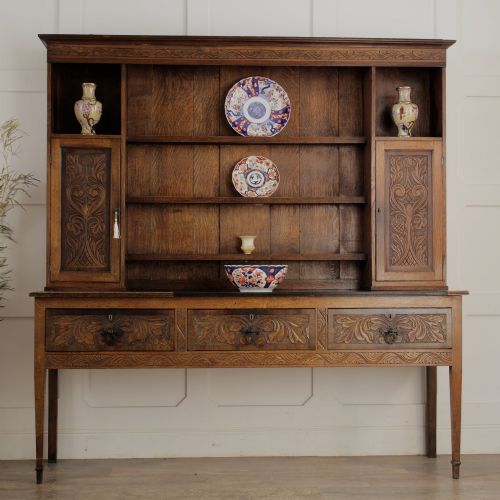
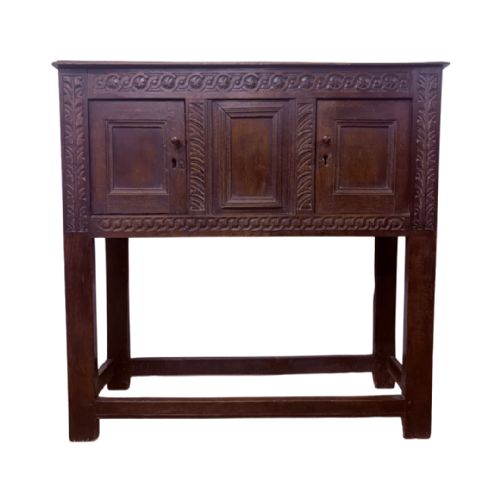

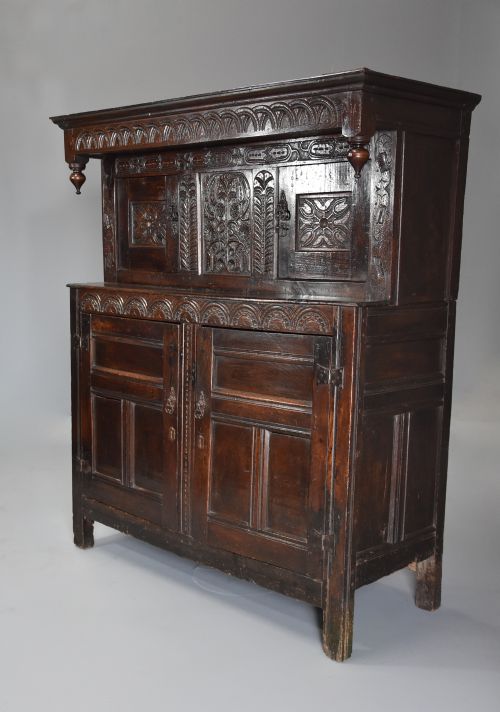
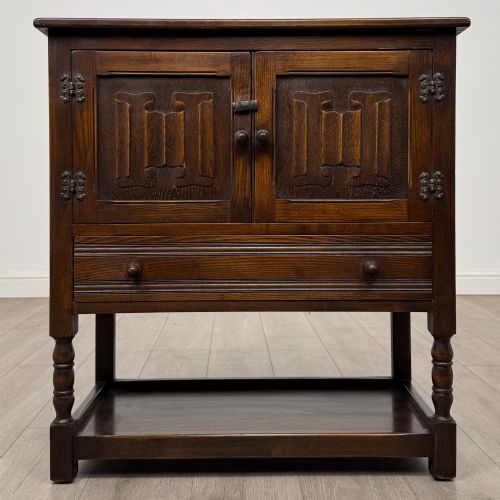


Carved English Oak Cupboard
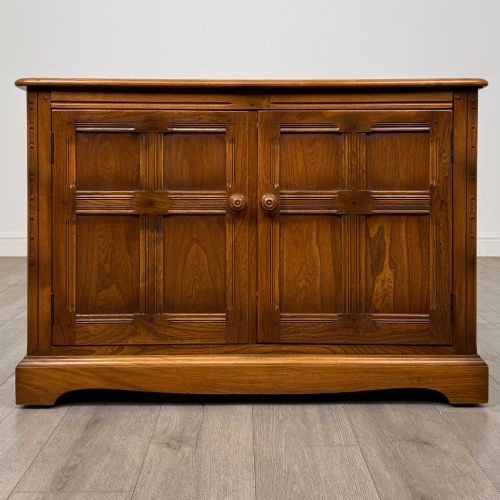
A carved English oak cupboard brings centuries of domestic history into a room, offering robust storage built from durable native timber.
Carved English Oak Cupboard
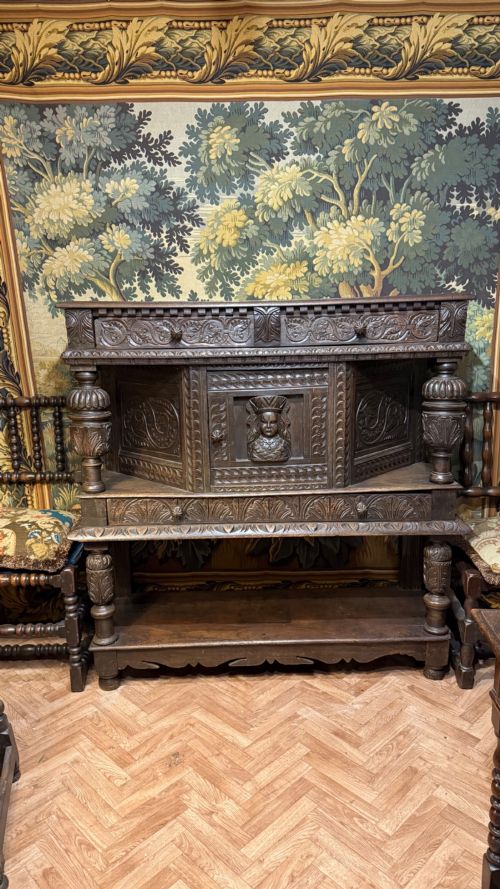
A carved English oak cupboard encompasses heavy storage furniture built from native timber across several centuries, ranging from seventeenth-century court pieces to later vernacular examples.
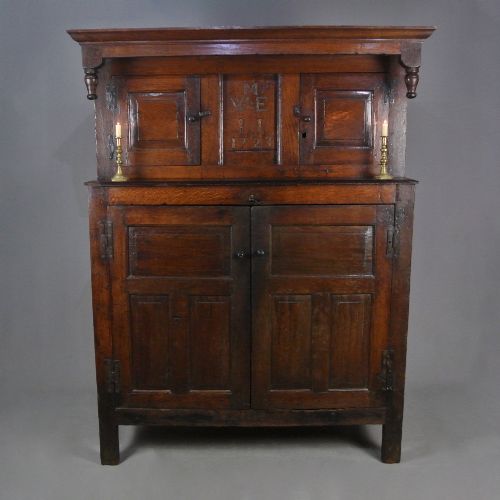
Buyers seeking this phrase most frequently encounter seventeenth-century court cupboards, eighteenth-century housekeepers' versions, and nineteenth-century revived styles.
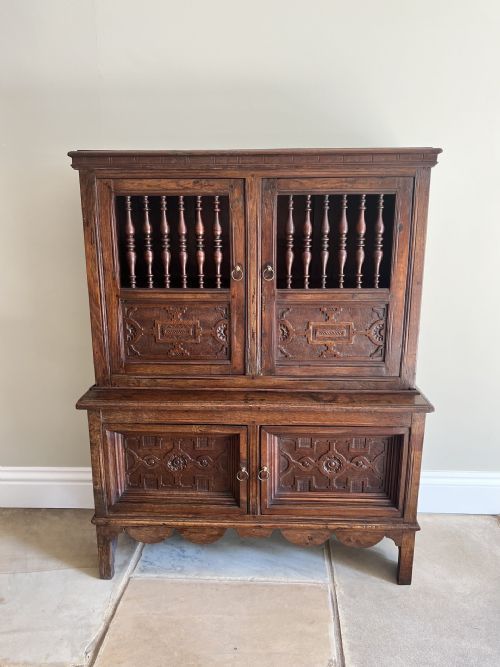
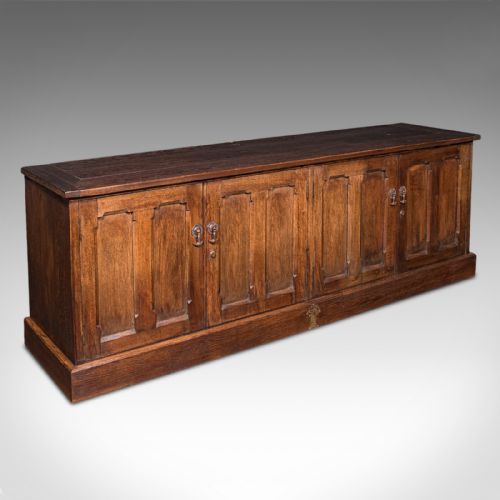
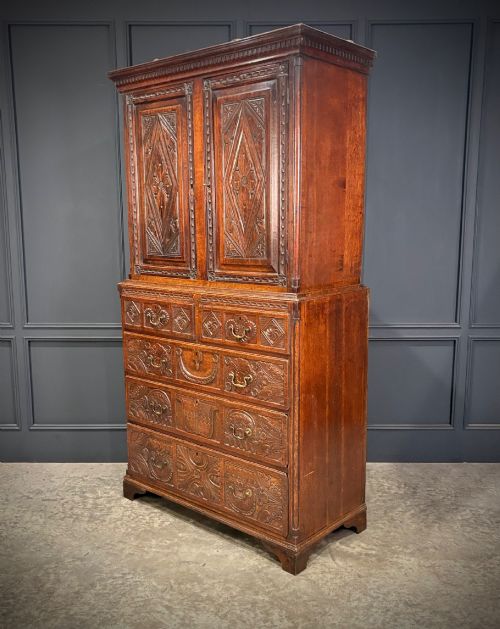
Forms span court cupboards, press cupboards, livery cupboards, corner cabinets, and dresser bases, reflecting the evolving domestic storage needs of English households.
Materials and construction
Construction relies heavily on English oak joined with mortise and tenon joints, sometimes complemented by fruitwood inlay, brass fittings, iron hardware, and glass panes in later iterations.
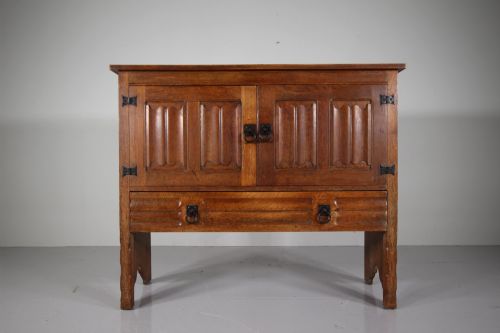
Decoration is achieved through hand-carved panels, geometric mouldings, and linenfold motifs executed directly into the solid timber substrate.
Listings span periods from the sixteenth century through the Edwardian era, incorporating oak, fruitwood inlay, brass, and iron.
Assessing quality
Quality rests on the depth and crispness of the hand-carving, the integrity of the original joinery, and the retention of untouched surfaces showing authentic historic patina.
Pieces retaining their original stands, hardware, and structural configuration command greater attention than those altered or assembled from disparate historic elements over subsequent centuries.
The Carved English Oak Cupboard Glossary
- Court cupboard
- A formal seventeenth-century storage piece with an upper enclosed section supported by columns above a lower tier or cupboard. These pieces often display elaborate geometric carvings and date from the Jacobean era.
- Livery cupboard
- A traditional English storage piece originally used for keeping food and candles overnight. These cabinets often feature pierced or slatted doors for ventilation.
- Linenfold
- A carved wooden panel motif imitating the appearance of folded linen cloth. This decorative technique appears frequently on Tudor and Elizabethan revival panels.
- Press cupboard
- A large enclosed storage furniture type designed for garments and household textiles. These examples typically feature upper and lower cupboard sections.
- Patina
- The surface sheen and colour developed by wood over centuries through handling, light exposure, and polishing. Original surfaces display a depth that modern finishing cannot replicate.
Carved English Oak Cupboard: Frequently Asked Questions
What is a court cupboard?
A court cupboard is a formal seventeenth-century storage form featuring an upper cabinet structure supported by turned posts above a lower tier.
These pieces were status symbols in substantial English homes and served to display plate and store provisions.
How do I care for antique oak furniture?
Care for antique oak involves maintaining stable indoor humidity and applying occasional applications of traditional beeswax to nourish the timber.
Avoid placing these heavy pieces near direct heat sources or in strong sunlight to protect the historic surface.
How can I tell a 17th-century cupboard from a revival piece?
Seventeenth-century pieces utilise hand-rived timber, traditional peg joinery, and tool marks consistent with period hand-working methods.
Revival pieces from the Victorian or Edwardian eras often display machine-sawn components and standardised construction techniques beneath the surface.
Where were these cupboards originally used?
These cupboards stood in the principal rooms, halls, and kitchens of English houses, serving both functional storage and decorative display purposes.
Housekeepers and estate owners relied on them to secure provisions, linens, and domestic silverware.