



Carved Ebonised Clock
A carved ebonised clock brings dark timber and precise movement into a room, spanning Victorian wall pieces and French mantel designs.
Carved Ebonised Clock
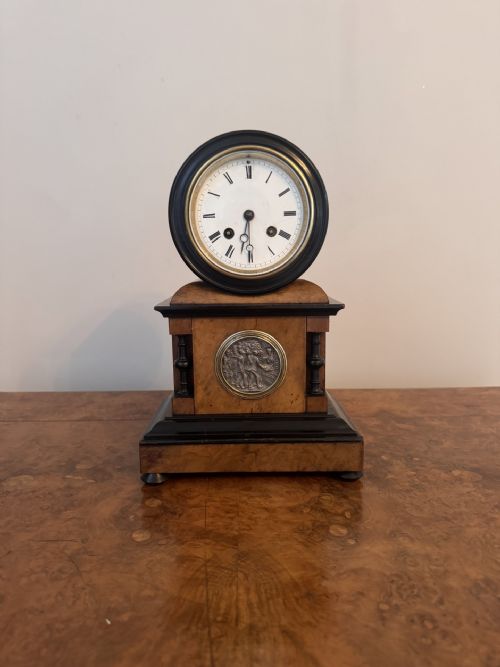
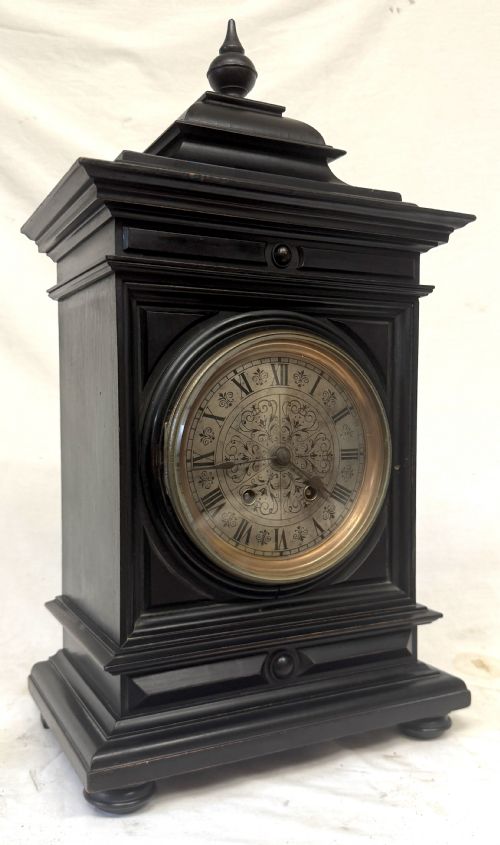
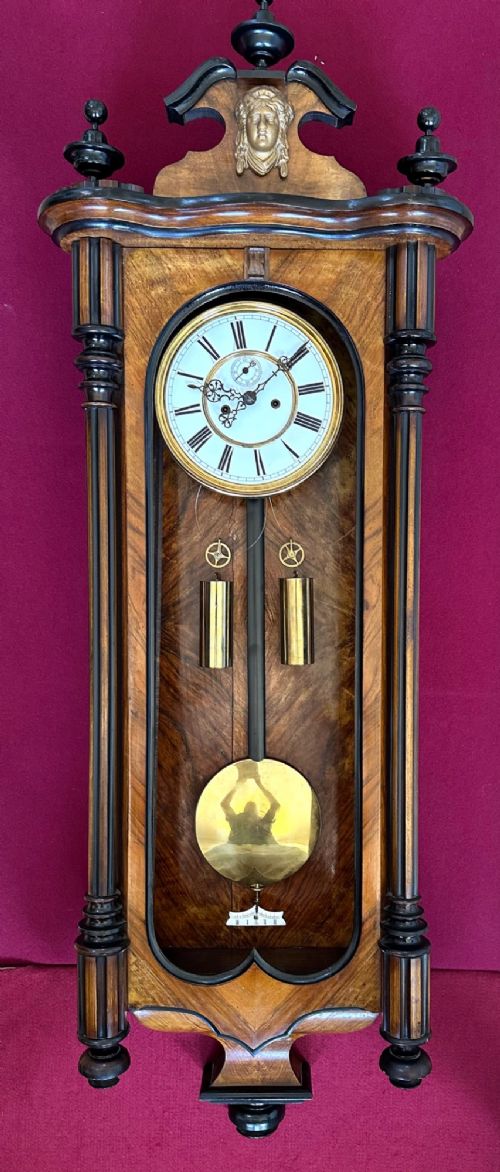
A carved ebonised clock represents a distinct period of horological design, typically emerging from Victorian workshops between 1860 and 1910. These items combine deep black wooden cases with intricate carving, taking the form of mantel clocks, bracket clocks, wall clocks, and Vienna regulators.
The pieces listed on this page range from English aesthetic movement pieces to German spring-driven Vienna regulators and French wall clocks. Buyers frequently encounter mantel clocks featuring silvered dials alongside substantial wall-hanging instruments dated around 1880.
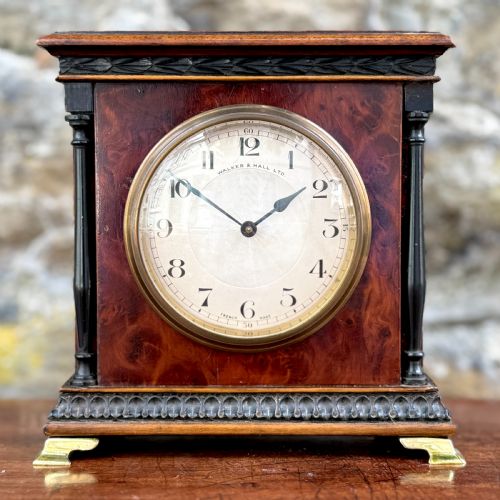
Makers such as Walker and Hall, Lenzkirch, and Gustof Becker appear among these records, alongside Chinese and European examples in walnut, burr walnut, and mahogany. Each piece offers a heavy dark finish that contrasts sharply with brass bezels, white enamel faces, and mother-of-pearl details.
How they were made
Cases rely on woods like walnut, burr walnut, and mahogany that undergo ebonisation to achieve a dense, black surface resembling ebony. Craftsmen then carve relief patterns directly into the timber, applying glass fronts to protect the dial.
Interior mechanisms utilise brass for wheels and plates, paired with steel springs or weights for eight-day striking movements. Dials feature either silvered brass or white enamel with painted numerals, often bearing the signature of makers such as Lenzkirch or Gustof Becker.
Carved Ebonised Clock Retail Price Guide 2026
Typical asking prices for carved ebonised clock among the pieces listed under this phrase on Sellingantiques today, from the lower quarter to the upper quarter. They describe what is for sale here now, not the wider market.
One notable timepiece recorded on this page sailed the seas aboard the SS Ethiopia in 1874 before finding its way ashore.
What varies in quality
The depth and crispness of the timber carving separate standard production from superior examples, particularly in Victorian aesthetic movement items. Sharp chisel work on ebonised wood retains its definition, whereas lower grades show softer, more rounded edges.
Movement sophistication also dictates value, moving from simple time-only mechanisms to eight-day striking systems housed in heavy cases. Signed movements by established makers like Lenzkirch demonstrate superior horological engineering compared to unsigned alternatives.
Walker and Hall·Gustof Becker·Lenzkirch
The Carved Ebonised Clock Glossary
- Ebonised wood
- Timber treated with stain or paint to imitate ebony. This dark finish became popular during the nineteenth century for furniture and clock cases.
- Vienna Regulator
- A precision weight-driven wall clock developed in Austria. These instruments feature long wooden cases and large glass doors to display the pendulum.
- Bracket clock
- A portable clock designed to sit on a bracket or shelf. Originally built with handles for transport, later Victorian versions functioned purely as mantel ornaments.
- Silvered dial
- A brass clock face treated with silver powder to create a matte metallic finish. Blackened numerals are then engraved into the surface.
- Eight-day movement
- A clock mechanism that requires winding once a week. This system uses springs or weights to power the going and striking trains.
Carved Ebonised Clock: Frequently Asked Questions
What is an ebonised clock?
An ebonised clock is a timepiece housed in wood treated to achieve a deep black finish, mimicking expensive ebony timber. These cases date largely from the nineteenth and early twentieth centuries.
Cabinetmakers used this technique during the Victorian and aesthetic movement periods to create stark, dark contrasts against white enamel or silvered brass dials.
Where were Vienna regulators placed?
Vienna regulators were designed for domestic or public display on interior walls, where their long pendulums could swing freely. Their glass-fronted cases allowed the movement and pendulum to be viewed easily.
These clocks served as both accurate timekeepers and central decorative fixtures in nineteenth-century rooms.
How do I identify a Victorian mantel clock?
Victorian mantel clocks typically feature heavy ebonised wood cases, sometimes combined with walnut or mahogany, and often display carved decorative elements. They sit flat on surfaces and house spring-driven movements.
Many examples from this era include brass bezels, bevelled glass, and detailed dials produced by makers such as Lenzkirch or Gustof Becker.
What does an eight-day movement mean?
An eight-day movement indicates that the clock mechanism runs for approximately eight days before requiring manual winding via a key. This system applies to both spring-driven mantel clocks and weight-driven wall regulators.
It offered nineteenth-century households the convenience of weekly rather than daily winding.