



Carved Eagle Giltwood Mirror
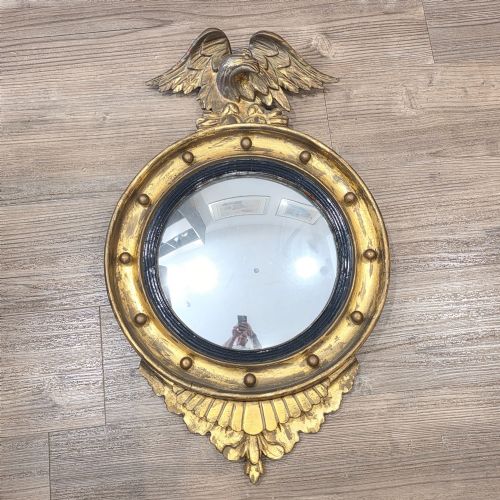
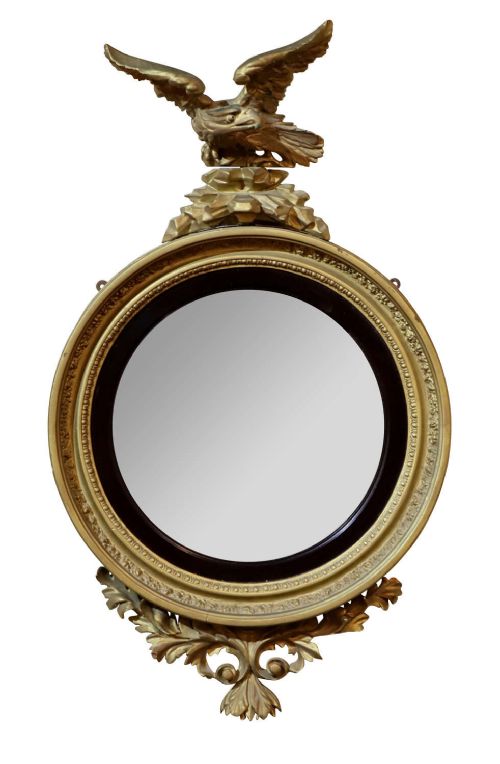
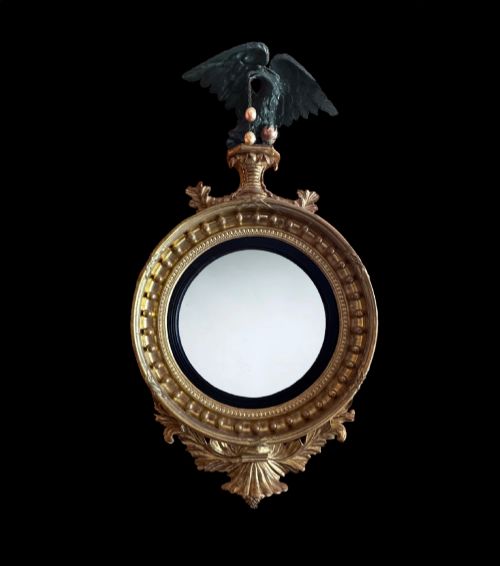
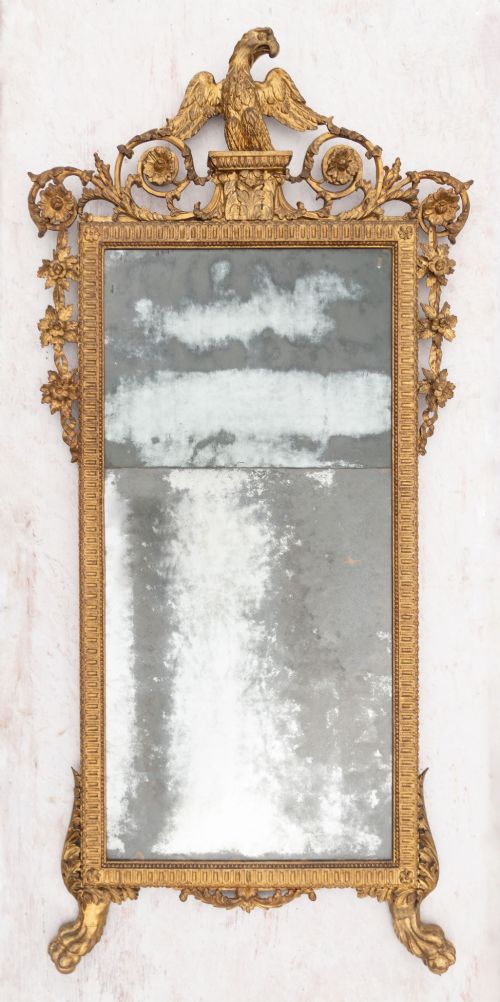
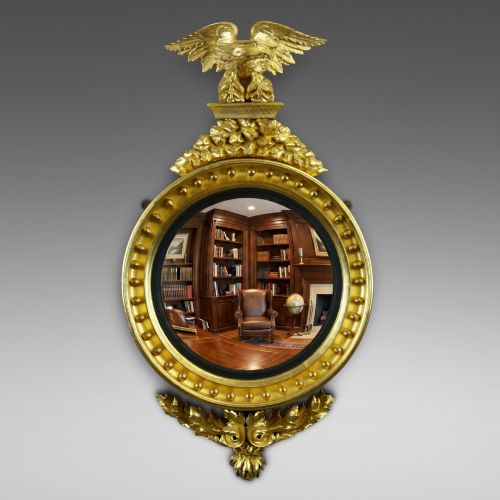
A carved eagle giltwood mirror brings unmatched drama to a room, catching the light and holding the eye with its commanding bird surmount.
Carved Eagle Giltwood Mirror
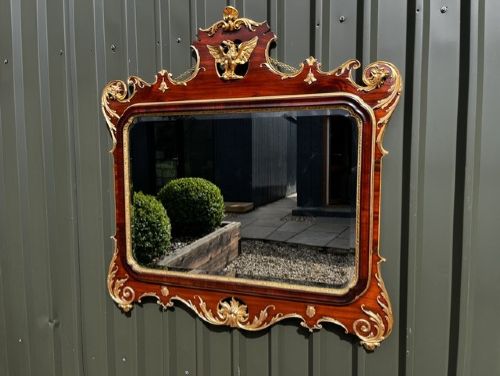
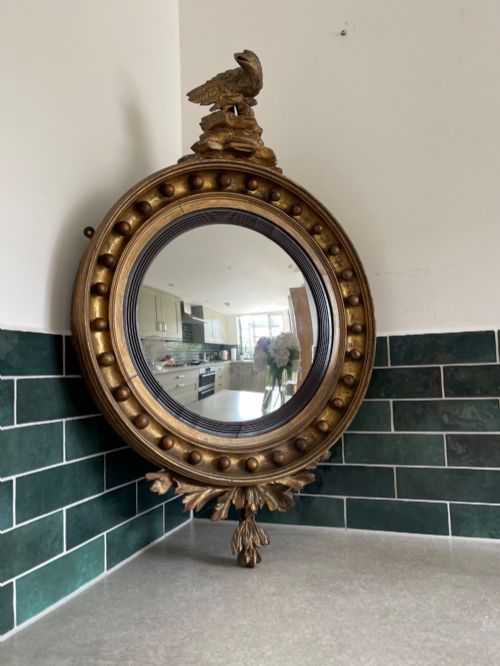
A carved eagle giltwood mirror is a striking wall hanging defined by its gilded wooden frame and the prominent avian crest perched above the glass. When buyers search for a carved eagle giltwood mirror, they most commonly encounter round convex wall mirrors originating from the Regency period or the nineteenth century. These pieces combine reflective convex glass with elaborate wood carving, often featuring candle sconces or detailed gesso ornamentation.
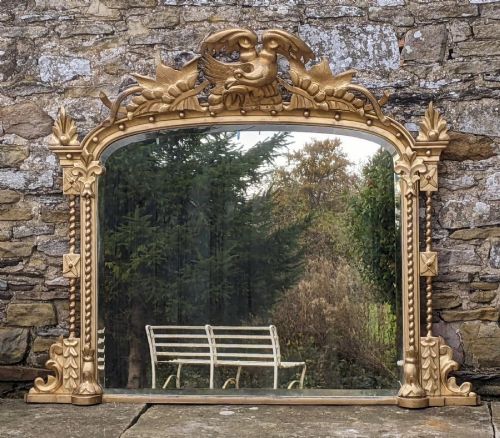
The selection ranges from compact circular wall fixtures to large overmantel mirrors designed for grand chimney breasts. Alongside Regency originals, the listings include Georgian examples and later revivals spanning the nineteenth and early twentieth centuries. Makers and craftsmen across different eras drew on Chippendale and George II styles, ensuring a variety of proportional scales and crest designs.
Materials and Construction
Makers constructed the primary frames from timber such as mahogany, walnut, or softer woods, applying layers of gesso to build up intricate surface decoration before gilding. The gold leaf or gilt finish gives these frames their characteristic luminous quality, which reflects ambient room light across the carved details. Mirror glass, particularly convex plates, was specially cast and silvered to distort the room's reflection into a wide, fish-eye perspective.
Carvers shaped the eagles and surrounding foliage by hand, creating wings that spread outward from the top of the frame. Secondary materials like brass occasionally appear in candle arms or girandole fittings attached to the main body. Ebonised wood details are sometimes used to contrast against the bright gilt surfaces.
The listings span the Georgian, Regency, Victorian, and Edwardian periods, utilising materials such as giltwood, ebonised wood, brass, and mirror glass.
Distinctions in Quality
The standard of a carved eagle giltwood mirror depends heavily on the depth and crispness of the hand-carved crest. Superior examples display finely feathered wings and powerful talons on the eagle, whereas lesser pieces feature softer, more generalised moulding in the gesso. The integrity of the original gilt surface also dictates the tier of the piece, with untouched gold leaf holding greater visual depth than later repainting.
The quality of the mirror glass itself marks another clear division between items. Original convex plates retain subtle distortions and silvering marks that evidence their age, unlike modern replacements. Furthermore, the structural joinery of the frame and the retention of original backboards separate workshop pieces of high ambition from standard commercial production.
The Carved Eagle Giltwood Mirror Glossary
- Convex mirror
- A round mirror glass curved outward to provide a wide-angled reflection of the entire interior space. These glasses are sometimes called butler's mirrors.
- Giltwood
- Timber coated with gold leaf or gold paint over a prepared ground of gesso. This finish provides the bright metallic sheen characteristic of formal antique furniture.
- Gesso
- A mixture of chalk, gypsum, and binder applied to wood frames to create a smooth surface for carving and gilding. It allows for crisp, detailed ornamentation.
- Girandole
- A decorative wall mirror fitted with one or more candle branches attached to the frame. The arms multiply the flickering light of the candles across the room.
- Surmount
- The decorative crest or ornament positioned at the very top of a mirror frame. In these pieces, the surmount typically takes the form of an eagle or hoho bird.
Carved Eagle Giltwood Mirror: Frequently Asked Questions
Where should I hang a convex mirror?
These mirrors work best opposite a window or in a hallway where they can capture and project light across the entire space. Because the curved glass shrinks the reflection, placing them in smaller rooms creates an illusion of greater depth.
Avoid hanging them in direct, harsh sunlight that might degrade the antique gilt surface over decades. A central position above a fireplace or a principal piece of furniture allows the eagle crest to act as a natural focal point.
Are these mirrors heavy to hang?
Many of these pieces carry substantial weight due to the dense timber frames, thick gesso layers, and heavy glass plates. Securing them safely requires locating solid wall studs or utilising heavy-duty wall anchors rated for the specific weight.
Professional installation is often advisable to ensure the hanging wire and original brackets bear the load securely. Checking the structural stability of the frame's hanging loops before mounting prevents accidental slips.
How can I tell a Regency original from a later revival?
Regency pieces usually display the characteristic hand-cut convex glass, older pine or hardwood backing boards, and traditional gesso application methods. Examining the construction of the joints and the wear on the gilding helps reveal the true age of the timber.
Revival pieces from the late nineteenth or early twentieth centuries often feature machine-sawn backing woods and brighter, more uniform gilding finishes. Comparing the crispness of the eagle carving against documented period examples clarifies the manufacturing era.