
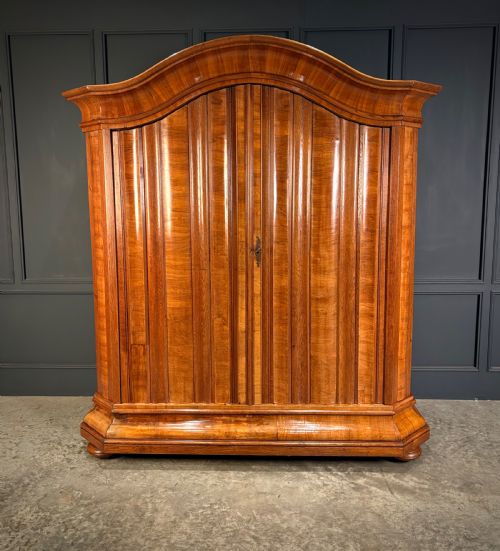
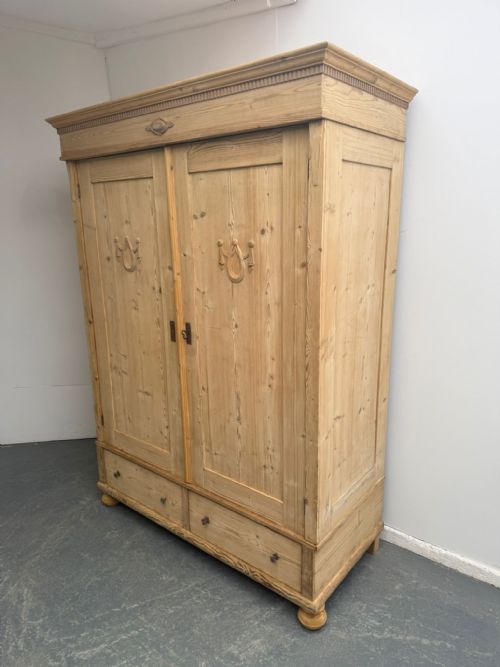
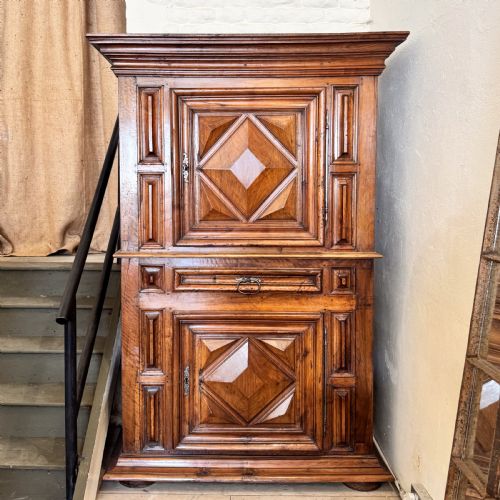

Carved Double Wardrobe
When you want a carved double wardrobe, you are looking at substantial timber storage built to last generations.
Carved Double Wardrobe
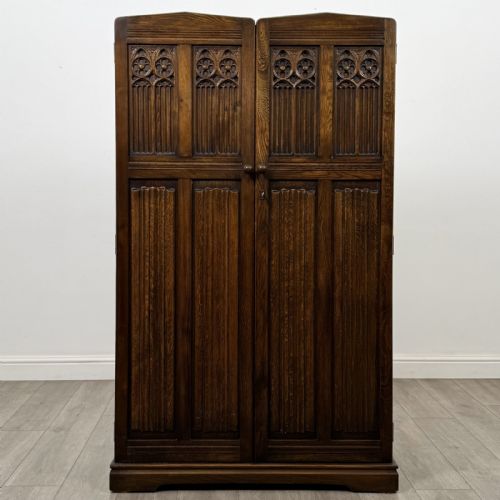
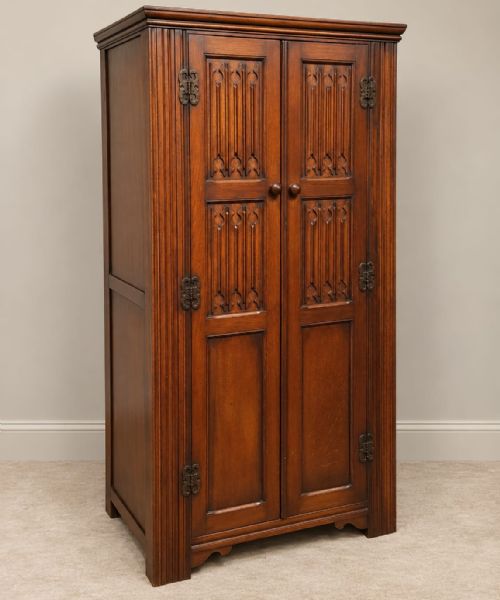
A carved double wardrobe provides generous two-door hanging and storage space, appearing frequently in sturdy oak from the early twentieth century and the Victorian era. These large pieces were designed for substantial bedrooms, offering deep interiors that often include shelves, drawers, or hanging rails.
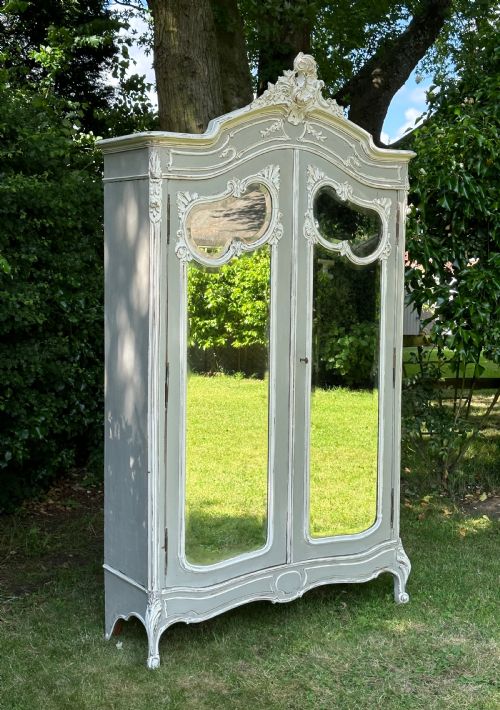
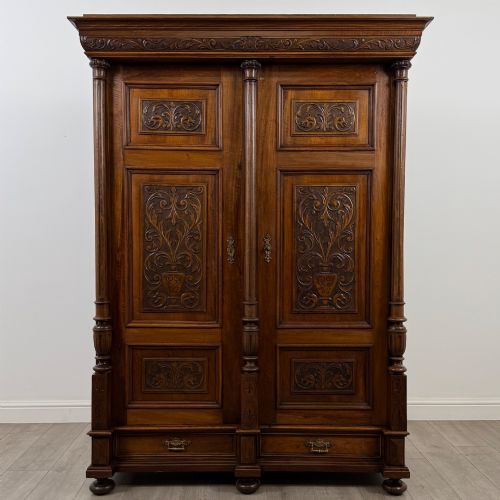
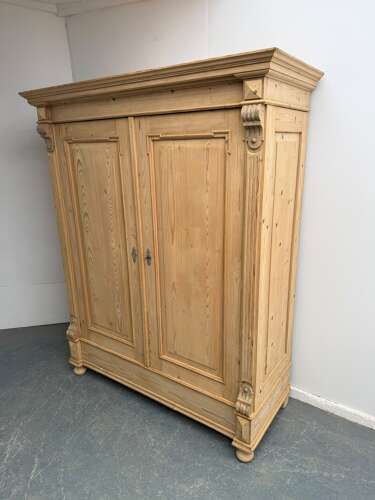
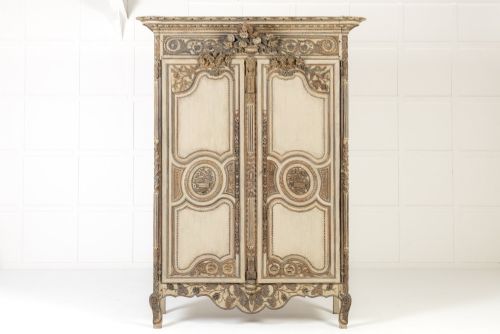
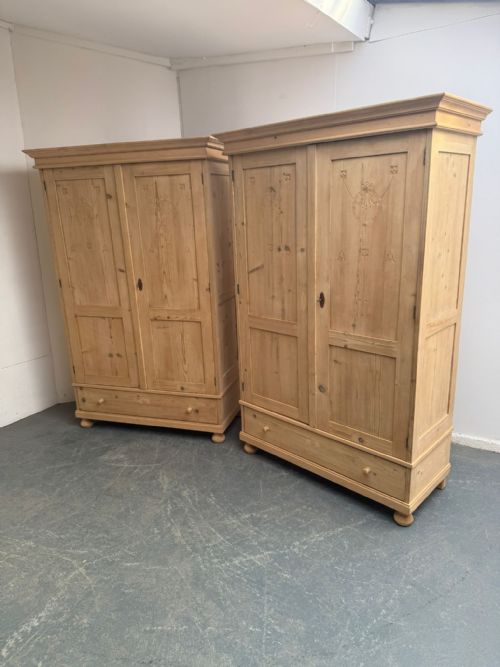
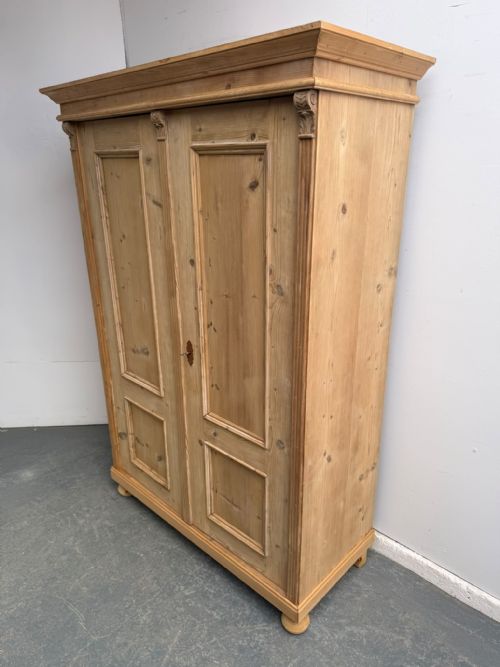
Beyond standard oak examples, the selection includes continental armoires and press cupboards executed in walnut, mahogany, and pine. Styles range from plain vernacular pieces to elaborate French provincial designs and Arts and Crafts creations.
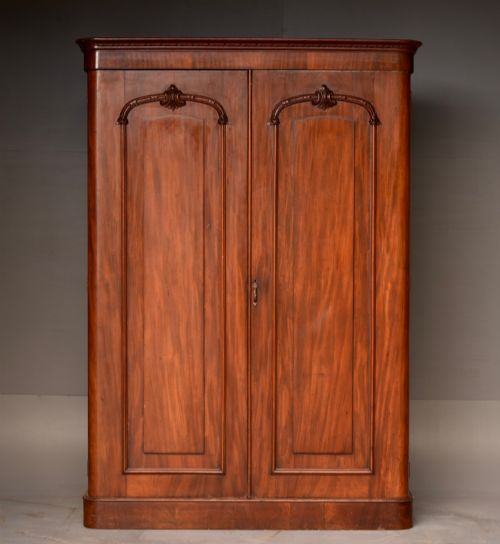
The architectural presence of these wardrobes relies on deep cornices, panelled doors, and carved ornamentation. They function as dominant focal points in a bedroom, combining practical capacity with period craftsmanship.
Materials and Construction Methods
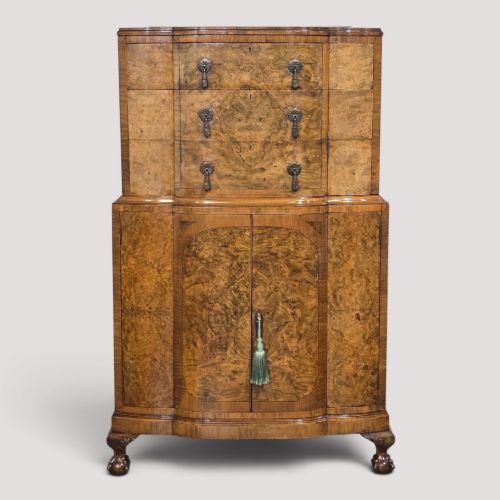
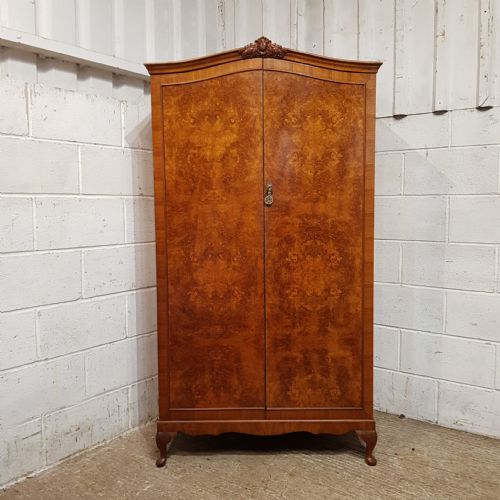
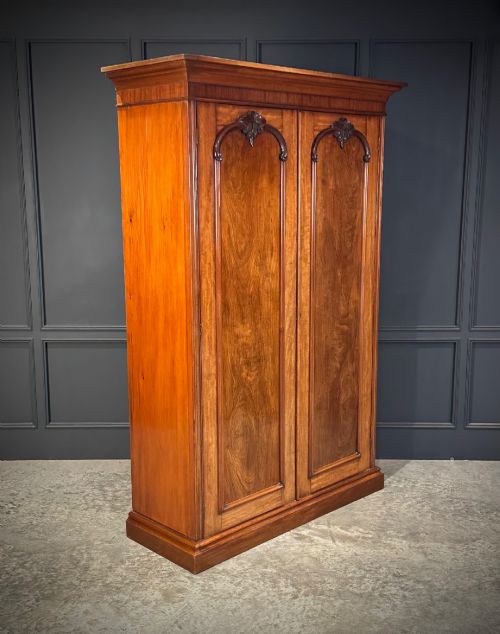
Makers relied heavily on solid hardwoods like oak, walnut, and mahogany, alongside pine for internal carcases and backing boards. Many pieces utilise figured veneers such as burr walnut to create striking panel patterns on the main doors.
Traditional joinery techniques governed the construction, incorporating pegged mortise and tenon frames and panelled doors to allow timber to move naturally with seasonal humidity changes. Knockdown construction was frequently employed for larger wardrobes, using internal bolts to make transportation and assembly manageable.
Decorative elements involve hand-carved panels, linenfold motifs, and applied mouldings, occasionally complemented by brass or iron hardware and mirrored door inserts. Surfaces were finished with wax, polish, or historic paint layers depending on the regional tradition and period style.
Listings feature oak, walnut, mahogany, and pine across periods from the eighteenth century through the 1930s.
Distinctions in Quality and Execution
The calibre of a carved double wardrobe rests on the crispness of the hand-carving and the selection of timber figures. Superior examples feature deeply undercut mouldings and well-matched grain patterns across both doors rather than repetitive machine stamping.
Structural integrity and original internal fittings also separate fine pieces from standard utility items. Wardrobes retaining their original sliding linen trays, deep bottom drawers, and robust brass hinges demonstrate a higher standard of workshop production.
Proportion and architectural balance dictate the overall success of the design. Well-executed cornices and harmonious door panels indicate that the cabinetmaker carefully considered scale, whereas lesser items can appear heavy or poorly proportioned.
The Carved Double Wardrobe Glossary
- Armoire
- A large upright cupboard or wardrobe, typically of continental European origin with deep proportions and panelled doors. They often feature elaborate carved decoration and substantial cornices.
- Compactum
- A multi-functional wardrobe combining hanging space with linen drawers, shelves, and sometimes small compartments. This format maximises internal storage within a single footprint.
- Knockdown
- A piece of furniture engineered to be easily dismantled into separate panels, posts, and cornices using internal bolts or wedges. This system was essential for moving large wardrobes up narrow staircases.
- Linenfold
- A style of carved wooden panelling resembling folded fabric or linen. It appears frequently on the door panels of early twentieth-century oak furniture.
- Cornice
- The decorative horizontal moulding crowning the top of a wardrobe. It visually anchors the piece to the room and conceals the upper joinery.
Carved Double Wardrobe: Frequently Asked Questions
How do I dismantle a knockdown wardrobe?
Most knockdown wardrobes use hidden interior bolts or metal brackets that secure the sides to the top cornice and bottom plinth. You simply unscrew these internal fasteners while supporting the heavy door panels.
It is wise to label every loose peg and panel as you take the piece apart. Having two people makes the process much safer for historical timber joints.
What is the difference between a wardrobe and an armoire?
An armoire generally refers to a tall, continental European cupboard with deep interior proportions. Wardrobes specifically designate British or American hanging closets developed from the nineteenth century onward.
In practice, antique dealers often use the terms interchangeably for large two-door storage furniture. Both provide substantial volume, though armoires frequently display more pronounced regional carving.
How do I care for antique waxed oak?
Keep waxed oak furniture away from direct heat sources and strong sunlight to prevent the timber from splitting or warping. Dust the carved surfaces regularly with a soft, dry cloth.
Apply a traditional beeswax polish sparingly once or twice a year to nourish the grain and maintain a soft sheen. Buff the wax thoroughly after application to prevent a sticky buildup.