



Carved Decorative Table
A carved decorative table brings immediate sculptural presence to a room, offering rich surface detail across various historical styles.
Carved Decorative Table
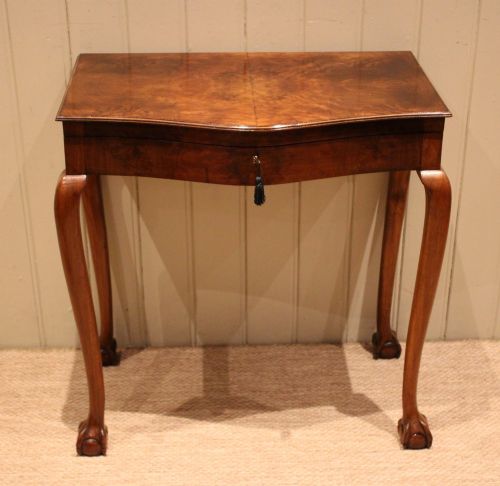
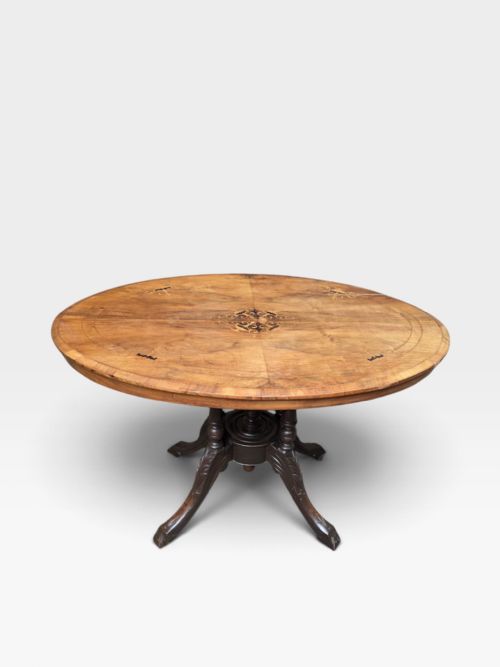
A carved decorative table serves as both a functional surface and a focal point, spanning console tables, centre tables, and side tables. When exploring a carved decorative table, pieces predominantly emerge from the nineteenth century alongside eighteenth-century examples and later twentieth-century interpretations.
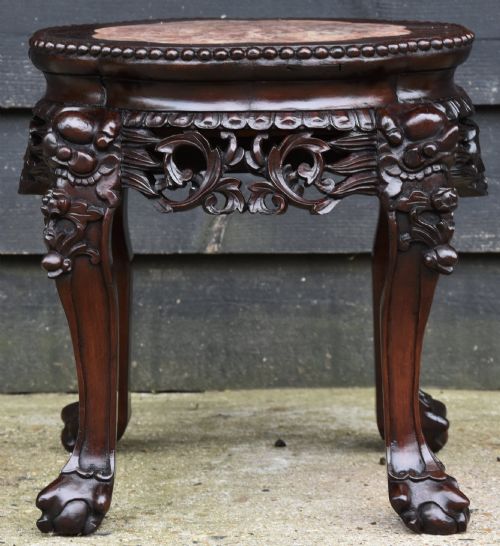
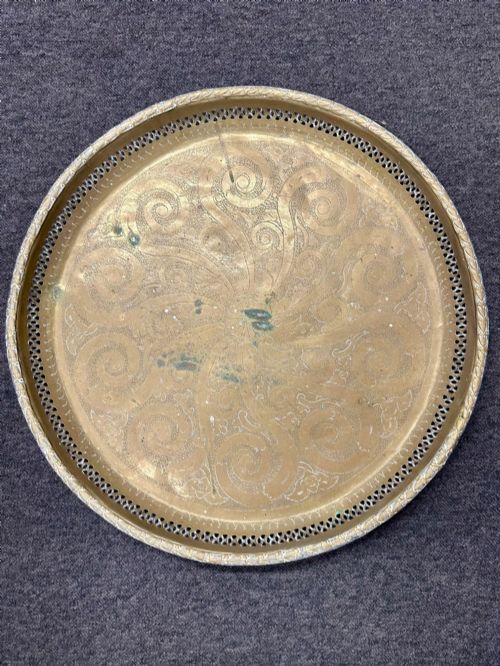
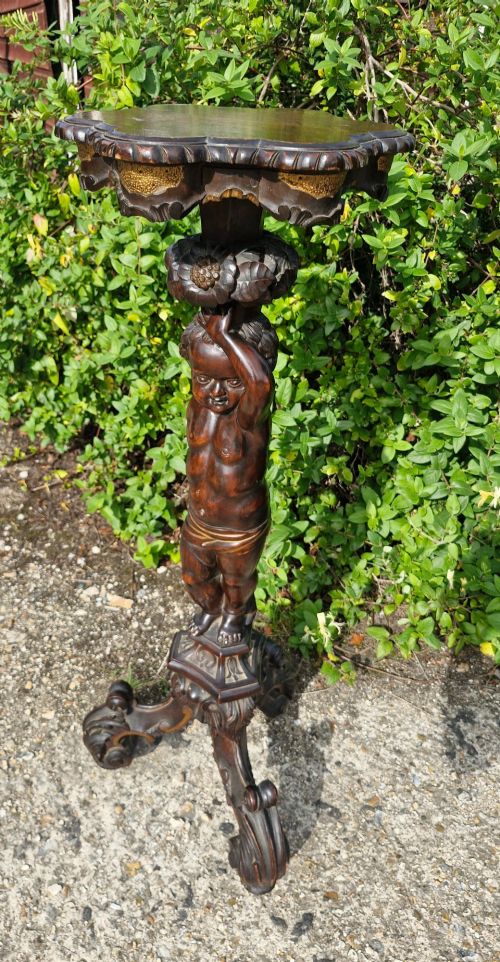
The selection encompasses diverse regional traditions, from Italian giltwood consoles and French occasional pieces to Anglo-Indian, Chinese, and Vietnamese hardwood forms. Side tables, plant stands, and low tables dominate the selection, often integrating carved elements directly into the structure.
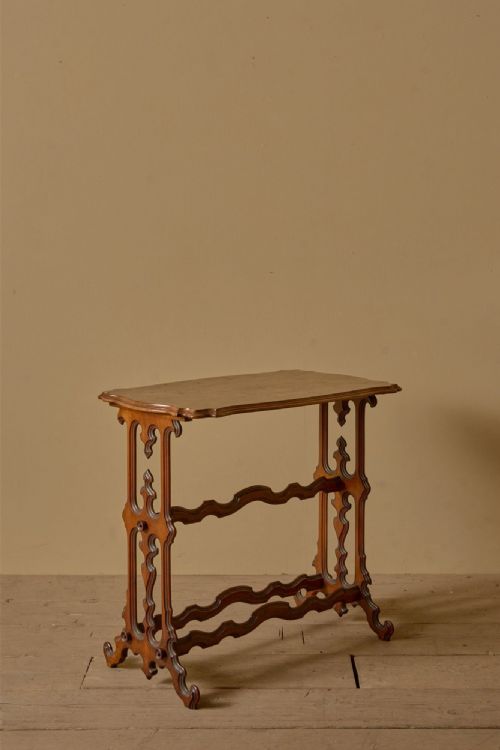
Victorian and Edwardian iterations frequently employ oak, walnut, and various hardwoods, whilst continental European examples favour giltwood, painted finishes, and shaped marble tops. These variations reflect the broader international tastes for ornate domestic furnishings across multiple decades.
How they were made
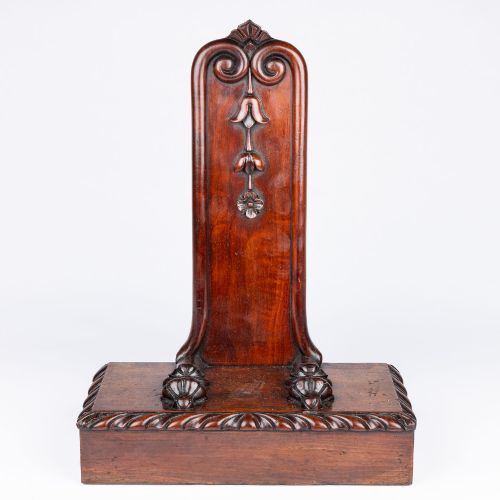
Construction relies upon traditional timber framing, utilising native woods such as oak and walnut alongside exotic hardwoods like rosewood and assorted Asian varieties. Carvers shaped these materials using hand gouges and chisels to achieve deep relief decoration along aprons, legs, and borders.
Surface enhancement often involved the application of gold leaf, gesso, paint, or intricate inlays including mother of pearl and marquetry. Italian and French workshops frequently combined carved wooden frames with inserted marble tops or applied ormolu mounts to elevate the visual texture.
Carved Decorative Table Retail Price Guide 2026
Typical asking prices for carved decorative table among the pieces listed under this phrase on Sellingantiques today, from the lower quarter to the upper quarter. They describe what is for sale here now, not the wider market.
Someone once carved an entire elephant family into a solid wooden seat, proving that Victorian artisans took animal themes very seriously.
What varies in quality
The distinction between tiers rests upon the crispness and depth of the hand carving, where deep, undercut relief demonstrates superior craftsmanship compared to shallow, mechanical moulding. Materials dictate value significantly, with dense hardwoods, genuine giltwood, and intact marble inserts marking higher grade execution.
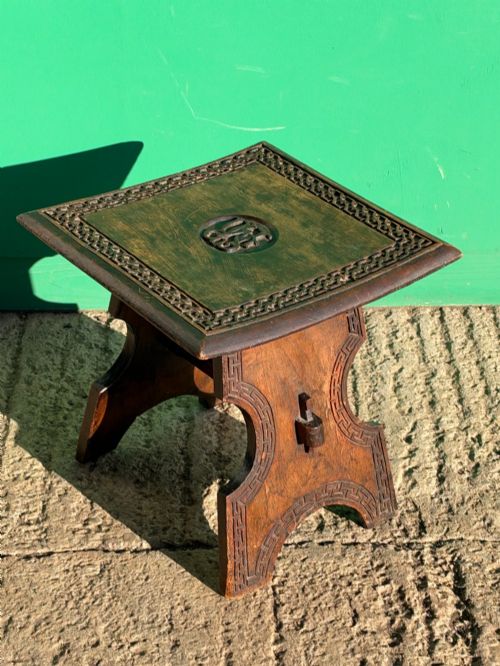
Cohesion of style also separates standard production from exceptional work, particularly in regionally specific pieces such as Hoshiarpur or Anglo-Indian tables where dense geometric carving must align perfectly with the structural joints. The integrity of surface treatments, from original painted finishes to well-preserved gold leaf, further defines the standard of preservation.
The Carved Decorative Table Glossary
- Console table
- A table designed to stand against a wall, frequently supported by ornate brackets or carved legs rather than four standard posts. These pieces often feature decorative marble tops.
- Centre table
- A freestanding table intended to be viewed from all sides, commonly placed in the middle of a principal room. Victorian examples frequently incorporate tilt-top mechanisms or marquetry inlays.
- Giltwood
- Wood that has been coated with a thin layer of gold leaf or gold dust. This finish appears frequently on eighteenth and nineteenth-century Italian and French tables.
- Marquetry
- The art of applying pieces of veneer to a structural structure to form decorative patterns. This technique is prominent on nineteenth-century centre tables.
Carved Decorative Table: Frequently Asked Questions
Where should a console table go?
A console table fits naturally against an entryway wall or beneath a prominent mirror, where its decorative base and surface can be appreciated without blocking foot traffic. These pieces anchor empty wall spaces effectively.
Because they often feature shaped marble tops or elaborate giltwood carving, pairing them with minimal surrounding furniture allows the craftsmanship of the base to stand out.
How do I identify a Victorian centre table?
Victorian centre tables frequently exhibit rich timbers like walnut or oak, often enhanced with marquetry inlays or tilt-top mechanisms. They were built to stand in the middle of a room.
Examining the turning of the central pedestal and the stability of the tripod or four-legged base helps determine the period and standard of construction.
What is an Anglo-Indian table?
An Anglo-Indian table is a piece manufactured in India during the British colonial period, often characterised by dense, intricate overall carving on woods such as rosewood or teak. Hoshiarpur tables are a notable subset of this tradition.
The surface decoration typically covers every available inch with floral or geometric motifs, reflecting local woodworking mastery combined with European furniture forms.
How do I care for a carved wooden surface?
Maintaining carved decorative tables involves gentle dusting with a soft, dry cloth to prevent accumulation in the recesses of the relief work. Avoid harsh chemical polishes that can degrade original finishes.
Keeping the furniture away from direct heat sources and strong sunlight preserves the stability of the timber and prevents the drying out of applied gilt or painted decoration.