
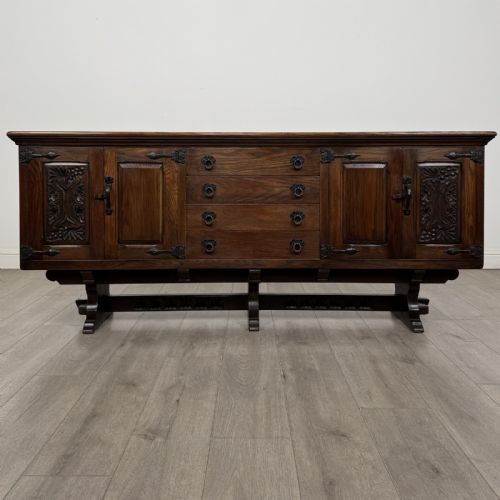
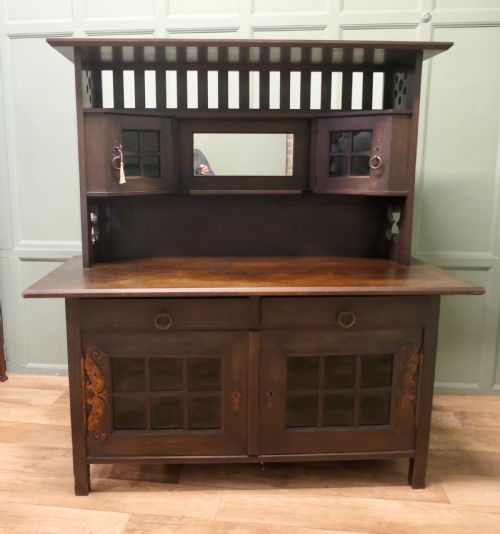
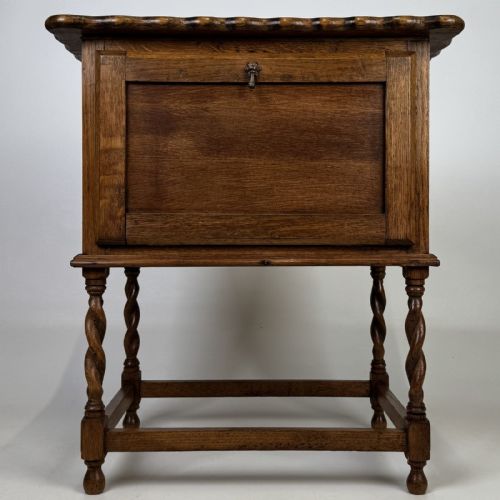
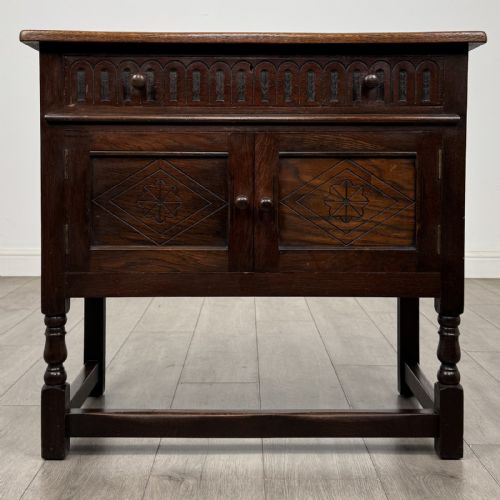
Carved Dark Oak Sideboard
A carved dark oak sideboard brings enduring weight and deep timber grain to a room, grounding the interior with centuries of cabinet-making tradition.
Carved Dark Oak Sideboard
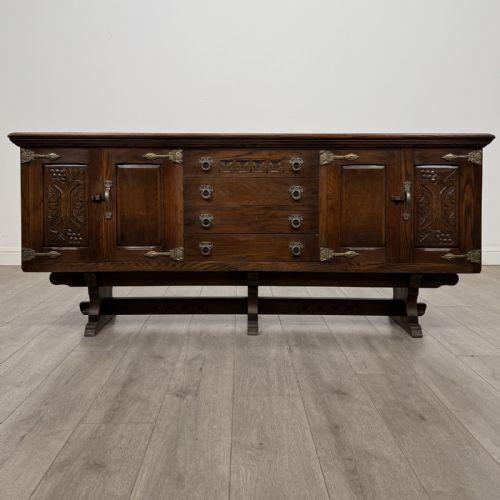
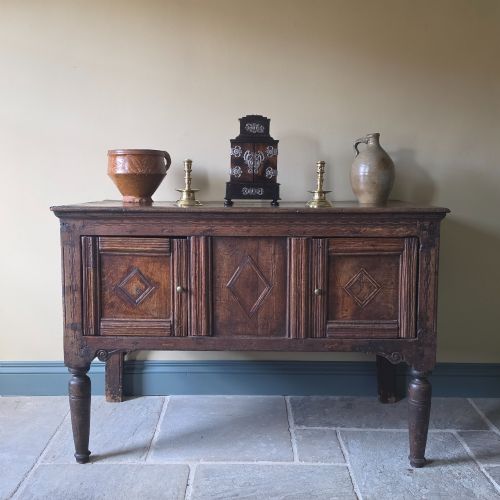
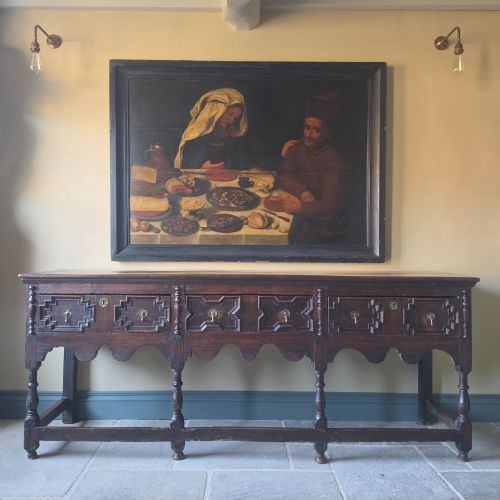
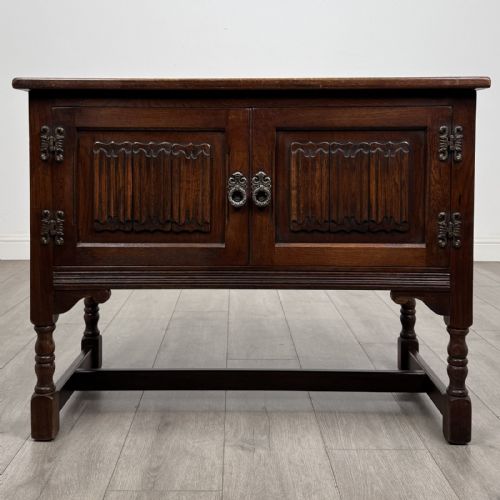
A carved dark oak sideboard serves as a substantial storage piece and a focal point for dining spaces, originating from periods spanning the seventeenth century through to the Edwardian era. When searching for this specific form, buyers encounter sideboards alongside related generational relatives such as court cupboards, dresser bases, and buffets.
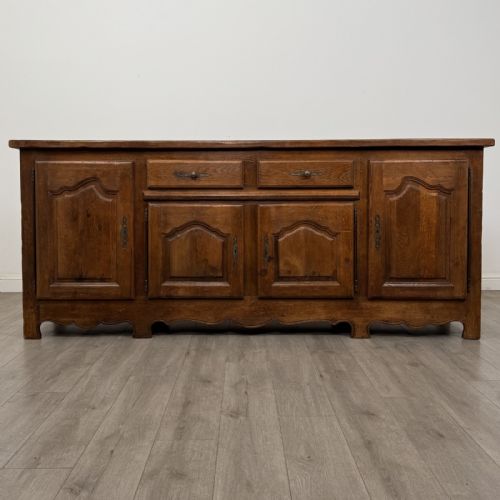
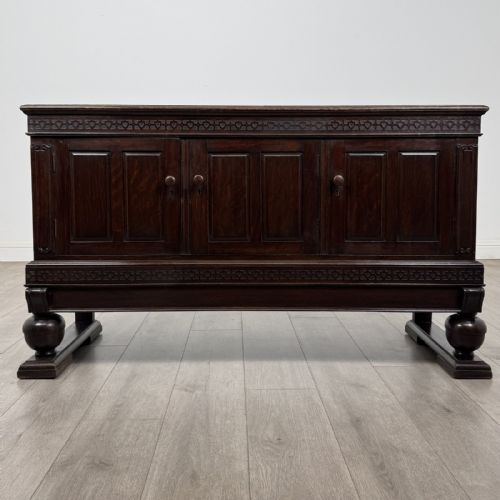
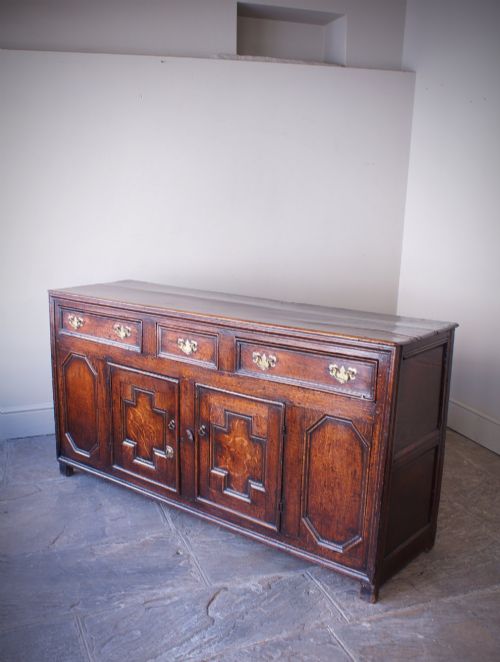
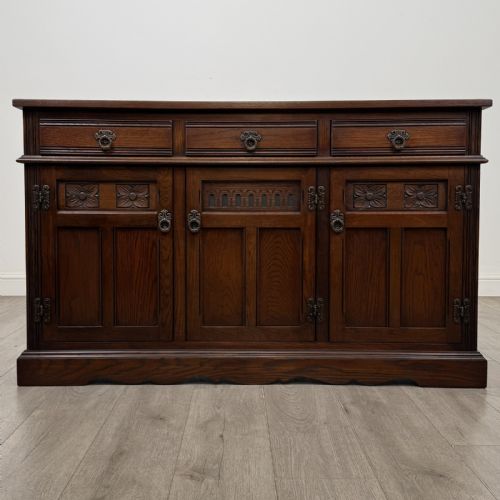
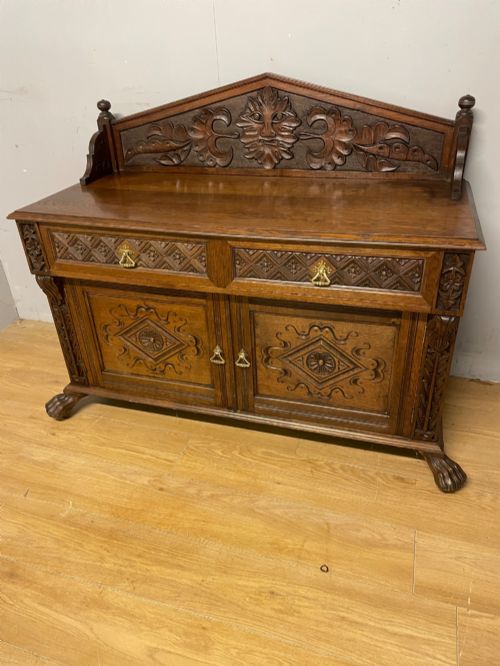
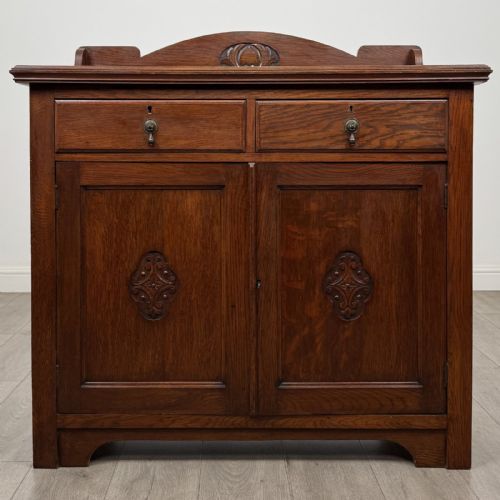
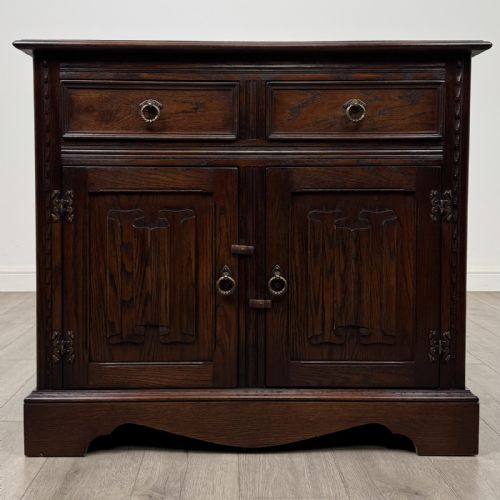
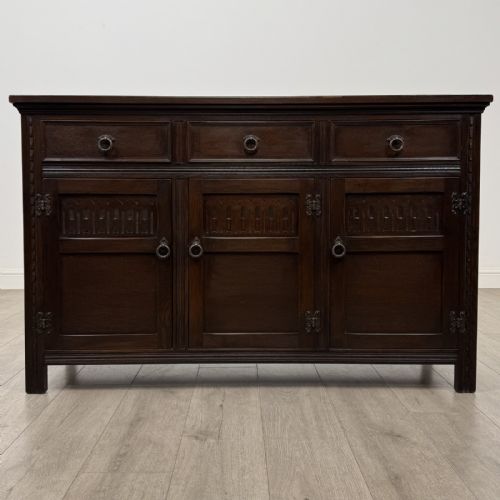
The pieces appearing on this page stretch from early joined oak constructions of the 1600s to later Victorian and Edwardian revivals, including regional variations like French hunting cabinets and Welsh dresser bases. These items combine utilitarian storage with decorative expression through panel work, surface carving, and applied mouldings.
Materials and construction methods
Makers utilised solid oak timber, taking advantage of its strength and pronounced grain pattern to construct heavy frames, panelled doors, and boarded tops. Secondary materials such as brass drop handles, iron hinges, and occasionally glass or mirrored elements provide functional contrast to the heavy dark timber.
Construction relied upon traditional joinery techniques including mortice and tenon frames, pegged joints in earlier examples, and hand-cut dovetails for drawer construction. Surfaces were shaped using gouges and chisels to produce deep relief carvings, linenfold panels, and geometric mouldings characteristic of Jacobean, Gothic, and Renaissance revivals.
The listings on this page span the seventeenth century through the Edwardian period, incorporating oak, brass, and glass across diverse forms.
Judging the quality of craftsmanship
Quality reveals itself in the depth and crispness of the hand carving, where skilled carvers achieved sharp undercut details rather than shallow, machine-routed impressions. The choice of timber also dictates grade, with quarter-sawn oak displaying prominent medullary rays that signal superior log selection.
Structural integrity separates exceptional survivals from standard production, visible in the tightness of the original joints, the lack of warping in heavy doors, and the retention of period hardware such as brass drop handles and iron butterfly hinges.
The Carved Dark Oak Sideboard Glossary
- Court cupboard
- A heavy enclosed piece of furniture featuring an upper recessed cabinet supported by pillars above a lower section, typical of seventeenth-century joinery. These functioned primarily for the display of plate and the storage of provisions.
- Dresser base
- A low rectangular cabinet fitted with drawers across the upper section and cupboards or shelves below, designed for domestic food preparation and serving. Georgian and Victorian examples often feature cabriole legs or bracket feet.
- Linenfold
- A style of wood carving that imitates the appearance of folded fabric or linen drapery, commonly used on fifteenth and sixteenth-century panels and revived in later furniture. This technique requires precise chisel work to achieve the illusion of overlapping cloth.
- Jacobean style
- A heavy, geometric design aesthetic popular during the seventeenth century and widely revived in the nineteenth and twentieth centuries, characterised by applied split mouldings, strapwork, and dark finishes. Pieces in this style emphasise architectural lines and robust proportions.
- Gothic Revival
- An architectural and decorative movement drawing inspiration from medieval forms, featuring pointed arches, tracery, quatrefoils, and ecclesiastical motifs. Furniture from this revival applies stone-masonry design principles directly to heavy oak timber.
Carved Dark Oak Sideboard: Frequently Asked Questions
What is a carved dark oak sideboard?
A carved dark oak sideboard is a heavy timber storage unit featuring decorative relief work, panel doors, and drawer space designed for dining rooms and large living spaces. These pieces originated across multiple centuries, ranging from early joined seventeenth-century examples to later Victorian and Edwardian revival interpretations.
Cabinet makers utilised native and European oak to build these functional storage units, applying styles such as Jacobean, Gothic Revival, and Renaissance revival to the exterior surfaces. They provide substantial surface area and internal capacity while serving as architectural anchors within a room.
How were these sideboards used historically?
Historically, these sideboards and related dresser bases served in dining rooms and great halls for the serving of food, the preparation of dishes, and the display of valuable silver and ceramic tableware. The top surface acted as a staging area for serving dishes during large meals, while the cupboards and drawers housed linens, cutlery, and provisions.
Over subsequent centuries, their role shifted from purely utilitarian dining furniture to statement display pieces that showcased the owner's taste and the skill of regional cabinet makers. In country houses and urban villas alike, they provided secure storage for household goods away from dust and damp.
How do I live with a dark oak sideboard?
Living with a heavy oak sideboard involves positioning the piece away from direct heat sources and strong sunlight to prevent the timber from drying out and splitting over time. Because of their substantial weight and dark finish, these pieces anchor a room best against neutral walls and alongside lighter contemporary or traditional furnishings.
Maintenance requires simple dusting with a dry cloth and occasional application of appropriate beeswax to nourish the old timber grain without building up heavy chemical layers. Allowing adequate floor space for the depth of the cabinet ensures the proportions balance comfortably within a modern interior.
How can I tell different periods apart?
Distinguishing periods relies on observing construction techniques, joinery methods, and the specific decorative vocabulary applied to the oak timber. Seventeenth-century pieces typically exhibit pegged mortice and tenon joinery, hand-riven boards, and simple geometric mouldings, while Georgian examples often introduce cabriole legs and cleaner drawer alignments.
Victorian and Edwardian pieces frequently lean into heavy revival styles, incorporating machine assistance alongside hand carving, alongside distinct hardware and internal linings. Examining the backboards, drawer linings, and tool marks provides clear clues regarding the true age of manufacture versus later revival work.