




Carved Cupboard Desk
These carved cupboard desk pieces combine writing surfaces with enclosed storage, offering period craftsmanship from the seventeenth century onwards.
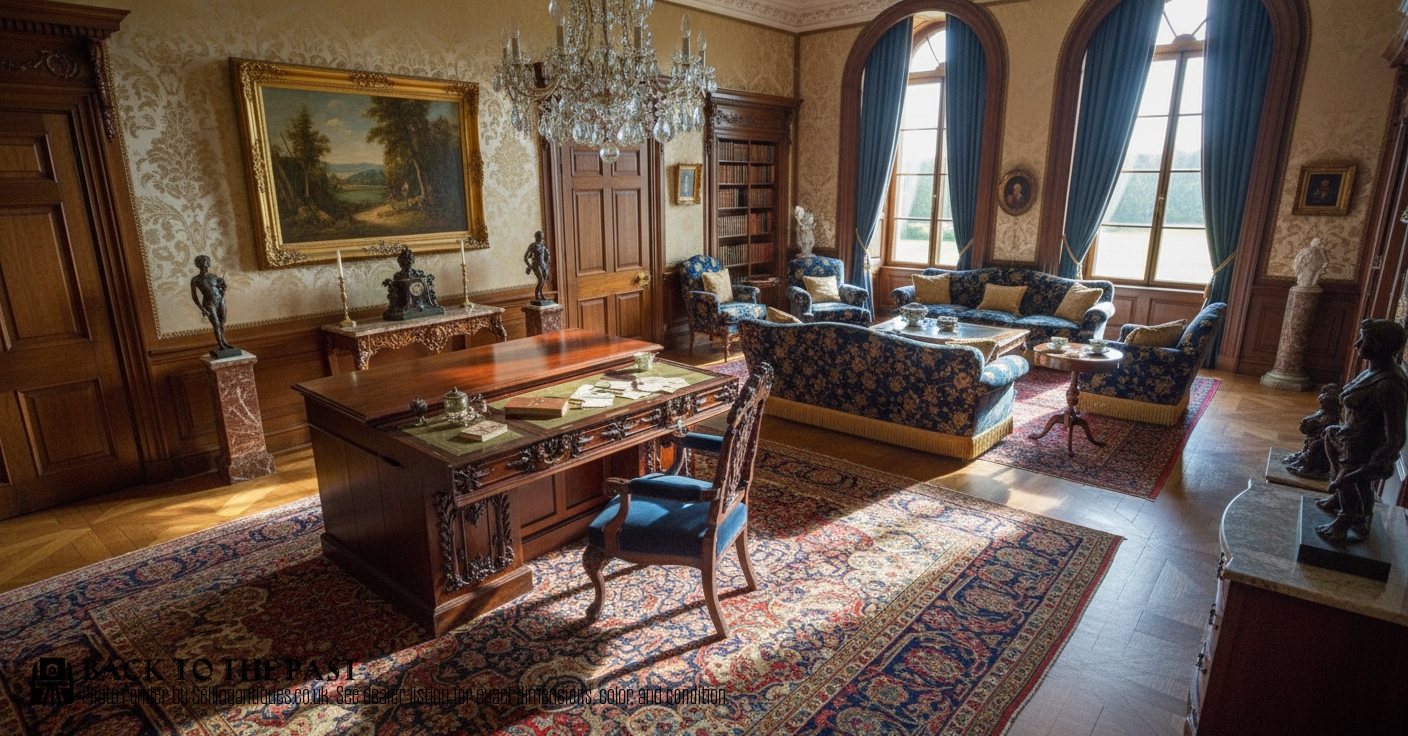
Carved Cupboard Desk
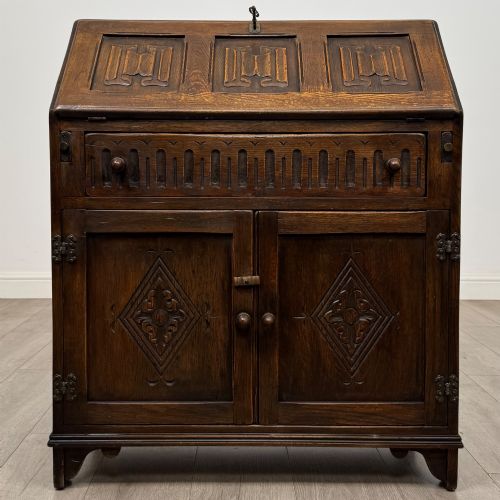
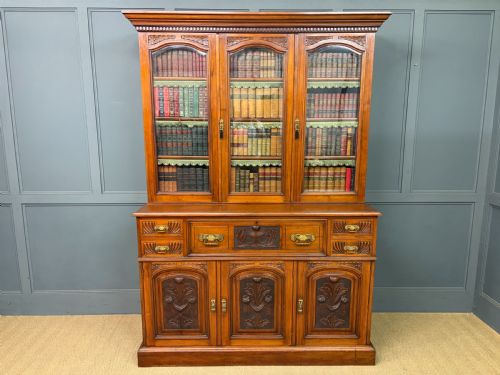
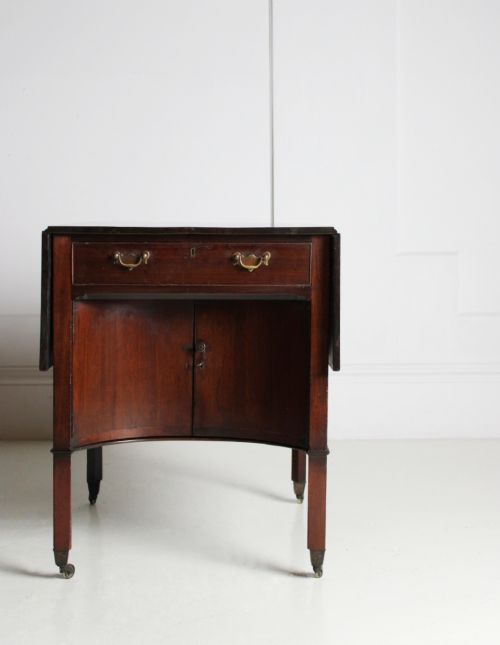
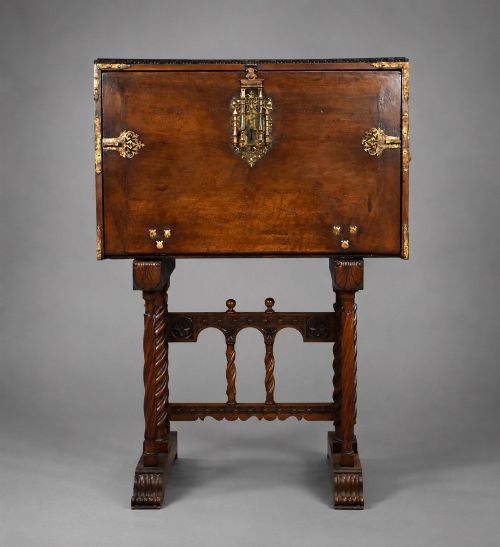
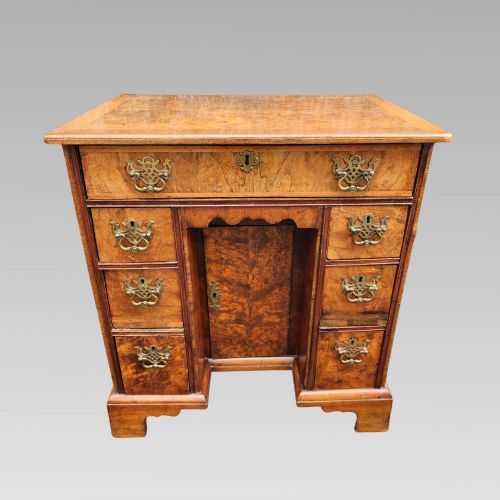
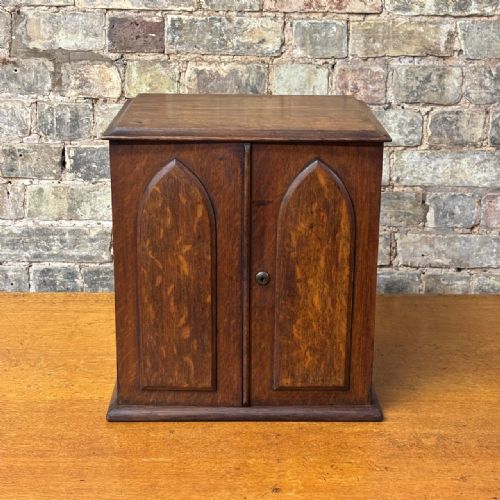
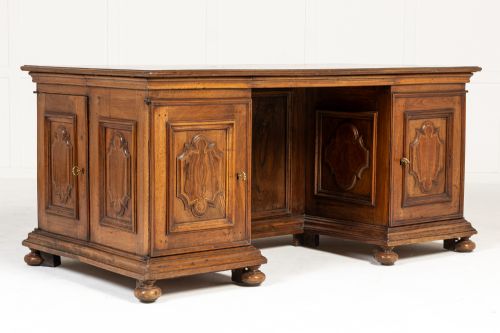
A carved cupboard desk brings together a functional writing space and enclosed storage, appearing across periods from the seventeenth century through to the twentieth century. These pieces span forms such as oak bureaus, walnut kneehole desks, table cabinets and secretaire bookcases.
The version most likely to meet you on this page is an oak or walnut piece from the Victorian, Georgian or Edwardian eras, often featuring panel doors, drawers or drop-front writing surfaces.
Makers utilised woods like mahogany, burr walnut and oak alongside brass hardware to create items designed for both domestic writing tasks and secure document storage.
What varies in quality
The standard of a carved cupboard desk rests on the choice of timber and the execution of its carved details, where crisp hand-carved linenfold or panel work distinguishes superior examples. Cabinet construction, including dovetail joints in drawers and the matching of wood grain across veneers, marks the division between standard workshop production and finer craftsmanship.
Original elements such as working locks, keys and brass hardware preserve the integrity of the piece. The depth of the colour in aged oak, mahogany or walnut develops distinct patination over time, reflecting how the materials were finished and maintained.
Listings feature items from the seventeenth, eighteenth, nineteenth and twentieth centuries, using oak, mahogany, walnut and brass.
The Carved Cupboard Desk Glossary
- Bureau
- A sloping desk with a hinged flap that folds down for writing, typically above a chest of drawers or enclosed cupboard space.
- Kneehole desk
- A freestanding desk featuring a central recess for the user's legs, flanked by pedestals containing drawers or cupboards.
- Secretaire
- A piece of furniture containing a concealed writing drawer or drop-front desk compartment.
- Linenfold
- A style of relief carving used on wooden panels to resemble folded parchment or linen.
- Marquetry
- Decorative inlay work using pieces of wood veneer to form geometric or pictorial patterns on furniture surfaces.
Carved Cupboard Desk: Frequently Asked Questions
What is a carved cupboard desk?
It is a hybrid furniture form combining a writing surface with enclosed cupboard storage or drawers. These pieces range from compact table cabinets to full-sized oak bureaus and kneehole desks.
They served as private spaces for correspondence and document storage in period homes, offices and libraries.
How do I date a carved cupboard desk?
Dating relies on identifying the timber, construction methods and stylistic revival periods present in the piece. Pieces span the seventeenth century through to the twentieth century, including Georgian and Victorian examples.
Hardware styles, dovetail construction and specific motifs like linenfold carving provide further clues to the decade of manufacture.
Are these desks suitable for daily use?
Many of these pieces function well for writing or laptop use, provided the writing height and interior space suit your needs. Drop-front flaps and pull-out slides require proper support from internal stays or original hinges.
Care should be taken with antique veneers and polished timber surfaces when using them for daily workspace tasks.
What woods were used for these desks?
Oak and mahogany appear frequently across different periods, alongside walnut and burr walnut veneers. Some pieces incorporate soft wood or specialised timbers depending on their regional origin and style.
Brass fittings and occasional bone details complete the construction of these cabinets and desks.