
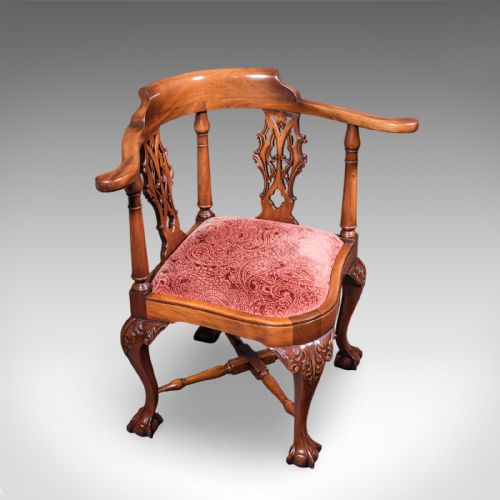

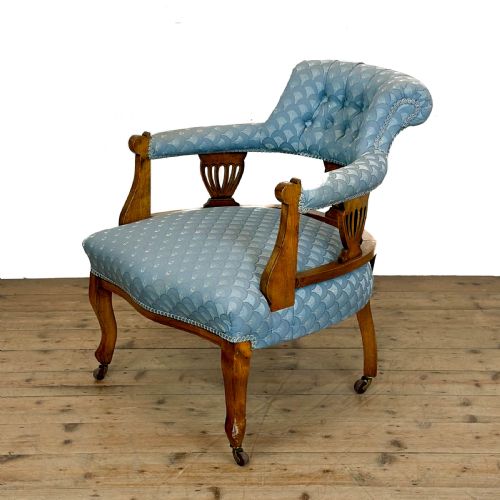


Carved Corner Chair
A carved corner chair provides an ingenious space-saving seat that fits snugly into domestic corners while offering distinctive architectural presence.
Carved Corner Chair
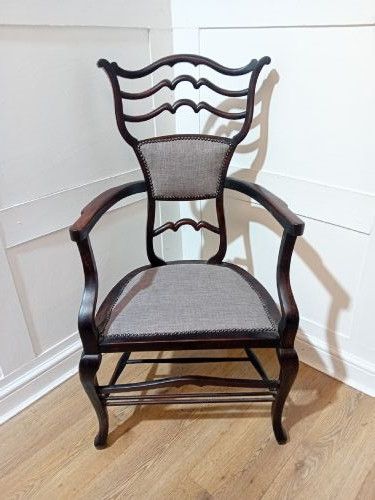
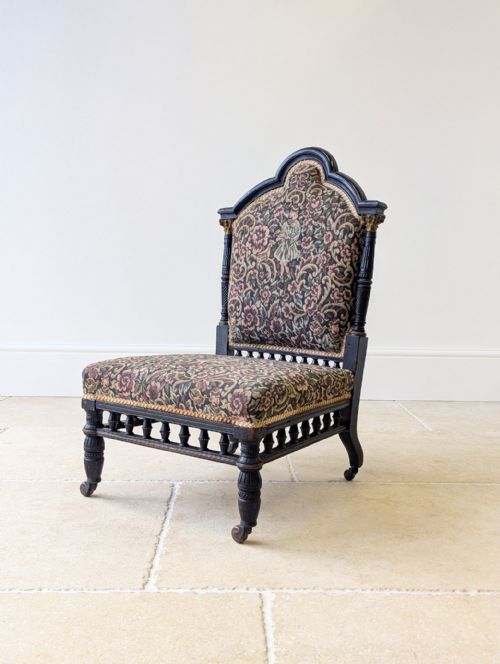
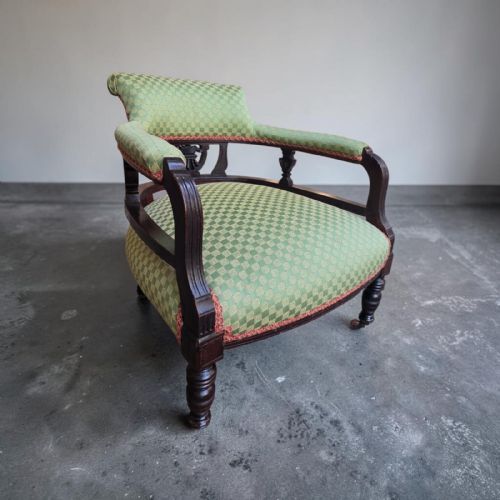
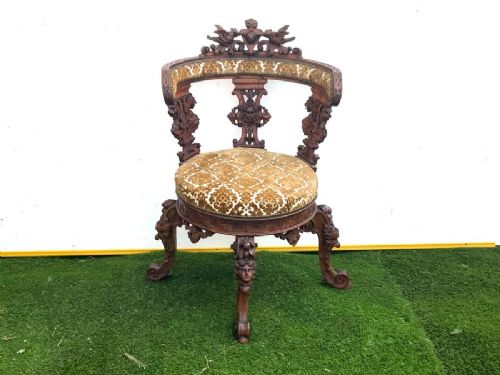
The versions met most frequently on this page date from the Victorian and Edwardian eras, constructed primarily in oak or walnut. These later pieces often adopt Georgian or Renaissance revival styles, incorporating intricate relief carving along the splats and aprons.
How they were made
Cabinetmakers constructed these frames predominantly from solid hardwoods such as oak, walnut, and mahogany, selecting timber for its grain density and structural strength. Joinery relied heavily on traditional mortise and tenon joints to secure the diagonal arrangement under daily weight.
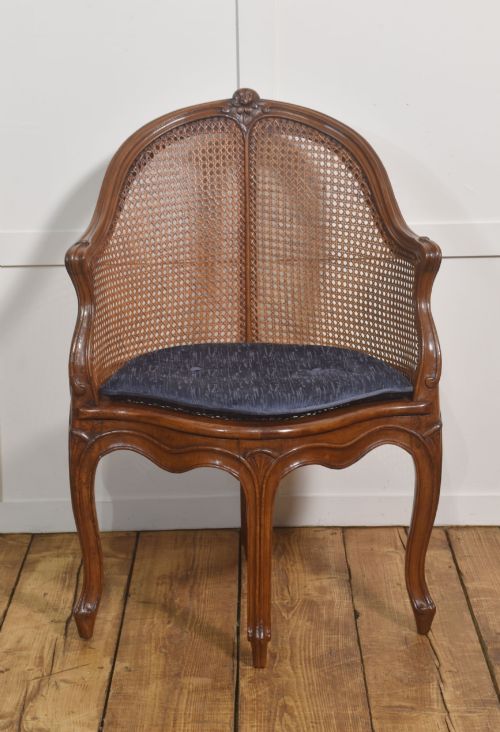
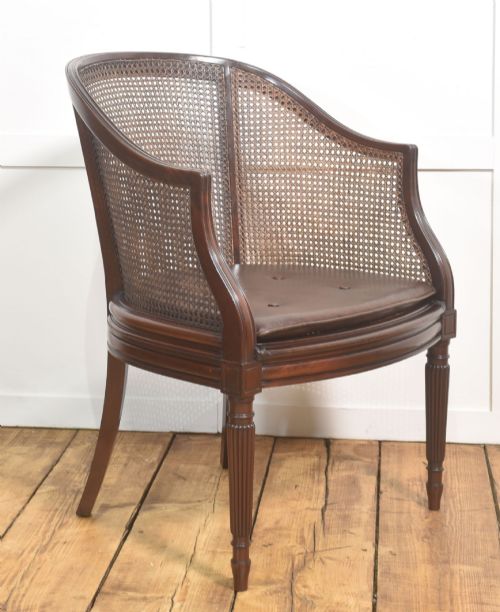
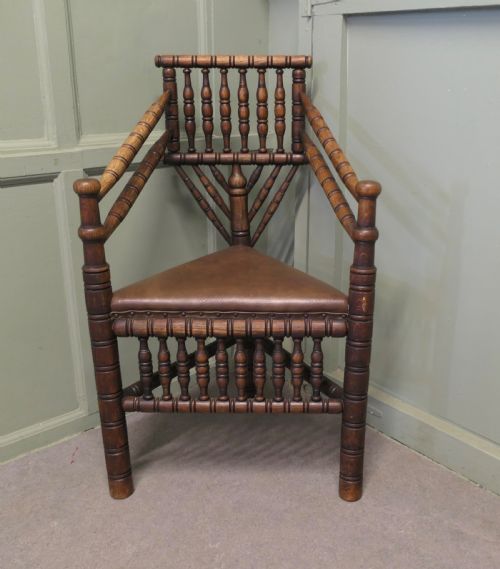
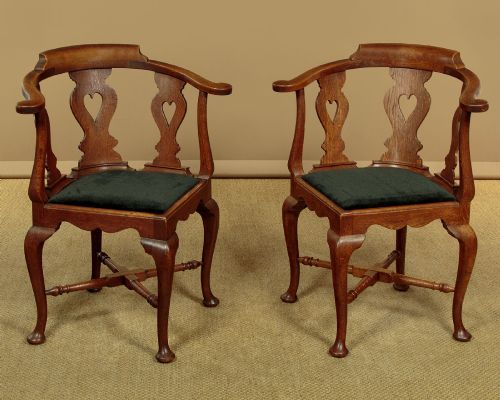
Decoration involved hand-carving directly into the solid wood elements, producing foliage, geometric motifs, or figural panels. Turning lathes shaped the central spindles and legs, while drop-in or upholstered seats utilised textiles, leather, or cane inserts.
Several examples double as traditional turners' chairs, offering an ancient Saxon seating form reborn for Victorian libraries.
What varies in quality
The standard of carving distinguishes exceptional examples from routine workshop production. Deep, crisp relief work executed with confident hand-tool marks demonstrates superior craftsmanship compared to shallow or mechanically finished ornamentation.
Timber selection and frame integrity dictate long-term durability. Denser hardwoods retain crisp joint tolerances over generations, whereas lesser pieces often show shrinkage or replacement elements in the structural underpinnings.
S and H Jewell·Liberty and Co
The Carved Corner Chair Glossary
- Corner chair
- A chair specifically designed to fit into a room angle, featuring a diagonal seat plan with a supporting leg at the front corner. This layout positions the backrest along the two rear sides.
- Splat
- The vertical wooden strip positioned in the centre of a chair back, connecting the seat to the top rail. In these pieces, the splat frequently carries the primary carved decoration.
- Bobbin turning
- A form of woodwork created on a lathe that produces a sequence of rounded spheres resembling bobbins or spools. This technique appears often on nineteenth-century Revival frames.
- Bergère
- An enclosed upholstered armchair with wooden framing, sometimes incorporating cane work on the sides or back. The style originates in France but appears across later European seating.
Carved Corner Chair: Frequently Asked Questions
Where were corner chairs placed historically?
These seats served as writing chairs at small desks or as occasional seating in parlours and bedrooms. Their unique geometry allowed them to occupy unused room corners without obstructing pathways.
Over time, homeowners moved them into hallways or drawing rooms as decorative accents rather than primary dining seats.
How do I distinguish eighteenth-century examples from later revivals?
Early examples display construction characteristics typical of Georgian joinery, including hand-cut tenons and native timber patination developed through centuries of use. Revival pieces from the Victorian era often feature machine-sawn components and heavier, highly stylised carving.
Examining the underside of the seat frame reveals tool marks and timber ageing that help clarify the true date of manufacture.
Are these chairs comfortable for daily use?
The supportive backrail and generous diagonal seat provide a surprisingly secure sitting position. Many incorporate upholstered pads or drop-in cushions that enhance comfort during extended sitting.
Because the frame design distributes weight across four corner posts and a central front leg, stability remains high despite the compact footprint.
How do I care for the wood and upholstery?
Maintain the timber surfaces by applying a traditional beeswax polish sparingly to nourish the grain. Avoid placing antique wood in direct sunlight or near heat sources to prevent timber shrinkage.
Upholstered drop-in seats require gentle vacuuming with a brush attachment, while cane panels benefit from occasional light dampening to keep the material supple.