

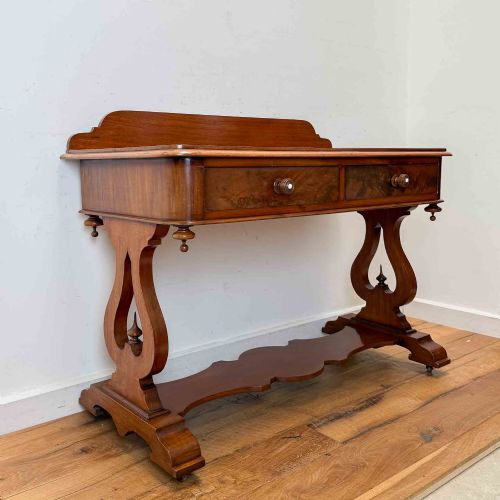
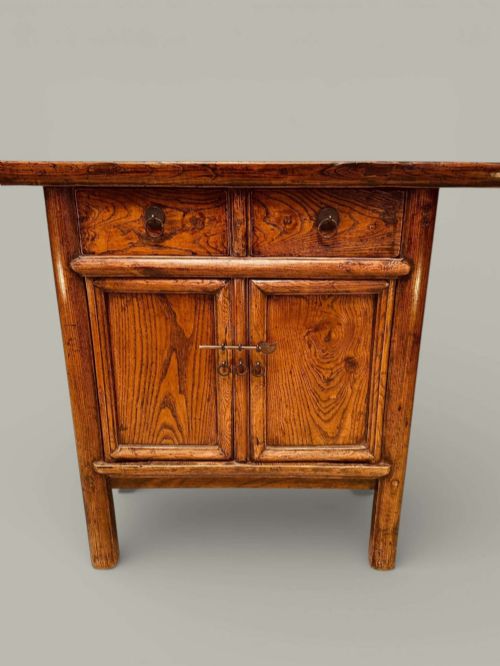

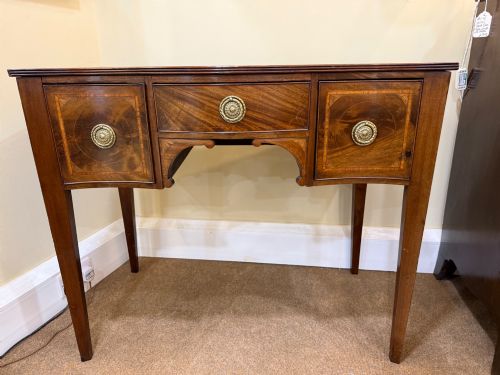
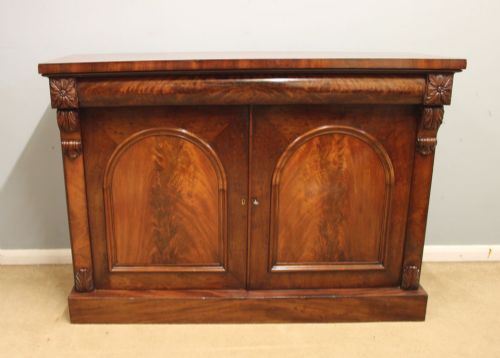
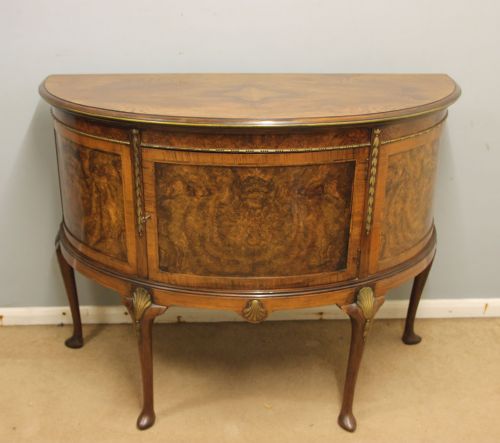


Carved Console Cabinet
These carved console cabinet pieces bring architectural presence and disciplined timberwork to a room, offering surface display and enclosed storage.
Carved Console Cabinet
A carved console cabinet is a wall-anchored or freestanding piece designed to bridge the gap between table surface and enclosed storage. Buyers seeking this form encounter dense timbers shaped by Victorian, Edwardian, and earlier revival hands.
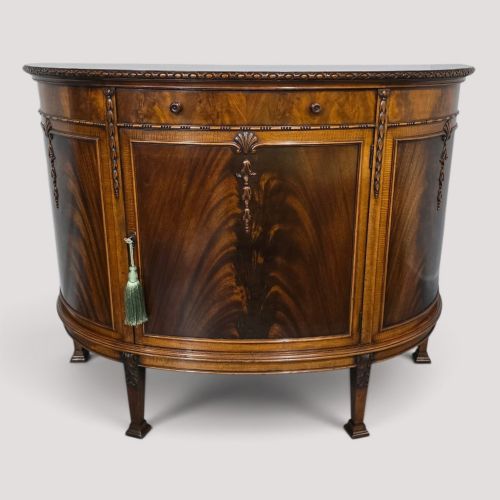
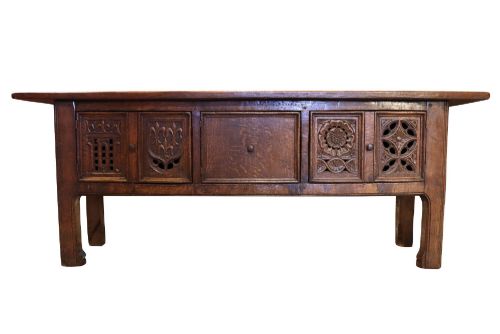
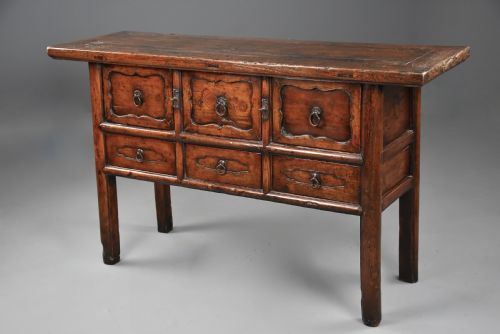
The selection ranges from demi-lune mahogany servers to oak Gothic revival bases and walnut credenzas. Pieces span from the eighteenth century through the nineteen-twenties, incorporating French and Chinese provincial idioms alongside British cabinetmaking traditions.
Mahogany and walnut predominate on this page, often paired with marble tops or brass hardware. The forms frequently adopt curved demi-lune footprints or rectangular breakfront proportions suited to narrow hallways and principal reception rooms.
How they were made
Cabinetmakers utilised dense hardwoods such as mahogany, rosewood, and walnut, frequently applying burr walnut or mahogany veneers over secondary timbers. Surfaces received extensive hand carving, integrating brass mounts and inset glass panels.
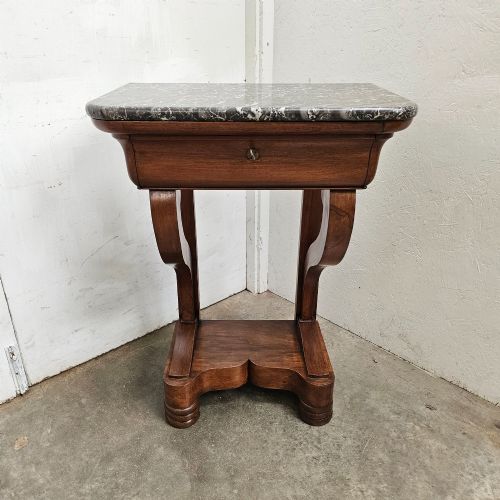
Marble tops appeared on French and Victorian iterations, requiring precise stone-cutting and edge-profiling to sit flush against wooden frames. Construction relied on traditional joinery, dovetailing drawer carcases and securing mouldings with organic glues.
Carved Console Cabinet Retail Price Guide 2026
Typical asking prices for carved console cabinet among the pieces listed under this phrase on Sellingantiques today, from the lower quarter to the upper quarter. They describe what is for sale here now, not the wider market.
Periods represented span from the eighteenth century through the nineteen-twenties, including Victorian and Regency eras.
What varies in quality
The depth and crispness of the hand carving dictate the upper tier of execution, separating mechanical chisel work from spirited sculptural detail. Timber selection equally divides the grade, with figured burr walnut and book-matched rosewood veneers commanding superior visual weight.
Structural integrity rests on the original relationship between carcase and marble top or timber surface, alongside the retention of period brass hardware. The handling of secondary timbers and the precision of veneer alignment reveal the workshop standard behind each piece.
Gillow and Co·Pauly et Cie·Epstein
The Carved Console Cabinet Glossary
- Demi-lune
- Half-moon shape in plan, frequently utilised for console tables and cabinets designed to stand flush against a wall.
- Chiffonier
- A compact sideboard or low cabinet developed in the nineteenth century, often featuring enclosed shelving beneath a tiered superstructure.
- Credenza
- A large formal side cabinet or sideboard originating in Italy, typically low to the ground with central and flanking cupboards.
- Lowboy
- A small eighteenth-century table with drawers, standing on relatively tall legs and serving as a dressing or side table.
- Breakfront
- A piece of furniture where the central section projects forward from the flanking wings, creating architectural relief.
Carved Console Cabinet: Frequently Asked Questions
What is a carved console cabinet used for?
These pieces function as surface display for lamps and decorative objects while concealing tableware, linens, or papers within their cupboards. They occupy narrow circulation spaces or anchor principal walls in sitting rooms.
Their shallow depth allows them to sit comfortably in hallways without obstructing movement while providing substantial visual weight and storage capacity.
How do I date a Victorian piece?
Dating relies on timber choices, carving styles, and construction markers visible in the carcase joinery and drawer linings. Victorian examples span mid to late nineteenth-century preferences for dense mahogany and walnut.
Examining the secondary woods inside and the fastening methods helps distinguish earlier Regency survivals from late nineteenth-century revival work.
Are marble tops original to these cabinets?
Marble tops frequently appear on French and Victorian items designed for service areas or formal reception spaces. They provided a durable, water-resistant surface for serving or washing.
Matching the thickness and edge profile of the marble to the period of the wooden base confirms its authenticity.
How do I care for antique timber and veneer?
Maintain stable indoor humidity levels and keep wooden surfaces away from direct heat sources to prevent veneer shrinkage. Regular dusting with a dry, soft cloth preserves the finish.
Apply occasional professional wax polish sparingly to nourish the grain without building up heavy residues on the carved details.