

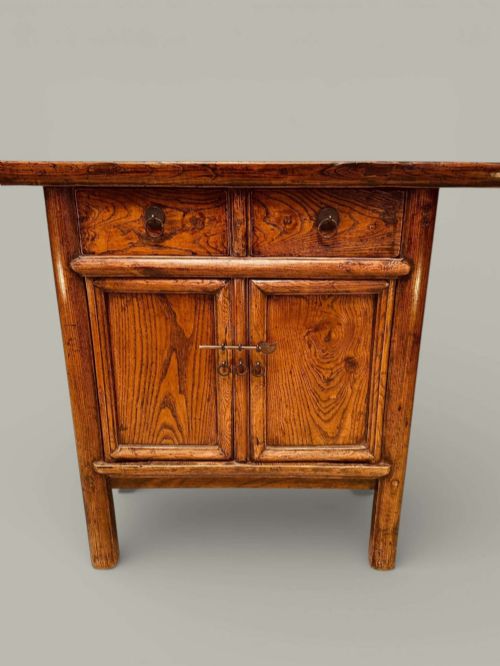

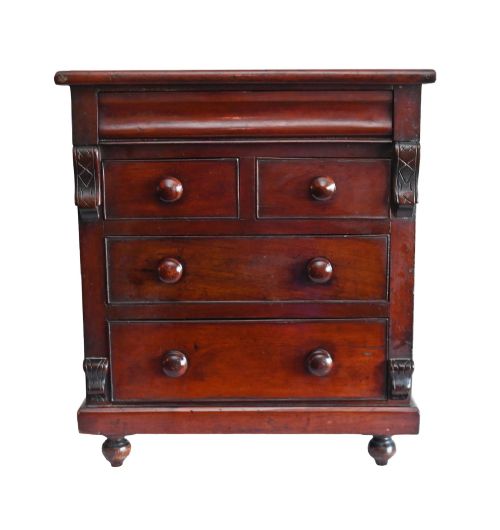
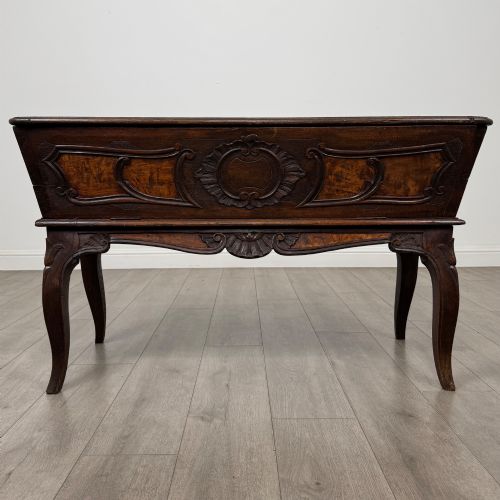
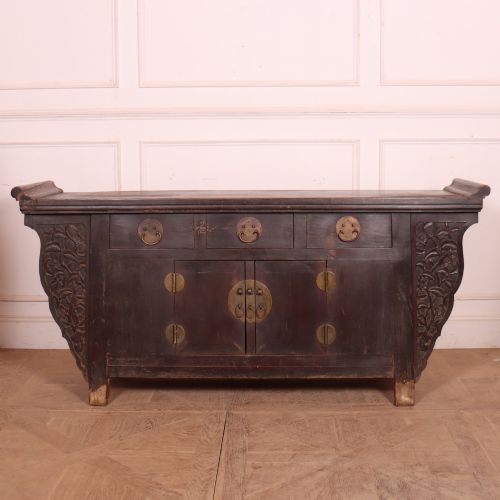


Carved Coffer Cabinet
A carved coffer cabinet brings robust storage and deep relief work together, offering tangible history for daily use.
Carved Coffer Cabinet
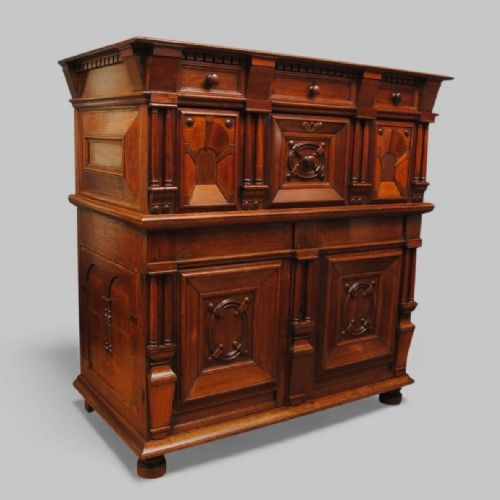
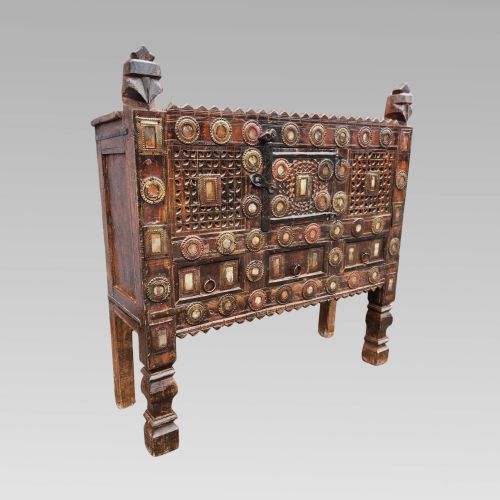
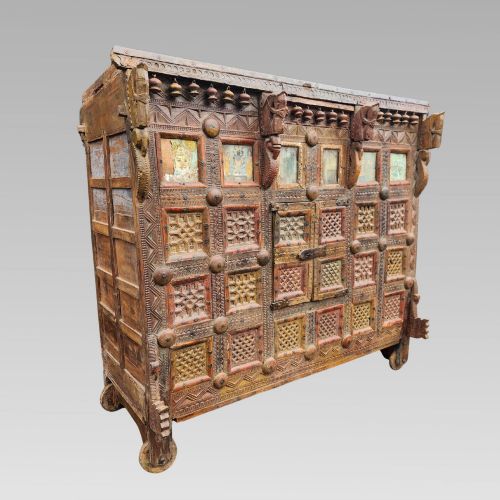
A carved coffer cabinet combines storage utility with intricate surface carving, spanning forms from dowry chests and court cupboards to sideboards and miniature cabinets. Buyers search for these pieces to anchor a room with heavy timber construction and historic character.
The selection here encompasses diverse regional vernaculars and formal periods, ranging from seventeenth-century oak joinery to nineteenth-century walnut, elm, and teak storage forms. Examples include French dough bins, Indian damchiya dowry chests, Chinese lacquered cupboards, and Welsh court cupboards.
Most items you encounter lean toward seventeenth-century oak iterations or nineteenth-century Asian and European storage cabinets. These works serve primarily as focal storage points, housing tableware, textiles, or collections within heavily panelled or carved frames.
How they were made
Makers relied primarily on solid timbers such as oak, walnut, elm, and teak, often joined with traditional pegged mortise and tenon construction. Secondary woods like fruitwood appear in regional pieces, while applied brass and iron hardware reinforce doors and lids.
Surface ornamentation relies on deep chisel carving, relief panels, and occasionally black or red lacquer finishes. Cabinetmakers shaped panels by hand, utilising lathe work for spindles and board construction for large storage bodies.
Carved Coffer Cabinet Retail Price Guide 2026
Typical asking prices for carved coffer cabinet among the pieces listed under this phrase on Sellingantiques today, from the lower quarter to the upper quarter. They describe what is for sale here now, not the wider market.
The listings span multiple centuries, uniting seventeenth-century European joined oak with nineteenth-century Chinese elm and Indian teak.
What varies in quality
The distinction between ordinary and exceptional pieces rests upon the crispness of the hand carving and the integrity of the timber. Deeply undercut relief work and well-figured grain elevate a piece far above utilitarian boxes with mechanical or later surface incisions.
Original structural cohesion dictates value, particularly in joined items where pegged joints and uncompromised floor timbers remain intact. High-grade examples retain their original hardware, patination, and proportional balance without heavy modern intervention.
The Carved Coffer Cabinet Glossary
- Coffer
- A heavy chest used for storing valuables, often fitted with a hinged lid or enclosed by cabinet doors beneath.
- Court Cupboard
- An antique storage unit, typically in oak, featuring tiered shelving or enclosed upper and lower compartments.
- Damchiya
- A traditional Indian dowry chest characterised by low proportions, heavy teak construction, and intricate front panel carvings.
- Mortise and Tenon
- A primary woodworking joint where a protruding peg fits snugly into a corresponding cavity to lock timbers together.
- Patina
- The surface sheen and colour developed through decades of handling, wax application, and ageing timber.
Carved Coffer Cabinet: Frequently Asked Questions
What is a carved coffer cabinet used for?
These pieces serve as substantial storage furniture for linens, tableware, and dry goods while functioning as decorative focal points in a hallway or living room.
Their sturdy tops also provide a surface for displaying lamps, ceramics, or collections in a traditional interior.
How do I date an oak court cupboard?
Dating relies on examining the construction methods, tool marks, and joinery style, such as pegged mortises characteristic of seventeenth-century work.
Surface patination and timber shrinkage patterns further indicate age, distinguishing period joinery from later revival pieces.
Are Indian damchiya chests heavy?
Damchiya chests are constructed from solid teak and heavy hardwoods, making them substantial items that require careful placement.
Their solid build reflects their original purpose as secure dowry storage units designed to withstand generational use.
Can I use a side cabinet in a modern dining room?
These cabinets provide practical enclosed storage for glassware, cutlery, and table linens while introducing historic warmth to contemporary spaces.
Their varied heights allow them to function as serving surfaces during meals or as media storage consoles.