


Carved Cane Settee
A carved cane settee brings lightness and crisp texture to a room, offering the open weave of woven panels alongside carved wooden frames.
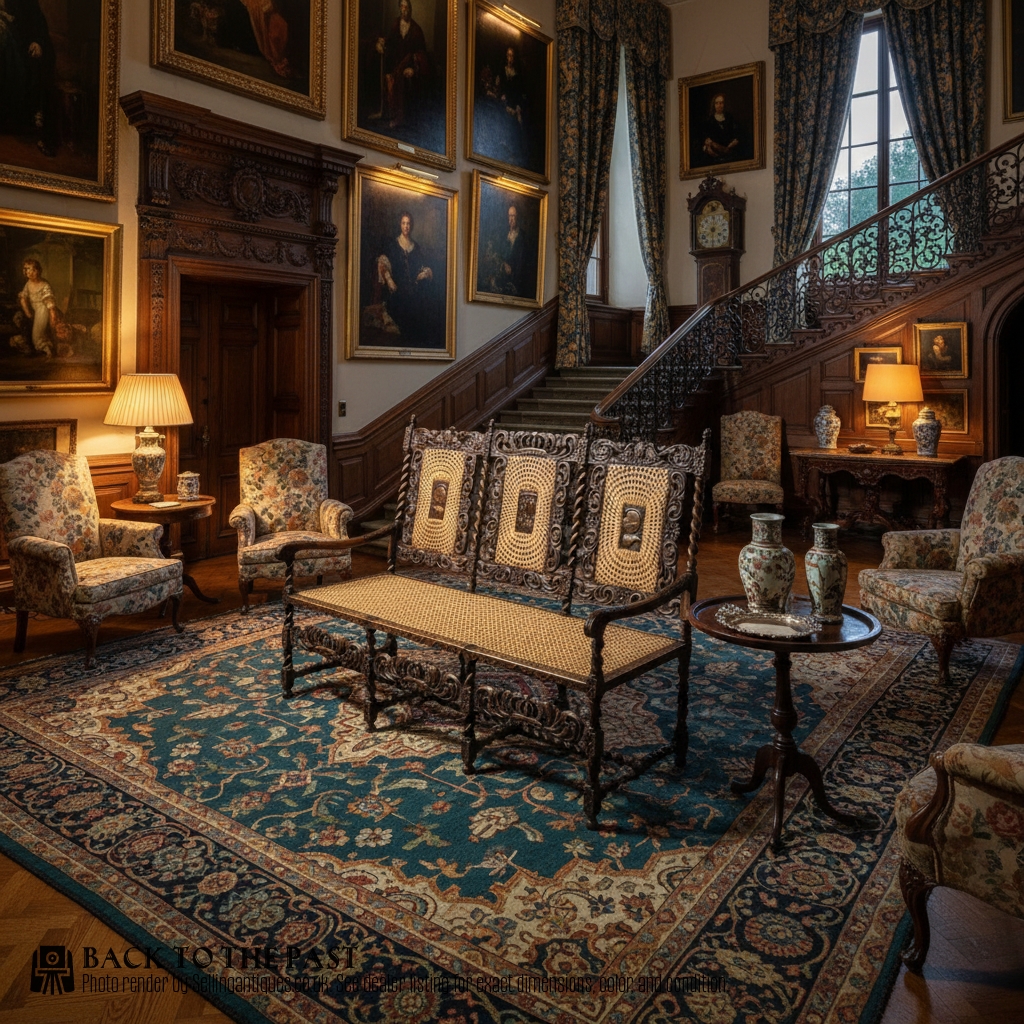
Carved Cane Settee
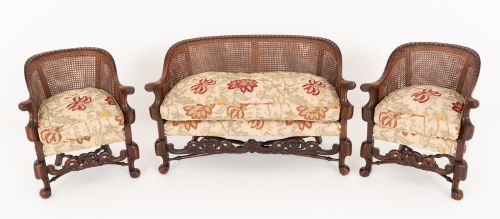
When you search for a carved cane settee, you are looking at substantial seating built with woven cane panels and carved wooden frameworks, spanning everything from compact love seats to grand multi-piece suites. The pieces gathered here range from eighteenth-century examples to twentieth-century revivals, capturing diverse regional tastes across Britain and continental Europe as well as British colonial centres.
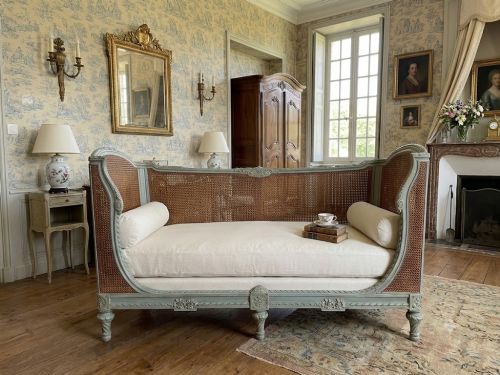
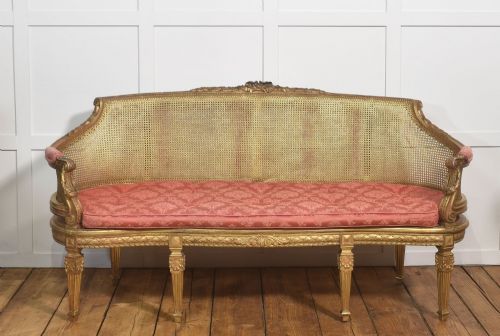
The version you are most likely to meet on this page is a French-inspired design from the nineteenth or early twentieth century, echoing the clean lines of Louis style or the ornate flourishes of Carolean and Baroque revivals. These frameworks often incorporate walnut, beech or painted finishes, paired with open cane work to create a silhouette that feels less heavy in a modern interior than solid upholstered alternatives.
How they were made
Makers shaped the structural framework from timbers such as walnut, mahogany, beech and rosewood, applying hand-carving to rails, crests and cabriole or scroll legs. Giltwood and painted wood finishes appear frequently, alongside decorative elements executed in relief.
The characteristic cane panels were hand-woven directly through holes drilled into the frame channels or inserted into grooves, creating a flexible, breathable support. Upholstered elements such as feather cushions, fabric squabs and linen pads were frequently added to seat bases and backrests for comfort.
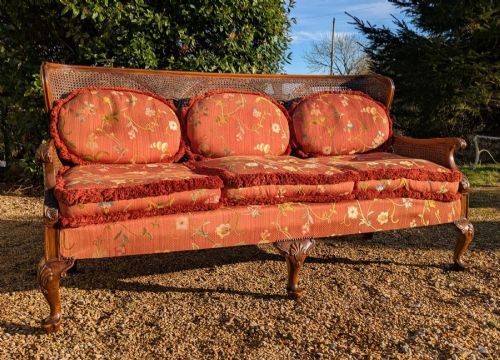
The inventory includes nineteenth-century Anglo-Indian designs alongside French Louis styles and seventeenth-century Carolean revivals.
What varies in quality
The distinction between ordinary production and superior work lies in the depth and crispness of the hand-carving on the wooden frame, where sharp relief work outshines soft or mechanical moulding. The rhythm and tension of the woven cane panels also set exceptional pieces apart, showing uniform strand spacing and precise execution.
Materials and finish dictate the upper tier of the range, with original gilding, select walnut timbers and cohesive stylistic revivals commanding greater attention than plain or later painted surfaces. Structural integrity in the joints and the survival of secondary elements like matching armchairs complete the hierarchy of quality.
The Carved Cane Settee Glossary
- Canapé
- A French term for a settee or sofa, frequently encountered in eighteenth and nineteenth-century continental furniture designs. It typically describes a wide, decorative seat with an upholstered or caned back.
- Bergère
- An enclosed upholstered armchair or sofa featuring solid wooden sides filled with cane work or upholstery. These pieces often include loose squab cushions filled with feathers or down for added comfort.
- Giltwood
- Timber that has been coated with a thin layer of gold leaf or gesso preparation. It provides a bright, reflective surface seen on decorative European seating.
- Carolean Style
- A seventeenth-century English revival style known for rich walnut frames, crown and scroll carvings, and pierced cresting rails. Pieces in this manner reappear in nineteenth-century revivals.
- Louis XVI Style
- A neoclassical design vocabulary characterised by straight tapering fluted legs, rectangular backs, and crisp architectural carving. It emerged in eighteenth-century France and inspired numerous later revivals.
Carved Cane Settee: Frequently Asked Questions
How do I care for antique cane?
Keep cane panels clean by gently dusting them with a soft brush and maintaining stable humidity levels in the room. Avoid placing these pieces in direct sunlight or near intense heat sources, which can cause the natural fibres to dry out and become brittle over time.
Moisturising the cane occasionally with a damp cloth helps maintain its natural flexibility. If a cushion is provided, ensure the weight is distributed evenly across the seat base to protect the woven surface from concentrated pressure.
Are these settees comfortable to sit on?
Many examples on this page are equipped with loose cushions filled with feathers, fabric pads or squabs that soften the firm support of the wooden frame. The woven cane itself offers a slight, springy give rather than deep, sink-in padding.
While historic seating was often designed with an upright posture in mind, adding well-fitted squab cushions makes these settees suitable for relaxed daily sitting in a drawing room or bedroom.
How do I distinguish between periods?
Look closely at the carving details, wood selection and structural joinery to identify the likely period of manufacture. Eighteenth-century pieces display native timbers and hand-wrought construction, whereas nineteenth-century and later pieces often adopt specific revivals like Louis XVI or Carolean styles with distinct regional interpretations.
Tool marks, timber shrinkage and the patina of the finish provide further clues to age. Revivals from the late nineteenth and early twentieth centuries frequently combine historical decorative motifs with machine-assisted efficiency in the framing.
Can I use a settee in a bedroom?
Settees, window sofas and daybeds function naturally at the foot of a bed or beneath a window, providing a practical spot to sit or rest. Their open cane backs and lighter frames prevent them from blocking light or dominating smaller bedroom layouts.
Pairing the wooden frame with complementary textiles allows you to tie the seating into existing bedroom decor. Daybeds and love seats offer versatile proportions that fit comfortably against bedroom walls without overwhelming the floor space.