
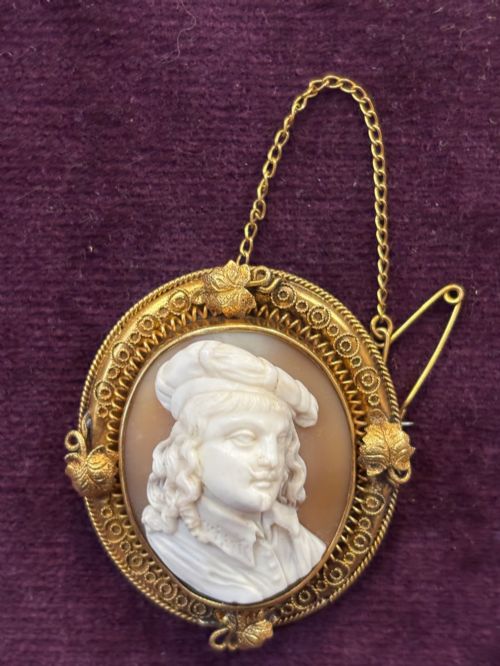
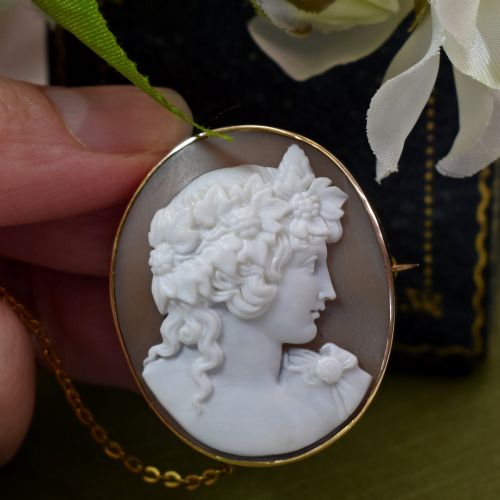
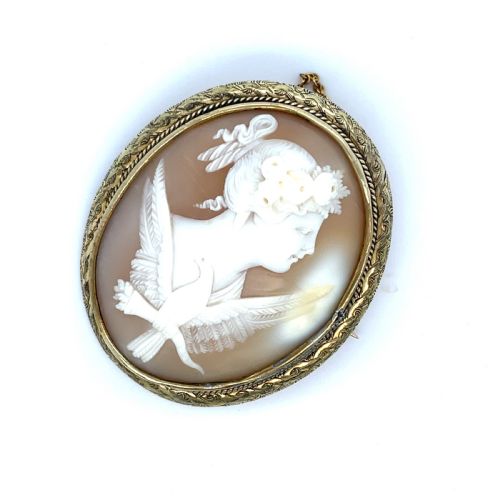


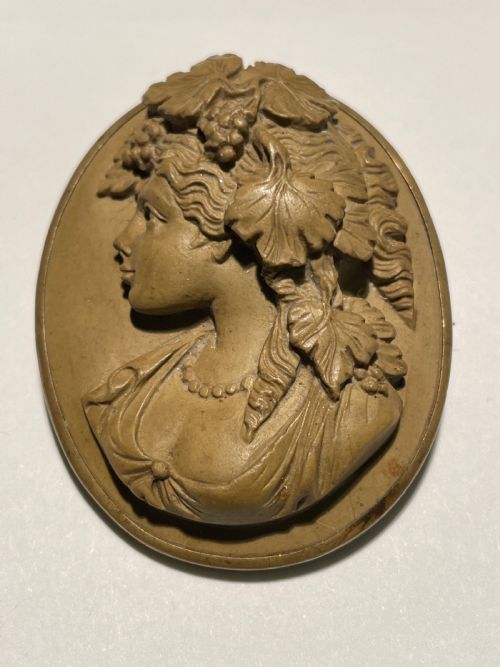

Carved Cameo Pendant Brooch
These carved cameo pendant brooch pieces offer classical hand-carved subjects mounted in precious metals, ready to wear as a brooch or hang from a chain.
Carved Cameo Pendant Brooch
A carved cameo pendant brooch combines the dual utility of a dress fastener and a neck ornament, designed to display relief carvings against a contrasting background. When you search for a carved cameo pendant brooch, you encounter pieces intended to transition simply from lapel to chain.
Most examples found on this page date from the Victorian era through the early twentieth century, reflecting nineteenth-century revivals of classical antiquity. These items frequently feature shell or hardstone as the primary relief medium.
The subjects depicted draw heavily from mythology, classical profiles, and Grand Tour souvenirs, portraying figures such as Aphrodite, Psyche and Cupid, or Antinous Vertumnus. Such designs display the Victorian fascination with classical art and narrative.
How they were made
Carvers shaped shell layers, particularly from helmet shells, or carved hardstone such as agate to exploit natural colour strata, leaving an opaque white figure raised against a darker ground. Lava and coral also served as carving materials for specific Italian and Grand Tour pieces.
Makers set these carved reliefs into mounts fashioned from silver, pinchbeck, and varying purities of gold including 9ct, 14ct, 18ct, and 20ct gold. Many mounts incorporated structural loops or folding bails to allow versatile wear as either a pendant or a brooch.
Detailed frames often featured twisted wirework, granulation, or pearl surrounds, soldered directly to the reverse box or bezel holding the cameo securely in place.
Listings incorporate items spanning the Victorian era through the mid-twentieth century, featuring shell, agate, lava, and gold or silver mounts.
What varies in quality
The substance and weight of the metal mount also dictate standard, ranging from hollow, lightweight stamped gold and silver frames to substantial, heavy-gauge gold constructions embellished with pearls or intricate wirework.
The integration of the pendant loop or bail affects utility, where secure, original conversion mechanisms demonstrate higher craftsmanship than later, adapted alterations.
The Carved Cameo Pendant Brooch Glossary
- Cameo
- A method of carving an object such as a gemstone, shell, or piece of layered stone in relief. This technique creates a raised design that stands apart from a contrasting background colour.
- Bail
- The loop on a piece of jewellery that attaches the pendant to a chain or cord. On these items, bails often fold down or hide away when worn as a brooch.
- Pinchbeck
- An alloy of copper and zinc invented in the eighteenth century to imitate gold. It provides a warm metallic appearance used frequently in historical costume jewellery frames.
- Grand Tour
- A cultural trip of Europe undertaken by wealthy young men in the eighteenth and nineteenth centuries. Travellers frequently purchased local lava and shell cameos as souvenirs.
- Glyptic
- Pertaining to the art of engraving or carving on small objects such as gems and stones. The term covers the hand-tooled relief work seen on antique shell and hardstone profiles.
Carved Cameo Pendant Brooch: Frequently Asked Questions
How do I wear a carved cameo pendant brooch?
These pieces include both a pin mechanism for fastening to garments and a loop for suspension on a chain. You can tuck the pin away when hanging the piece from a necklace or secure it directly to a lapel.
The dual function reflects nineteenth-century manufacturing habits, where versatile jewellery allowed owners to maximise wear across different outfits and social occasions.
What materials are cameos carved from?
The listings show pieces carved primarily from helmet shell, which provides a white relief over a pink or brown backing. Other items utilise agate stone, lava, or coral.
Shell cameos rely on natural colour strata within the material, whereas hardstone and lava pieces present different textural qualities and working techniques for the carver.
How can I date a Victorian cameo?
Dating relies on examining the style of the metal mount, the clasp mechanism, and the subject matter depicted. Victorian examples often feature tubular hinges and C-clasps alongside classical revival motifs.
Additionally, hallmarks stamped on gold or silver mounts provide specific assay office marks and date letters corresponding to years like 1908 or periods spanning the mid to late nineteenth century.
What subjects appear on these cameos?
Common subjects include classical deities, mythological figures, and idealised female profiles inspired by antique sculpture. You will find specific figures like Aphrodite, Psyche, and Cupid represented.
These themes reflect the widespread influence of the Grand Tour and classical archaeology on Victorian and Edwardian decorative arts and personal ornaments.
Are these pieces fragile?
Shell cameos require careful handling because the material is organic and thinner in the background layers. Storing them safely away from hard impacts prevents accidental fracturing of the relief.
The metal mounts and pins also benefit from gentle treatment to preserve historical hinges and delicate wirework frames without bending or straining the structure.