

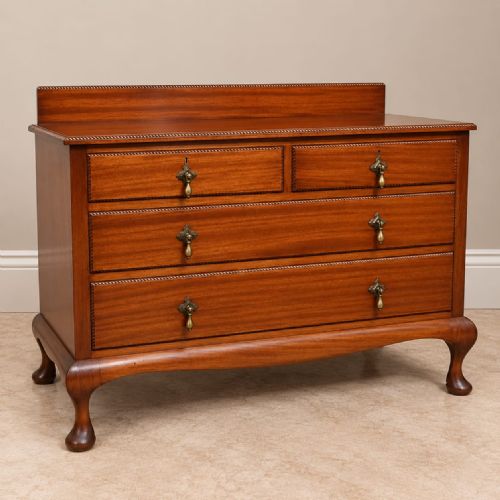
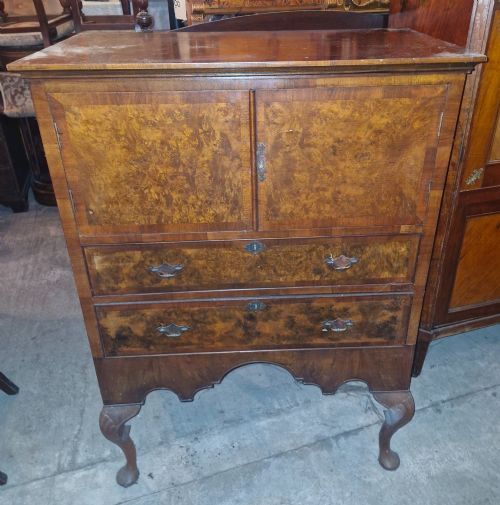


Carved Cabriole Tallboy
A carved cabriole tallboy combines generous storage with elegant raised proportions, making it a striking focal point for any traditional bedroom.
Carved Cabriole Tallboy
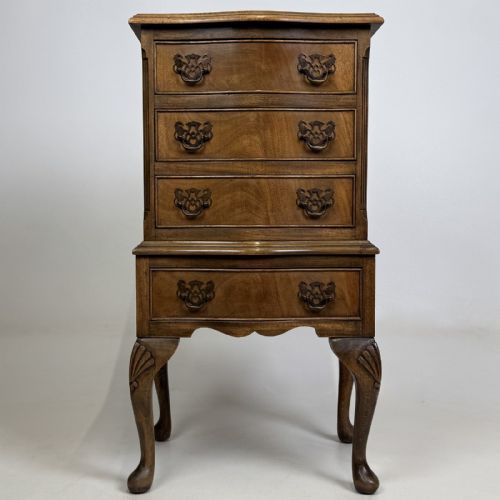
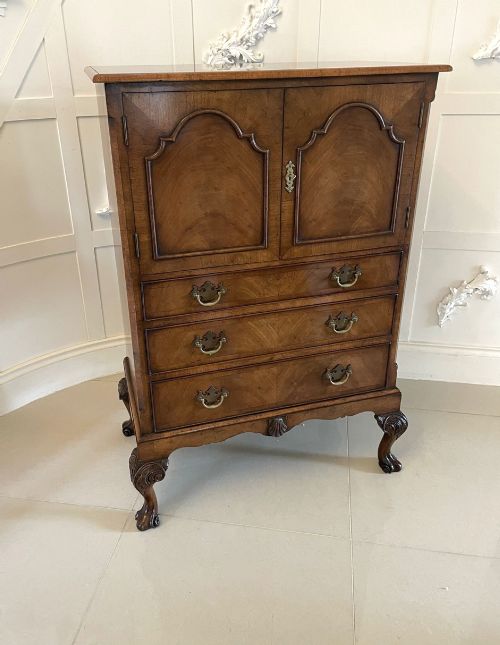
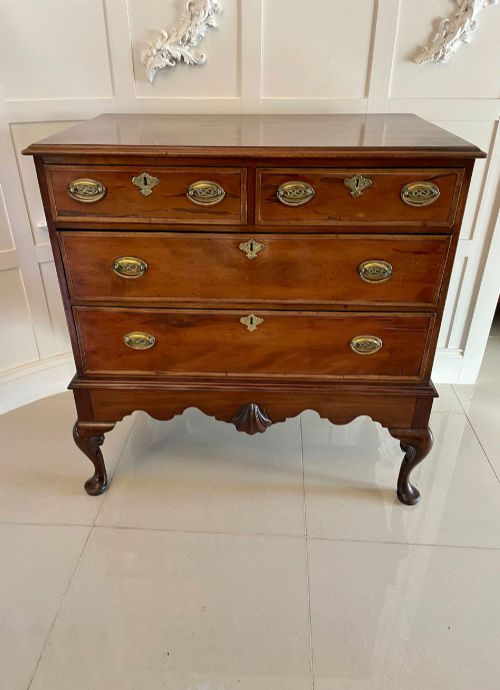
A carved cabriole tallboy typically presents as a chest on stand or a high chest of drawers raised upon slender, curved legs. These pieces draw heavily on 18th-century forms, including Queen Anne and Georgian styles, alongside later revival iterations from the Edwardian era and the 1920s and 1930s.
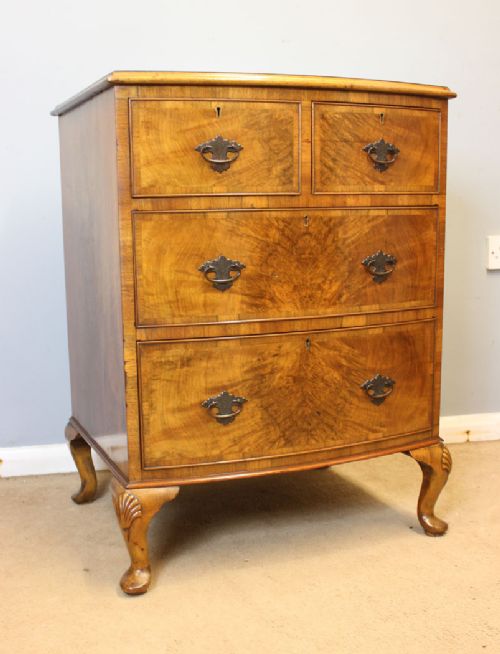
The form encompasses walnut, burr walnut veneer, oak, and mahogany variants, often featuring distinctive serpentine or block fronts. Makers ranged from traditional workshops to established cabinet makers such as Maple & Co, producing substantial storage units scaled for domestic use.
How they were made
Cabinet makers utilised choice hardwoods including mahogany, oak, and walnut, frequently applying figured burr walnut veneers to primary display surfaces to create rich grain patterns. Drawer construction relied on traditional joinery methods within sturdy carcases, whilst the signature legs were shaped to achieve the characteristic outward curve.
Brass handles and escutcheons provided functional and decorative accents on drawers, complementing the polished timber finishes. Structural support was engineered to bear the considerable weight of stacked drawers whilst maintaining the visual lightness of the raised stand.
Carved Cabriole Tallboy Retail Price Guide 2026
Typical asking prices for carved cabriole tallboy among the pieces listed under this phrase on Sellingantiques today, from the lower quarter to the upper quarter. They describe what is for sale here now, not the wider market.
Some tallboys hide their secrets behind polite serpentine fronts, daring you to guess which drawer holds the midnight chocolate.
What varies in quality
Quality reveals itself in the selection of timbers and veneers, where highly figured burr walnut or dense mahogany indicates a more ambitious commission. The crispness of carved details on the knees of the cabriole legs and the precision of the drawer dovetails further distinguish standard production from finer work.
Proportion and balance dictate the architectural success of the piece, with superior examples maintaining harmonious lines between the upper chest and the supporting stand. The integration of original brass hardware and the preservation of the polished finish contribute significantly to the standing of an individual piece.
Maple and Co
The Carved Cabriole Tallboy Glossary
- Cabriole leg
- A furniture leg that curves outward at the knee and tapers inward toward the ankle, ending in a pad or foot. This form was popularised during the Queen Anne and Georgian periods.
- Tallboy
- A tall chest of drawers, often constructed in two sections with a smaller chest sitting upon a larger base or stand. It maximises vertical storage space whilst maintaining a smaller floor footprint.
- Burr walnut
- A prized timber veneer sliced from walnut tree growths, displaying intricate, swirling grain patterns. It was favoured for high-status cabinetry throughout the 18th century and later revival periods.
- Serpentine front
- A furniture front characterised by a wavy contour, curving convexly at the centre and concavely at the sides. This shape demands advanced woodworking skill to execute properly.
- Chest on stand
- A storage unit comprising an upper chest elevated on a separate framework with legs. This configuration lightens the overall visual mass of tall case furniture.
Carved Cabriole Tallboy: Frequently Asked Questions
What is a carved cabriole tallboy?
A carved cabriole tallboy is a tall chest of drawers raised on graceful, curved legs, combining vertical storage capacity with decorative woodwork. These pieces draw on historical forms spanning from the 17th century through to 20th-century revival periods.
They serve as prominent furniture items in bedrooms or dressing rooms, offering substantial drawer space without occupying excessive floor area.
How do I date a tallboy?
Dating involves examining the timber species, construction techniques, and stylistic markers such as hardware and leg profiles. Earlier pieces from the 18th century utilise solid woods and hand-cut joinery, whereas Edwardian and 1930s examples often employ applied veneers and revival styling.
Matching the stylistic details against known periods helps determine whether a piece is an 18th-century original or a later Edwardian interpretation.
Where should I place a tallboy?
Because of their height and raised legs, these pieces work well against blank bedroom or hallway walls where their proportions can be fully appreciated. Ensure the room has adequate clearance so the swinging drawers and curved legs are not obstructed.
Positioning them away from direct heat sources helps protect the timber and delicate burr walnut veneers from drying out.
How do I care for walnut veneer?
Walnut veneer requires gentle maintenance using a soft, dry cloth to remove dust without abrasive cleaners. Keeping the timber away from direct sunlight prevents the rich grain tones from fading over time.
Applying a light, quality wax occasionally will nourish the wood and maintain a natural sheen across the carved surfaces and polished panels.