
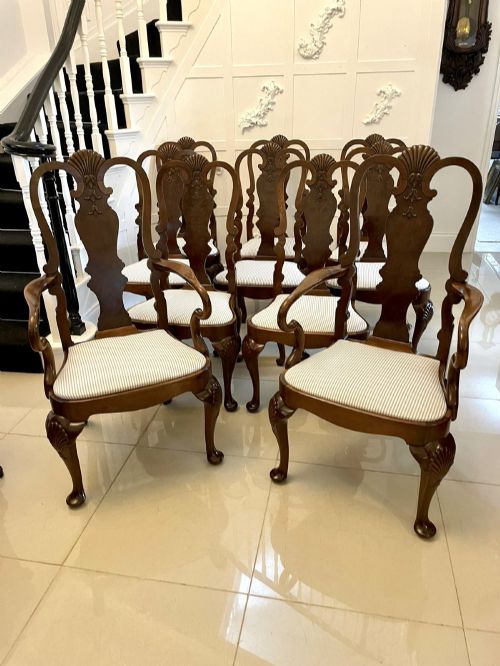
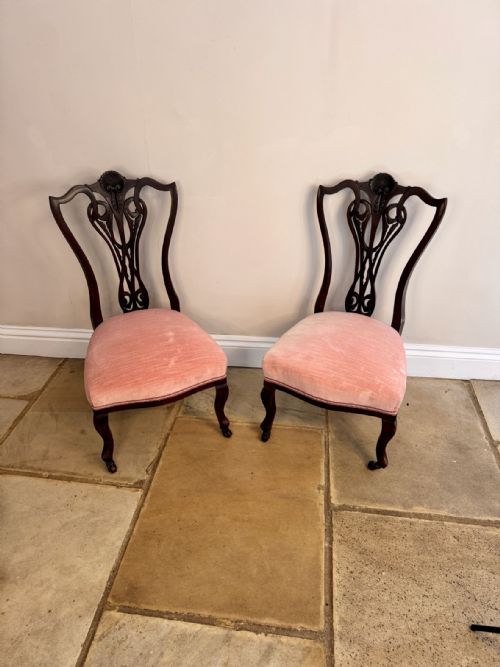
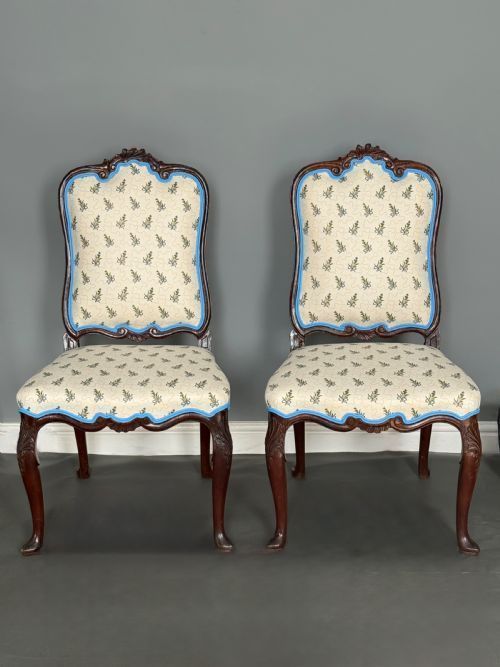
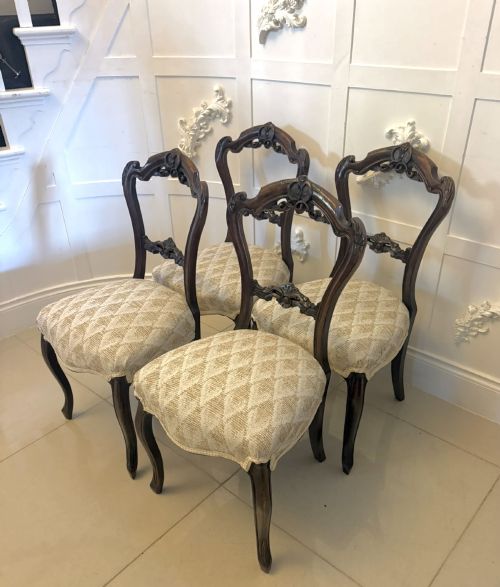
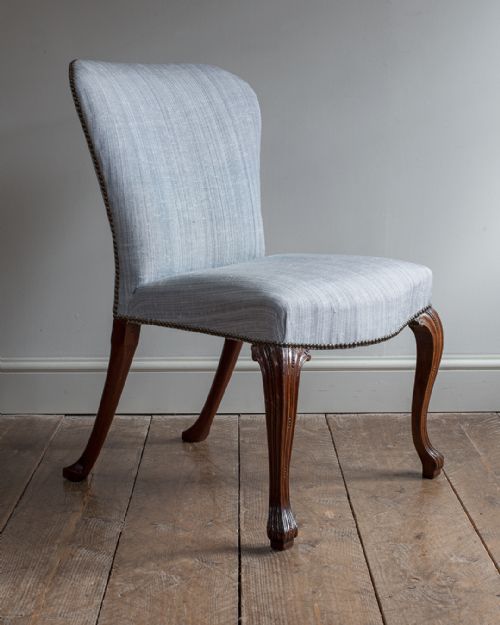
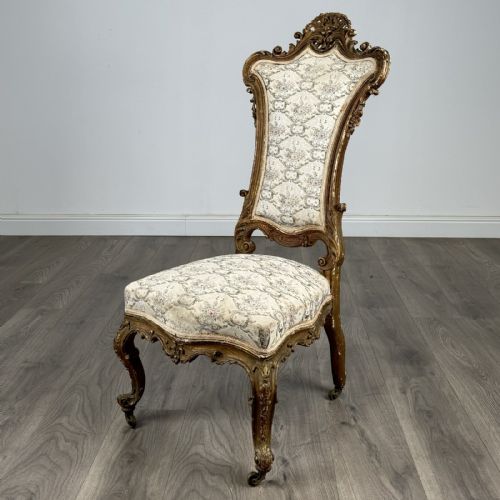
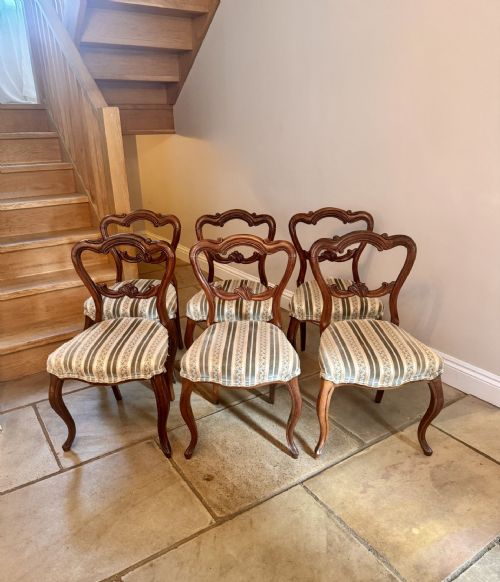
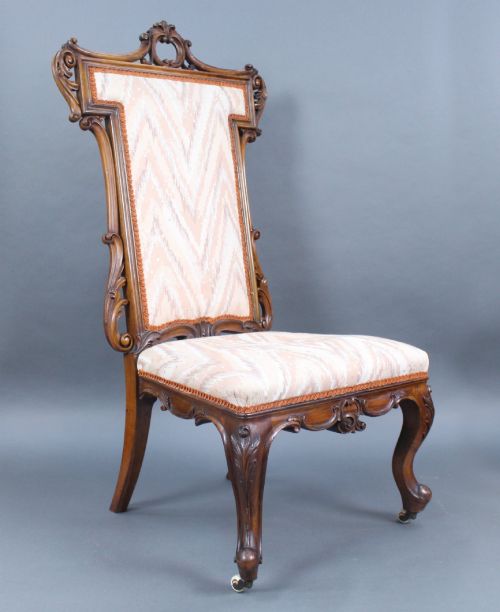
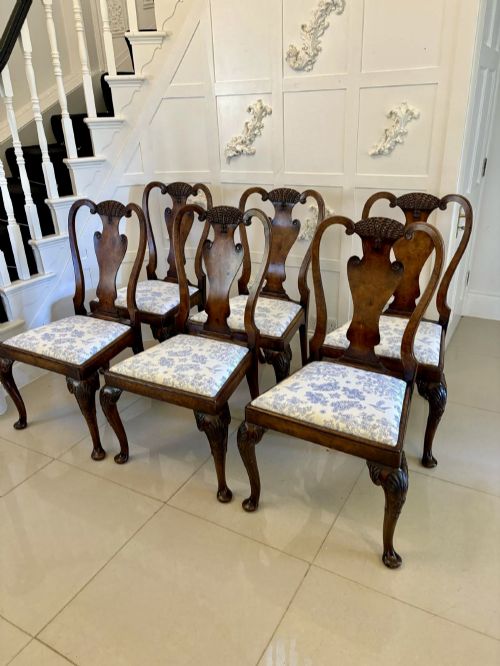
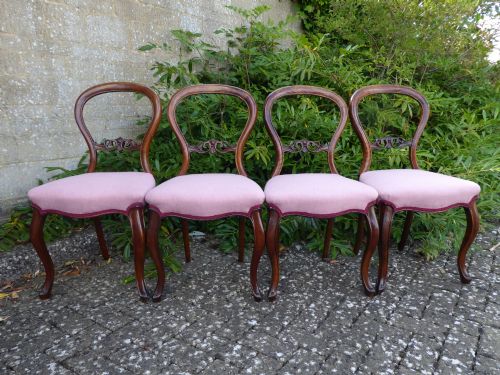
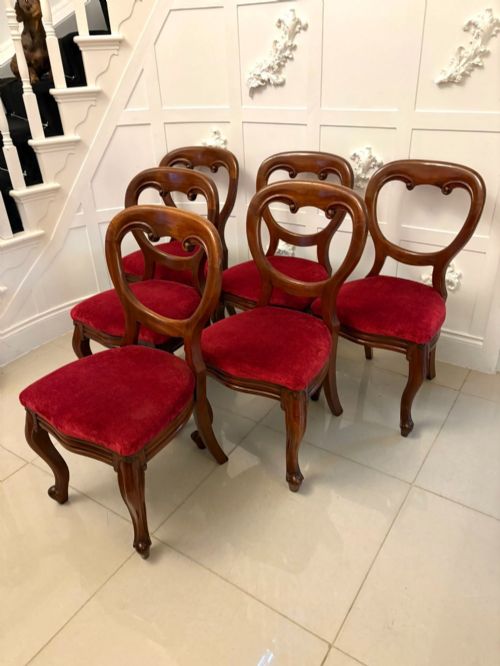
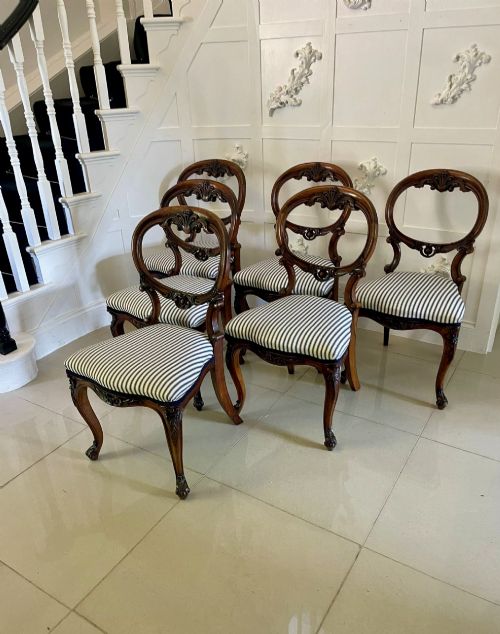
Carved Cabriole Side Chairs
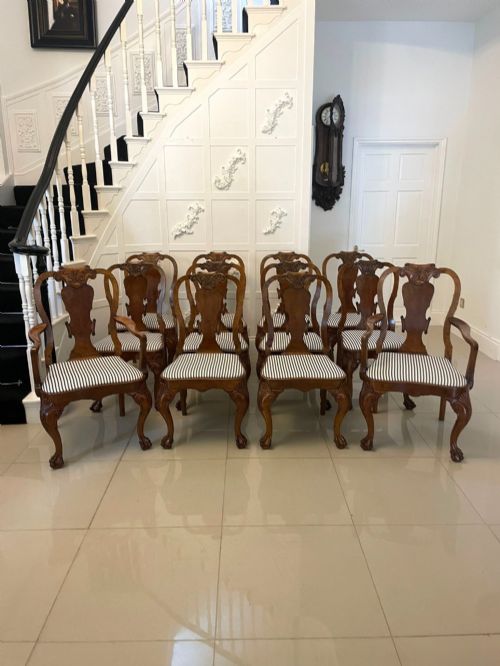
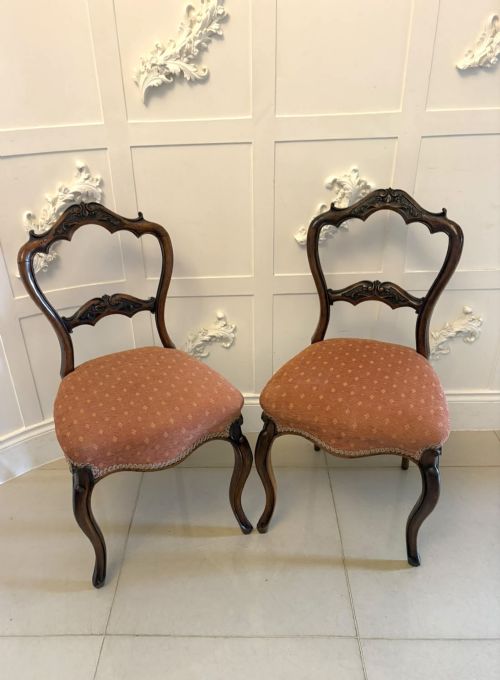
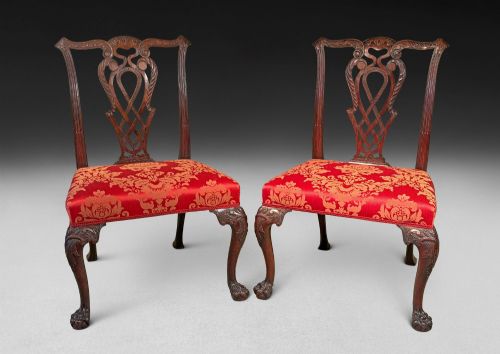
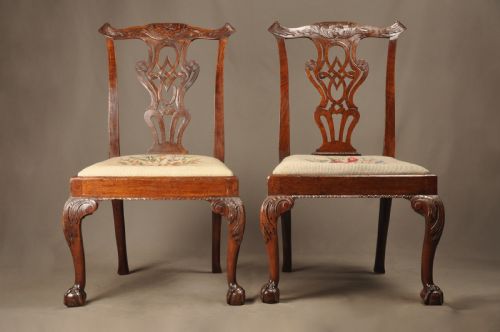
These carved cabriole side chairs bring fluid movement and substantial wood to a room, offering both reliable dining seating and distinct period form.
Carved Cabriole Side Chairs
A search for carved cabriole side chairs leads to seating shaped by curved legs and decorative woodwork, originating from periods spanning the eighteenth century through the Victorian era and later revivals. The listings here contain walnut and mahogany examples in Queen Anne, George II, Chippendale, and Victorian styles.
Most pieces encountered on this page date from the Victorian period or reflect earlier eighteenth-century designs. These chairs function primarily around dining tables or act as decorative occasional seating in parlours and halls.
Materials and construction
Cabinetmakers shaped these frames primarily from solid walnut and mahogany, occasionally employing rosewood or padauk for specific commissions. Timber selection governed the strength required in the sinuous curve of the leg.
Carvers applied ornamental detail directly to the solid wood of the crest rails, knees, and splats. Drop-in seats or fixed upholstery frames received coverings of fabric, leather, or velvet.
The listings feature walnut and mahogany as the dominant timbers, spanning the eighteenth, nineteenth, and early twentieth centuries.
Assessing quality and craftsmanship
Depth and crispness of the wood carving distinguish finer examples from simpler production. The integration of the cabriole leg into the seat frame demands precise joinery to ensure structural integrity.
Proportion and wood figure determine the standing of a piece within its period. Matched sets display consistent timber grain and uniform carving across every chair.
Charles Tozer·Warings
The Carved Cabriole Side Chairs Glossary
- Cabriole leg
- A furniture leg featuring a double curve, bulging outward at the knee and tapering inward toward the foot. This form mimics animal limbs and appears widely on eighteenth-century and revival seating.
- Drop-in seat
- A removable wooden frame upholstered separately and dropped into a ledge within the chair seat rails. This construction method allows easier reupholstery.
- Splats
- The vertical central strip of wood within a chair back connecting the seat to the top rail. Carved or pierced splats provide decorative focus.
- Crest rail
- The uppermost horizontal member of a chair back. It frequently receives the primary carved ornamentation of the piece.
- Padouk
- A dense tropical hardwood displaying a reddish hue, utilised for durable furniture construction.
Carved Cabriole Side Chairs: Frequently Asked Questions
How do I date a cabriole leg chair?
Dating relies upon timber choice, joinery methods, and stylistic cues present in the carving and splat. Eighteenth-century examples generally exhibit simpler, more integrated structural lines than later nineteenth-century revivals.
Examination of the underside and interior frame reveals tool marks and wood oxidation that help corroborate the period of manufacture.
Were these chairs used only for dining?
While many listings comprise sets intended for dining rooms, similar forms served as desk chairs, hall chairs, or occasional seating. The lighter side chair configuration suited multiple domestic settings.
Individual pieces often moved between rooms depending on household needs and the formality of the occasion.
How should I care for antique walnut wood?
Maintenance requires keeping wooden surfaces away from direct heat sources and strong sunlight to prevent the timber from drying out. Occasional dusting with a soft, dry cloth preserves the finish.
Avoid liquid polishes containing silicones or harsh chemical cleaners that can penetrate old finishes and damage the wood grain.
What defines the Queen Anne style?
Queen Anne design is characterised by curved lines, pad feet, and the prominent use of walnut timber. Chairs from this aesthetic typically feature spooned backs and vase-shaped splats.
Ornamentation remains restrained compared to later periods, relying on the graceful sweep of the wood rather than heavy carving.