

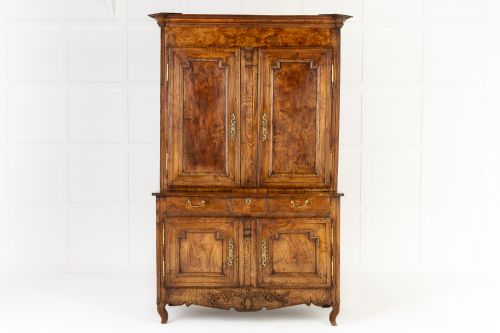


Carved Buffet Deux Corps
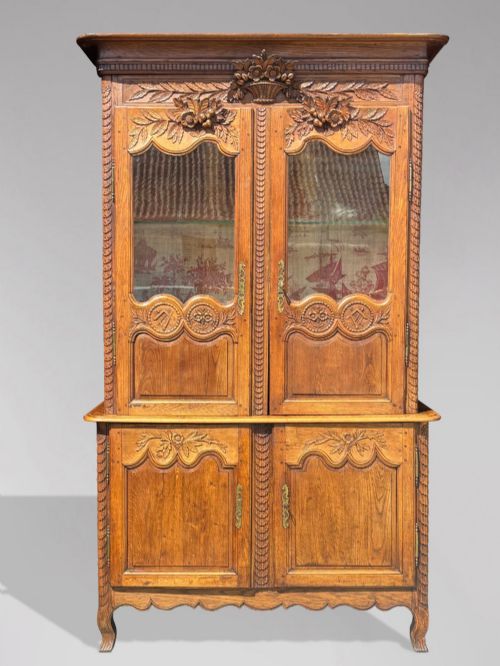
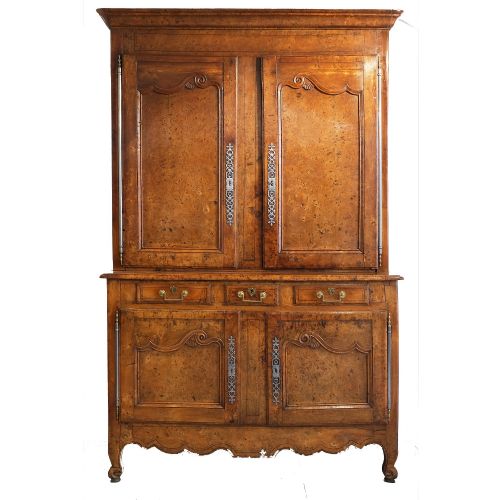
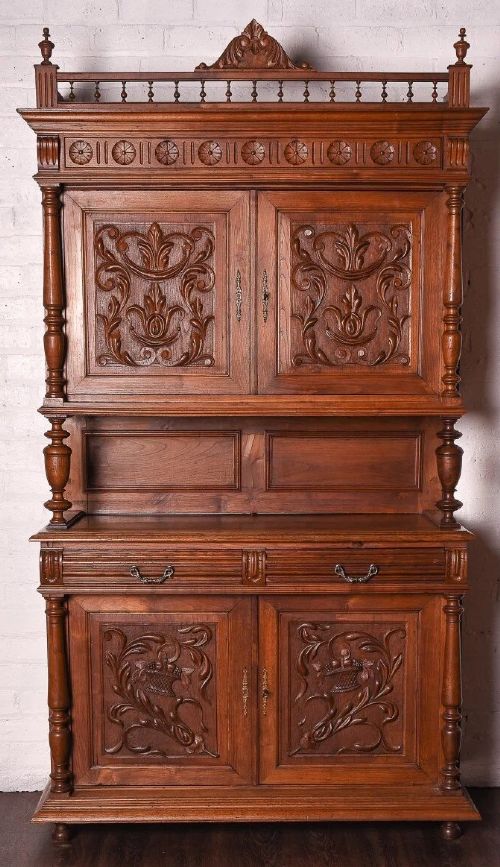
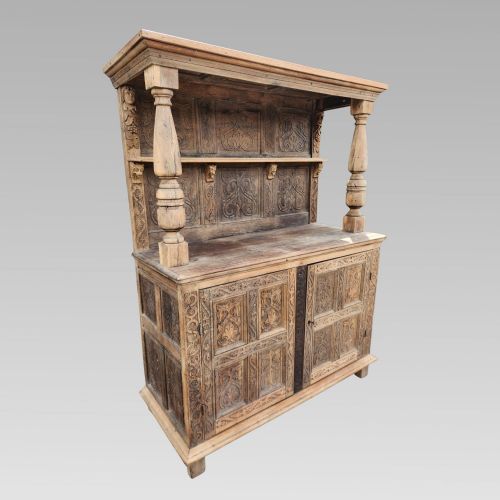
These large two-body storage pieces known as a carved buffet deux corps offer grand architectural presence and deep cupboards for serious dining room storage.
Carved Buffet Deux Corps
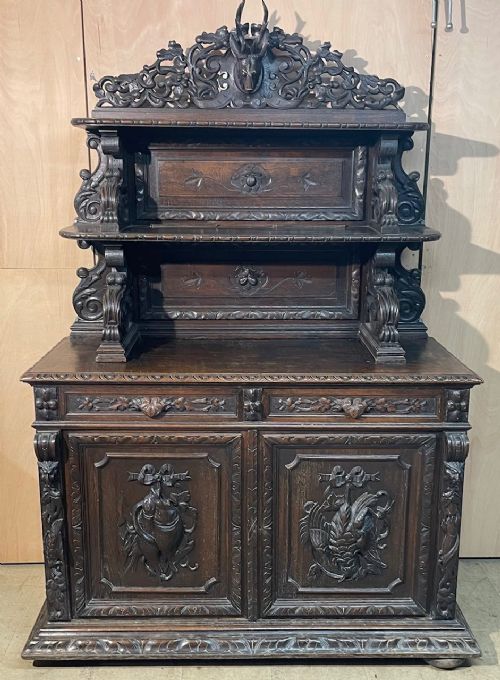
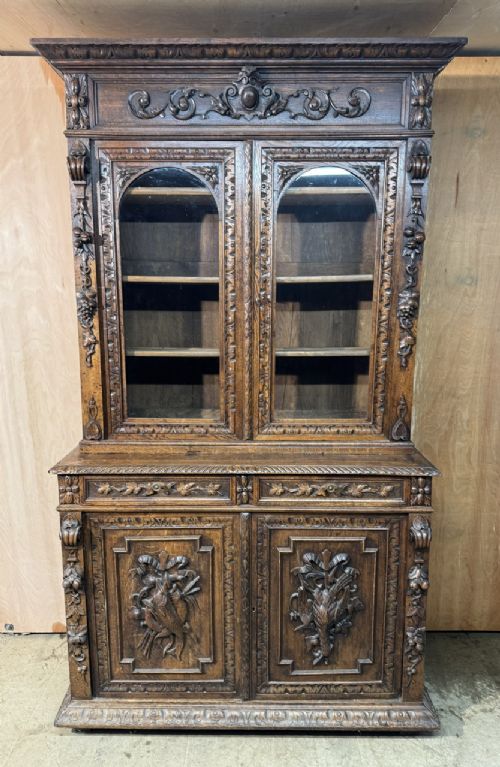
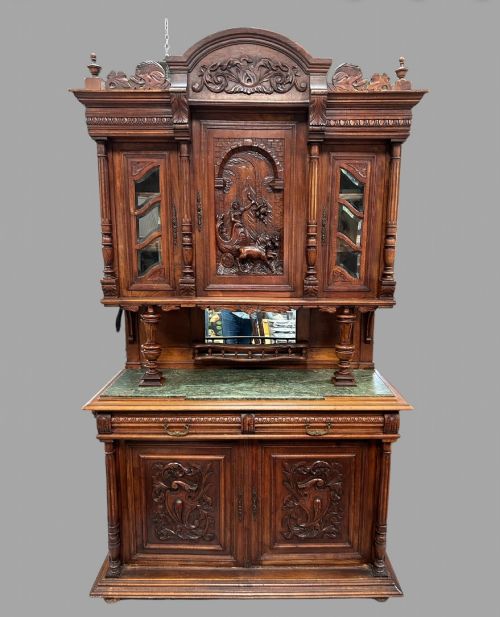
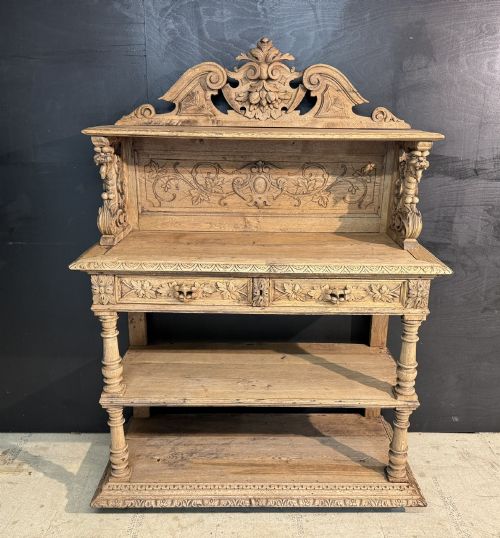
A carved buffet deux corps is a substantial two-part storage cabinet featuring a smaller upper section set upon a deeper, wider base with cupboards or drawers. These large imposing storage pieces originate primarily from French provincial regions and date from the eighteenth and nineteenth centuries.
The version most commonly encountered on this page is the nineteenth century carved oak hunting cabinet or provincial dresser, often displaying regional motifs. Eighteenth century examples with Louis XV styling or simple ash and elm construction also appear alongside later nineteenth century revivals.
Builders constructed these tall cupboards to store linen, china and provisions in substantial dining rooms or kitchens. The double-bodied form provides immense visual weight and practical division between the upper display or storage space and the lower sideboard surface.
How they were made
Traditional joiners built these substantial two-body cabinets predominantly using solid European hardwoods such as oak, walnut, ash and elm. Panels were typically hand-carved and assembled using traditional pegged mortise and tenon joints to withstand the weight of the massive upper sections.
Hardware played an essential functional and decorative role, with heavy brass and iron hinges, lockplates and handles securing the large double doors. Later nineteenth century pieces occasionally incorporate materials like glass, steel and marble inserts into their heavier revival designs.
Current listings showcase pieces spanning the 18th century, 19th century, 1880, and the Victorian period, constructed in oak, walnut, ash, elm, and pitch pine.
What varies in quality
Quality in a carved buffet deux corps rests upon the crispness and depth of the hand-carving across the doors and panels. Pieces featuring deeply undercut foliage, game or figural motifs display superior craftsmanship compared to shallow or mechanical later carving.
The choice of primary timber significantly dictates the grade of the piece, with dense figured walnut and well-selected quarter-sawn oak holding higher regard than mixed secondary woods. Proportion and the integration between the upper and lower bodies also define the aesthetic success of the design.
The Carved Buffet Deux Corps Glossary
- Buffet deux corps
- A traditional two-tiered French storage cabinet consisting of an upper cupboard resting on a larger lower base. This form provides maximum storage capacity and strong vertical proportions.
- Louis XV
- An eighteenth century French design style characterised by asymmetrical curves, naturalistic scrolling and cabriole supports. Furniture from this period emphasises flowing organic lines rather than strict symmetry.
- Breton style
- A regional nineteenth century French aesthetic originating from Brittany, noted for heavy figural carvings depicting local scenes, figures in traditional costume and spinning wheels.
- French Provincial
- Furniture made in the regions outside Paris, reflecting local traditions and practical utility rather than courtly fashion. These pieces use native timbers and regional carving idioms.
- Pitch Pine
- A resinous North American and European pine species utilised in nineteenth century cabinet making for its durability and strong grain pattern. It provides a lighter alternative to traditional hardwoods.
Carved Buffet Deux Corps: Frequently Asked Questions
What is a buffet deux corps used for?
These tall two-part cabinets served historically as principal storage pieces in large European dining rooms and kitchens. Families stored heavy tableware, linens, silver and provisions across the upper and lower cupboards.
Today, they function brilliantly as monumental storage cupboards in modern dining spaces, large kitchens or hallways. The deep shelves easily accommodate dinnerware, glassware and dry goods while adding undeniable period character.
How do I tell an 18th century piece from a 19th century one?
Eighteenth century examples often exhibit softer hand-planed surfaces, pegged joinery showing age-related movement and regional Louis XV proportions with restrained carving. The timber patination develops a deep wax finish over centuries of handling.
Nineteenth century pieces, particularly those from the Victorian era or revival periods, tend to feature sharper, deeper machine-assisted carving and heavier architectural mouldings. They frequently embrace styles like French Renaissance Revival or Breton folklore with intense decorative detail.
Are the top and bottom sections detachable?
Yes, nearly all buffet deux corps constructions separate into two distinct carcasses for transport and placement. The upper cabinet simply rests upon the deeper lower sideboard base.
This two-part engineering was essential for moving such massive furniture through domestic doorways during the eighteenth and nineteenth centuries. When reassembling, ensure the weight distributes evenly across the base.
How do I clean and maintain an oak or walnut cabinet?
Maintain the timber by applying a quality beeswax sparingly with a soft cloth to nourish the dry wood grain. Avoid modern liquid polishes containing silicones that can build up and dull the historic patination over time.
Keep the cabinet away from direct heat sources and strong sunlight to prevent timber shrinkage and panel splitting. Regular dusting with a dry, lint-free cloth preserves the surface finish.