
Carved Brown Trunk
A carved brown trunk offers robust storage rooted in centuries of carpentry, prized for dense timber and crisp panel work.
Carved Brown Trunk
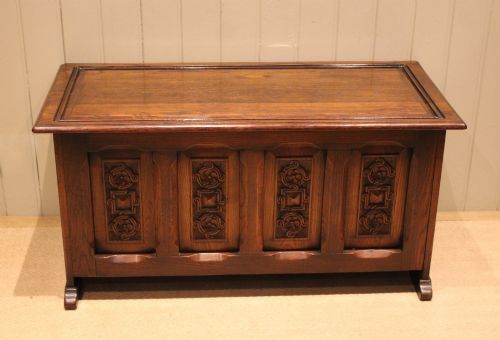
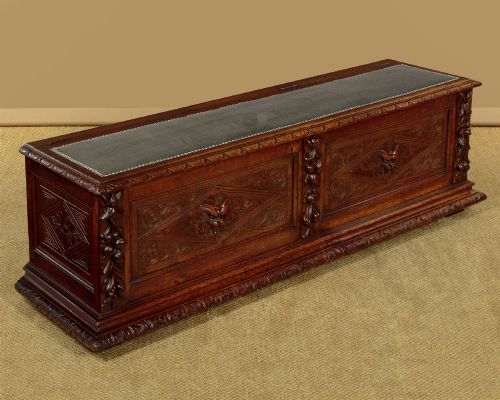
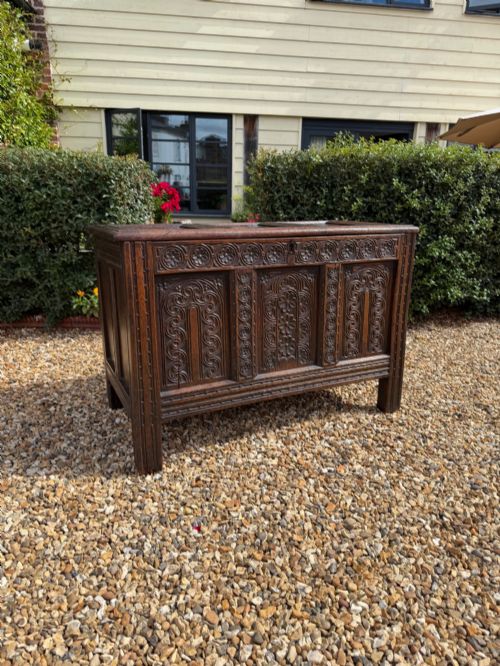
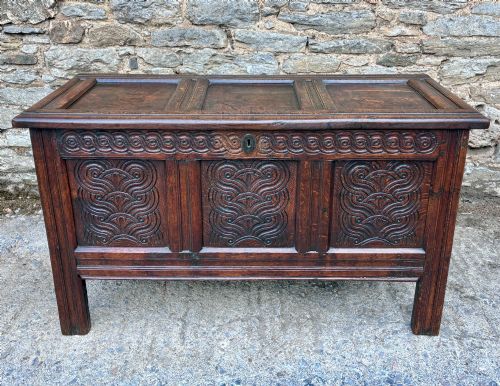
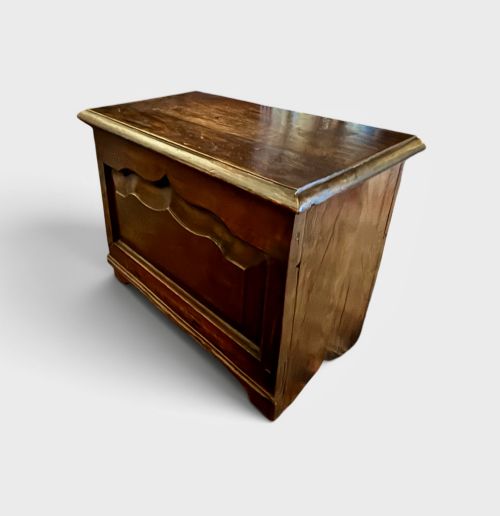
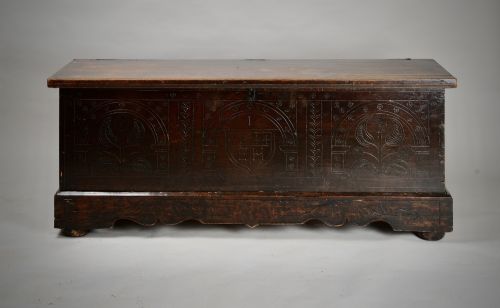
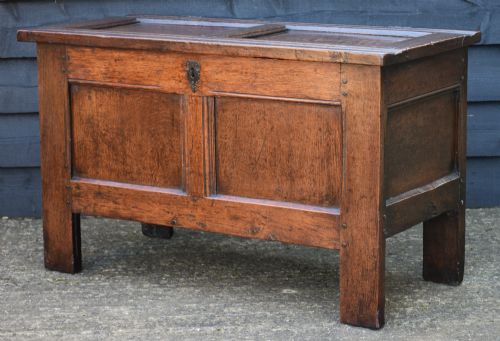
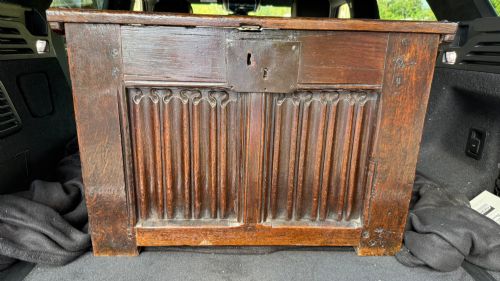
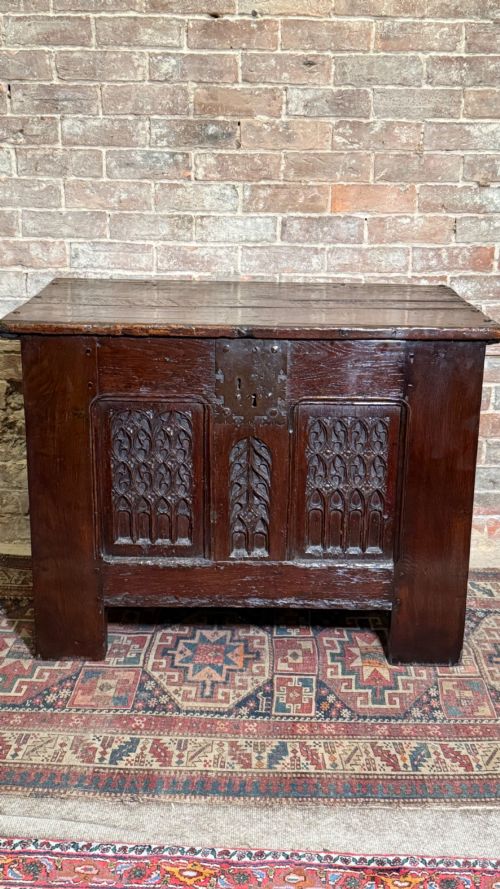
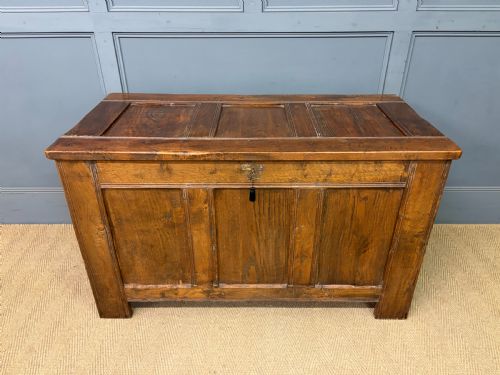
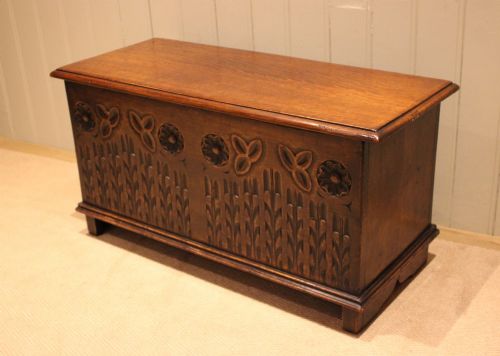
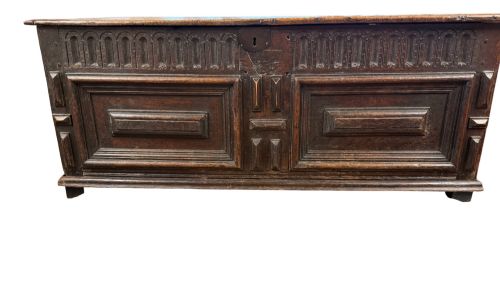
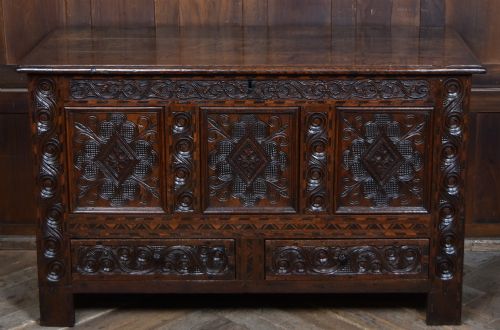
A carved brown trunk on this page usually appears as an oak coffer or blanket chest dating from the seventeenth, eighteenth or nineteenth century. These sturdy wooden containers served domestic and public spaces alike for storing textiles, documents and valuables.
Jacobean and Georgian forms dominate the selection, bringing heavy plank construction and deep relief carving into domestic settings. Buyers frequently encounter smaller provincial examples alongside monumental storage chests originating from English and European workshops.
Alongside traditional European coffers, the selection includes camphorwood trunks and dowry chests from Oriental traditions. These pieces demonstrate alternative timber usage whilst retaining the fundamental box form and carved exterior.
Construction and materials
Solid oak provides the primary structural foundation for most pieces, shaped using traditional joinery such as mortise and tenon frames. Craftsmen relied on natural hardwoods to ensure durability over generations of daily domestic use.
Iron and brass hardware frequently reinforce the corners and hinges of these chests, providing both structural stability and visual contrast to the dark timber. Surface decoration relies on hand-chiselled relief work, creating intricate fluted or geometric panels.
Selected pieces utilise exotic woods like camphor or cypress, valued for their aromatic properties and resistance to insects. These timbers take fine detail in carving while maintaining a rich, warm brown tone.
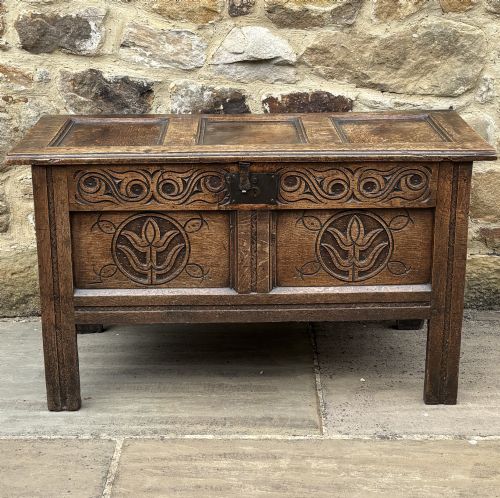
A cottage-size chest featuring a Green Man carving watches over your woollens with ancient, leafy folklore.
Judging execution and finish
The crispness of the hand-carved detail dictates the standard of execution, separating provincial utility work from master joinery. Deep, sharp relief work on the panels indicates a maker with confident tool control.
Surface preservation and original patination heavily influence the desirability of a piece. Trunks retaining untouched timber surfaces and honest wear show a history preserved without excessive modern intervention.
The Carved Brown Trunk Glossary
- Coffer
- A heavy wooden chest traditionally used for storing valuables and documents. These pieces often feature hinged lids and panelled construction.
- Mule chest
- A storage chest featuring one or more drawers beneath the main compartment. This form bridges the gap between the traditional coffer and the modern chest of drawers.
- Patina
- The surface sheen and colour developed by wood over centuries of handling and polishing. Original patination is a key indicator of age and authenticity.
- Stile
- The vertical upright member in panelled woodwork. Stiles frame the recessed panels on the front of traditional chests.
- Dowry chest
- A large container made to hold household goods and linen brought by a bride to her marriage. These pieces frequently receive elaborate carving or metal bindings.
Carved Brown Trunk: Frequently Asked Questions
How were these chests used historically?
Historically, these chests served as secure storage for household textiles, valuable documents and clothing before fitted wardrobes became common.
Their sturdy construction also allowed them to function as tables, benches or seating near firesides within domestic interiors.
How do I care for antique oak timber?
Maintain antique oak by applying natural beeswax occasionally to nourish the dry wood and preserve the surface sheen.
Keep the chest away from direct heat sources and sudden temperature fluctuations to prevent the timber from splitting.
How can I tell a seventeenth-century coffer from later copies?
Early pieces display hand-cut joinery marks, irregular peg placements and genuine surface wear accumulated over centuries of use.
Later revival pieces often show uniform machine tooling and lack the deep, natural patination found on period surfaces.
Where should I place a trunk in a modern home?
A carved chest functions effectively at the foot of a bed for holding spare blankets and winter linens.
Alternatively, position the piece in a hallway or living space to serve as a low table or primary storage feature.