
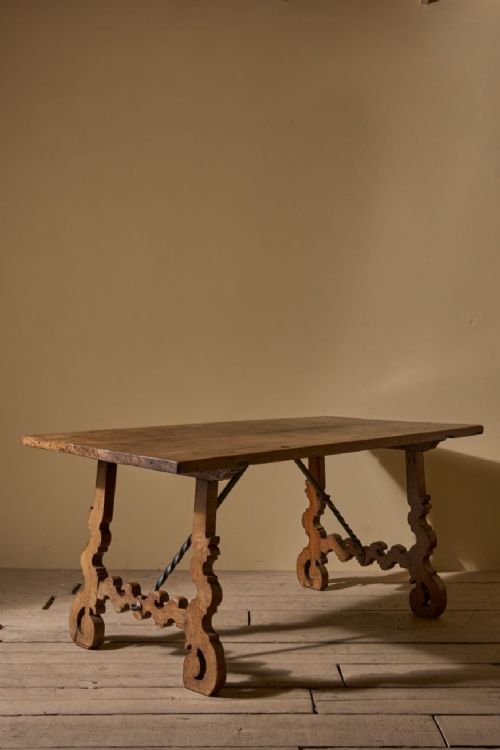
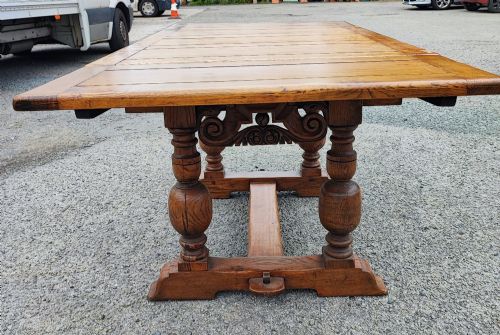
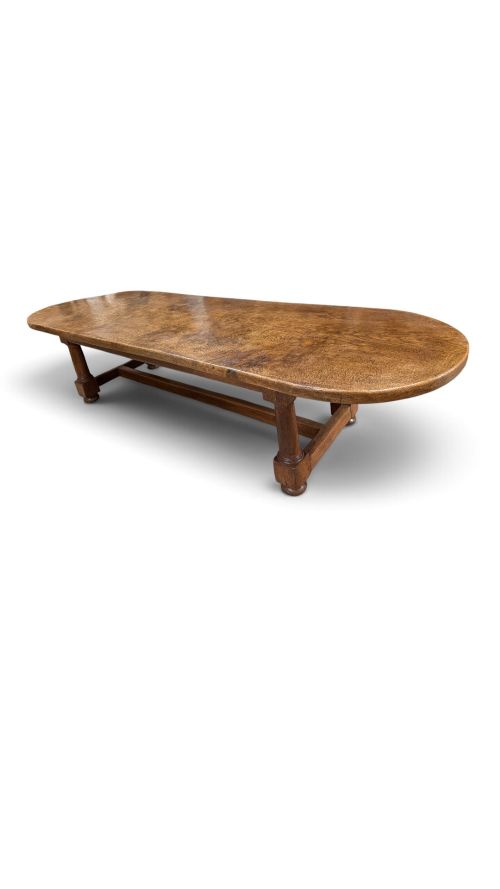
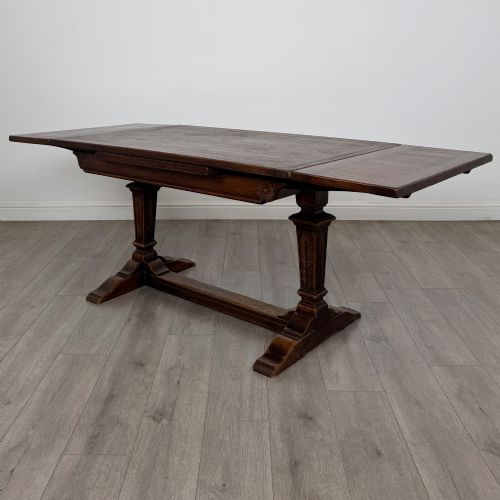
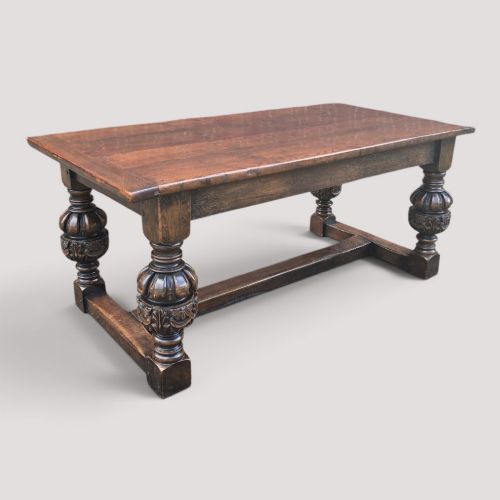
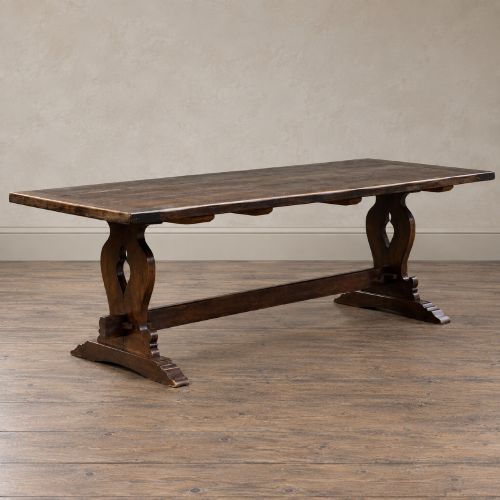
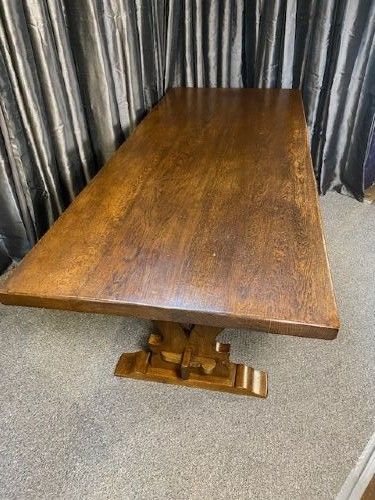
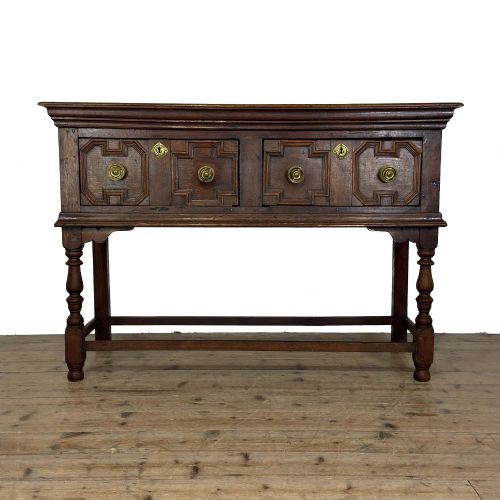
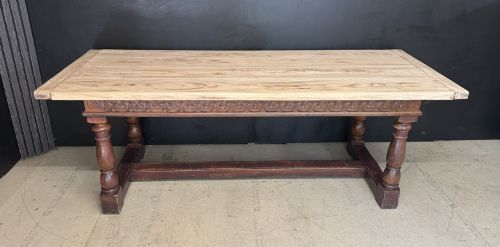
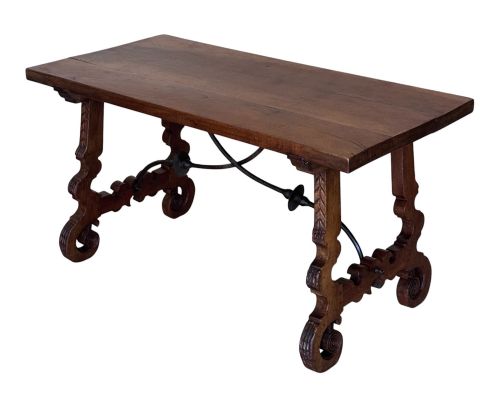
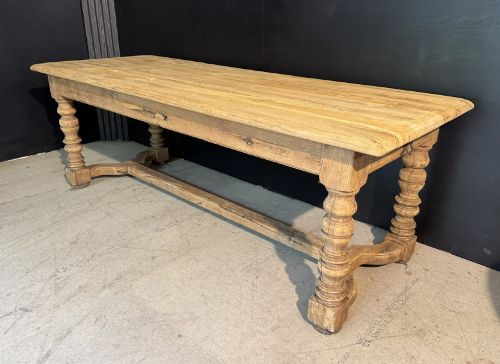


Carved Base Refectory Table
A carved base refectory table brings monumental presence and deep grain character to a room, offering the robust utility of historical dining boards.
Carved Base Refectory Table
A carved base refectory table is a substantial dining board designed for communal gathering, defined by sturdy understructures and architectural ornamentation.
You will most frequently encounter oak and walnut versions spanning from the seventeenth century through to revival periods of the early twentieth century.
The selection ranges from authentic sixteenth and seventeenth-century foundations to Edwardian and later interpretations featuring draw leaves or single plank surfaces.
Materials and construction methods
Construction relies heavily on timber selection, with oak and walnut providing the structural integrity required for long spans and heavy trestles.
Joinery methods utilise traditional pegged mortise and tenon joints to secure the thick tops to heavily carved bases, often reinforced with wrought iron or stretchers.
The inventory encompasses standard dining tables, extendable draw leaf formats, and compact coffee table adaptations.
Indicators of quality and distinction
The distinction between tiers rests upon the integrity of the timber and the depth of the carving on the structural supports.
Originality of the top to the base commands greater appreciation, alongside the rich natural patina accumulated on the wood over centuries of use.
Sir Robert Lorimer
The Carved Base Refectory Table Glossary
- Refectory table
- A long dining table originally used in monastic dining halls for communal meals. These pieces typically feature narrow proportions and substantial underframing.
- Draw leaf table
- A table equipped with pull-out leaves stored beneath the main top that extend outward to increase surface area. This mechanism allows for flexible seating arrangements.
- Jacobean Revival
- A nineteenth or twentieth-century style replicating the architectural motifs and heavy proportions of the early seventeenth century. It incorporates geometric mouldings and turned supports.
- Single plank
- A tabletop constructed from one wide piece of timber running the entire length of the board. This feature indicates the use of mature trees from historical forests.
- Stretcher
- A horizontal timber connecting the legs of a table to provide lateral stability and rigidity. They often sit close to the floor in traditional designs.
Carved Base Refectory Table: Frequently Asked Questions
How do I care for an antique oak table?
Maintain the timber by applying natural beeswax periodically to nourish the dry grain and protect against moisture.
Avoid placing the table near direct heat sources or in fluctuating sunlight to prevent timber movement.
Are these tables suitable for daily dining?
These boards were built for heavy communal use, making them exceptionally durable for family meals and gatherings.
Utilise heat mats and coasters to protect the historic polish and timber surface from daily wear.
How do I identify a seventeenth century table?
Examine the construction for pegged joints, hand-planed surface textures, and signs of structural wear consistent with early hand-tool work.
Genuine pieces often display distinct patination and timber shrinkage that modern reproductions cannot replicate.
What is a draw leaf mechanism?
A draw leaf system uses two sliding panels hidden beneath the main surface that pull out to lengthen the table.
This clever design provides extra dining space without requiring separate stored leaves.