


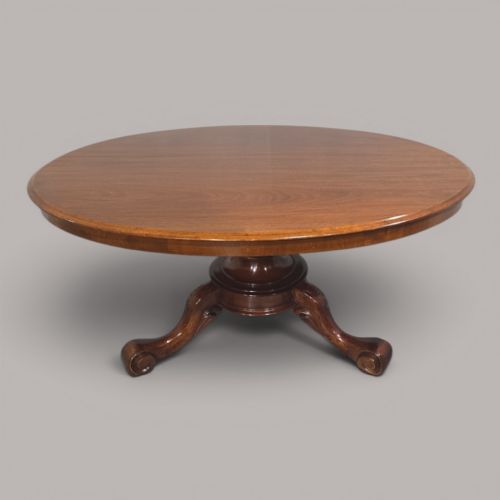
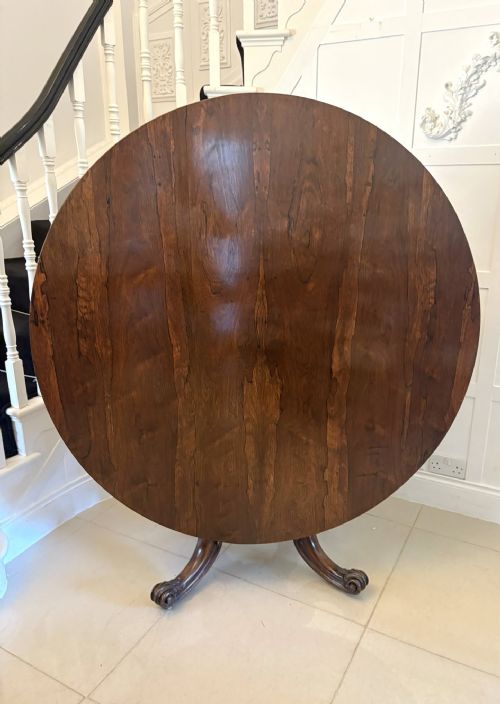
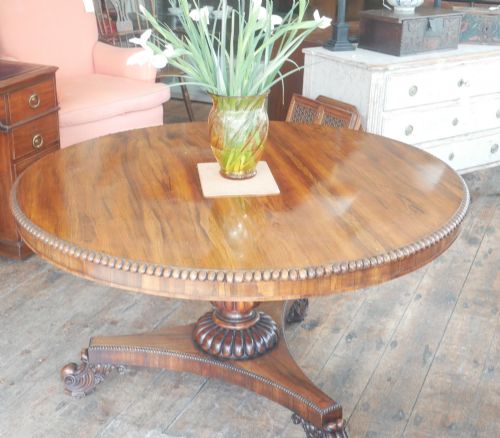


Carved Base Loo Table
A carved base loo table brings heavy timber and elaborate carving together in a central piece designed for evening gatherings.
Carved Base Loo Table
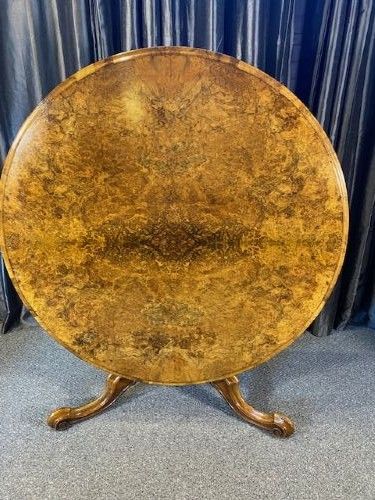
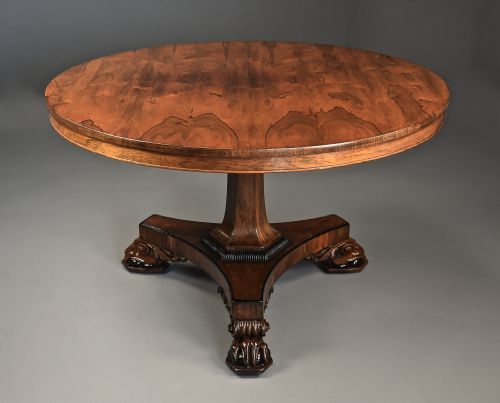
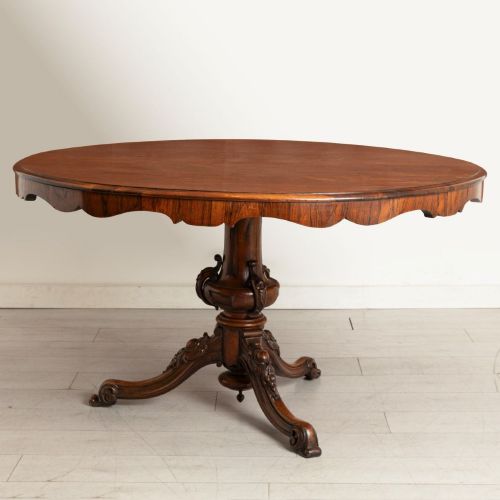
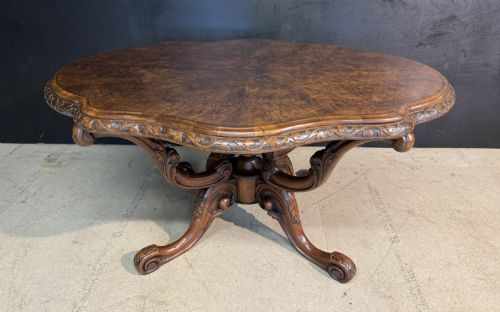
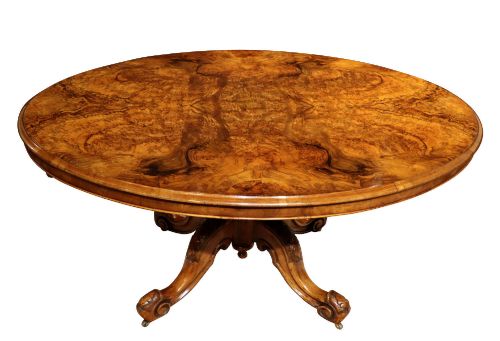
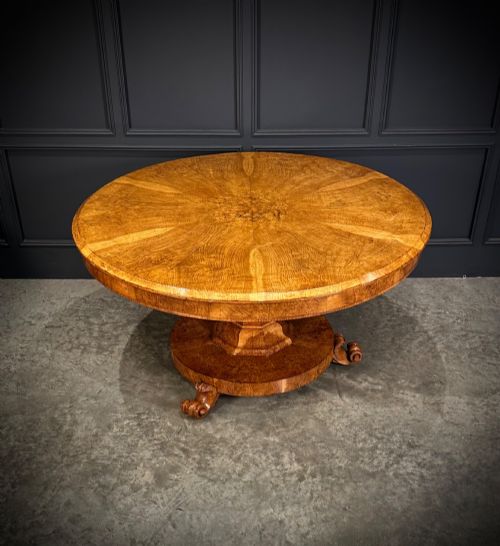
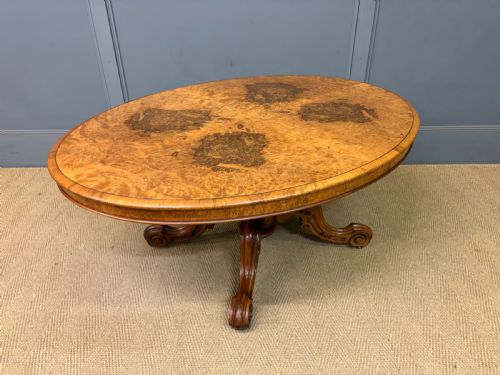
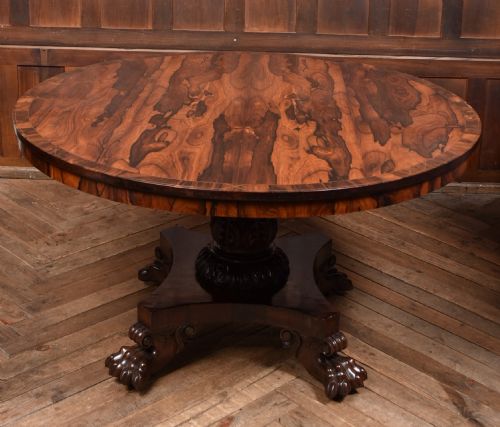
When you search for a carved base loo table, you encounter large circular or oval top tables from the nineteenth century designed for card games and breakfast. These pieces rest on heavy, solid timber pedestals with distinct carved tripod, quadrapod, or basket bases that anchor the room.
You are most likely to meet Victorian and William IV examples fashioned from rosewood or burr walnut, often featuring tilt-top or snap-top mechanisms. They serve as primary centre tables in larger rooms, combining practicality with robust decorative carving.
How they were made
Cabinet makers utilised dense hardwoods like mahogany, rosewood, and walnut, frequently applying fine veneer over secondary timbers to achieve rich grain patterns. Surfaces often display boxwood inlay or radial veneering.
The heavy central pedestals incorporate solid turned and carved components, joined to robust legs such as quadrapod or basket bases. Tilt-top and snap-top actions rely on sturdy brass locking mechanisms fitted beneath the table top.
Carved Base Loo Table Retail Price Guide 2026
Typical asking prices for carved base loo table among the pieces listed under this phrase on Sellingantiques today, from the lower quarter to the upper quarter. They describe what is for sale here now, not the wider market.
Materials recorded across the inventory include rosewood, mahogany, walnut, burr walnut, pollard oak, gonçalo alves, and macassar ebony.
What varies in quality
Quality rests in the selection of the timber veneer and the crispness of the pedestal carving. Finer examples display figured walnut or rosewood with matched grain patterns across the top and deeply undercut, detailed carving on the base.
Construction methods also separate standard production from bespoke execution. Superior tables maintain stable tilt mechanisms and tight joinery in the heavy central pillars without structural sagging.
Gillows
The Carved Base Loo Table Glossary
- Loo table
- A large nineteenth-century round or oval table used for the card game loo and for breakfast. These pieces typically feature a tilt-top mechanism for storage against a wall.
- Tilt-top table
- A table with a hinged top that tips vertically when not in use. This design allowed large furniture to be cleared to the sides of a room.
- Quadrapod base
- A heavy pedestal support resting on four feet or legs. It provides stable footing for large circular and oval table tops.
- Burr walnut
- Wood taken from the burl growth of a walnut tree, producing swirling, highly figured grain patterns. Cabinet makers prized this material for decorative veneering.
- Snap-top table
- A table fitted with a catch that locks the hinged top horizontally in place for use. It releases quickly to pivot the top upright.
Carved Base Loo Table: Frequently Asked Questions
How do I use a loo table today?
These large circular tables function effectively as central display surfaces in spacious entrance halls or as generous dining tables in everyday use.
Their tilt-top capability also allows them to stand flat against a perimeter wall when you need to reclaim floor space.
What is the difference between a loo table and a breakfast table?
While both terms describe nineteenth-century pedestal tables with large circular or oval tops, loo tables historically accommodated card games.
In practice, makers constructed them with similar tilt-top mechanisms and heavy carved bases across the Regency and Victorian periods.
How can I tell a Victorian table from a Regency one?
Regency and William IV pieces often display cleaner architectural lines with rosewood or mahogany solids, sometimes featuring brass inlay or simpler pillar designs.
Victorian examples frequently introduce burr walnut veneers, heavier carved quadrapod or basket bases, and more exuberant floral or scrolling woodwork.
How do I care for rosewood and walnut surfaces?
Keep these timber surfaces away from direct sunlight and steady heat sources to prevent the fine veneers from drying out or splitting over time.
Apply a traditional beeswax polish occasionally and buff gently with a soft cloth to maintain the natural lustre of the wood.