

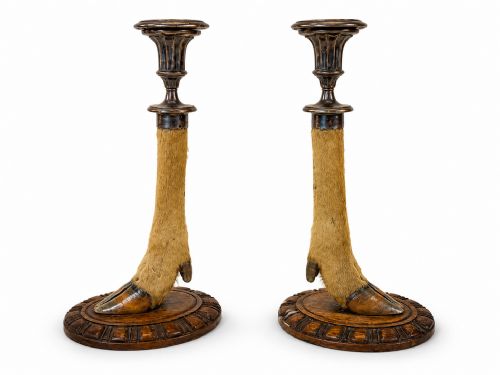
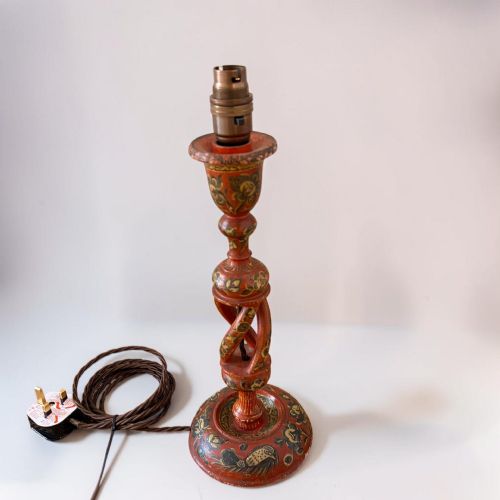
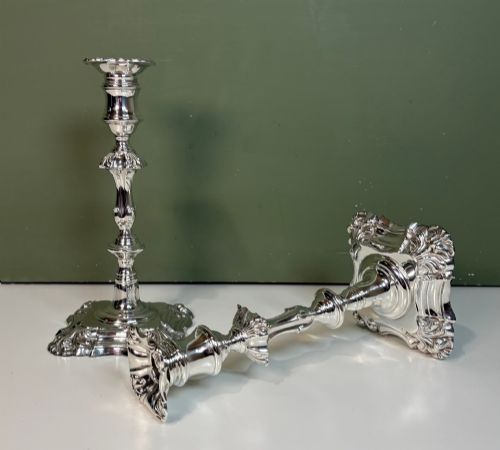
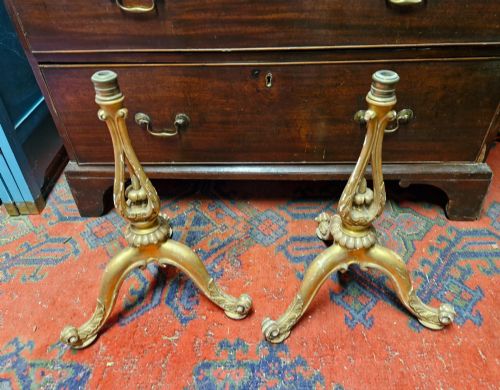
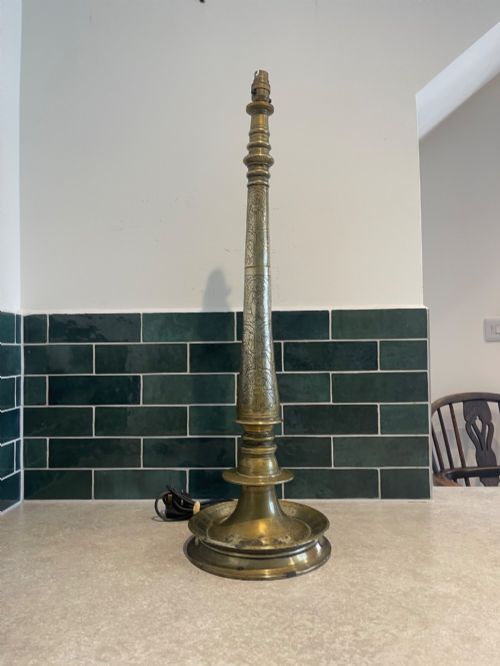
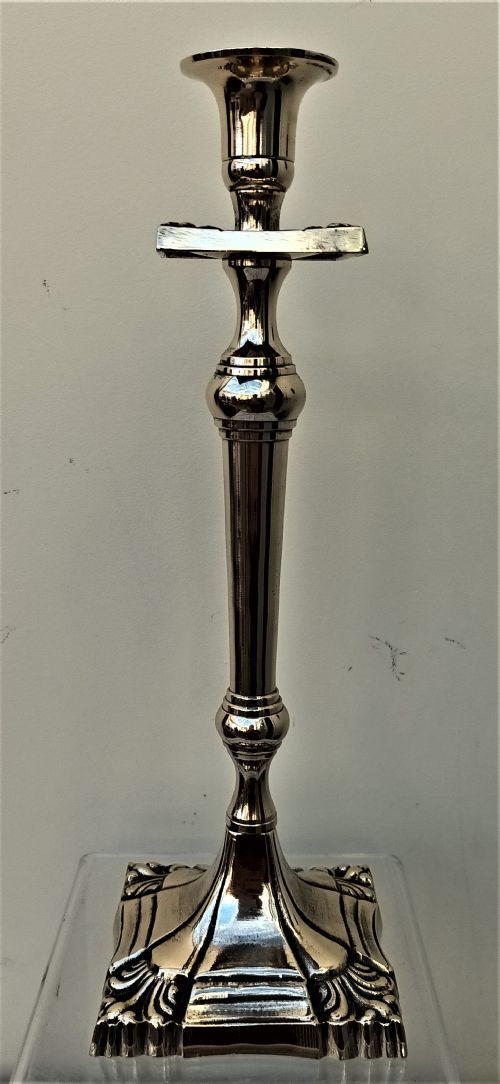
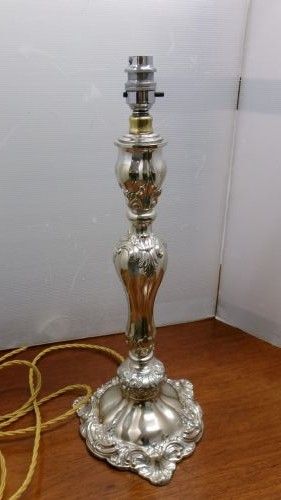
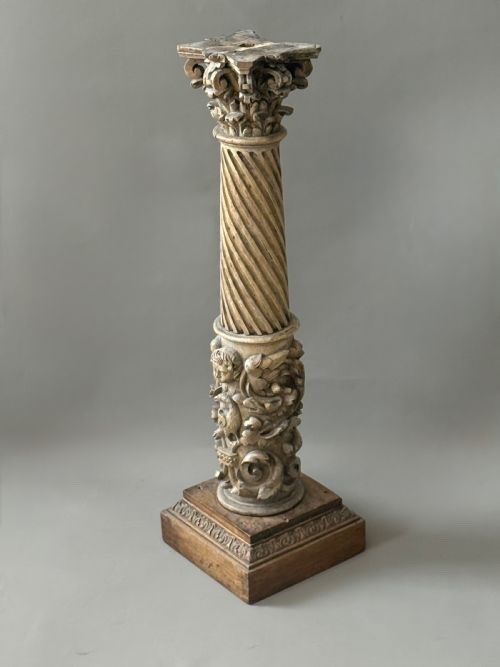
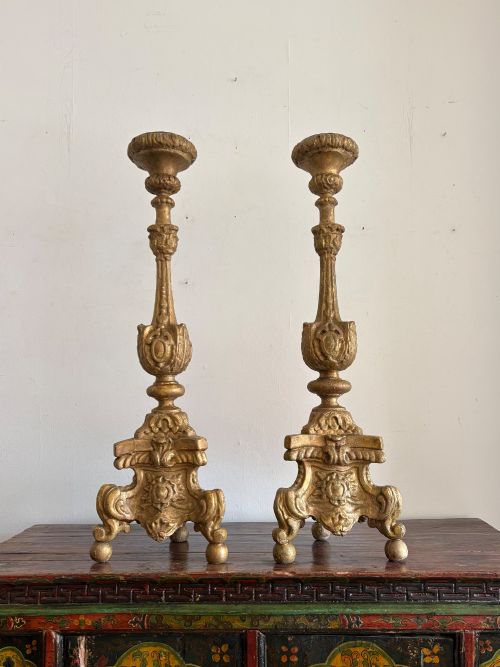

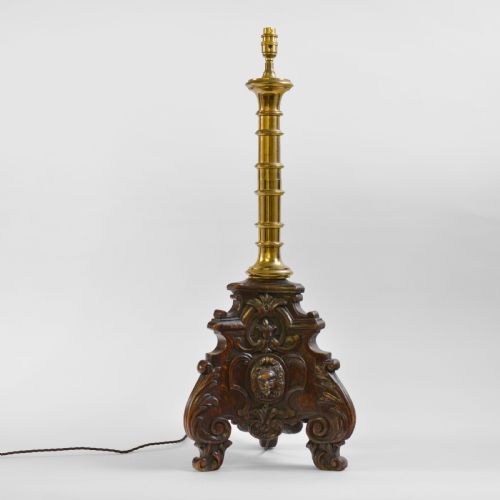


Carved Base Candlesticks
These carved base candlesticks bring tactile presence to a room through centuries of hand-worked timber, brass, and gilt surfaces.
Carved Base Candlesticks
When you search for carved base candlesticks, you encounter items spanning from the seventeenth century through the Edwardian period, encompassing table lamps, standard lamps, and traditional candle holders. These pieces primarily originate from English, French, Italian, and Flemish workshops, reflecting diverse regional aesthetics from robust baroque pillars to slender neoclassical forms.
The most common examples on this page are nineteenth-century turned or carved wooden supports, frequently adapted as table lamps alongside pairs of Italian giltwood altar sticks and heavy brass designs. Many of these objects bear evidence of past ritual or domestic lighting use, transitioning smoothly into contemporary interiors as statement illumination.
The selection ranges from monumental carved wooden figures on socle bases to smaller painted or limed oak pieces and silver-leafed standards. Each object centres on a substantial decorative support that elevates the simple act of holding a candle or mounting a bulb.
How they were made
Makers shaped these pieces primarily from solid woods such as oak and timber, applying layers of gesso, paint, gold leaf, or giltwood to enrich the carved surfaces. Artisans utilised hand-carving techniques to create figural elements, architectural pillars, and intricate scrollwork.
Metal versions utilise cast brass, EPNS, and sterling silver, often combining heavy metal components with turned wooden cores or marbleized details. Surface finishes vary from bright gilding and silver leaf to distressed paint and limed oak treatments, highlighting the grain and chisel marks.
Carved Base Candlesticks Retail Price Guide 2026
Typical asking prices for carved base candlesticks among the pieces listed under this phrase on Sellingantiques today, from the lower quarter to the upper quarter. They describe what is for sale here now, not the wider market.
Current listings demonstrate a strong representation of seventeenth and eighteenth-century baroque forms alongside nineteenth-century giltwood and brass designs.
What varies in quality
The distinction between ordinary and exceptional work lies in the crispness of the hand-carving and the depth of the original gilding or surface finish. Master carvers achieved anatomical conviction in figural supports and architectural precision in baroque pillars, whereas lesser pieces rely on mechanical turning and crude surface applications.
Proportion and structural integrity dictate the standing of a piece, with balanced weight distribution across tripod bases and socles marking superior construction. Original surfaces that retain their historic patination outrank items stripped or heavily repainted in later eras.
The Carved Base Candlesticks Glossary
- Giltwood
- Wood that has been coated with gold leaf or gold paint over a prepared gesso ground. This technique creates a luminous surface common on baroque altar pieces.
- Pricket
- A sharp metal spike on a candlestick designed to impale and secure a wax candle. These are frequently found on seventeenth and eighteenth-century altar sticks.
- Socle
- A short plinth or pedestal supporting a statue, vase, or candlestick base. It provides physical stability and visual lift to figural carvings.
- Gesso
- A plaster-like mixture applied to wood surfaces to prepare them for gilding or painting. It allows artisans to carve intricate details before applying gold leaf.
- Standard Lamp
- A tall floor-standing lamp base designed to illuminate a room from standing height. These often share turning styles with large candlesticks.
Carved Base Candlesticks: Frequently Asked Questions
How are these lamp bases wired?
Most antique candlesticks and pricket sticks have been converted to electricity at various points in their history, using drilled channels or discreet cord paths.
Buyers often work with a local electrician to ensure the internal wiring meets modern safety standards without altering the historic exterior.
Can I use real candles on them?
Many items retain their original prickets or flat sconces, allowing them to function with traditional wax candles if desired.
When fitted as lamps, the conversion is sometimes reversible, though many collectors prefer to leave the electrical fittings in place.
How do I date a wooden base?
Dating relies on tool marks, timber species, joinery methods, and the style of the carving relative to known historical periods.
Surface characteristics such as crackled gesso and oxidized gilding also provide reliable clues to a piece's true age.
Where should I place a standard lamp?
Tall standard lamps and monumental pillars suit corners, beside reading chairs, or flanking large pieces of furniture where their height commands space.
Their substantial carved bases anchor the visual weight of the room during both day and night.