




Carved Barometer
A carved barometer measures atmospheric pressure while displaying the sculptural depth of Victorian woodcarving.
Carved Barometer
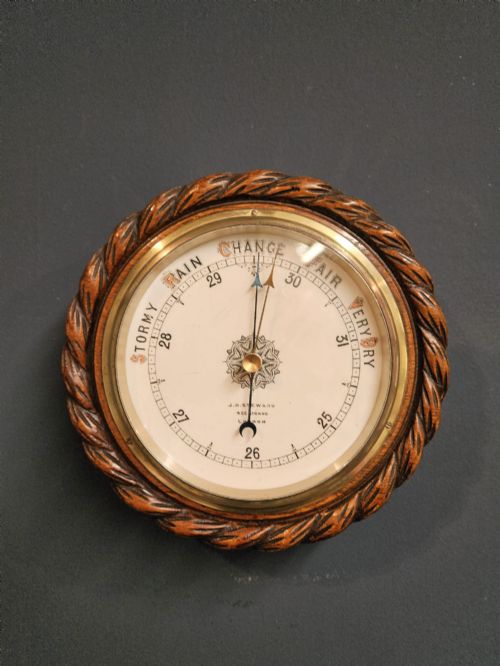
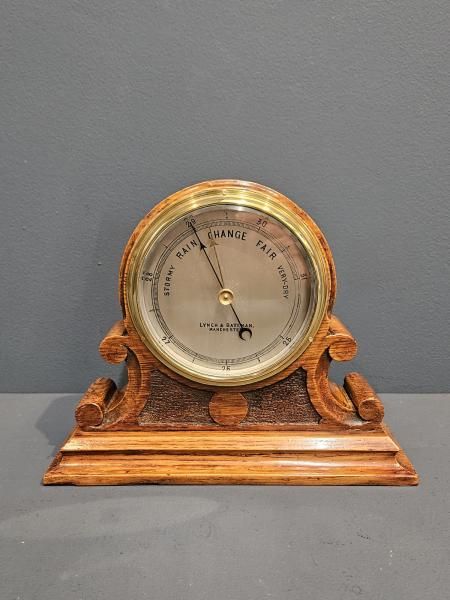
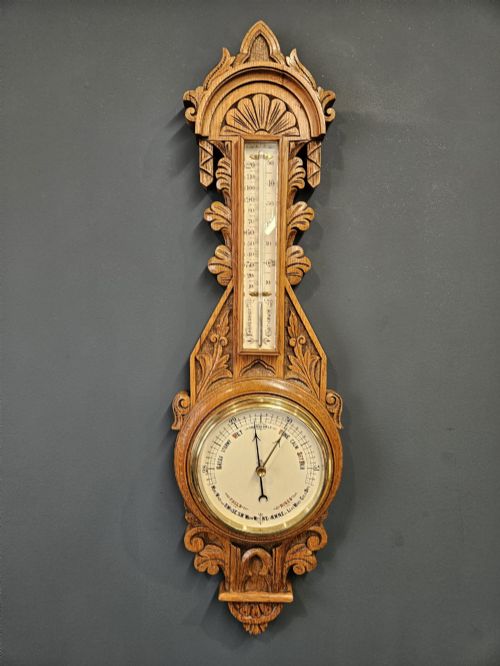
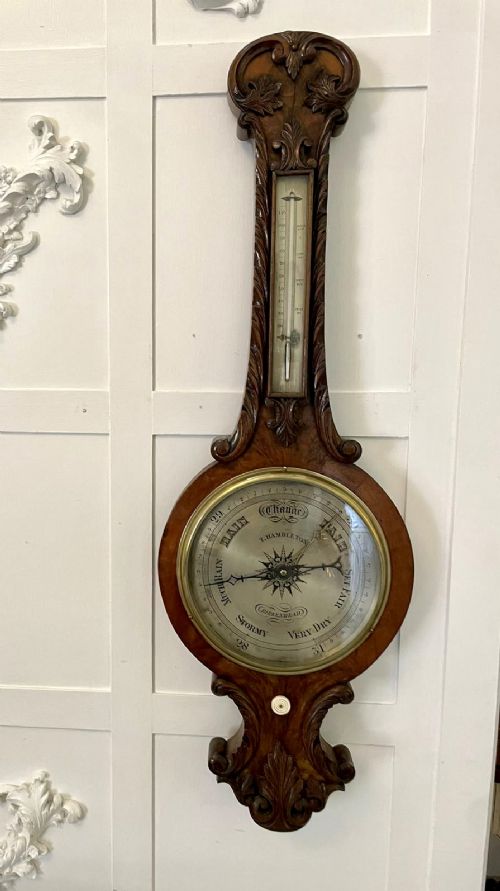
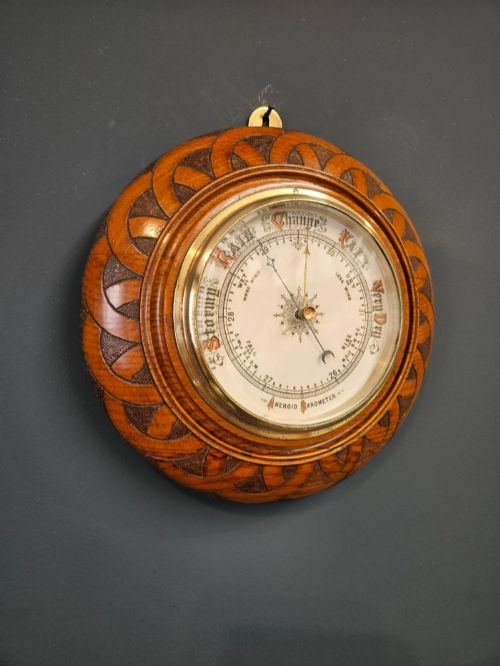
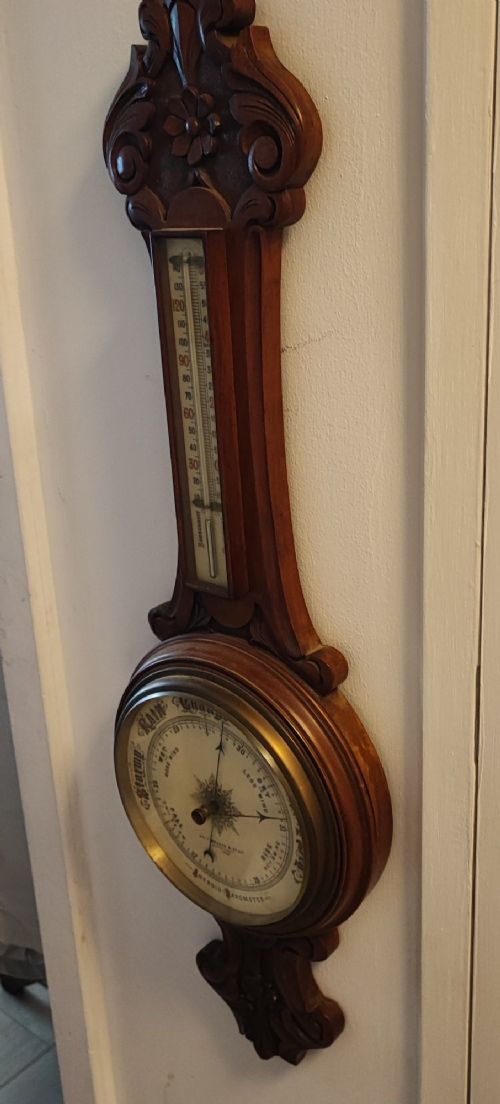
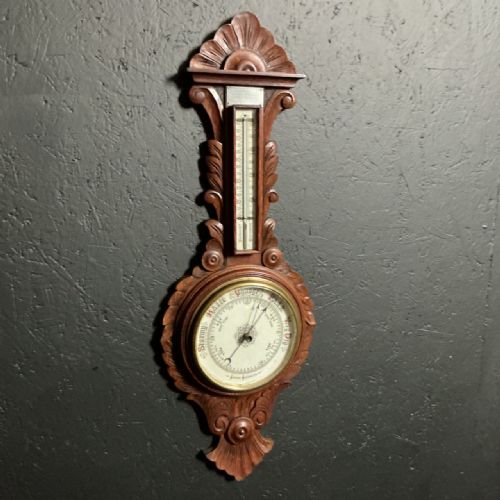
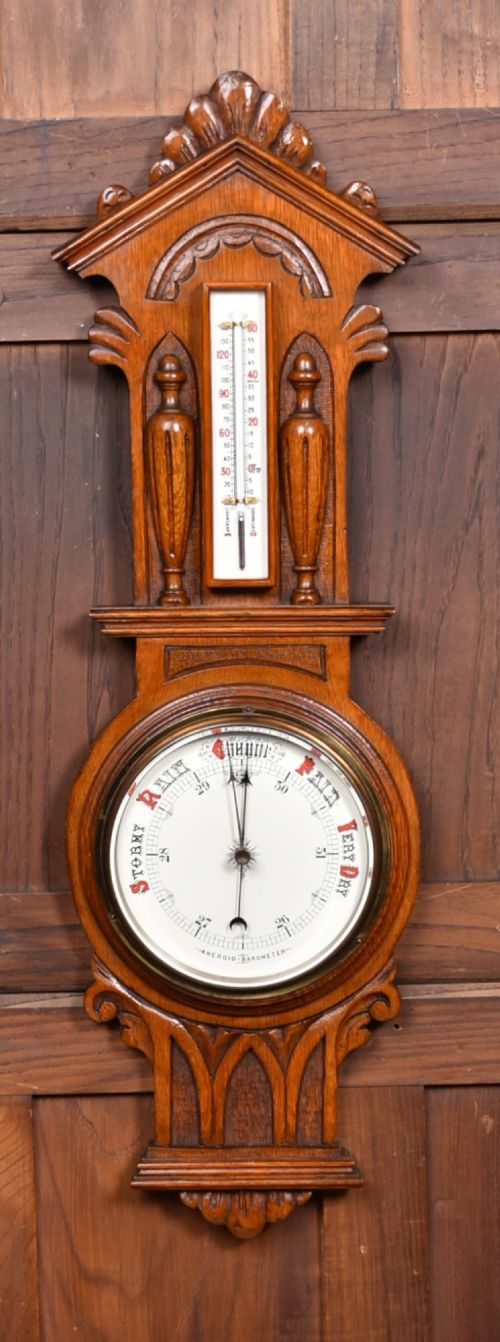
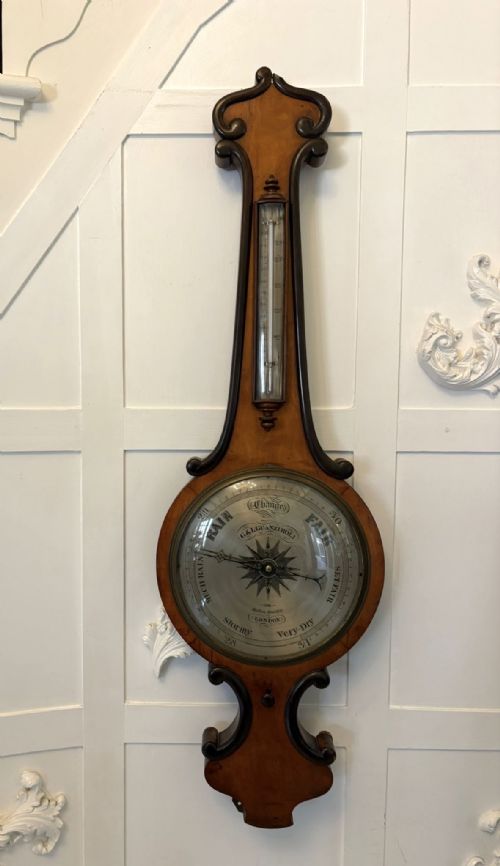
A carved barometer combines meteorological function with decorative woodwork, primarily emerging from Victorian and Edwardian periods. These pieces range from banjo and wheel barometers to wall-hung aneroid instruments.
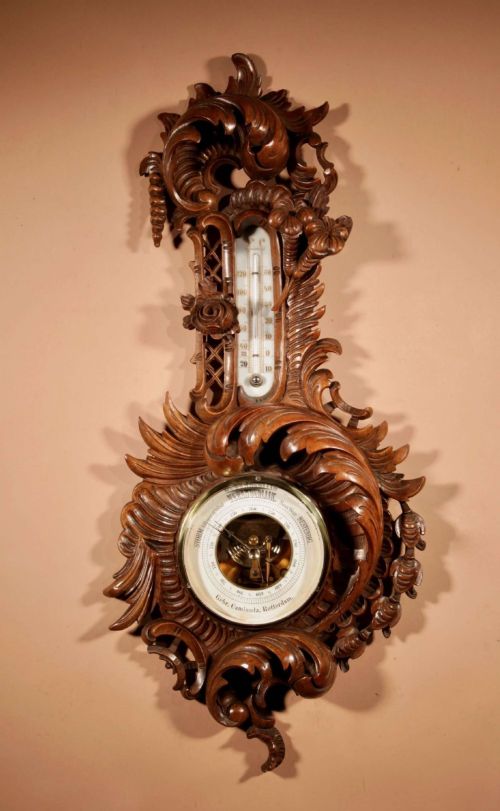
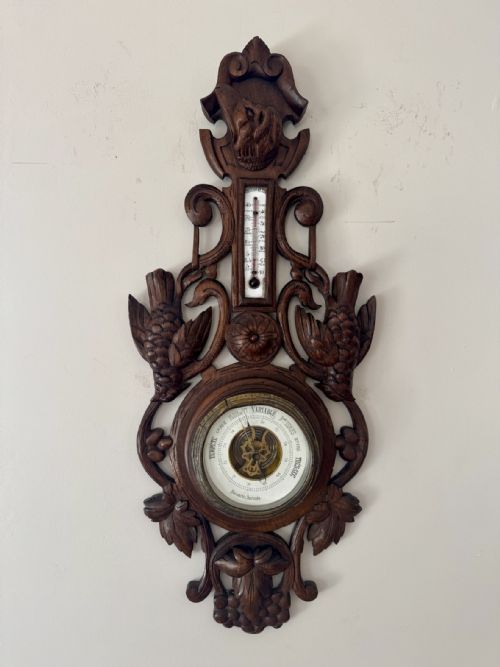
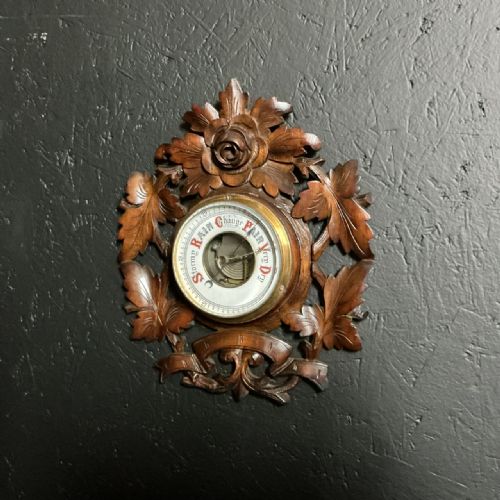
The most common examples encountered are oak or walnut banjo barometers featuring foliate and geometric carving. Black Forest variants also appear frequently, often displaying deep relief work in walnut and golden walnut.
Beyond standard domestic timepieces and weather glasses, related objects include combined clock, thermometer and barometer units, alongside specialised forms like Admiral Fitzroy barometers and ships barometers.
Materials and construction
The casings rely on cabinet timbers such as oak, walnut, and mahogany, shaped through manual carving and turning. Instrument faces incorporate brassbezels, silvered dials, ceramic or porcelain components, and protective glass covers.
Mechanically, these instruments utilise either traditional mercury-filled glass tubes for stick barometers or aneroid movements with skeletonised dials. Dials often feature engraved scales paired with integrated mercury thermometers.
Carved Barometer Retail Price Guide 2026
Typical asking prices for carved barometer among the pieces listed under this phrase on Sellingantiques today, from the lower quarter to the upper quarter. They describe what is for sale here now, not the wider market.
Listings feature oak, walnut, and mahogany cases spanning Victorian, Edwardian, and Georgian periods alongside Black Forest styles.
Judging quality in carved barometers
Quality rests primarily on the depth, sharpness, and ambition of the woodwork. Crisp relief carving on walnut and oak bodies separates master workshop output from simpler, repetitive production.
The complexity of the movement and the quality of the dial fittings elevate an item further. Pieces combining barometers with thermometers, clocks, or delicate porcelain and silvered dials demonstrate superior craftsmanship.
G and L Guanziroli·Bramwell and Harbron·Negretti and Zambra
The Carved Barometer Glossary
- Aneroid barometer
- An instrument that measures air pressure using a flexible metal capsule rather than liquid mercury. It responds to pressure changes to drive a mechanical pointer across a dial face.
- Banjo barometer
- A household weather glass housed in a distinctive curved wooden case resembling a banjo. These typically display a hygrometer or thermometer at the top and a larger dial at the base.
- Stick barometer
- A tall, narrow wall instrument that utilises a vertical glass tube filled with mercury. It allows direct observation of barometric height changes against an engraved scale.
- Skeletonised movement
- A clock or barometer mechanism with exposed plates and gears. This design reveals the intricate interior workings beneath the dial.
- Silvered dial
- A metal face treated to produce a matte silver finish. Numerals and graduations are then engraved and blackened for legibility.
Carved Barometer: Frequently Asked Questions
What is a carved barometer?
A carved barometer is a functional weather-measuring instrument housed within a decorative wooden frame shaped by hand. These pieces serve as both scientific tools and ornamental wall hangings.
Most examples date from the Victorian and Edwardian eras, utilising timber cases carved with foliage, geometric patterns, or wildlife motifs.
How do aneroid and mercury barometers differ?
Mercury barometers rely on a column of liquid in a glass tube that rises and falls with atmospheric pressure. They represent traditional stick barometer designs.
An aneroid barometer uses an internal sealed metal vacuum chamber that expands and contracts. This movement transfers mechanically to the dial pointer without any liquid.
Where were carved barometers displayed?
These instruments hung in prominent domestic spaces such as hallways, libraries, and drawing rooms. They provided practical weather forecasts while complementing period interior woodwork.
Many styles, particularly Black Forest and banjo variants, were designed to draw the eye as decorative focal points on a wall.
How do I identify a Black Forest barometer?
Black Forest barometers typically feature deeply undercut carvings in walnut, often depicting naturalistic subjects like ivy wreaths, game, or birds. The woodwork shows high sculptural relief.
Originating from European woodland carving traditions, these pieces frequently pair aneroid movements with ceramic or wooden dials.