
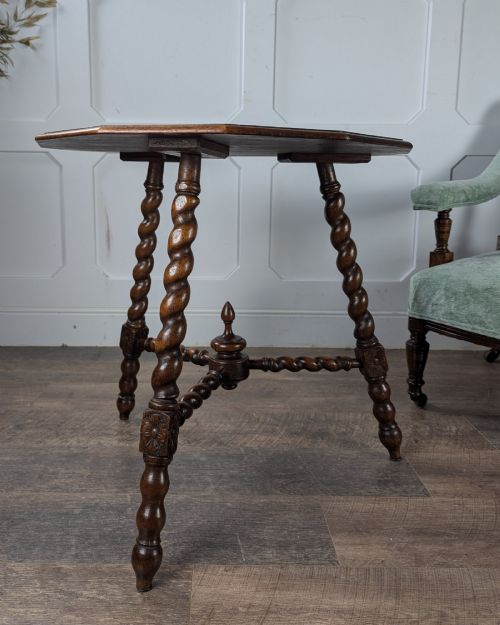
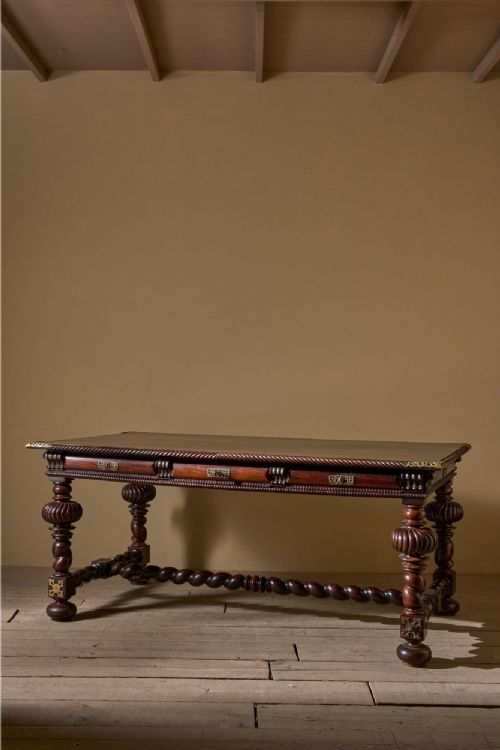
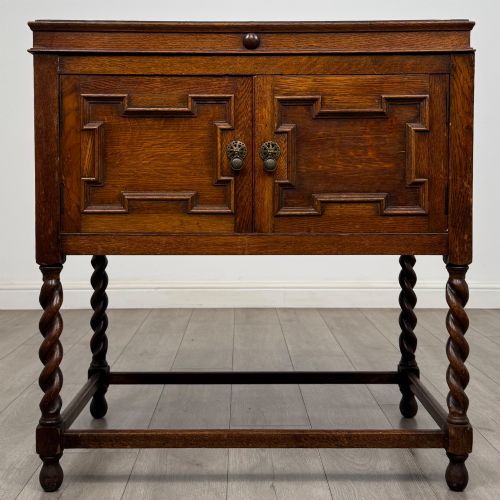
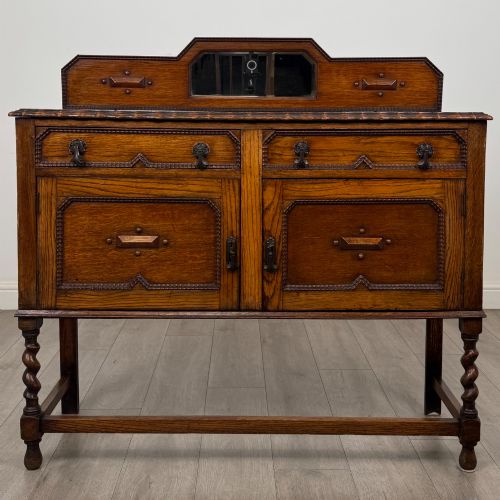
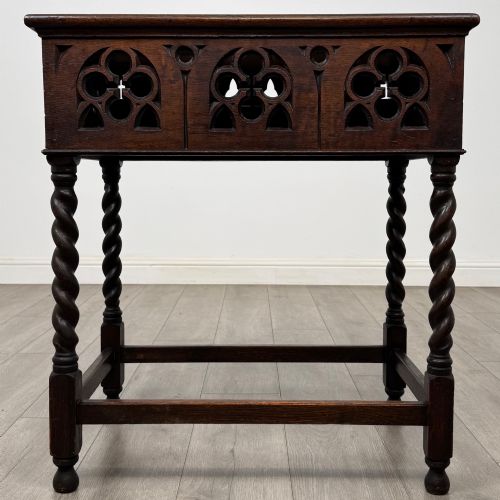


Carved Barley Leg Table
A carved barley leg table brings tactile turnery and rich timber into a room, offering both robust function and historic warmth.
Carved Barley Leg Table
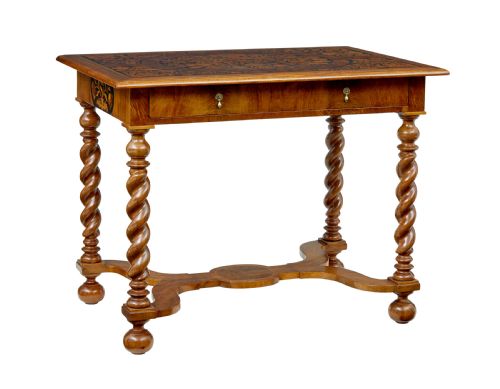
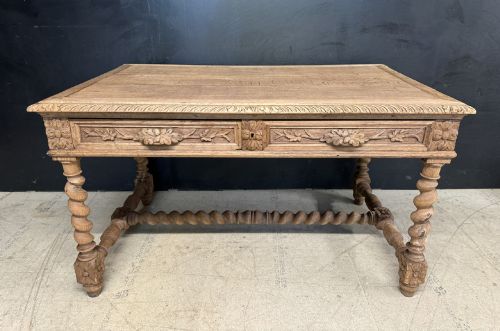
When you search for a carved barley leg table, you encounter a form defined primarily by spiral turnery supporting surfaces of oak, walnut, or rosewood. These pieces span centuries of domestic use, appearing most frequently in the listings from the Victorian, Edwardian, and early twentieth-century periods.
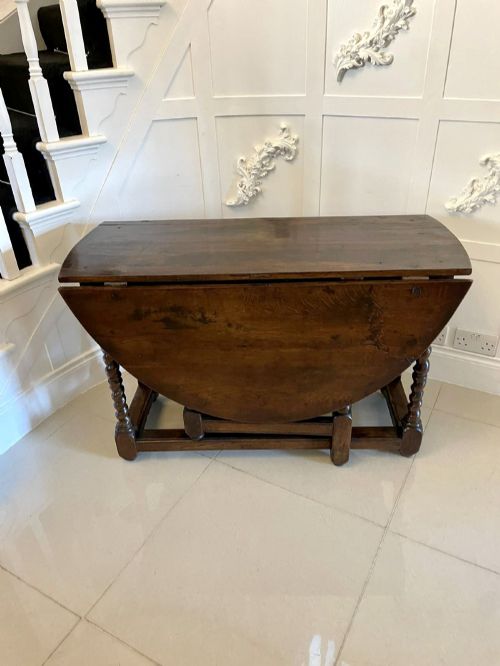
The format ranges from small occasional tables and side pieces to larger gateleg dining tables and writing desks. Oak dominates the vernacular British examples, while Portuguese and French variants showcase exotic timbers like rosewood and walnut.
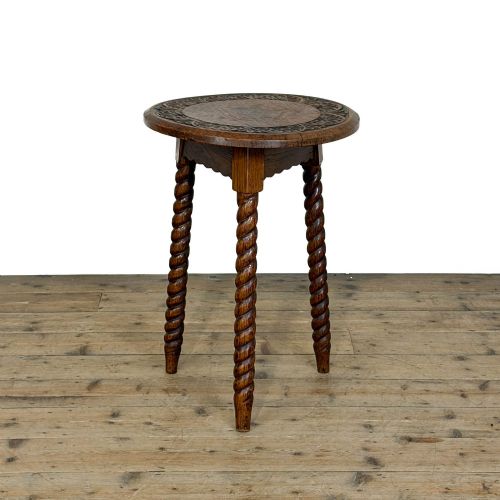
You are most likely to meet modest side tables and drop-leaf designs featuring turned uprights and subtle edge carving. Their utility remains straightforward, designed historically for holding lamps, books, or tea.
Materials and construction
The distinctive spiral supports are shaped on a lathe, cutting the helical twist into solid timber such as oak or walnut before hand-finishing with chisels. Joinery relies on traditional methods including mortise and tenon frames, pegged joints, and drop-leaf hinges.
Surfaces often combine solid timber construction with figured veneers or parquetry work, particularly on seventeenth-century and nineteenth-century examples. Hardware such as brass handles and drawer pulls are fitted alongside leather writing inserts where the form demands a desk or table top.
Listings feature solid oak, walnut, rosewood, and mahogany across side tables, desks, and gateleg dining tables.
Quality and proportion
Quality rests upon the crispness of the hand-carved details and the proportion of the spiral turnings relative to the top. Superior examples maintain structural integrity without excessive timber shrinkage, displaying harmonious grain matching across panels and drop leaves.
The integrity of the timber species dictates much of the standing, with dense native oak or figured walnut holding a sharper turn than softer woods. Original hardware, undisturbed patination, and minimal replacement parts elevate an example above heavily restored or later married pieces.
The Carved Barley Leg Table Glossary
- Barley twist
- A spiral form of wood turnery resembling a coiled rope, popular in seventeenth-century furniture and revived during the Victorian and Edwardian eras. This distinctive profile provides strong vertical emphasis on table legs.
- Gateleg table
- A drop-leaf table with hinged legs that swing outward to support the folding leaves. This mechanism allows the surface to expand for dining or contract for storage against a wall.
- Parquetry
- Geometric patterns of wood veneer laid down on a structural carcase to form decorative surfaces. It appears on top panels of finer tables to create subtle tonal contrast.
- Drop-leaf
- A table design featuring a fixed central section with hinged flaps on either side. These flaps lift to increase surface area when required.
Carved Barley Leg Table: Frequently Asked Questions
How do I date a barley twist table?
Dating relies on timber choice, construction marks, and the style of the turnery. Seventeenth-century originals show hand-split oak and peg construction, whereas revival pieces from the Victorian and Edwardian periods use machine-assisted lathe work and uniform fixings.
Examine the underside of the top and the joints for tool marks. Later twentieth-century versions often feature lighter modern adhesives and standardised screws not found on earlier examples.
Are these tables sturdy enough for daily use?
Most variants are robustly built from solid oak or walnut, making them well-suited for everyday domestic tasks. Gateleg versions and occasional tables offer stable platforms if their leg hinges and joints remain tight.
Avoid placing them in areas with extreme humidity fluctuations to protect the timber and glue joints. Regular light polishing maintains the moisture balance in the wood.
What is the difference between oak and rosewood versions?
Oak examples typically reflect British vernacular furniture traditions, emphasising utility, heavy gateleg frames, and Jacobean or Gothic revival styles. Rosewood versions frequently point toward Portuguese colonial or continental production, showcasing denser grain and finer decorative carving.
Weight and colour separate the two materials instantly. Oak offers a golden or dark brown textured grain, while rosewood provides a heavy, polished dark reddish-brown surface.
Where should I place an occasional table?
An occasional table works effectively beside a sofa or chair to hold lamps, drinks, or books. Their compact footprints allow them to fit into hallways or empty corners without crowding a room.
Ensure the floor is level so the four legs sit flush, preventing any wobble during use. Keep them out of direct sunlight to preserve the finish on the timber.