





Carved Ball and Claw Stool
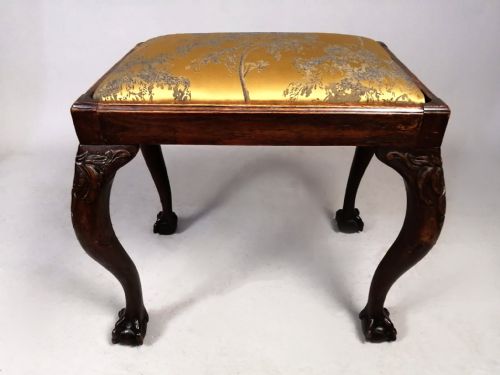
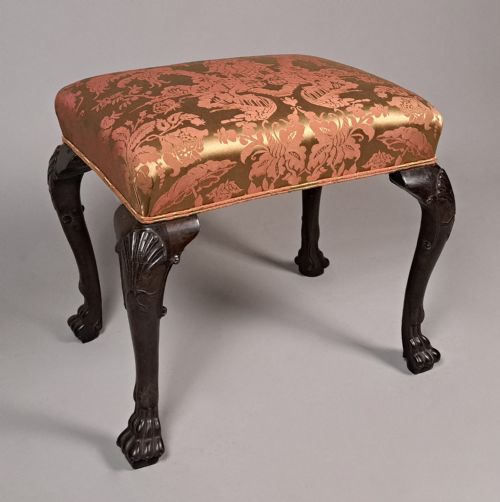
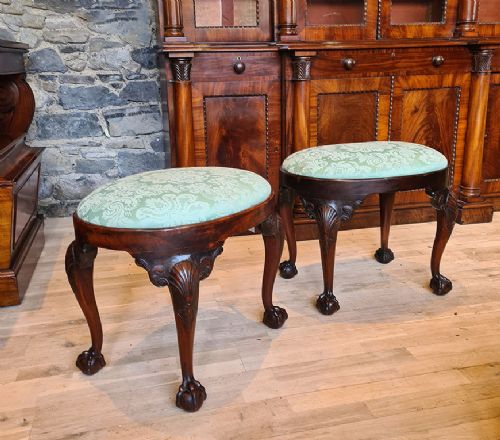
These carved ball and claw stool designs offer robust timber frames and distinctive claw feet that anchor a traditional interior.
Carved Ball and Claw Stool
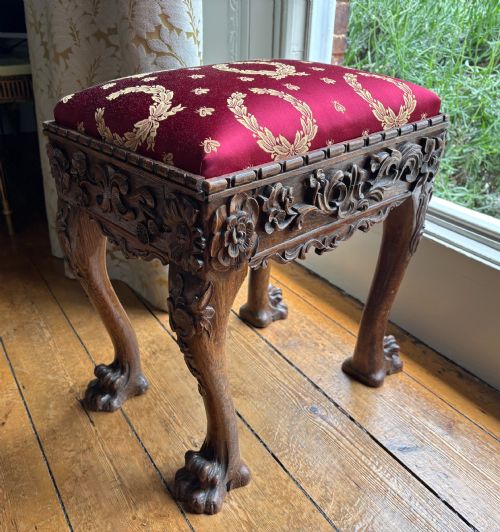
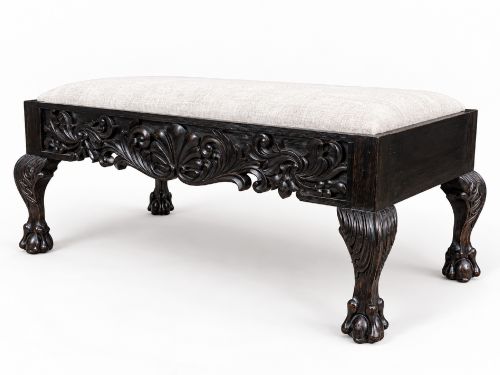
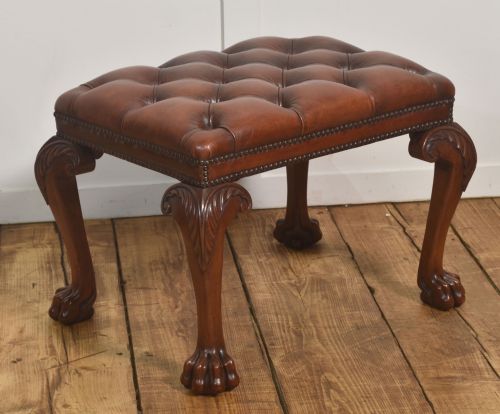
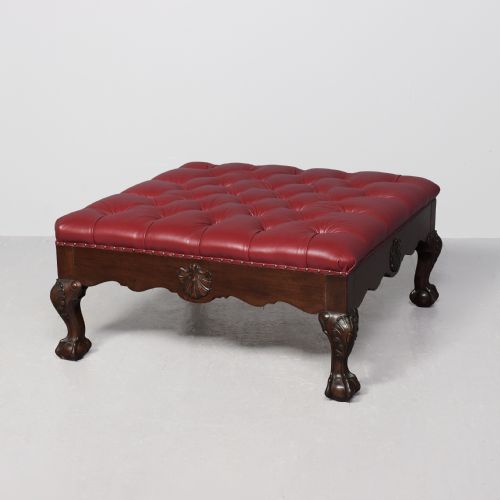
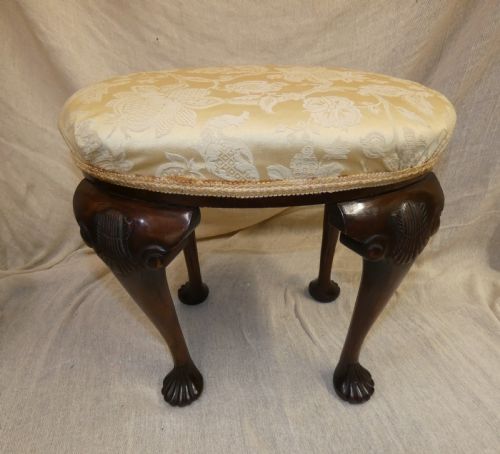
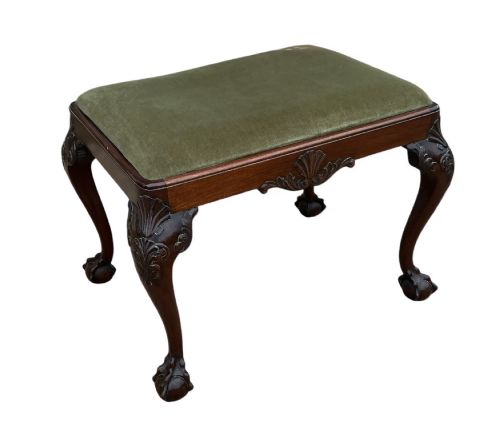
A carved ball and claw stool combines substantial timber construction with prominent claw-and-ball terminals on the legs, fulfilling both seating and footrest functions in historic interiors. These items appear in various formats, ranging from compact square footstools to long window seats and dressing stools designed for domestic utility.
The pieces on this page lean heavily towards revival aesthetics, most notably Chippendale Style and Georgian Revival interpretations alongside Victorian and Edwardian examples. Mahogany frames dominate the selection, accompanied by occasional walnut, elm, and calamander wood structures.
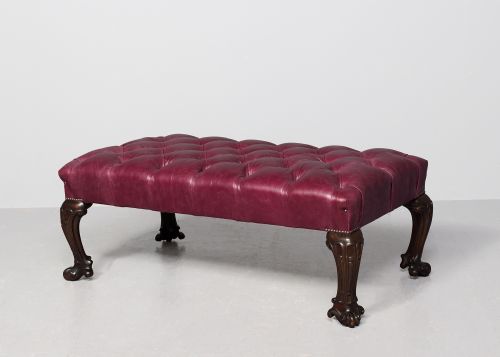
Makers and workshops across Britain and Ireland produced these forms throughout the nineteenth and early twentieth centuries, drawing on earlier eighteenth-century George II and George III motifs. Buyers will encounter both modest occasional stools and grander buttoned hide or damask upholstered variants.
Materials and construction methods
Craftsmen built the primary frames of these stools using dense hardwoods such as mahogany, walnut, and oak, selecting timber that could withstand the deep relief carving required for the legs. Ceylonese calamander and elm also appear in specific regional or period pieces, providing distinct grain patterns and colouration.
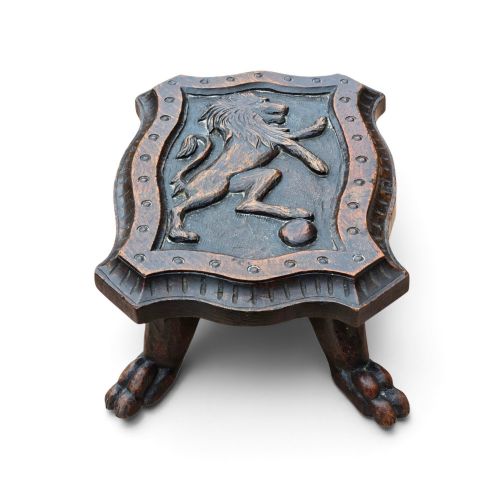
Upholstery methods varied from simple drop-in pads to buttoned red hide, burgundy leather, wool, velvet, fabric, and cream damask secured over webbing and stuffing. Carved details such as heraldic motifs, acanthus leaves, and the characteristic ball and claw feet were shaped by hand directly into the solid timber frame.
Carved Ball and Claw Stool Retail Price Guide 2026
Typical asking prices for carved ball and claw stool among the pieces listed under this phrase on Sellingantiques today, from the lower quarter to the upper quarter. They describe what is for sale here now, not the wider market.
Listings span multiple decades, incorporating genuine 18th-century pieces alongside 19th-century Victorian items and Edwardian or 1930s revival interpretations.
Factors that distinguish quality
The distinction between standard production and exceptional quality rests primarily on the depth and crispness of the timber carving on the legs and frame. Superior pieces display finely articulated talons grasping the ball and naturalistic detailing on the knee, whereas lesser examples present flat or summary moulding.
Proportion and material selection also set pieces apart, with dense, well-figured mahogany or walnut frames carrying high-grade upholstery like buttoned hide or damask. Maker attribution, such as work originating from established firms like Whytock and Reid, further elevates the standing of an individual stool.
Whytock and Reid
The Carved Ball and Claw Stool Glossary
- Ball and claw
- A foot motif representing a bird's talon gripping a ball, popular on furniture legs from the eighteenth century onwards. This design derives ultimately from Chinese dragon motifs imported via trade.
- Chippendale Style
- Furniture design inspired by the pattern books of Thomas Chippendale, characterised by intricate carving, cabriole legs, and ball and claw feet. Revival versions of this style were widely produced during the Victorian and Edwardian eras.
- Cabriole leg
- A furniture leg that curves out at the knee and tapers inward to the foot, mimicking the shape of an animal's limb. It forms the structural foundation for most claw and ball supports.
- Hide
- Untanned or tanned heavy animal skin utilised for durable furniture upholstery. Red and burgundy hide finishes are common on nineteenth-century footstools.
Carved Ball and Claw Stool: Frequently Asked Questions
What is a ball and claw stool?
A ball and claw stool is a seating piece or footrest featuring carved legs where the terminal resembles a bird's talons gripping a spherical ball. These items draw heavily on eighteenth-century design traditions.
They function as versatile furnishings, appearing as small footstools, dressing furniture, or long window seats in traditional rooms.
How do I date a mahogany stool?
Dating relies on examining the timber density, tool marks, and stylistic indicators such as whether a piece is an eighteenth-century original or a nineteenth-century revival. Revival pieces often combine earlier George II forms with Victorian manufacturing techniques.
Upholstery style and secondary woods used in the frame construction also provide reliable clues for establishing the era of manufacture.
Where were these stools used?
These stools served multiple domestic purposes across drawing rooms, dressing rooms, and libraries. Smaller versions acted as footstools before armchairs, while longer benches fitted beneath windows.
Centre stools provided accessible seating in larger reception rooms where furniture was arranged away from the walls.
Are these stools comfortable for daily use?
Most pieces offer firm support derived from traditional webbing, stuffing, and heavy upholstery materials like leather, damask, or wool. Their robust hardwood frames ensure structural stability under regular seating loads.
Dressing stools and footstools are built specifically for seated tasks or resting legs, matching standard domestic heights.