


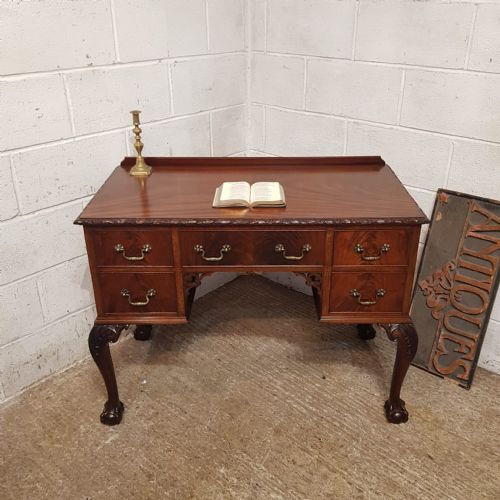
Carved Ball and Claw Desk
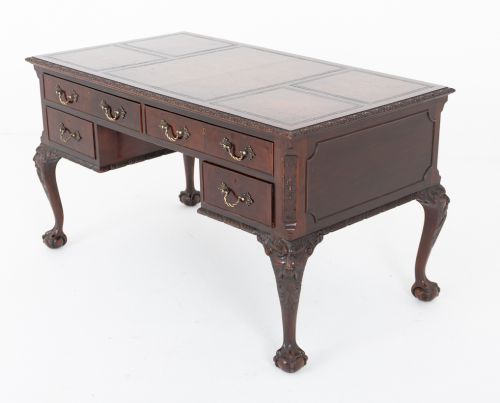
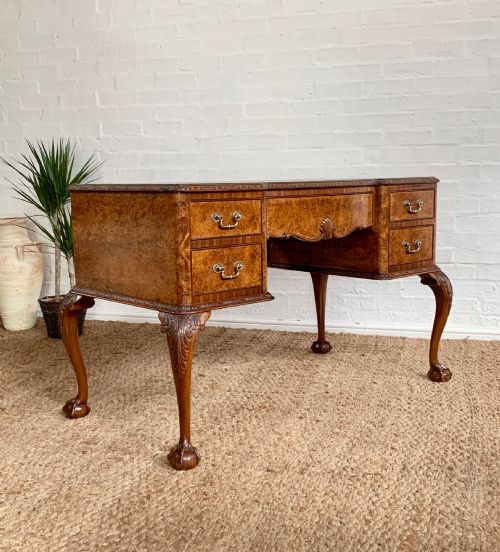
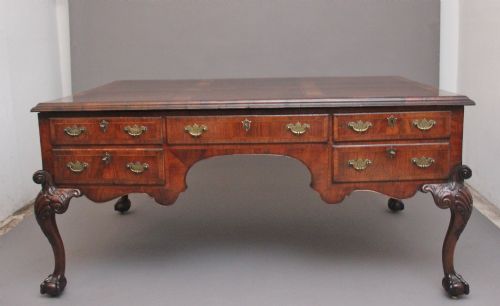
A carved ball and claw desk anchors a study with substantial timber and distinct footwork, offering a practical writing surface framed by historical revival styles.
Carved Ball and Claw Desk
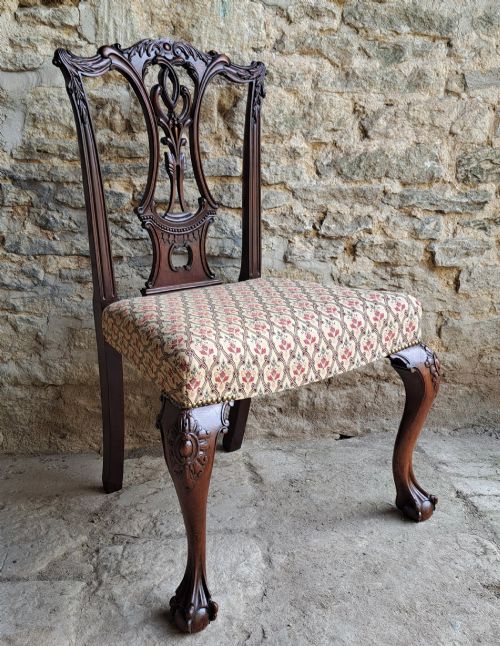
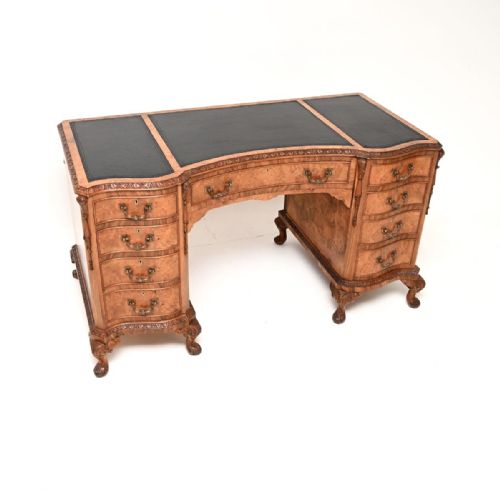
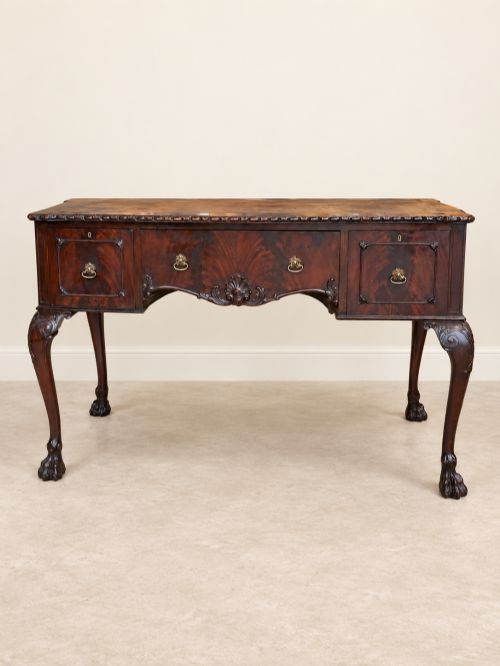
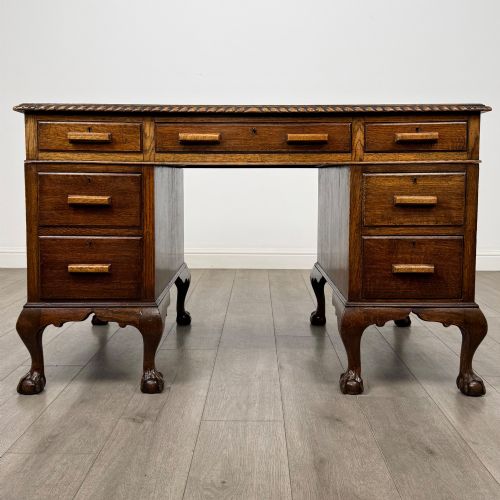
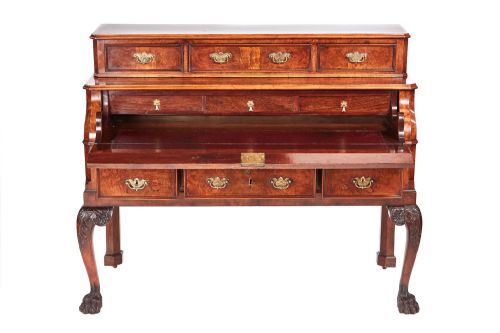
A carved ball and claw desk brings together pedestal desks, writing tables, and partners desks constructed from the eighteenth century onwards through revival periods like Chippendale and Queen Anne. Buyers searching for a carved ball and claw desk will encounter pedestal forms with leather writing surfaces, alongside writing tables and bureaux dating from the nineteenth and early twentieth centuries.
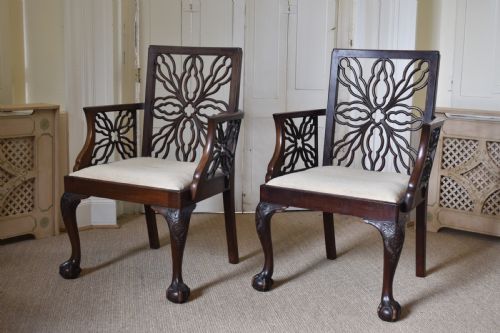
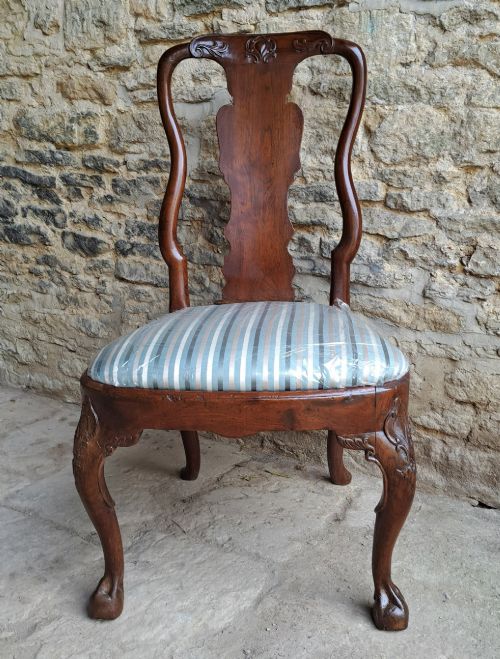
The pieces span periods including the eighteenth century, the Victorian era, and early twentieth century revivals. Walnut and mahogany dominate the selection, often featuring carved paw or claw details upon cabriole legs.
Materials and Construction
Cabinet makers utilised solid mahogany and walnut, occasionally selecting burr walnut or flame mahogany veneers for primary surfaces. Timber framing supports inset leather writing panels, sometimes tooled with gilt borders.
Carving defines the foot and leg junctions, executed directly into the dense grain of the timber. Brass hardware, such as drawer pulls and keyhole escutcheons, completes the construction of pedestal and kneehole writing furniture.
Listings span from the eighteenth century to the twentieth century, featuring mahogany, walnut, and burr walnut construction.
Craftsmanship and Proportion
The depth and crispness of the timber carving separate standard production from superior examples, particularly around the claw and ball terminals. Sharp relief work and well-defined talons indicate skilled hand-carving rather than mass-produced shaping.
Timber selection and grain matching across large pedestal fronts dictate visual success. Superior items maintain balanced proportions between the heavy kneehole body and the delicate curve of the cabriole leg.
Gillows·Maple and Co.
The Carved Ball and Claw Desk Glossary
- Cabriole leg
- A furniture leg that bends outward in a convex curve and tapers inward in a concave curve, ending in a carved foot. This form derives from traditional Chinese motifs adopted by European cabinet makers.
- Pedestal desk
- A large freestanding desk comprising two independent pedestals of drawers supporting a single top. A recessed kneehole space sits centrally between the two banks of drawers.
- Partners desk
- A large double-sided pedestal desk designed for two people to work opposite one another. Drawers and cupboards are duplicated on both long sides.
- Kneehole desk
- A compact desk featuring a central recessed space beneath the writing surface, flanked by smaller drawers. These units offer practical workspace in smaller rooms.
- Burr walnut
- Timber obtained from walnut tree growths, displaying intricate swirling grain patterns. Cabinet makers applied thin slices of this figured wood as veneer on prominent desk surfaces.
Carved Ball and Claw Desk: Frequently Asked Questions
What is a ball and claw foot?
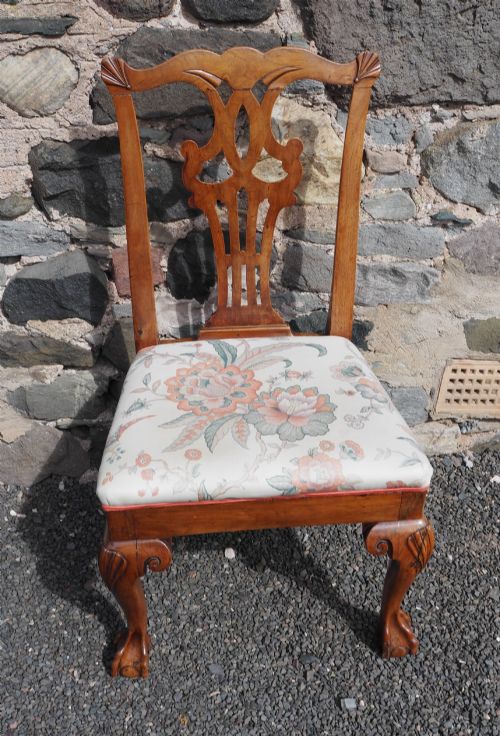
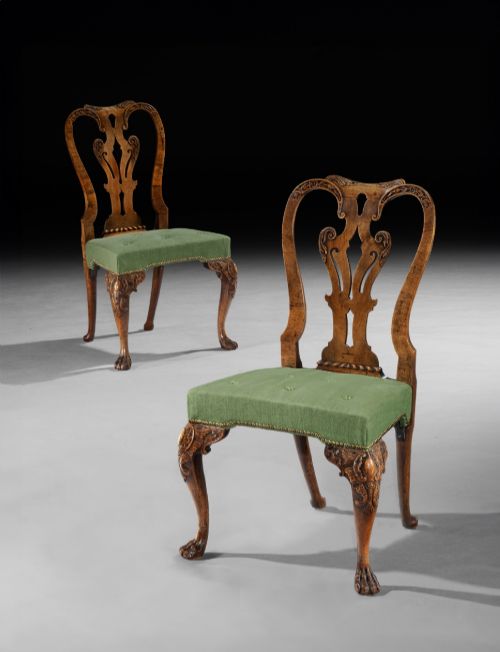
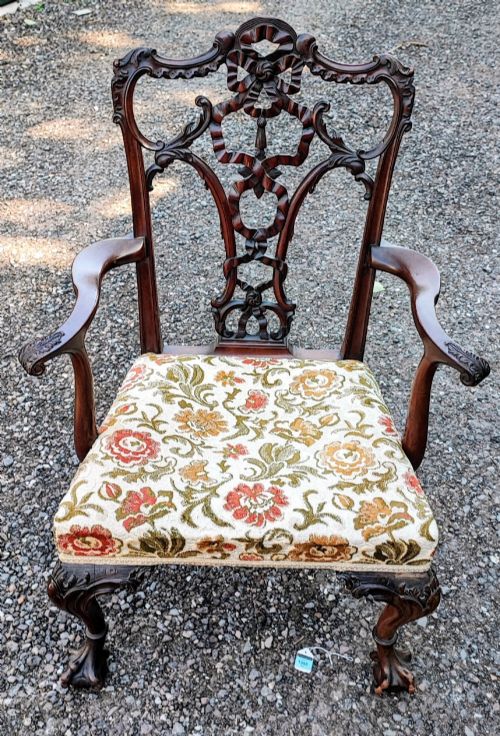
A ball and claw foot is a furniture foot carved to resemble a bird's talon clutching a spherical ball. This motif appears frequently on the legs of eighteenth-century chairs and desks, as well as later revival pieces.
Cabinet makers carved this detail directly from the solid mahogany or walnut of the leg. The style draws inspiration from Eastern art imported via trade routes during earlier centuries.
How do I care for leather desk tops?
Leather desk tops require regular dusting with a soft, dry cloth to prevent grit accumulation in the grain. Conditioning leather periodically with specialist balms keeps the material supple and prevents cracking.
Avoid placing hot cups or liquids directly onto the leather surface to prevent staining. Using blotters or writing pads protects the historic hide from ink spills and indentations.
Are these desks suitable for daily work?
These desks provide sturdy writing surfaces and ample drawer storage for modern daily use. Pedestal and writing tables accommodate laptops and paperwork while offering structural stability.
Consider the kneehole height and overall desk dimensions before purchase to ensure comfortable daily seating. Historic writing surfaces often sit lower than modern office desks.
How do I distinguish revival pieces from older ones?
Distinguishing revival pieces from older examples involves examining timber seasoning, construction joints, and tool marks within the drawers. Nineteenth and twentieth-century revival desks often show machine-sawn timber or secondary woods typical of later workshops.
Examining the underside and drawer linings reveals construction methods specific to Georgian periods versus Edwardian or Victorian reproductions. Comparing the patination of the wood helps confirm the age of the piece.