
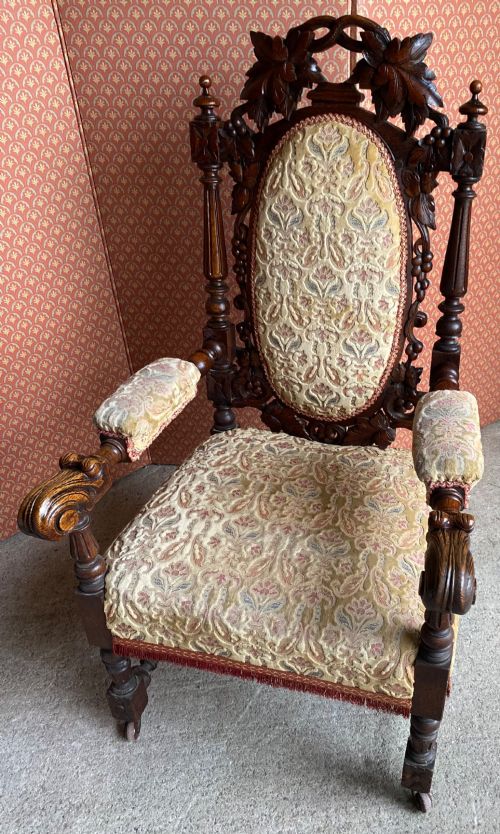
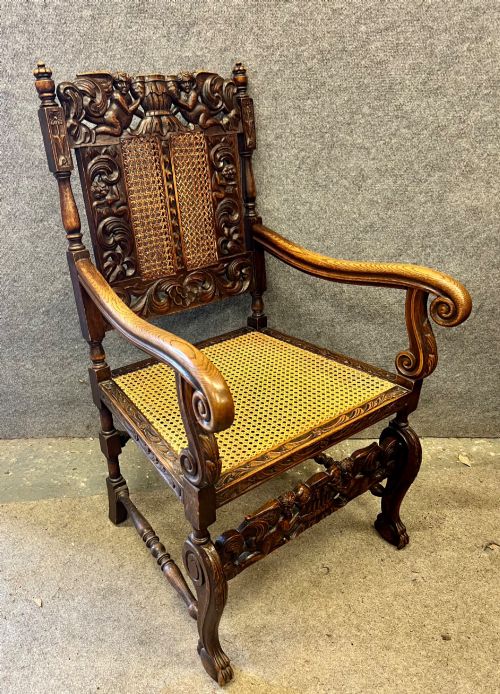
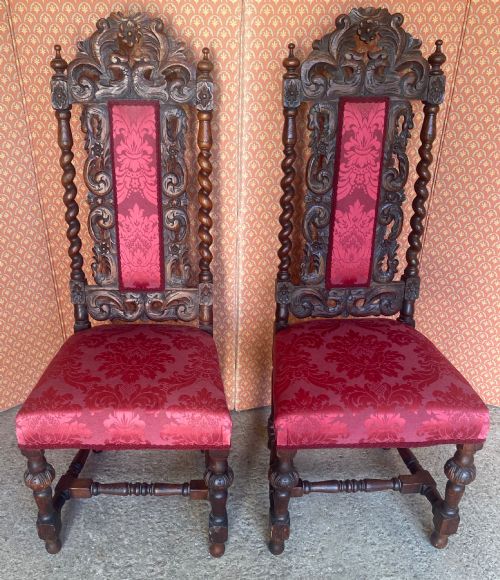
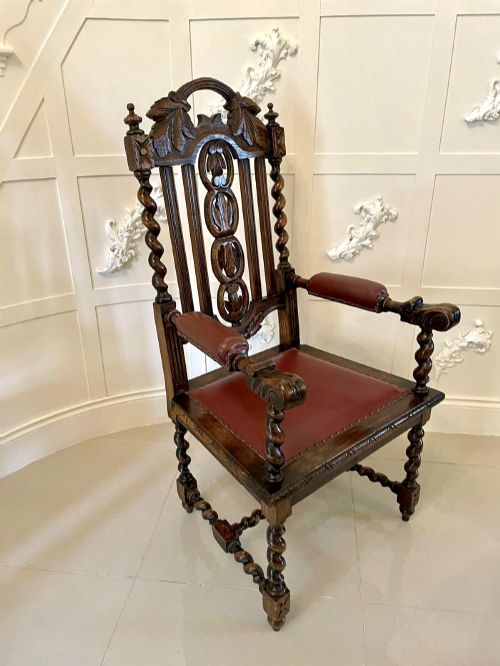
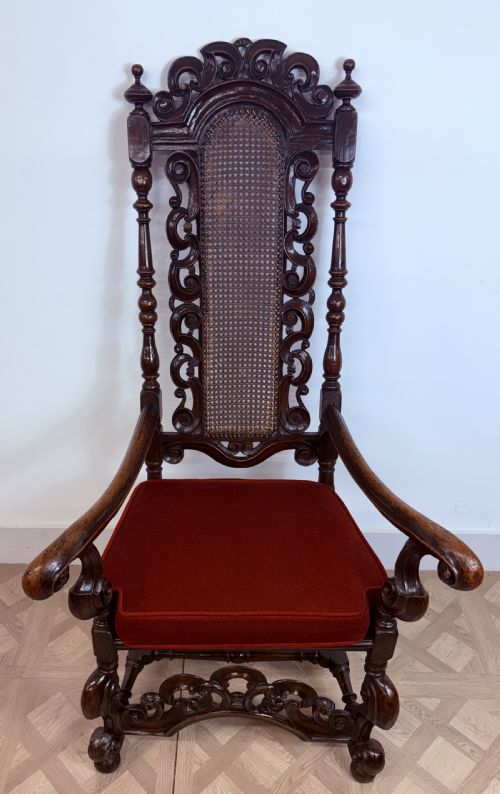
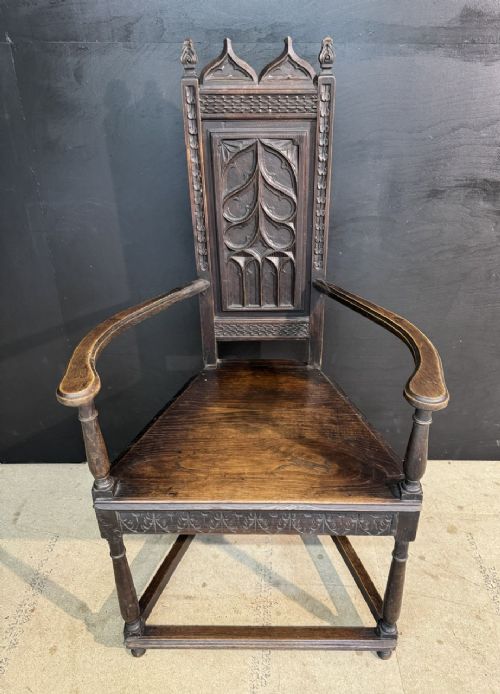
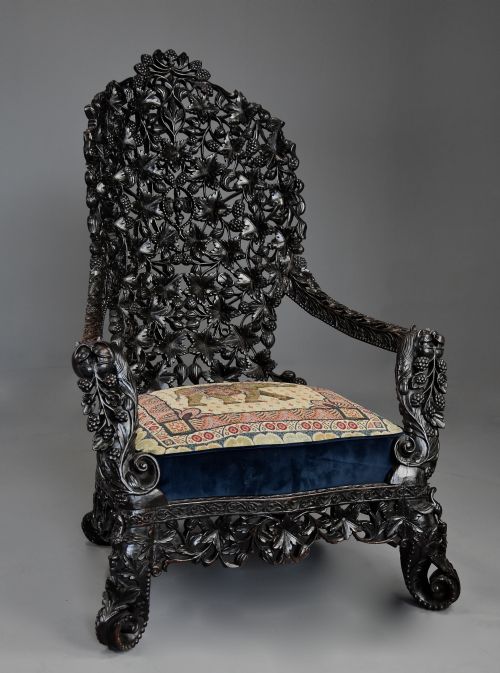
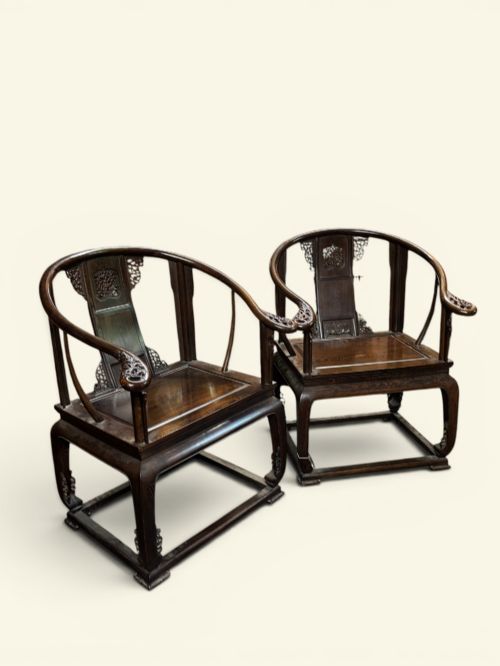
Carved Back Throne Chair
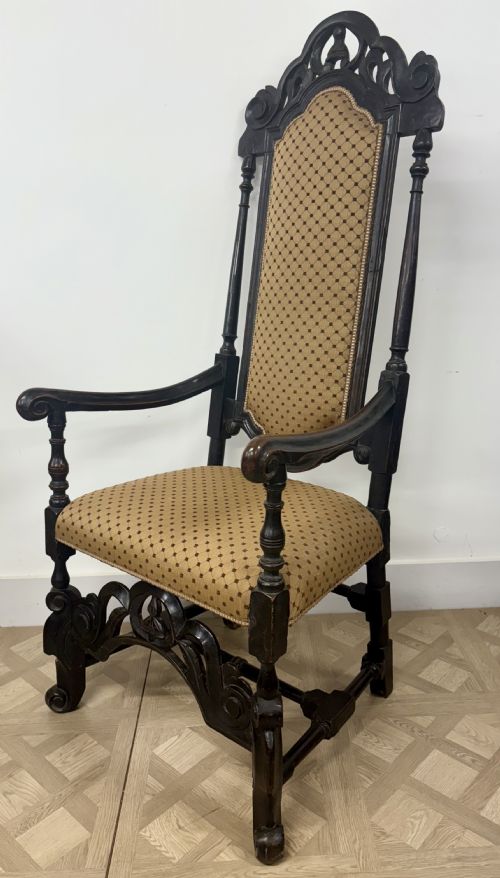
A carved back throne chair brings commanding presence and architectural weight to a room, drawing the eye with deep relief work and substantial frames.
Carved Back Throne Chair
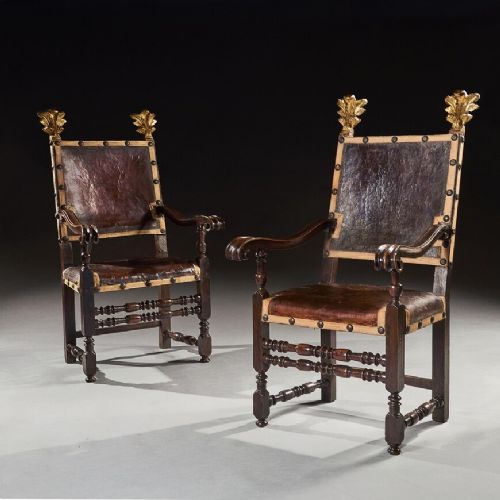
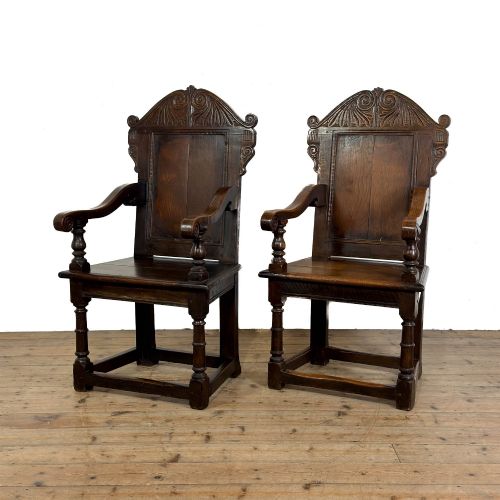
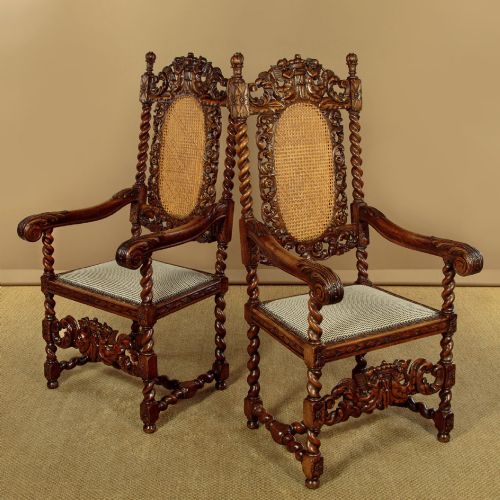
A carved back throne chair stands as a substantial seating form, often appearing in heavy timbers like oak and walnut with tall, ornamented backs. These pieces span several centuries, with early examples rooted in the seventeenth century alongside later revivals from the nineteenth and early twentieth centuries.
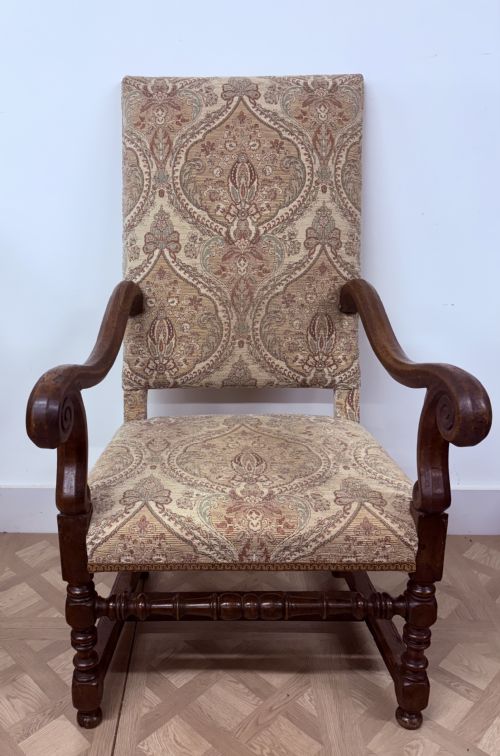
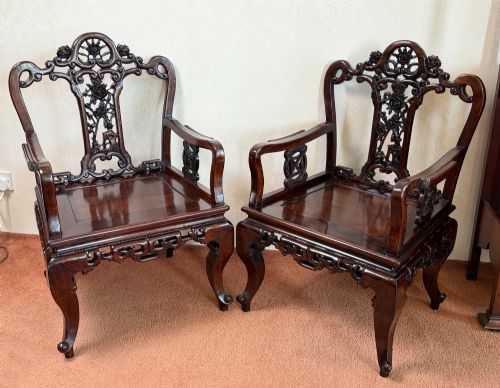
Buyers commonly encounter sturdy wainscot forms or grand revival styles, including Jacobean, Renaissance, and Baroque interpretations. Originating from diverse regions such as England, France, Italy, and China, these chairs utilise dense hardwoods and decorative upholstery.
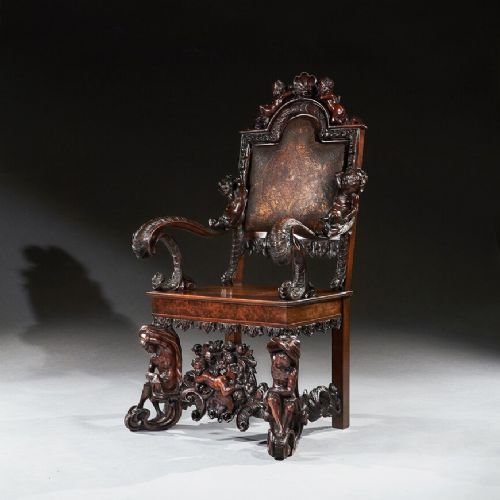
Object types on this page include armchairs, hall chairs, and accent chairs, reflecting domestic and institutional uses. The carved details often incorporate heraldic motifs, scrolling foliage, or figurative elements that define the character of each piece.
Materials and construction
Craftsmen built these chairs using durable timbers such as English and continental oak, walnut, elm, and exotic hardwoods. Joinery relied heavily on traditional mortise and tenon construction, ensuring the structural stability required for such heavy frames.
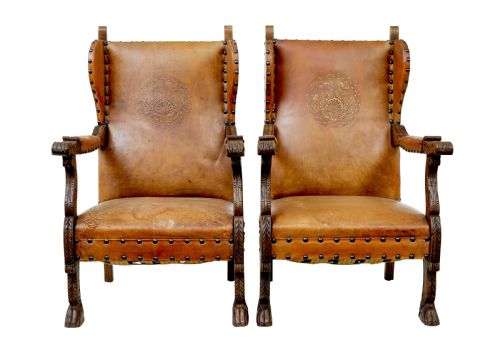
Surface decoration involved deep hand-carving directly into the solid wood, supplemented in certain examples by parcel-gilt finishes, painted details, or brass accents. Upholstery materials like embossed leather, velvet, fabric, cane, and tapestry were fixed with brass tacks to complete the seating.
Materials span native oak and walnut alongside exotic hardwoods, paired with leather, cane, and tapestry.
Assessing quality and execution
The distinction between ordinary and exceptional examples rests upon the crispness and depth of the wood carving. Skilled hands produced undercut relief and balanced proportions that elevate the architectural hierarchy of the chair.
Material selection and historical integrity dictate the standing of a piece, particularly where original timber patination and period joinery remain undisturbed. Later revivals vary according to the fidelity of their historical interpretation and the weight of the timber employed.
Andrea Brustolon
The Carved Back Throne Chair Glossary
- Wainscot chair
- A heavy wooden armchair of seventeenth-century origin, constructed with panelled backs and solid wooden seats. These early forms derive their name from wainscot grade oak.
- Caquetoire
- A type of sixteenth or seventeenth-century conversation chair featuring a narrow body and splayed arms designed to accommodate voluminous contemporary dress. Continental examples frequently display refined carving.
- Parcel-gilt
- Partially gilded wood surfaces where gold leaf highlights specific carved details against a darker timber or painted ground. This technique adds visual contrast to baroque and revival furniture.
- Horseshoe-back
- A traditional chair design featuring a continuous curved top rail that sweeps around to form the armrests. Chinese hardwood versions showcase flowing joinery without interrupting the grain.
Carved Back Throne Chair: Frequently Asked Questions
What defines a wainscot chair?
A wainscot chair is an early wooden armchair characterised by panelled construction and rigid upright proportions. They date predominantly to the seventeenth century and utilise solid oak.
These pieces served as principal seats in prosperous households, reflecting status through their joinery and subtle carved details rather than soft upholstery.
How do seventeenth-century chairs differ from nineteenth-century revivals?
Seventeenth-century chairs display authentic period tool marks, timber shrinkage, and structural wear accumulated over centuries. Their joinery relies on pegged mortises characteristic of early workshop practices.
Nineteenth-century revival pieces adopt historical styles like Jacobean or Baroque but employ later machining techniques alongside heavier, uniform timber stocks.
Where were these heavy chairs placed historically?
These imposing seats typically occupied dais positions in great halls, at the head of dining tables, or in reception rooms. Their scale commanded authority and designated specific seating hierarchy.
In domestic settings today, they function effectively as accent pieces in large entryways, libraries, or living spaces.
How should I care for antique leather upholstery?
Historic leather requires gentle cleaning and regular conditioning to prevent drying and cracking. Avoid harsh chemical treatments and keep the material away from direct heat sources.
Embossed and pinned leather panels benefit from professional assessment to maintain the stability of the surrounding wooden frame.