


Colonial Wooden Armchair
These colonial wooden armchair selections bring global 19th-century craft into modern rooms.
Colonial Wooden Armchair
A colonial wooden armchair represents heavy seating produced during overseas expansion, spanning the 19th century and the early 20th century. Buyers searching for a colonial wooden armchair typically encounter heavy hardwood frames designed for tropical climates or military campaigns.
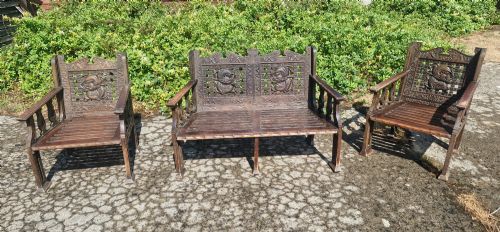
The styles range across Anglo-Indian, Victorian Campaign, and American Colonial forms. Pieces include Burmese conservatory suites, solid ebony armchairs, and expansive throne chairs from the Philippines.
Origins stretch from India and Ceylon to Burma and the Philippines. These seating suites and elbow chairs combine regional timber species with distinct regional carving traditions.
How they were made
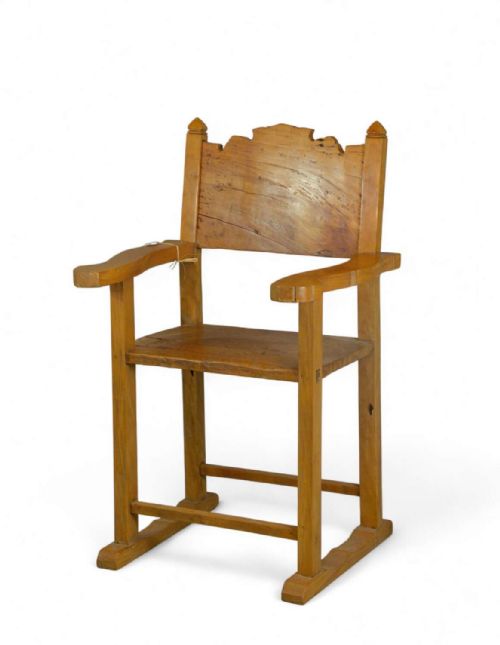
Construction relies heavily upon tropical hardwoods such as teak, ebony, rosewood, and general timber. Craftsmen shaped these dense materials into sturdy frames capable of withstanding humid climates.
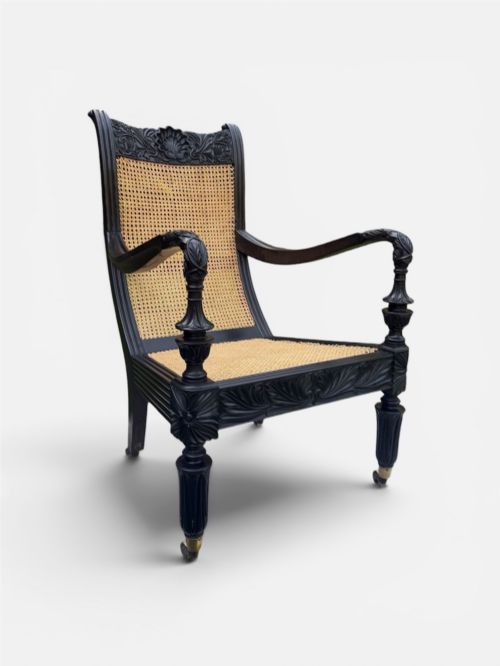
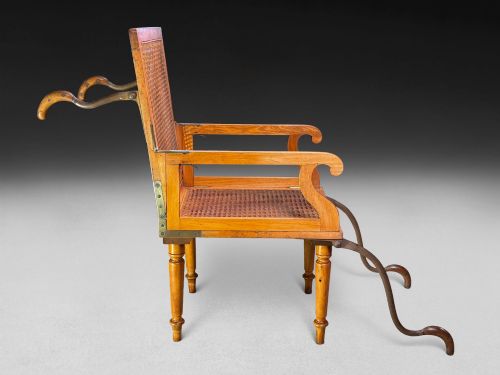
Secondary elements involve cane panels, rush seating, and brass fittings. Iron components appear in campaign pieces designed for portability and field disassembly.
Current listings feature pieces spanning the 19th century, nineteen-hundred, eighteen-fifty, and nineteen-twenty, utilising teak, cane, brass, hardwood, ebony, oak, iron, and timber.
What varies in quality
Depth of carving and timber selection define the upper tier of these seats. Solid ebony and Bombay rosewood frames command greater presence than simpler hardwood variants.
Structural complexity separates standard elbow chairs from giant size throne chairs and multi-piece conservatory suites. Original cane and rush work adds integrity that later replacements lack.
The Colonial Wooden Armchair Glossary
- Anglo-Indian
- Furniture made in India during British rule, usually combining European forms with local carving. This style often utilises native timbers like teak and rosewood.
- Campaign chair
- Portable folding or dismantling furniture built for military officers on the move. These pieces frequently incorporate brass mounts and sturdy iron hardware.
- Planters chair
- An armchair featuring extended leg rests designed for relaxed lounging in tropical verandahs. They are typically constructed from dense hardwoods.
- Bentwood
- Wood steamed and bent into curved shapes for furniture frames. American colonial examples utilise this technique for comfortable elbow chairs.
Colonial Wooden Armchair: Frequently Asked Questions
What is a colonial wooden armchair?
A colonial wooden armchair is a heavy seating piece produced across 19th-century global outposts. They reflect regional woodworking traditions mixed with European functional requirements.
These chairs utilise dense tropical timbers and often feature deep carving or woven cane elements.
Where were these chairs made?
Manufacturing locations span India, Ceylon, Burma, the Philippines, and America. Each region utilised local timber supplies such as teak, ebony, and rosewood.
Maker methods varied from British military workshops to local craftsmen producing elaborate conservatory suites.
How do I style a campaign armchair?
A campaign armchair fits well in studies or living spaces as a striking standalone seat. Their brass fittings and folding designs contrast sharply against minimalist modern backgrounds.
Pair them with neutral textiles to let the heavy hardwood frames remain the focal point.
How do I identify a 19th-century piece?
Look for dense regional timbers like solid ebony, rosewood, and teak combined with period-specific joinery. Styles often lean toward Anglo-Indian carving or Victorian campaign engineering.
Dates cluster around the mid-19th century through to nineteen-hundred, showing clear signs of manual hand-working.