




Carved Back Chiffonier
A carved back chiffonier brings architectural presence and mirrored depth to a room, offering both display and concealed storage.
Carved Back Chiffonier
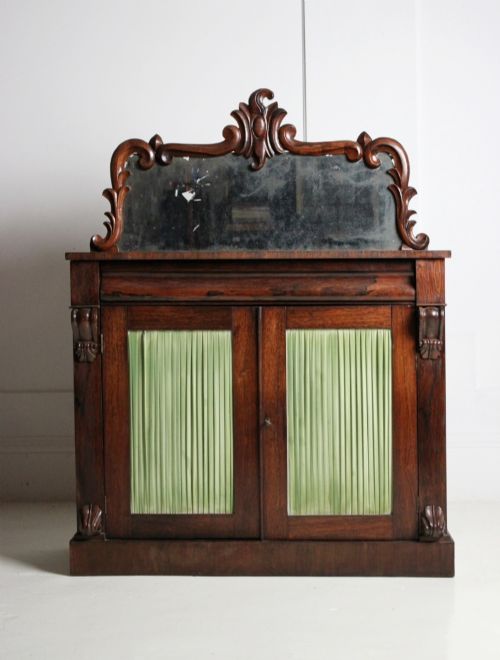
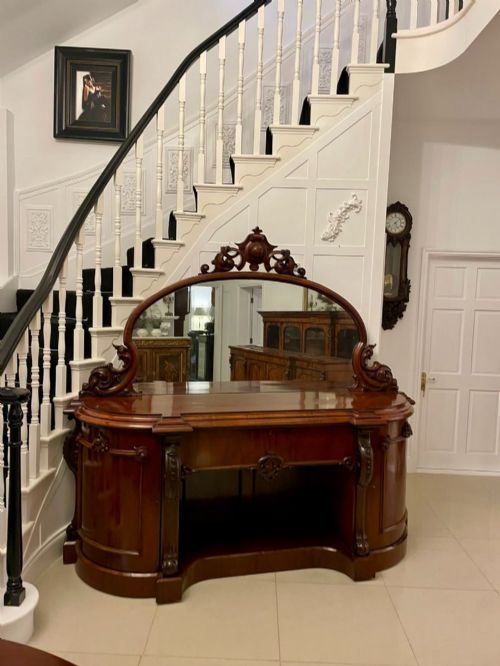
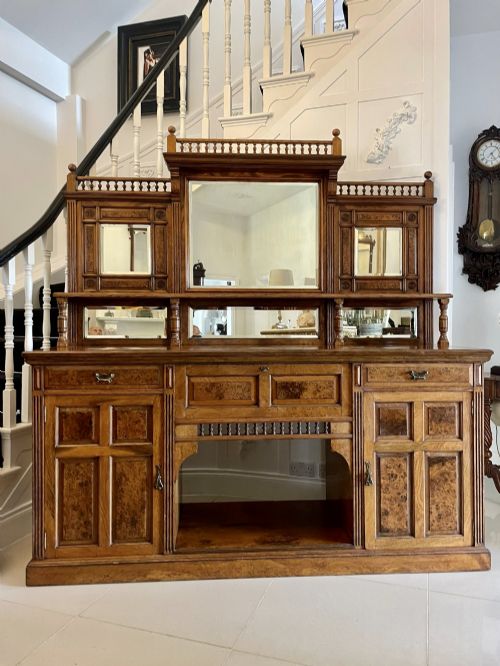
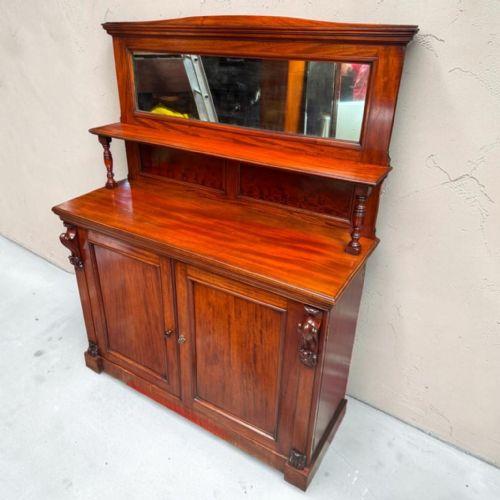
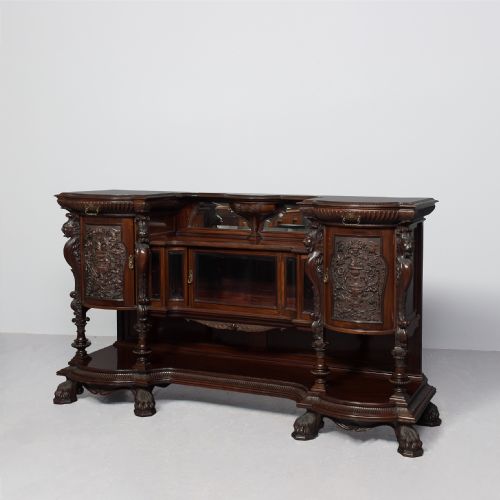
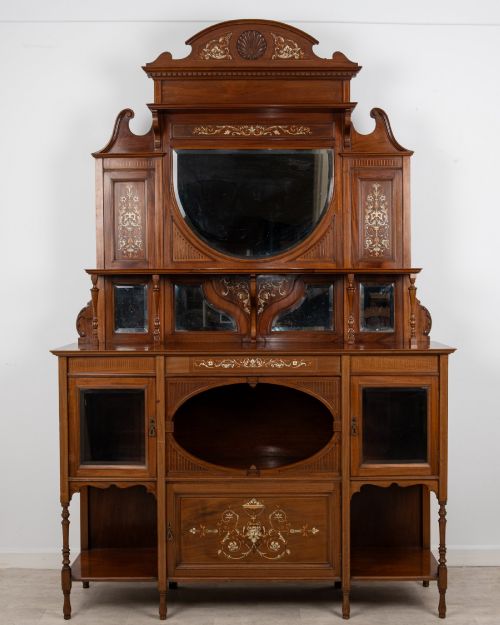
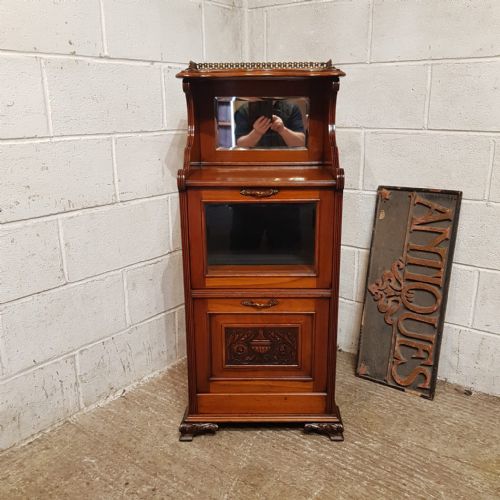
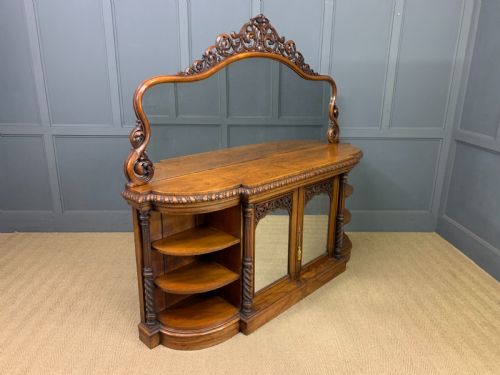
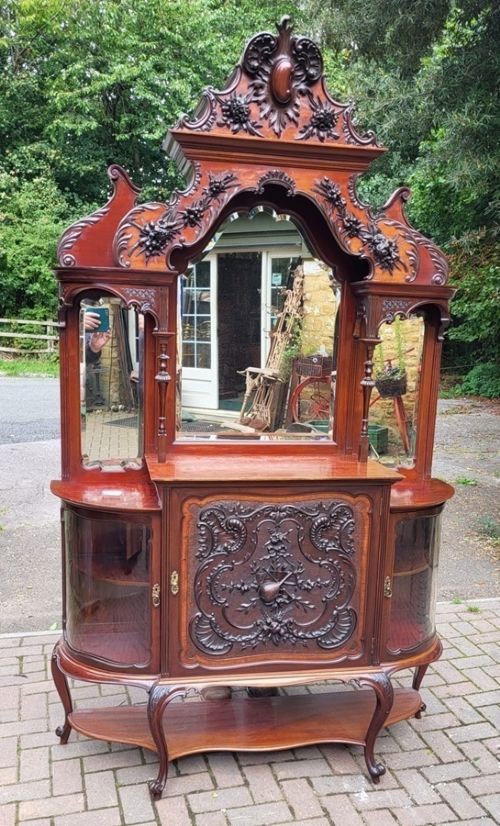
A carved back chiffonier is a low dining or parlour cabinet designed for storage and display, appearing most frequently in Victorian and Edwardian forms. Buyers encounter these pieces in solid woods and veneers, often featuring an integrated mirror and carved wooden superstructure.
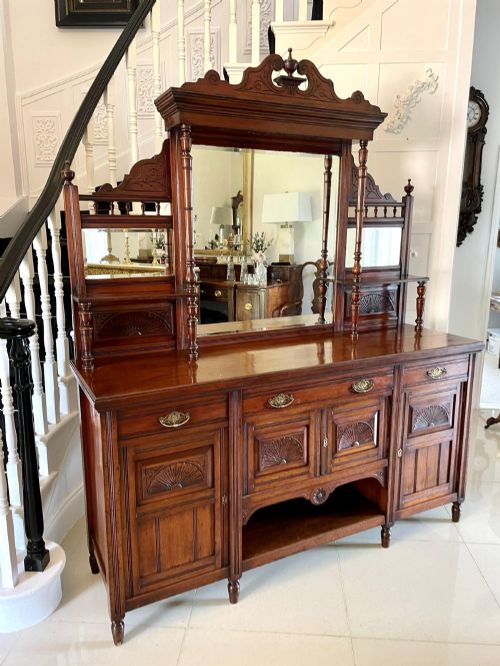
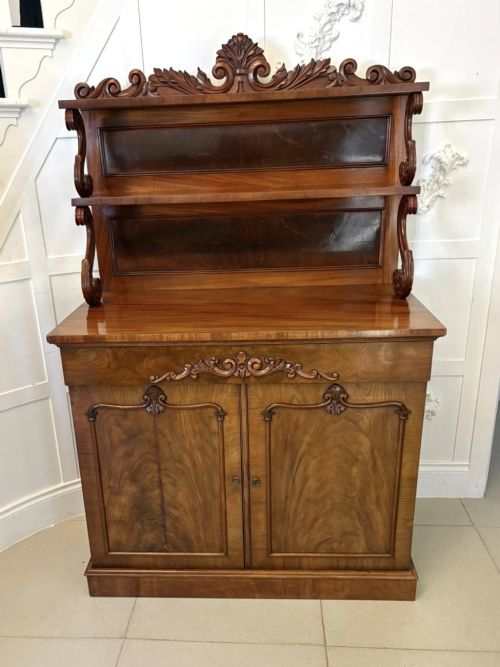
The form bridges the gap between a sideboard and a low cabinet, utilising cupboard doors below and open tiers or mirrored backs above. These pieces emerge from nineteenth-century domestic interiors, serving as both serving surfaces and display spaces for ceramics and glassware.
Victorian and Edwardian workshops produced the majority of these pieces, alongside select Regency examples. The design ranges from compact two-tiered models to large breakfront pedestals fitted with brass hardware and glass doors.
Materials and construction
Cabinet makers utilised dense hardwoods including mahogany, walnut, burr walnut, rosewood, and pollard oak for the structural carcass and decorative facades. These timbers were selected for their pronounced grain patterns and stability under heavy carving.
Carved wooden superstructures incorporate bevelled or flat mirror glass held within shaped frames, while brass hinges and mounts secure the doors. Secondary woods provide internal framework support behind polished exterior surfaces.
One remarkably honest chiffonier carries later sign-writing for the Red Lion public house, having retired from domestic service to pour pints.
Variations in quality
Quality rests in the depth and crispness of the timber carving, alongside the selection of figured veneers such as burr walnut or flame mahogany. Superior examples demonstrate meticulous hand-carved detailing on the mirror frame and cupboard doors rather than shallow machine moulding.
Construction standards reveal themselves in the thickness of the timber, the integration of the mirror back, and the precision of the joinery within the cupboards. Finer pieces maintain original brass hardware, uncompromised glass plates, and substantial timber carcasses without structural distortion.
The Carved Back Chiffonier Glossary
- Chiffonier
- A low sideboard or cabinet featuring cupboards below and a raised superstructure above. These pieces typically incorporate shelves or a mirror on the upper tier.
- Mirror back
- An upright wooden frame containing a mirror plate attached to the rear of a sideboard or cabinet. This feature reflects light and displays objects placed on the surface below.
- Burr walnut
- A prized timber veneer harvested from walnut tree growths, displaying swirling, irregular grain patterns. Cabinet makers applied it to prominent door panels and drawer fronts.
- Pollard oak
- Oak timber obtained from trees that were pollarded, producing a heavily knotted and textured grain. It appears on substantial Victorian cabinet work.
- Breakfront
- A piece of furniture where the central section projects forward from the flanking outer sections. This architectural arrangement creates depth and shadow across the facade.
Carved Back Chiffonier: Frequently Asked Questions
What is a carved back chiffonier used for?
These cabinets served primarily in dining rooms and parlours for storing tableware, linens, and bottles while displaying decorative items on the top surface. The lower cupboards kept everyday dining accessories out of sight.
The raised mirrored back provided a reflective display area for ceramics and glassware, brightening nineteenth-century rooms by bouncing natural light around the interior.
How do I date a carved back chiffonier?
Dating relies upon timber choices, carving styles, and structural markers found across the piece. Victorian examples often display heavy mahogany or burr walnut with dense foliate carving, whereas Edwardian pieces lean towards lighter oak or Chippendale revival motifs.
Secondary woods, backboards, and screw types inside the carcass offer further clues to the decade of manufacture. Regency pieces show simpler, classical lines with rosewood or inlaid mahogany.
Are mirror back chiffoniers heavy?
These cabinets possess substantial weight due to dense hardwoods, internal shelving, and large mirror glass plates. Moving them requires two people and careful handling of the upper superstructure.
The heavy timber carcass provides stability, but the height of the mirror back demands secure placement against a solid wall.
Can I place a chiffonier in a modern room?
A carved back chiffonier anchors a modern dining room or living space by introducing rich timber tones and reflective glass surfaces. The low profile works well against plain walls, contrasting historic craftsmanship with contemporary decor.
The surface provides ample room for lamps or art, while the internal cupboards accommodate modern storage needs.