

Carved Back Carver Chair
A carved back carver chair provides sturdy arm support at the head of a table or a desk, built to last through generations of daily sitting.
Carved Back Carver Chair
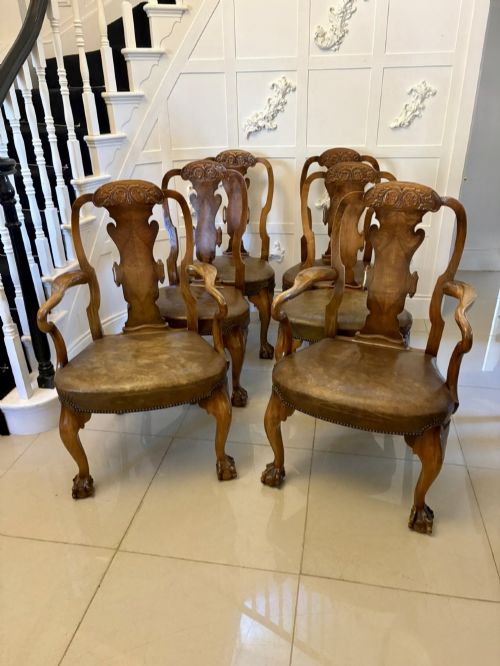
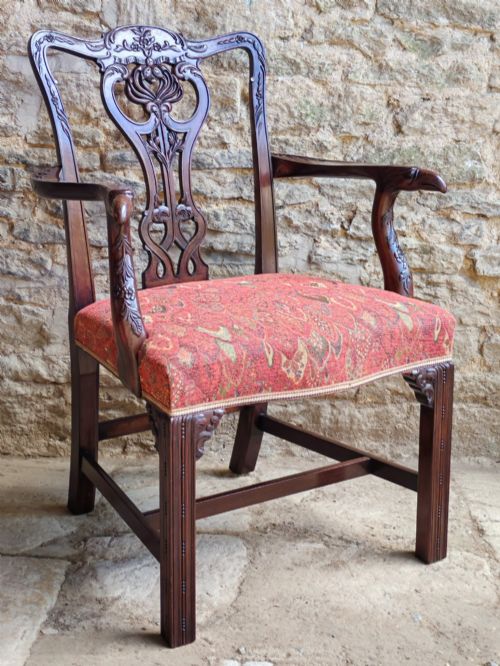
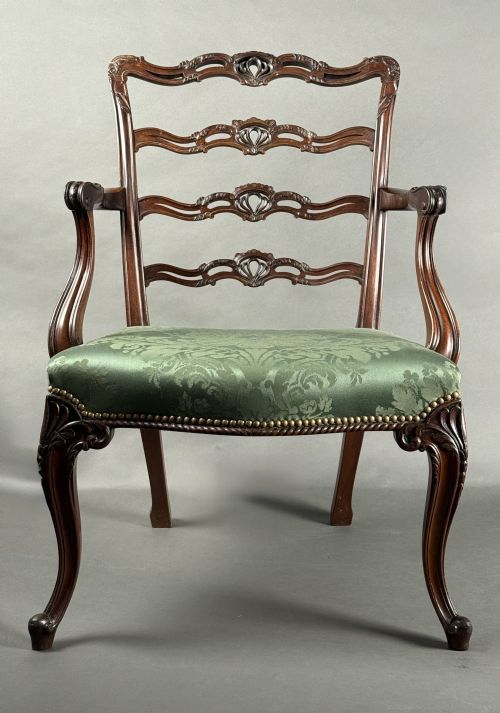
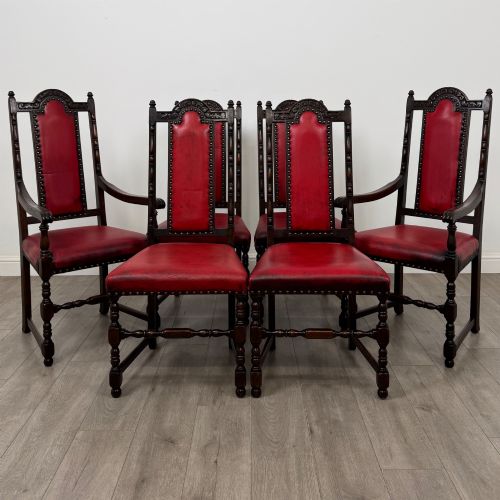
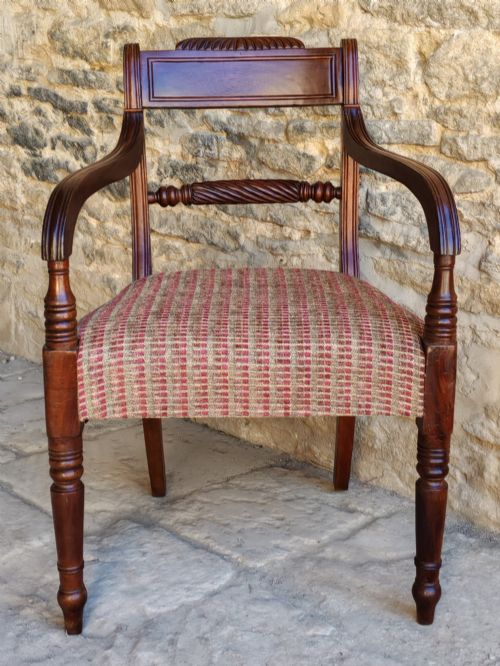
A carved back carver chair sits comfortably at the head of a dining table or serves as a substantial desk seat, distinguished by its integrated arms. These pieces emerge from periods spanning the seventeenth century through to the Edwardian era, with nineteenth and twentieth-century revivals well represented.
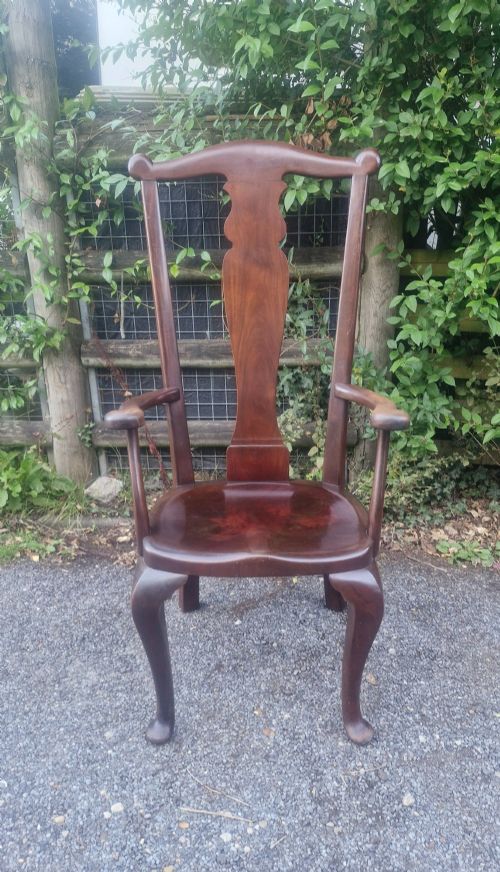
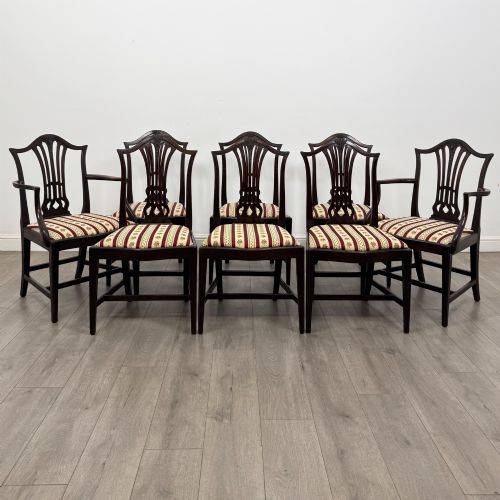
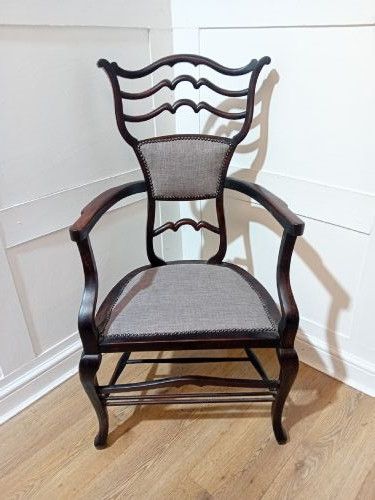
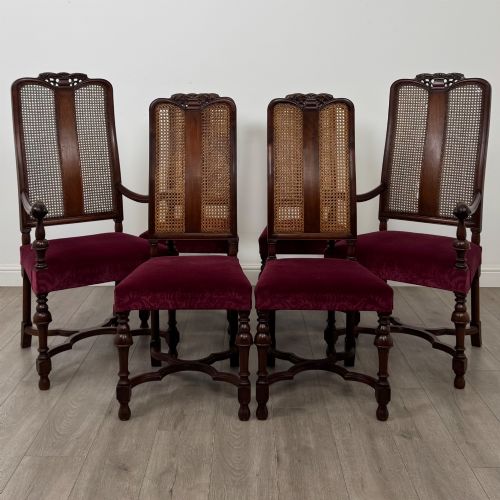
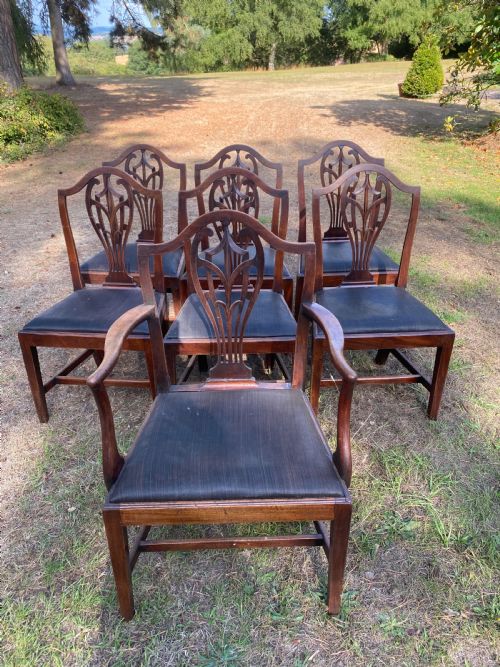
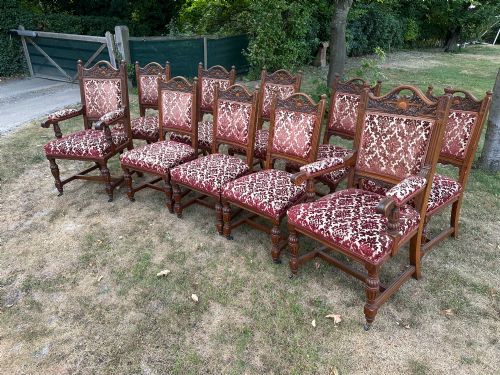
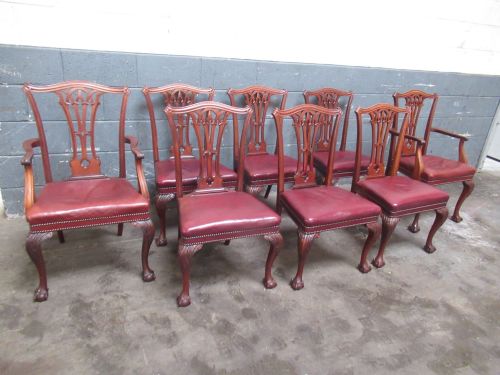
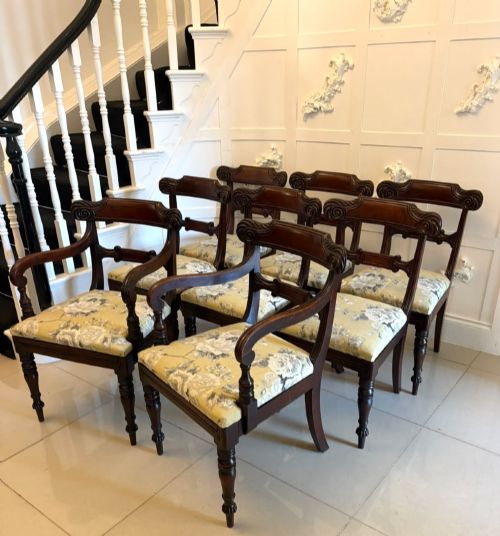
The materials vary across solid timbers like mahogany, walnut, oak, and maple, paired with seats in leather, velvet, fabric, cane, or brass upholstery. Forms range from high-backed kitchen chairs and desk armchairs to shield-back and lyre-back dining carvers.
Makers and designers referenced in the pieces include revival styles of Chippendale, Hepplewhite, and Queen Anne, alongside specific makers such as Howard and Sons, Maple and Co, and Alfred Allen of Birmingham.
How they were made
Makers utilised dense hardwoods such as mahogany, walnut, and oak to construct the sturdy frames required for open armchairs and carvers. Skilled hands carved intricate details into the wood, shaping splats, crests, and arms with precision.
Upholstery techniques involved durable fabrics, leather, velvet, and brass tacks secured over padded frames or cane seats. These materials ensured both comfort and longevity for daily seating at desks and dining tables.
Some nineteenth-century carvers clearly spent decades enduring lively family dinners without losing an ounce of their structural dignity.
What varies in quality
The depth and crispness of the woodwork set pieces apart, distinguishing sharply carved crests and splats from softer, worn details. Timber selection also matters, as well-figured mahogany or burr walnut elevates the presence of a carver chair.
Structural integrity remains central to a chair's worth, determined by tight joints and original timber rather than later replacements. The quality of the upholstery materials, whether original tan leather or fine cane work, further marks the tier of the piece.
Howard and Sons·Maple and Co·Alfred Allen of Birmingham
The Carved Back Carver Chair Glossary
- Carver
- An armchair designed to match a set of dining chairs, typically placed at the head of the table. These chairs feature open arms to accommodate sitting comfortably while dining.
- Shield-back
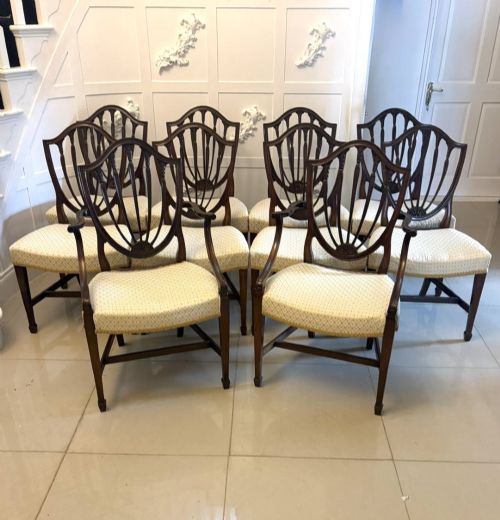
- A chair back shaped in the outline of a heraldic shield, popularised in the eighteenth century by designers like Hepplewhite. This form often incorporates carved splats and wheat-ear motifs.
- Lyre-back
- A chair back featuring an open splat shaped like an ancient musical instrument called a lyre. This design appears frequently in Regency and nineteenth-century seating.
- Cane
- Woven rattan material used to create resilient, breathable seat panels in chairs. It offers a light texture that contrasts with heavy timber frames.
- Splat
- The vertical central strip of wood within a chair back, often intricately carved or pierced. The splat provides both structural support and decorative character.
Carved Back Carver Chair: Frequently Asked Questions
What is a carver chair?
A carver chair is an armchair built with open arms, traditionally positioned at the ends of a dining table to match the side chairs.
These pieces provide extra width and support for the host while maintaining a cohesive look with the rest of the seating set.
How do I date a carved chair?
Dating relies on observing the timber species, joinery methods, and the specific decorative style of the carved backsplat.
Nineteenth-century pieces often emulate Georgian or Regency forms, while earlier examples display the distinct turning and high backs of the seventeenth and eighteenth centuries.
Can I use a carver at a desk?
Many carver chairs function effectively as desk armchairs due to their supportive side arms and comfortable seating heights.
Mahogany and oak desk armchairs from the Victorian and Edwardian periods offer sturdy options for daily workspace use.
What styles are most common?
Chippendale, Hepplewhite, and Regency styles appear frequently alongside revival movements from the Victorian and Edwardian eras.
These designs incorporate shield backs, lyre motifs, and intricate carvings that reflect the aesthetic preferences of their respective periods.