



Carved Alabaster Shade
A carved alabaster shade brings a soft, diffused glow to a room through translucent stone, shaped in styles from the nineteenth century to Art Deco.
Carved Alabaster Shade
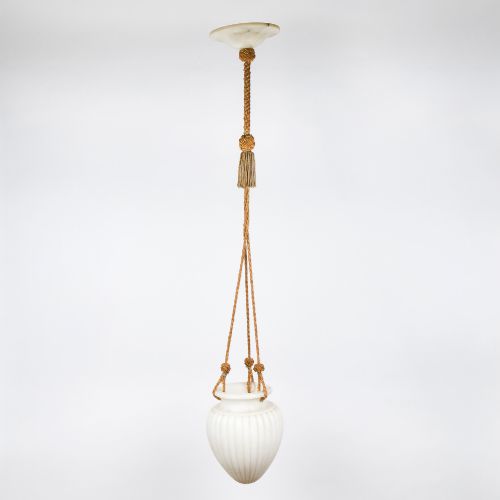
When you search for a carved alabaster shade, you are looking at stone lighting fixtures designed to cast a warm, even light across a space. These pieces take the form of hanging dish lights, ceiling lights, and pendants that transform harsh glare into a gentle luminescence.
The versions you are most likely to meet on this page hail from the early twentieth century, alongside nineteenth-century examples. They appear in Neoclassical, Classical Revival, and Art Deco styles, often accompanied by brass or metal fittings and fabric cords.
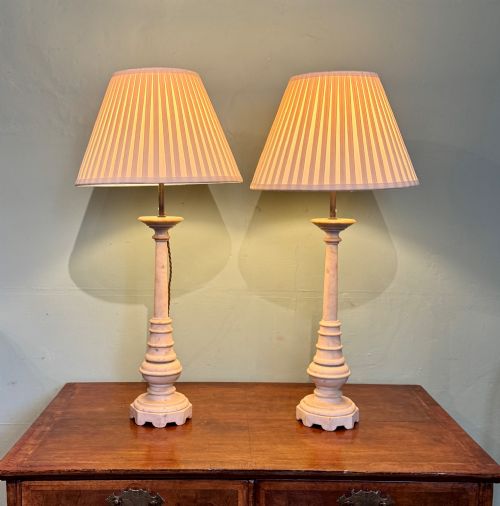
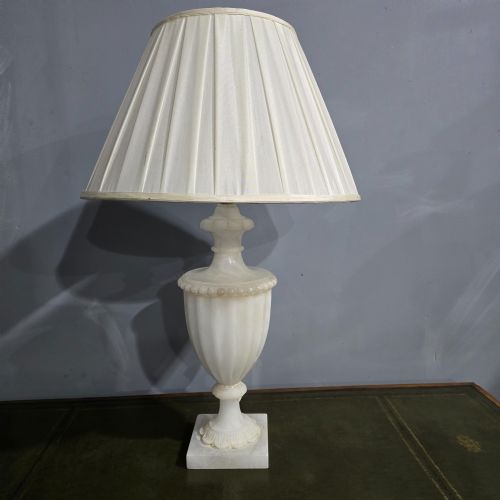
Makers shaped these shades from white alabaster, marble, and white onyx to serve as functional ceiling fixtures or table and floor lamps. Italian and Swedish origins appear frequently among the listings, showing how different workshops adapted the stone.
How they were made
Craftsmen carved these shades from solid blocks of alabaster, marble, or white onyx to achieve the thinness required for translucency. This work demanded precise reduction of the stone so that light could pass through the natural veining without compromising the structural integrity of the bowl or dish.
Makers combined the carved stone bodies with metal hardware, brass components, and braided fabric cords to suspend or mount the fixtures. Glass elements occasionally supplemented the stone, while hanging lights utilised chains or cords to secure the heavy bowls from ceilings.
Listings feature carved alabaster shades spanning the nineteenth century through to the 1930s, incorporating Neoclassical and Art Deco styles.
What varies in quality
The quality of a carved alabaster shade rests on the purity and translucency of the stone itself, which determines how evenly the light diffuses. Finer examples display a uniform density and subtle veining that glows brightly when illuminated, whereas lesser pieces can appear heavy or opaque in denser areas.
The depth and crispness of the carving separate standard production from superior work, particularly in Neoclassical and Art Deco pieces where geometric or classical motifs define the surface. The integration of the original brass, metal, or fabric cord hardware also dictates the overall integrity of the piece.
The Carved Alabaster Shade Glossary
- Alabaster
- A fine-grained, translucent stone used extensively for carving light shades and bowls. It allows light to filter through its surface with a soft glow.
- Plafonnier
- A ceiling-mounted light fixture featuring a bowl-shaped shade held close to the ceiling. This French term describes many hanging dish lights.
- Art Deco
- A design style from the early twentieth century characterised by sleek geometric lines and stylised motifs. Pieces from this period often feature streamlined carved alabaster shades.
- Neoclassical
- A revival style drawing on classical Greek and Roman forms. Items in this aesthetic display formal symmetry and restrained ornamentation.
Carved Alabaster Shade: Frequently Asked Questions
What rooms suit a carved alabaster shade?
These ceiling lights and pendants suit spaces that benefit from ambient, diffused illumination, such as hallways, dining areas, or living rooms. The stone softens electric light effectively.
They pair well with period interiors and provide a restrained focal point when suspended centrally from the ceiling.
How do I identify an Art Deco shade?
Art Deco shades typically display clean geometric profiles, stepped tiers, or stylised linear carving rather than ornate classical swags. They usually date from the 1920s or 1930s.
The overall geometry of the carved stone points directly to the modernist aesthetic of the period.
Are these shades heavy to hang?
Alabaster and marble are dense materials, meaning hanging lights require secure ceiling fixings and proper suspension chains or cords. Weight depends on the thickness of the carved bowl.
Professional installation ensures that the weight of the stone is safely distributed across the structural points of the ceiling.
What is the difference between alabaster and marble?
Alabaster is softer and significantly more translucent than marble, making it the preferred choice for light shades where glow is desired. Marble is harder and less permeable to light.
Some listings use marble for table lamp bases while utilising alabaster for the translucent elements.