


Antique Hanging Bowl Light
An antique hanging bowl light brings low, diffused illumination to a room, suspended from chains or cords in alabaster, cut glass or bronze.
Antique Hanging Bowl Light
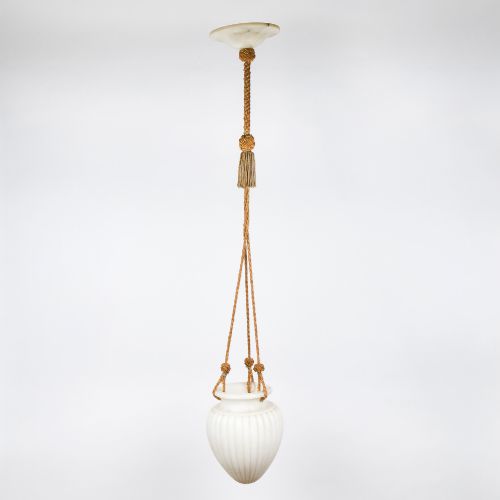
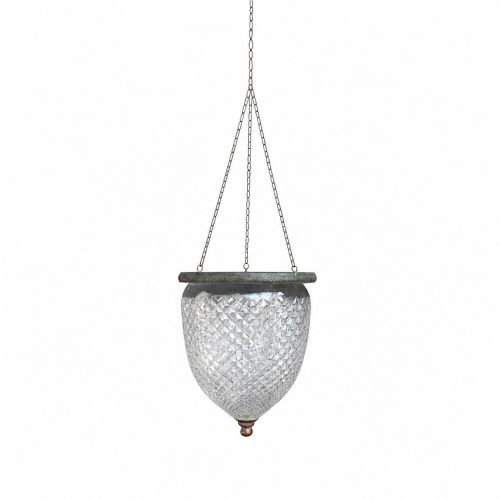
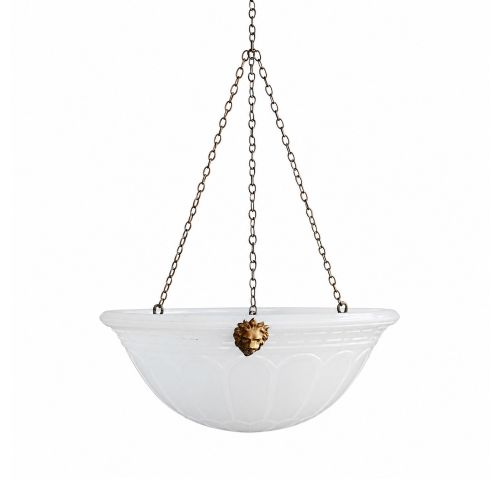
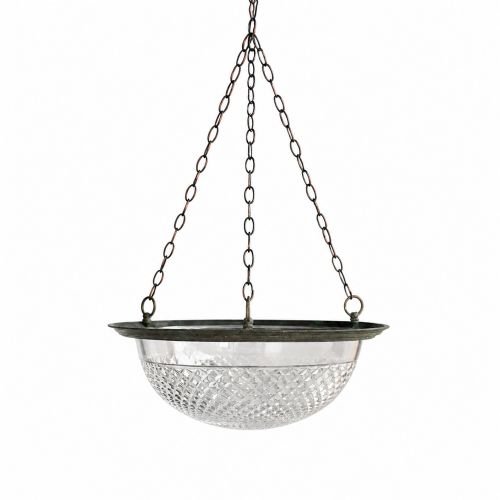
An antique hanging bowl light is a ceiling-suspended fixture that uses a shallow dish or bowl to soften and spread illumination downward. These fittings appear in various forms, from Edwardian cut glass dishes to 1930s Art Deco alabaster pendants.
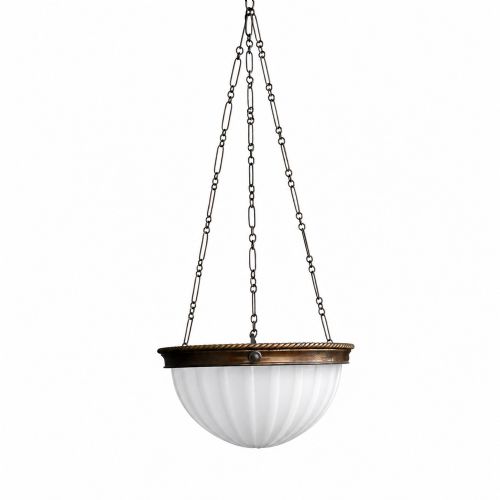
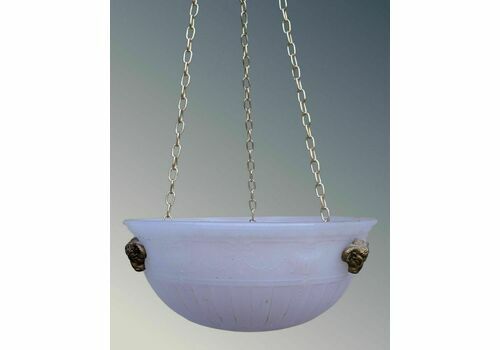
You are most likely to encounter Edwardian cut glass bowls, 1920s alabaster dish lights and Art Deco opalescent glass shades. These pieces function as primary or secondary room lighting, hanging securely from metal chains or fabric cords.
The materials span classical brass and bronze alongside translucent stones and moulded glass. Origins lean towards English workshops and 19th Century French makers, showing styles from Neoclassical to Arts and Crafts.
How they were made
Glass bowls were produced through cutting, moulding or opalescent techniques to achieve different qualities of light diffusion. Alabaster was carved into solid, dense white dishes that let a warm glow pass directly through the stone.
Metal mounts, suspension chains and ceiling roses were cast in brass, bronze, copper or silver-plated metal. These structural elements frequently incorporated classical motifs such as rams heads or restrained neoclassical borders.
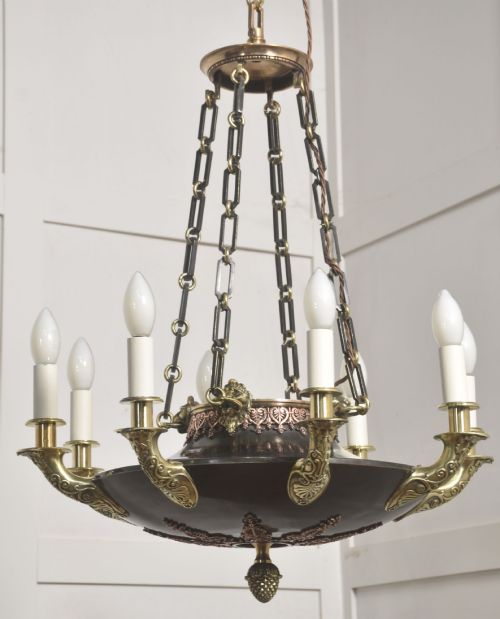
Some Edwardian shades feature sculpted brass rams heads peering outward from the rim, keeping a silent watch over the room.
What varies in quality
Quality rests upon the depth and crispness of the glass cutting or the purity and even veining of the alabaster bowl. Finer pieces demonstrate heavier metal casting in the suspension hardware and more refined decorative mounts.
The harmony between the glass shade and its original bronze or brass suspension chains marks a superior example. Mismatched or replacement hardware alters the integrity of the fitting.
The Antique Hanging Bowl Light Glossary
- Plafonnier
- A ceiling-mounted or shallow hanging bowl light that sits close to the ceiling or duces a low profile. This French term typically describes bowl-shaped glass shades.
- Moonstone glass
- A type of semi-translucent milky glass that produces a soft, diffused glow resembling moonlight. It gained popularity during the early twentieth century.
- Cut glass
- Glass decorated by grinding facets or patterns into the surface to catch and refract light. Edwardian and nineteenth-century examples often use this technique on thick crystal.
- Opalescent glass
- Glass containing ingredients that cause it to display milky, iridescent colour variations when lit from within. It is strongly associated with Art Deco lighting designs.
Antique Hanging Bowl Light: Frequently Asked Questions
How do I hang a heavy alabaster bowl?
Heavy alabaster and glass bowls require ceiling joists or suitable structural fixings to support the weight safely. Professional installation ensures the chains and suspension rose bear the load correctly.
Most antique fittings use standard internal wiring updated for modern electrical standards, which an electrician can connect to your household circuit.
What rooms suit a hanging bowl light?
These fixtures work well in hallways, dining rooms and bedrooms where direct glare is unwelcome. The shallow bowl design casts light upward against the ceiling while diffusing a gentle glow downward.
Ceiling height dictates the drop of the pendant, as shorter rooms require shorter chains to maintain adequate clearance underneath.
How do I clean antique glass shades?
Remove the glass bowl from its metal suspension if possible and wash it gently in lukewarm soapy water. Avoid harsh abrasives that might damage cut facets or aged surface patinas.
Alabaster requires particular care, using dry cloths or minimal moisture because the porous stone absorbs liquids easily.
How do I date an antique bowl light?
Dating relies on stylistic clues, such as geometric Art Deco moulding, heavy Edwardian cut crystal or neoclassical bronze mounts. Material choices like alabaster or moonstone glass also point toward specific decades between the late nineteenth century and the 1930s.
Examine the wiring channels, screws and suspension hardware for manufacturing methods consistent with the period.