


Carved Alabaster Female Figure
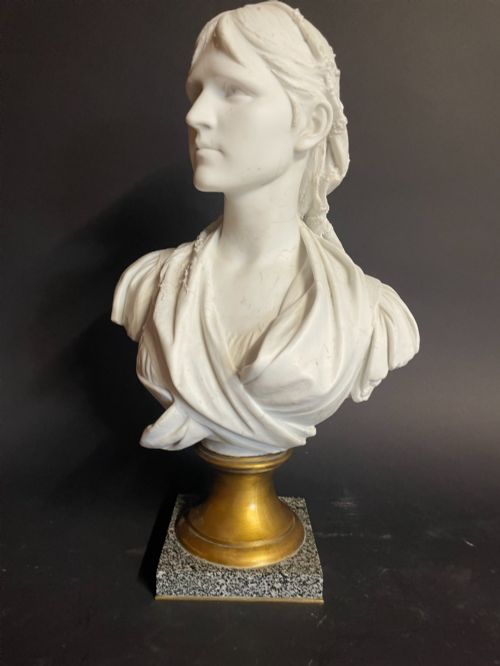
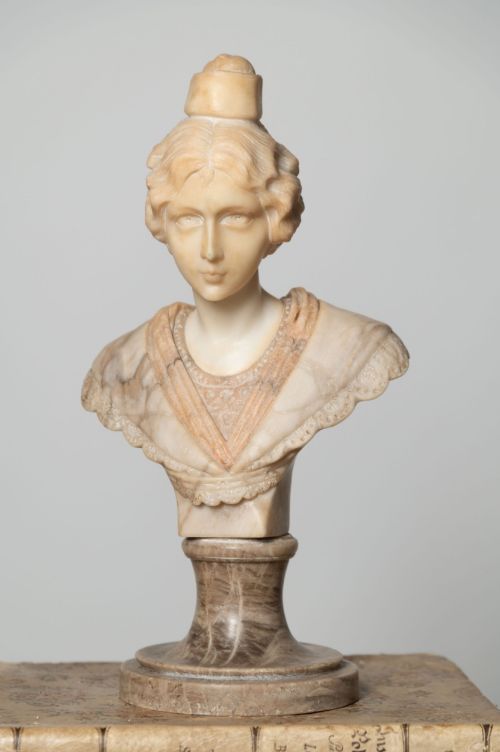
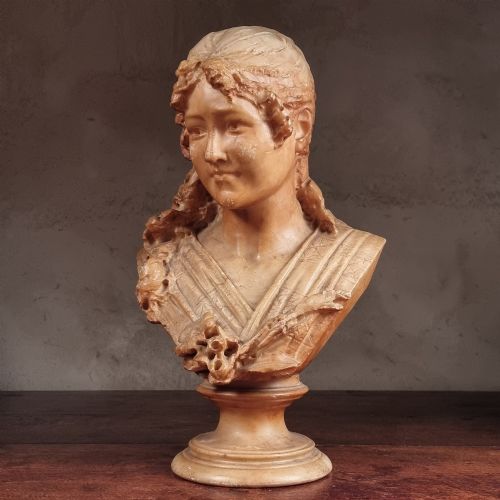
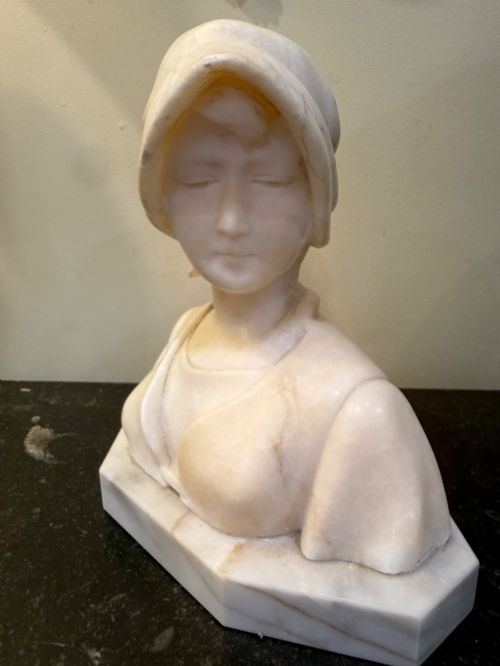
A carved alabaster female figure brings classical grace and expressive portraiture into a room through translucent stone.
Carved Alabaster Female Figure
A carved alabaster female figure encompasses sculptural works depicting women, ranging from intimate busts to full-length reclining nudes and allegorical deities. Buyers searching for a carved alabaster female figure frequently encounter pieces originating from French and Italian studios spanning the nineteenth and early twentieth centuries.
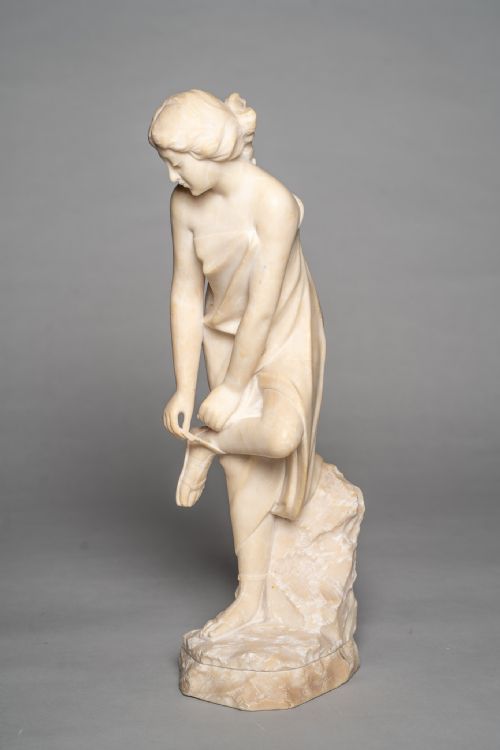
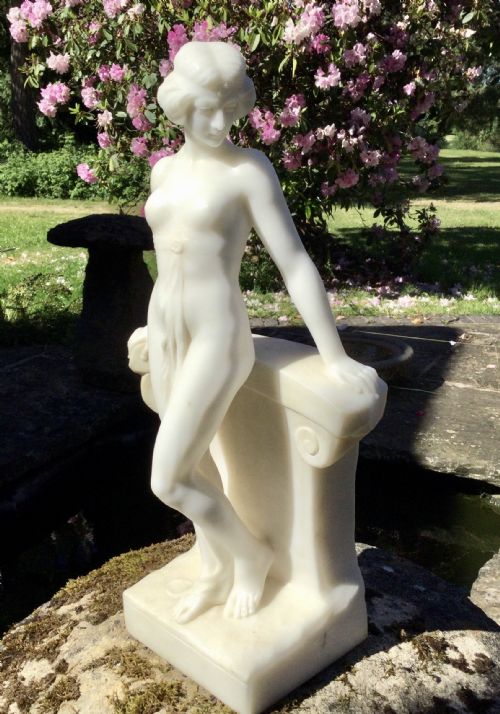
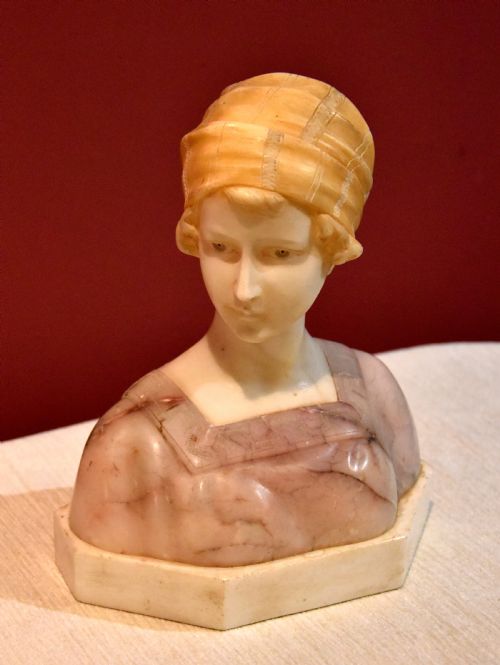
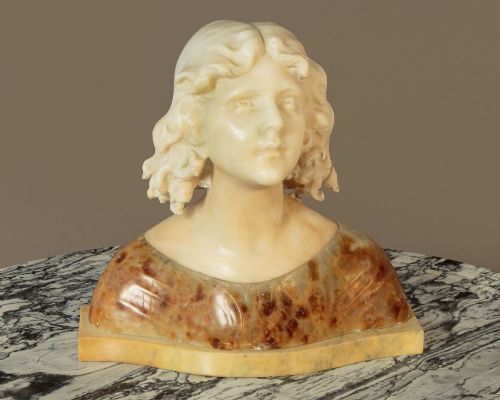
The selections on this page demonstrate considerable variety in scale and subject, including mythological figures like Hestia alongside young ladies bathing, playing instruments, or holding wheatsheaves. Busts and portrait sculptures predominate, capturing subjects from young girls to classical heroines.
Stylistic influences vary widely across these pieces, drawing upon Neoclassical, Victorian, Art Nouveau, and Belle Epoque traditions. Makers combined stone carving with distinct aesthetic movements, resulting in both formal portraiture and fluid, decorative forms.
Materials and Construction
Sculptors utilised fine alabaster and marble as primary mediums, often exploiting the natural translucency of the stone to render soft flesh tones and draped garments. Certain compositions incorporate mixed media elements such as metal, brass, or ormolu mounts to accent the carved stone.
Artisans shaped the stone through meticulous hand carving and chiselling, finishing surfaces with smooth abrasion to highlight the natural grain. Some advanced works employ two-tone alabaster or combine white marble with alabaster to create deliberate colour contrast within a single sculpture.
Several ladies depicted in these sculptures hold unexpected items, including lyres, wheatsheaves, and even pool edges.
Evaluating Quality in Carved Figures
Quality rests upon the sensitivity of the carving and the purity of the stone, where superior works display subtle facial expressions, realistic drapery folds, and minimal natural flaws in the alabaster. The distinction between standard studio output and premier examples often lies in the anatomical precision of the hands and hair.
Signature and attribution elevate certain pieces, particularly those bearing the marks of established European sculptors or prominent Italian workshops. The integration of auxiliary materials like ormolu or contrasting marble bases also signals higher ambition in the execution of the sculpture.
A. Gamay·Auguste Henri Carli·Fritz Kochendorfer·Gugielmo Pugi·R. Lusili·G.V. Vaerenbergh
The Carved Alabaster Female Figure Glossary
- Alabaster
- A fine-grained, translucent stone favoured by sculptors for its soft appearance and suitability for detailed carving. It transmits light slightly beneath the surface.
- Bust
- A sculpted representation of a person from the chest or shoulders up. This format focuses attention on facial expression and hairstyle.
- Ormolu
- Gilded bronze mounted onto or incorporated with stone sculptures. It provides decorative metallic contrast.
- Neoclassical
- An artistic style drawing inspiration from the classical art and culture of ancient Greece and Rome. It emphasises restraint, proportion, and classical themes.
- Art Nouveau
- A decorative style characterised by flowing, organic lines and natural motifs popular around the turn of the twentieth century.
Carved Alabaster Female Figure: Frequently Asked Questions
Where should I display a heavy stone bust?
These dense sculptures require sturdy furniture such as a strong console table, pedestal, or low sideboard capable of supporting substantial weight safely.
Position the piece away from direct sunlight and heavy foot traffic to protect the delicate stone surfaces from accidental impact.
What is the difference between alabaster and marble?
Alabaster is softer and possesses a characteristic translucency that allows light to penetrate just below the surface, resembling human skin.
Marble is a harder, crystalline metamorphic rock with denser veining and higher resistance to scratching.
How do I date an antique sculpture?
Examine the style of the hair, clothing, and overall aesthetic movement, such as the flowing organic lines typical of Art Nouveau or the stricter proportions of Victorian Neoclassical work.
Signatures, foundry marks, or inscribed dates carved directly into the stone or base offer further chronological evidence.