
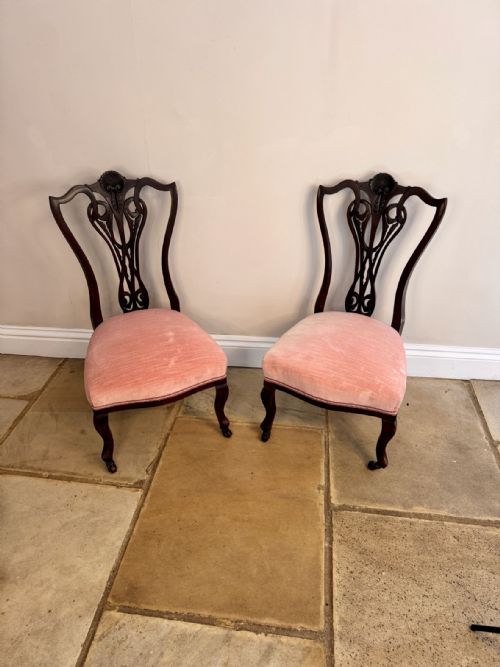
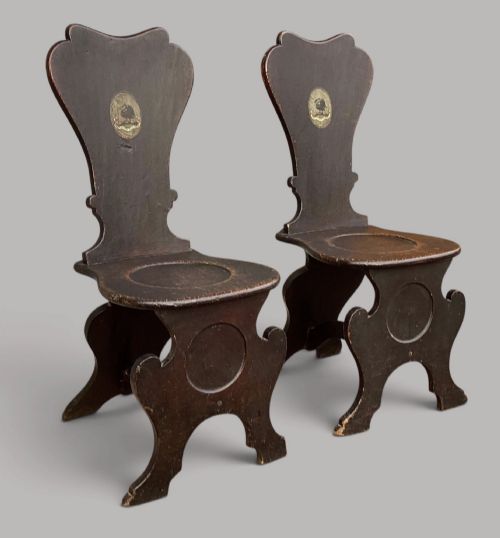
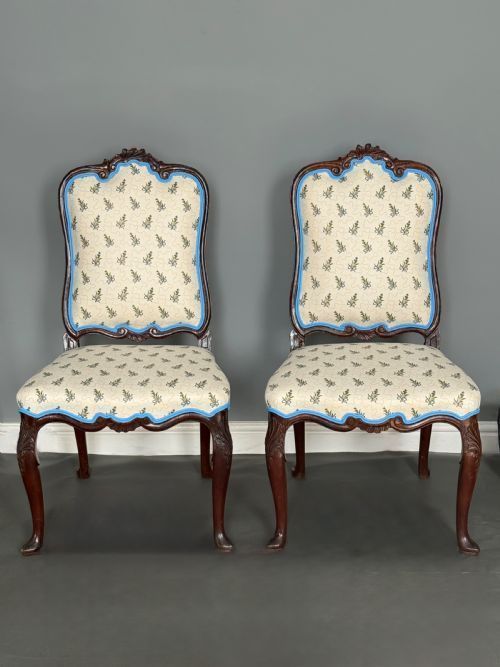
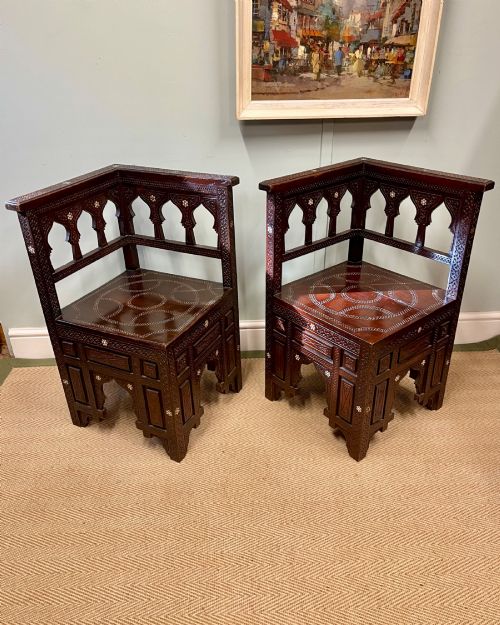
Carved Accent Side Chairs
Carved accent side chairs bring history into a room, offering functional seating shaped by centuries of cabinet-making skill.
Carved Accent Side Chairs
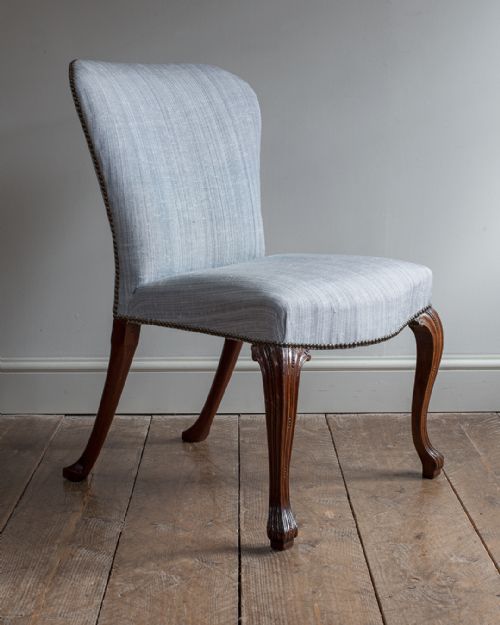
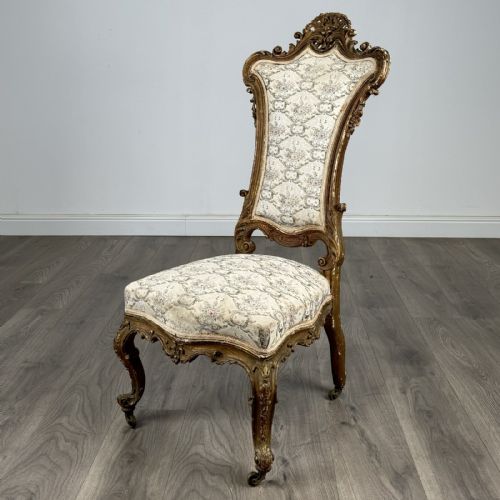
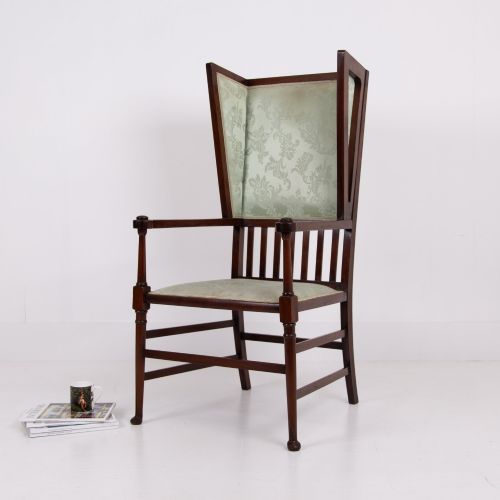
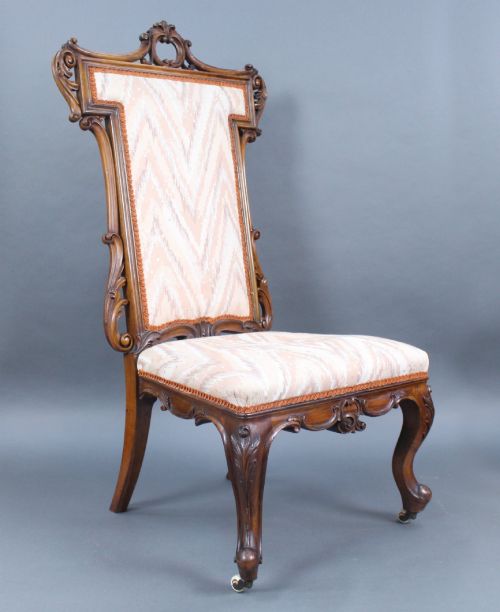
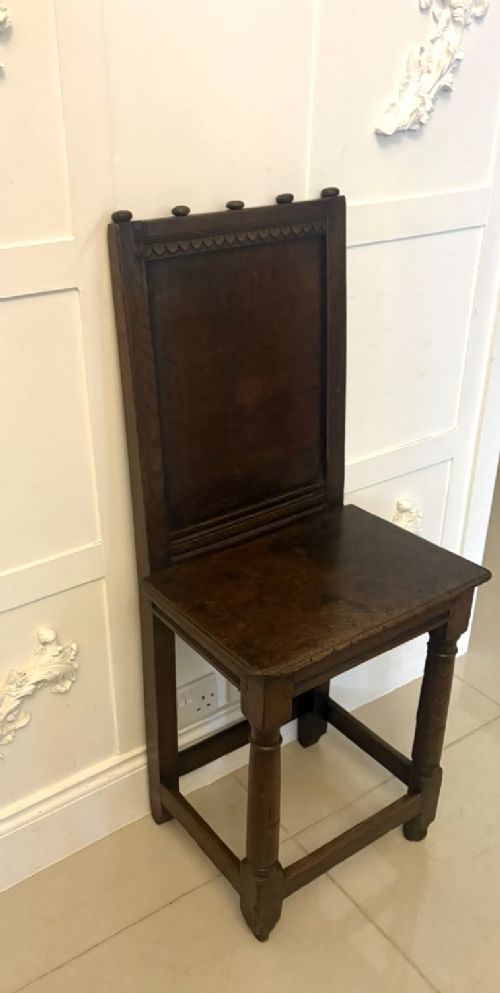
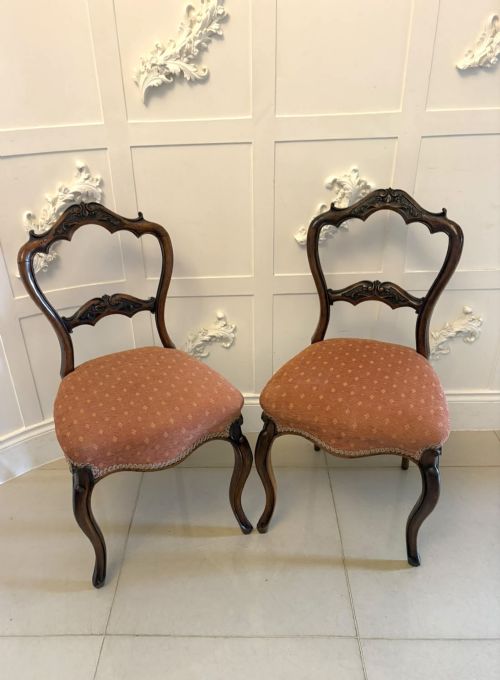
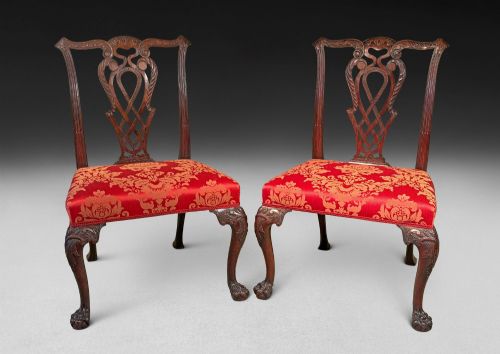
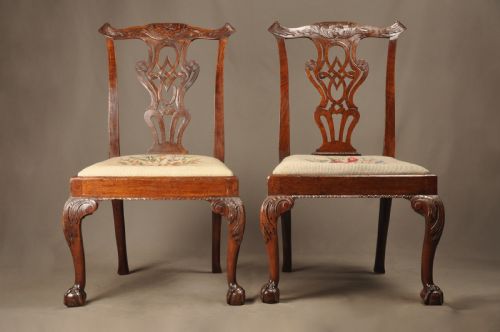
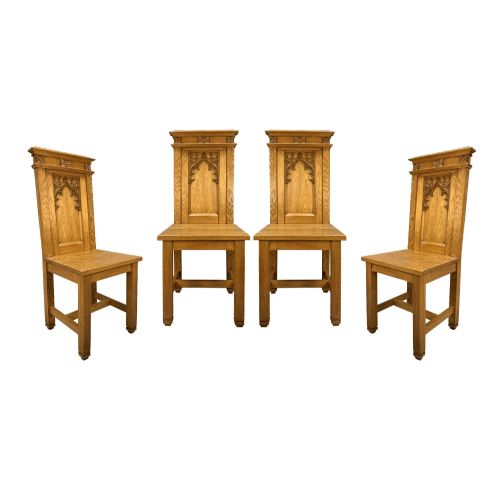
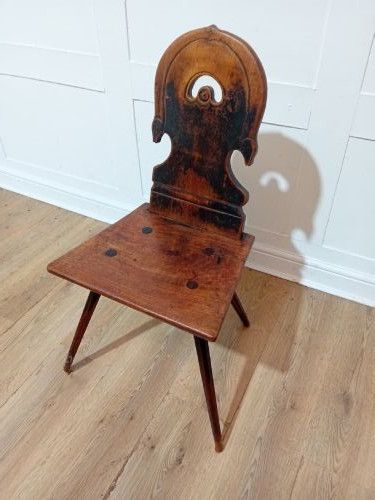
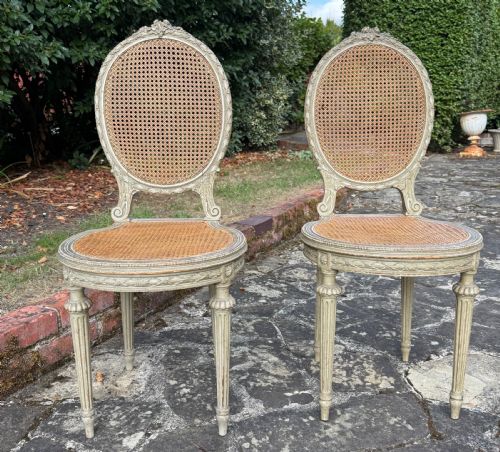
Carved accent side chairs encompass a wide variety of seating forms designed for occasional use in halls, parlours and reception rooms. These pieces emerge from periods spanning the eighteenth and nineteenth centuries, taking shapes such as hall chairs, salon chairs, nursing chairs and occasional chairs.
The selection ranges from Dutch Baroque Cuban mahogany examples and George II walnut chairs to Victorian walnut and tapestry upholstered seats. Oak and mahogany serve as the primary woods, while styles draw upon Georgian, Regency, Queen Anne and Gothic Revival influences.
Buyers encounter distinct regional variations, including English, Scottish and French workmanship, alongside specialised forms like shield-back hall chairs and low salon chairs. Each piece offers a specific functional history tied to the domestic interior of its original era.
How they were made
Makers constructed these chairs primarily using solid hardwoods such as walnut, mahogany and oak, often selecting dense timbers that supported intricate hand-carved details on splats and legs. Cabinet-makers utilised traditional joinery methods to ensure structural integrity across styles ranging from cabriole leg designs to bobbin-turned frames.
Upholstered versions incorporate textiles like fabric, velvet and tapestry, secured over padding to provide comfort in reception rooms and bedrooms. Painted finishes, such as grey paint on Gothick taste frames, and ebonised treatments also appear alongside exposed wood surfaces decorated with brass elements.
Listings feature walnut, mahogany and oak pieces spanning the eighteenth and nineteenth centuries, including Queen Anne, Regency and Victorian styles.
What varies in quality
The standard of carving distinguishes the workmanship, where crisp, deep relief work executed by hand contrasts with softer or more mechanical ornamentation. The choice of timber also dictates the tier of the piece, with figured Cuban mahogany and dense old-growth walnut commanding greater presence than standard utility woods.
Proportion and structural balance define the architectural success of the frame, separating standard regional production from masterworks commissioned for prominent interiors. The survival of original surfaces, whether polished wood or period upholstery, preserves the integrity of the design.
Charles Tozer
The Carved Accent Side Chairs Glossary
- Cabriole leg
- A furniture leg that curves outward at the knee and tapers inward toward the ankle, often ending in a pad or claw foot. This form derives from animal limbs and gained popularity during the eighteenth century.
- Hall chair
- A rigid wooden seat traditionally placed in entrance halls, frequently featuring a carved or painted shield back for family crests. These pieces prioritized heraldic display over cushioned comfort.
- Sgabello
- An early Renaissance-style chair type featuring solid trestle supports and an octagonal seat, adapted in later periods for decorative hall use. The backrest is typically narrow and upright.
- Shield back
- A chair back shaped in the outline of a heraldic shield, commonly found in late eighteenth-century dining and hall seating. This design allowed for delicate openwork carved splats.
- Bobbin turned
- Furniture legs or stretchers shaped on a lathe to resemble a series of rounded bobbins or spools linked end to end. This turning style is frequently seen on seventeenth and eighteenth-century oak seating.
Carved Accent Side Chairs: Frequently Asked Questions
Where should I place a carved accent side chair?
These chairs suit entrance halls, bedrooms and quiet corners where occasional seating is required without dominating the floor plan.
Because they lack heavy padding, they function best as decorative accents or transitional seating rather than primary lounge chairs.
How do I identify the period of a wooden chair?
Examination of the timber species, joinery construction and carved motifs provides the clearest indication of manufacturing date.
Comparing the silhouette to documented styles like Queen Anne, Regency or Victorian helps narrow down the decade of origin.
Can I use an antique hall chair for daily seating?
Hall chairs were built with rigid wooden seats intended for brief use in entryways rather than prolonged sitting.
They function well as decorative display pieces or occasional seats when paired with a desk or dressing table.
What maintenance do antique walnut and mahogany chairs need?
Keeping wooden frames away from direct heat sources and sudden humidity changes prevents the timber from splitting.
Regular dusting with a dry cloth maintains the polish without the need for heavy chemical waxes.