

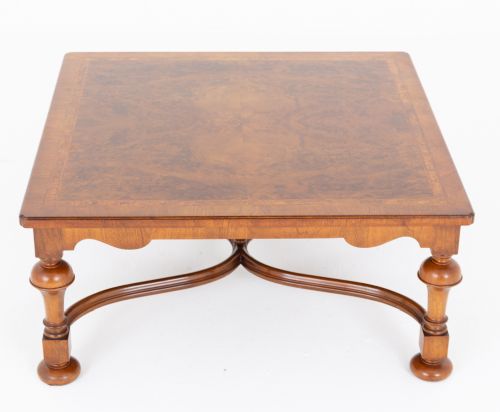
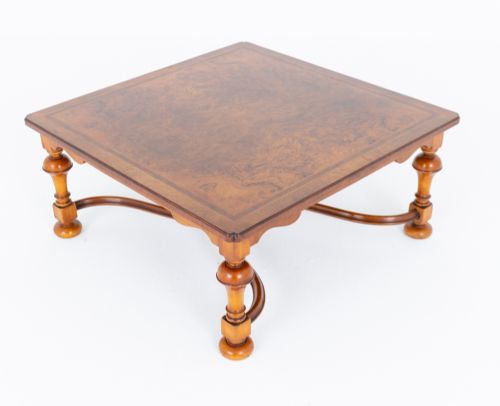
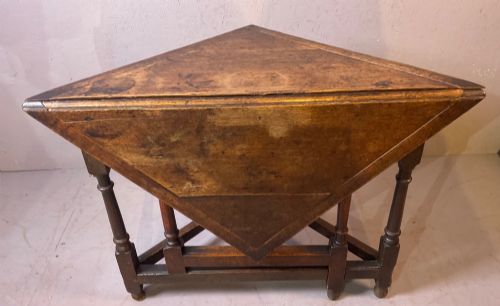
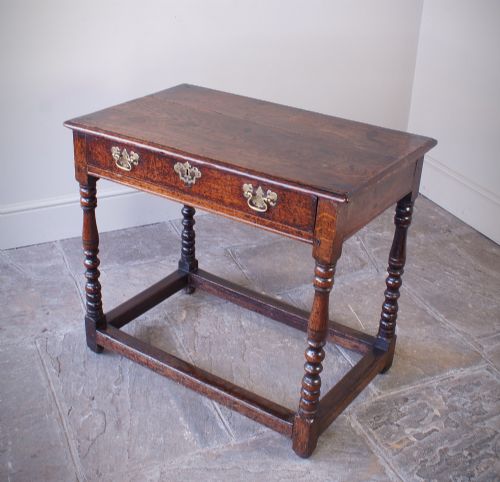




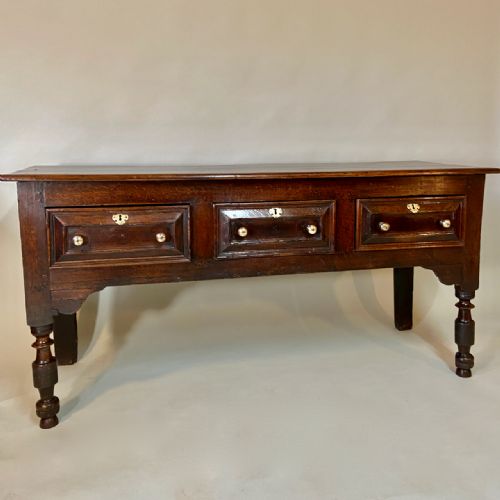
Carolean Turned Leg Table
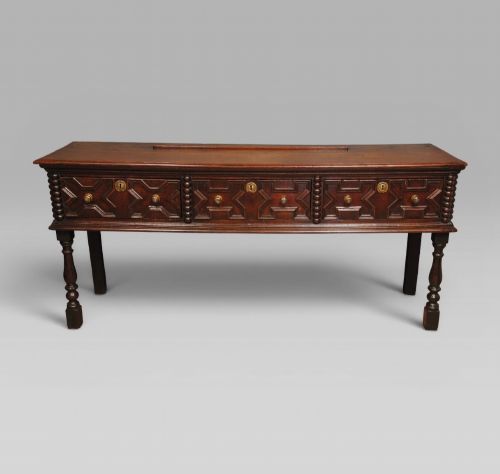
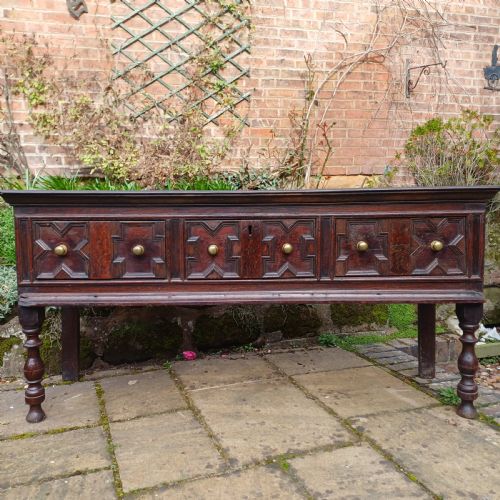
A carolean turned leg table brings heavy timber, strong seventeenth-century presence, and robust joinery into a modern room.
Carolean Turned Leg Table
A carolean turned leg table encompasses sturdy side tables, coffee tables, tavern tables, and low dressers spanning the seventeenth century alongside revival interpretations from later periods. When you search for this phrase, you find heavy timber furniture built with turned supports and substantial tops.
The material palette runs through oak, walnut, burr walnut, and yew wood. These timbers carry the grain and colour expected of seventeenth-century English work and later revival pieces.
How they were made
Carpenters utilised solid oak, walnut, and yew wood, shaping timber with hand tools to form thick tops and sturdy frames. Joinery relied on traditional pegged joints to hold heavy timber sections together.
Turners shaped the legs on lathes to create distinctive bobbin and turned profiles. Brass fittings appear occasionally as handles or mounts on related drawer bases.
Carolean Turned Leg Table Retail Price Guide 2026
Typical asking prices for carolean turned leg table among the pieces listed under this phrase on Sellingantiques today, from the lower quarter to the upper quarter. They describe what is for sale here now, not the wider market.
Bobbin-turned legs were sometimes turned on primitive pole lathes, bringing a delightfully lumpy rhythm to seventeenth-century dining.
What varies in quality
The choice of timber sets the tone, with richly figured burr walnut and dense seventeenth-century oak sitting at the upper end of the scale. Plain timber and later revival interpretations show different degrees of material selection.
The crispness of the turning on the legs defines the hand of the maker. Sharply cut bobbin and profile turnings demonstrate greater skill than softer, simpler lathe work.
The Carolean Turned Leg Table Glossary
- Carolean
- The period covering the reign of King Charles II, noted for rich carving and turned woodwork. This style influenced later revival furniture makers.
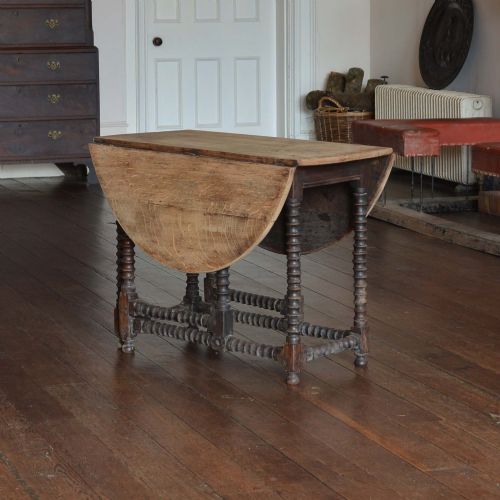
- Bobbin turning
- A form of lathe work producing a series of rounded spheres resembling bobbins on a thread. This profile appears frequently on seventeenth-century legs.
- Gateleg table
- A table with hinged flaps supported by swing legs that pull out like a gate. This form maximises surface area while folding down compactly.
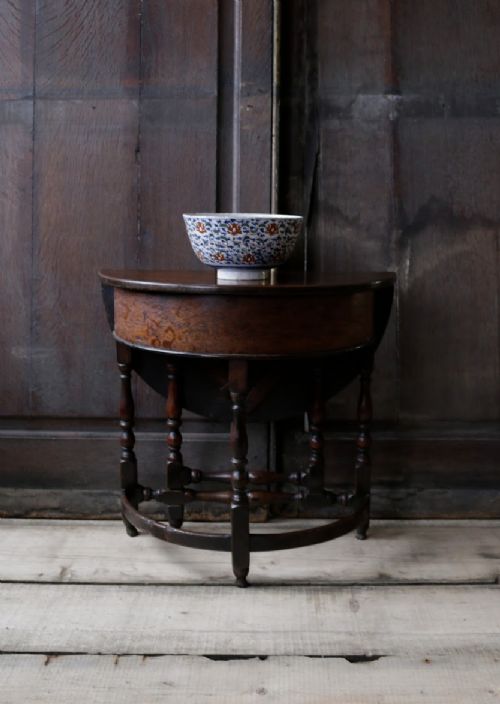
- Credence table
- A triangular or semicircular folding table with a hinged top supported by a swinging leg. These early pieces often served domestic or ecclesiastical functions.
Carolean Turned Leg Table: Frequently Asked Questions
What is a carolean turned leg table?
It is a heavy wooden table featuring turned legs, originating in the seventeenth century or built during later revival periods.
These pieces include side tables, coffee tables, and tavern tables constructed from oak, walnut, and yew.
How do I date an oak table?
Dating relies on examining the construction methods, tool marks, and timber shrinkage visible across the frame. Seventeenth-century examples show hand-cut joinery and period hardware.
Revival pieces from later centuries often employ different secondary woods and mechanical fixings alongside older stylistic cues.
Where were these tables used?
Original pieces served domestic and public spaces like taverns as side tables, centre tables, and low dressers for storage.
Today they function effectively as coffee tables or accent surfaces in modern interiors.
What woods were commonly used?
Oak and walnut dominate the surviving examples, alongside occasional pieces fashioned from yew wood or burr walnut.
These dense timbers provided the structural integrity needed for heavy turned legs and thick table tops.