


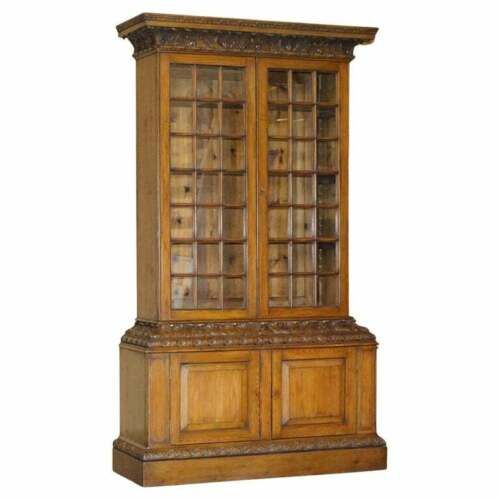

Carolean Style Furniture
Carolean style furniture brings the robust, heavily carved grandeur of the Restoration period into your home.
Carolean Style Furniture
Carolean style furniture encompasses seating, tables, desks, and storage pieces inspired by the late seventeenth-century reign of Charles II. When you search for carolean style furniture, you encounter robust items defined by ornate carvings, scrolling motifs, and high backs.
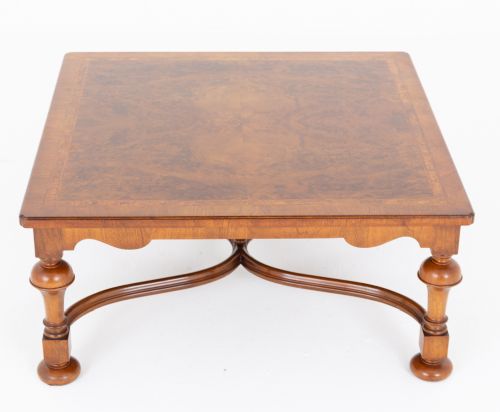
The pieces listed here bridge original seventeenth-century examples from the 1600s with later nineteenth- and early twentieth-century revivals. You are most likely to meet revival dining sets, coffee tables, and side chairs constructed during the Edwardian era and the late Victorian period.
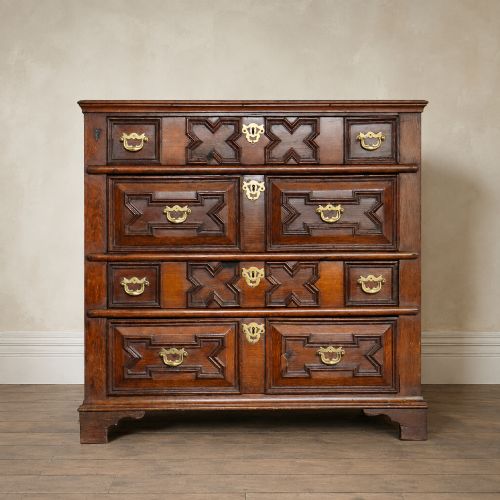
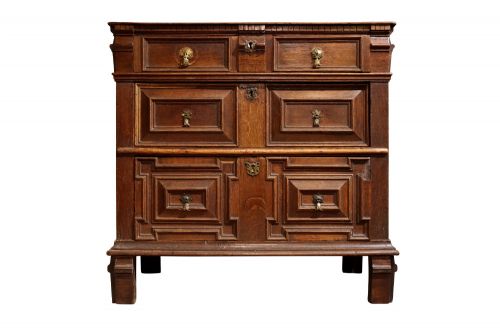
Forms range from geometric moulded chests of drawers and library bookcases to expansive dining tables with high-back chairs. These items reflect a distinct shift toward lavish ornamentation following the austere Puritan period of the English Commonwealth.
How they were made
Cabinetmakers and joiners relied heavily on native timber, shaping solid oak and walnut into sturdy structural frames. Timber selection dictated the weight and presence of each piece, whether it was a large dining table or a two-part chest.
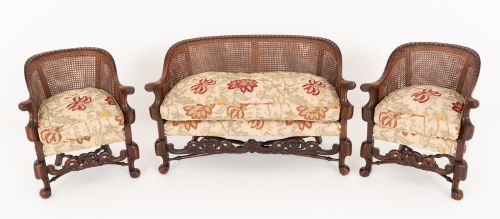
Decorative surfaces frequently incorporate woven cane for chair backs and seats, adding textural contrast to the heavy timber frames. Brass hardware, such as drop handles and escutcheons, provides functional fastening and subtle metallic detail.
Advanced joinery techniques, including geometric mouldings applied to drawer fronts and intricate hand-carving on chair crests, demand high levels of woodworking skill. Artisans utilised mortise and tenon joints to ensure longevity in large items like bookcases and dining suites.
Listings feature oak, walnut, burr walnut, and woven cane across seating, chests of drawers, and dining sets.
What varies in quality
The depth and crispness of the hand-carved ornamentation separate exceptional examples from simpler production. Sharply chiselled acanthus leaves and scrollwork indicate superior craftsmanship compared to shallow, machine-routed decoration.
The integrity of the structural timber and the retention of original elements determine the standing of a piece. Period items from the seventeenth century command attention for their authentic age, while revivals from the Victorian and Edwardian periods depend on the fidelity of their execution.
The Carolean Style Furniture Glossary
- Cane
- Woven split rattan used for chair seats and backs. This material offers a flexible yet durable surface that lightens the heavy appearance of timber frames.
- Geometric moulding
- Raised wooden mouldings applied in symmetrical patterns to drawer fronts. This technique creates architectural depth and visual rhythm on flat surfaces.
- Bergere
- An enclosed armchair featuring upholstered sides and a cane or padded back. It provides substantial comfort while maintaining a formal aesthetic.
- Restoration
- The historical period beginning in 1660 with the return of Charles II. Furniture from this era is characterised by exuberant carving and a celebration of luxury.
Carolean Style Furniture: Frequently Asked Questions
What defines carolean style furniture?
Carolean style furniture is defined by its seventeenth-century origins, featuring rich walnut and oak timbers, elaborate scrollwork, and high-backed chairs.
It reflects the restoration of the monarchy through ornate designs that rejected earlier Puritan simplicity.
Are all items from the seventeenth century?
Not all pieces date to the original period, as many examples come from later nineteenth and early twentieth-century revivals.
Revival pieces capture the same decorative spirit and craftsmanship techniques using period-appropriate timbers and methods.
How do I care for cane panels?
Cane panels require gentle cleaning with a damp cloth to prevent the natural rattan from becoming brittle over time.
Keeping the material away from direct heat sources maintains its flexibility and structural integrity.
Where should I place these pieces?
These substantial oak and walnut items suit dining rooms, libraries, and hallways as focal points.
Their robust construction allows them to anchor a room while providing functional surface and storage space.