





Carolean Oak Armchair
A carolean oak armchair brings the robust timber and carved ornament of the mid-seventeenth century directly into a modern room.
Carolean Oak Armchair
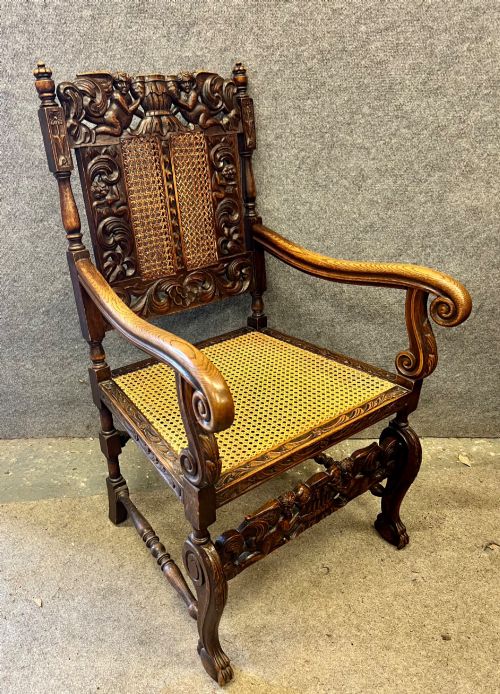
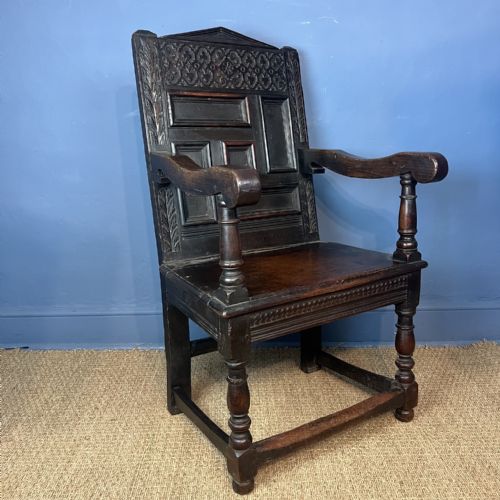
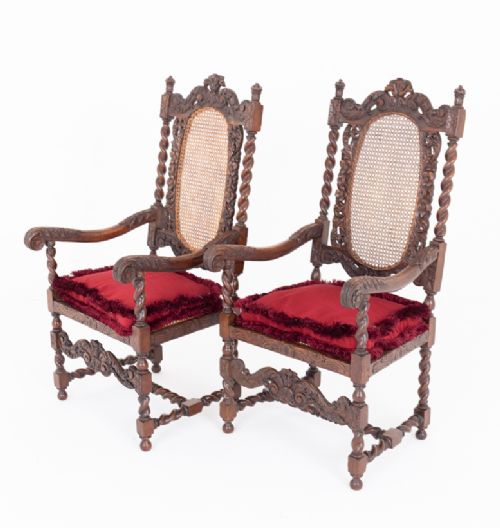
A carolean oak armchair represents a distinct lineage of heavy timber seating originating in the seventeenth century, built with high backs and prominent armrests. These pieces combine utilitarian joinery with elaborate decorative carving that marks the restoration period of Charles the Second.
Buyers browsing this selection will encounter authentic seventeenth-century examples alongside later nineteenth- and early twentieth-century revivals. The latter group includes pieces made in the Carolean style, Jacobean revival, and Cromwellian aesthetic, reflecting successive waves of historical interest in early English furniture forms.
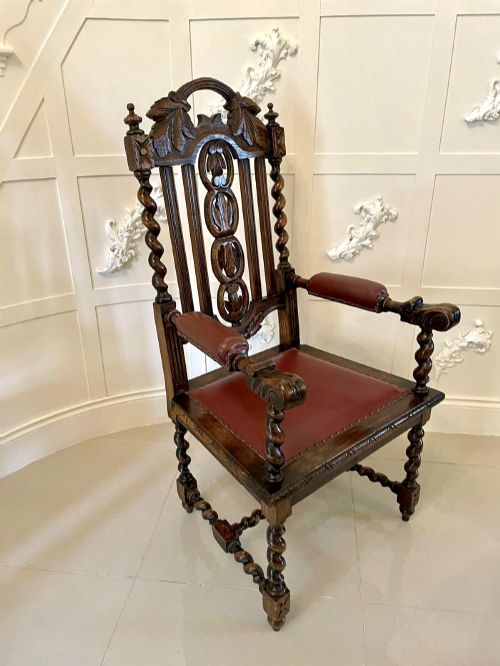
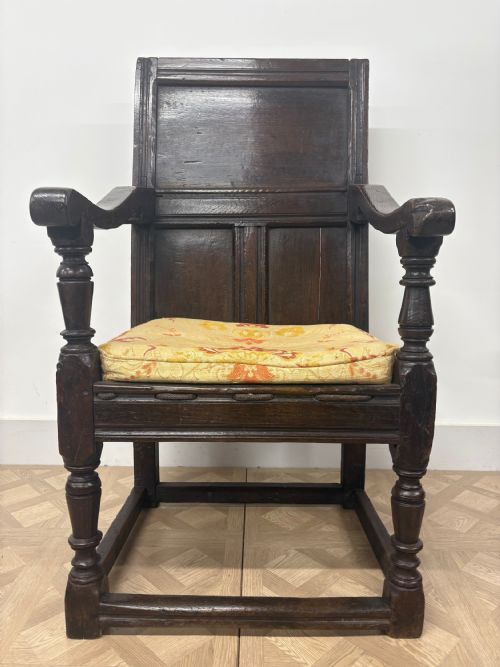
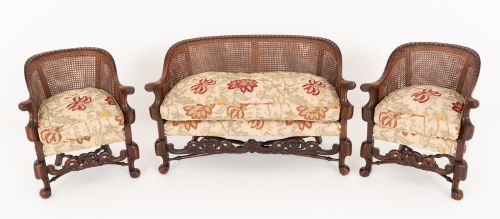
The physical formats range from solid wainscot armchairs with panelled backs to elaborate throne chairs, bergere suites, and highchairs. While seventeenth-century survivals remain scarce, revival pieces from the Victorian era and the nineteen-twenties appear frequently on this page.
Assessing quality and execution
The distinction between ordinary and exceptional pieces rests upon the crispness of the hand-carving and the integrity of the timber framing. Superior examples display deep, three-dimensional relief on crest rails and stretchers rather than shallow, mechanical milling.
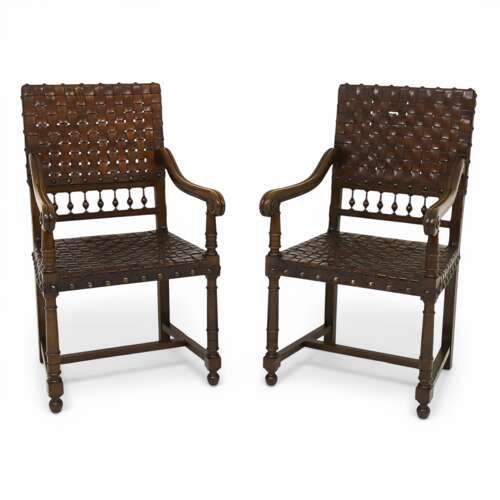
Proportion and structural balance also determine the standing of a chair, with finer items maintaining harmonious scales between heavy turnings and open cane or upholstered panels. The choice of original or period-appropriate secondary materials, such as supple leather or tight caning, elevates the execution.
Carolean Oak Armchair Retail Price Guide 2026
Typical asking prices for carolean oak armchair among the pieces listed under this phrase on Sellingantiques today, from the lower quarter to the upper quarter. They describe what is for sale here now, not the wider market.
The archive and active inventory include pieces dated across nine distinct periods, from mid-seventeenth-century originals to nineteen-twenties revivals.
The Carolean Oak Armchair Glossary
- Wainscot chair
- A heavy wooden armchair constructed primarily from oak panels with solid wooden seats, typical of the seventeenth century and earlier domestic interiors.
- Carolean revival
- A nineteenth- or twentieth-century stylistic movement that recreates the elaborate scrolls, crown motifs, and turned woodwork of the reign of Charles the Second.
- Cane back
- A seating panel formed from interwoven rattan or cane strips, offering a lighter decorative contrast to solid wood or heavy upholstery.
- Throne chair
- An oversized armchair featuring an elevated back and substantial armrests, designed to impart a sense of authority and formal status.
- Crest rail
- The horizontal topmost member of a chair back, frequently carved with scrolls, foliage, or royal ciphers in seventeenth-century designs.
Carolean Oak Armchair: Frequently Asked Questions
How do I distinguish a seventeenth-century original from a nineteenth-century revival?
Original pieces from the sixteen-hundreds exhibit hand-cut joinery marks, iron or wooden pegs showing irregular wear, and deep oxidisation within the grain of the oak. Tool marks left by pit saws and hand chisels differ fundamentally from the machine-standardised surfaces found on later revival furniture.
Revival pieces made during the Victorian era or the nineteen-twenties often use softer secondary woods, possess more uniform turnings, and reflect the heavier proportions favoured by nineteenth-century cabinet makers.
Were these chairs used at dining tables or as standalone seats?
Historic armchairs of this weight were typically reserved for the head of the household or important guests at the dining table, rather than distributed as matching sets for general seating. Most domestic households maintained a single wainscot chair or a matched pair for the hall or parlour.
Later revival movements produced larger suites, including sets of dining chairs and matching fireside armchairs, adapting the seventeenth-century aesthetic for broader Victorian and Edwardian domestic arrangements.
How should I care for cane and leather elements on these chairs?
Cane panels require occasional gentle cleaning with a damp cloth to maintain moisture in the rattan and prevent it from becoming brittle. Keeping these chairs away from direct heat sources preserves the natural flexibility of both the wickerwork and the leather.
Woven and upholstery leathers benefit from specialised wax balms or leather dressings applied sparingly to nourish the hide and prevent cracking along the structural folds and brass stud lines.
What is the difference between a wainscot chair and a throne chair?
A wainscot chair is defined by its solid panelled wooden back and box-like construction, reflecting sixteenth- and seventeenth-century domestic utility. These pieces rely on flat panels and straightforward carpentry combined with select carving.
Throne chairs generally date from the Victorian revival period and feature exaggerated proportions, towering backs, and heavy architectural carving intended for display rather than standard seating comfort.