



Carolean Hall Table
A carolean hall table brings sturdy seventeenth-century character and rich timber grain to an entryway.
Carolean Hall Table
When you search for a carolean hall table, you are looking at substantial seventeenth-century timber furniture designed for grand domestic spaces. The pieces available here span side tables, dresser bases, servers, and dressers originating from the seventeenth century, alongside revival interpretations from later periods like 1900. These tables provide a commanding physical presence through robust proportions and dark, aged timbers.
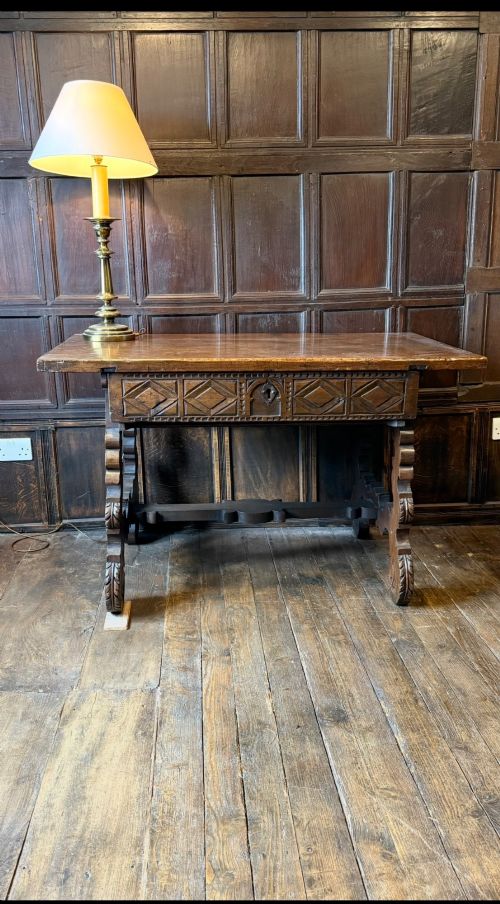
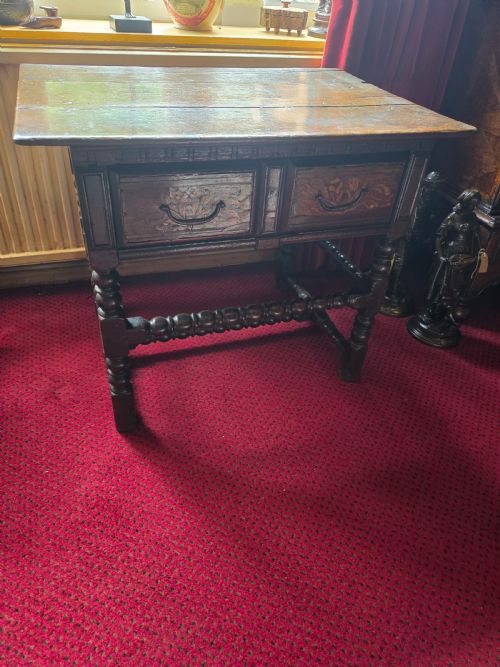
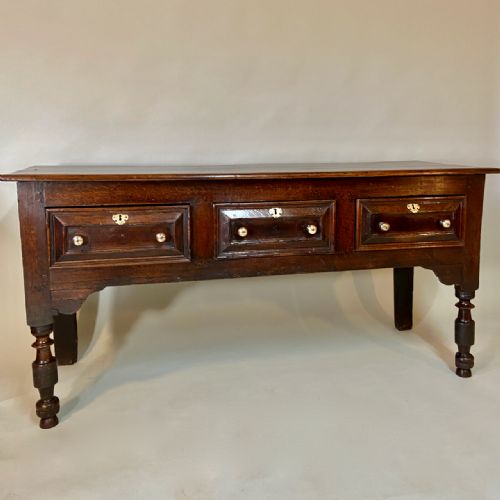
You are most likely to meet heavy oak side tables and low dressers featuring characteristic period joinery. Many examples display geometric mouldings, parquetry, or wood inlay across their drawer fronts and surfaces. Alongside authentic seventeenth-century survivors, you will also find later revival styles that emulate these earlier structural and decorative choices.
Materials and construction
Makers built these tables primarily using solid oak and walnut, often enhanced with intricate wood inlay or parquetry. Structural stability relied on thick timber planks joined with traditional methods, while decorative surfaces utilised geometric mouldings to create depth and shadow.
Hardware and secondary materials played an essential functional role in the construction. Blacksmiths provided iron and brass components, including hinges and drawer pulls, which secured the heavy wooden elements together under daily use.
Carolean Hall Table Retail Price Guide 2026
Typical asking prices for carolean hall table among the pieces listed under this phrase on Sellingantiques today, from the lower quarter to the upper quarter. They describe what is for sale here now, not the wider market.
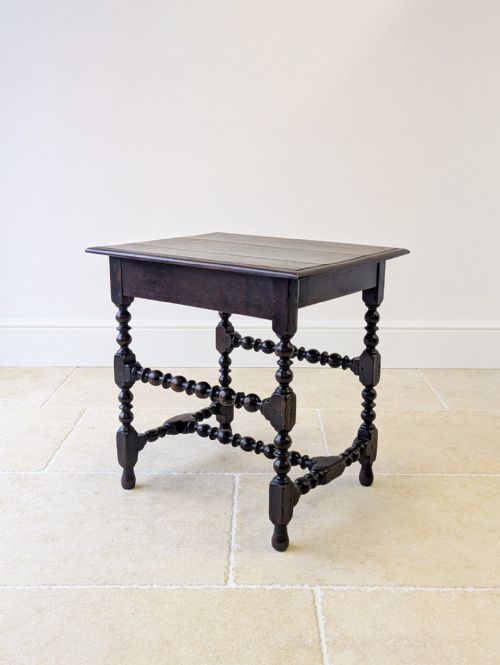
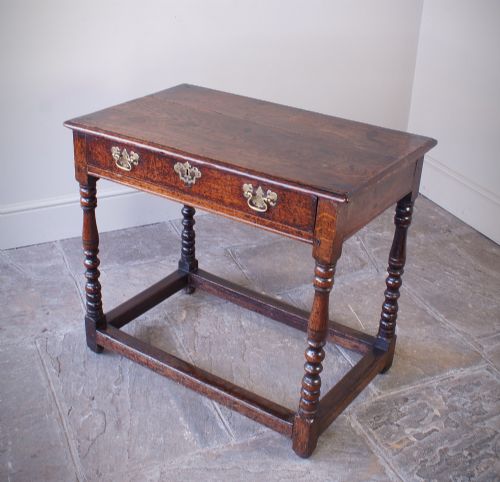
Several tables rely on rows of wooden bobbins that make you want to reach out and test their rhythmic turn.
Assessing quality and craftsmanship
The distinction between standard examples and the finest pieces rests upon the crispness of the timber carving and turning. Bobbin-turned legs and geometrically moulded drawer fronts require precise handwork to achieve balanced symmetry and clean edges across dense hardwoods like oak and walnut.
Surface integrity and timber preservation dictate the overall character of each piece. Superior examples retain their original patination and well-fitted parquetry inlay, showing minimal disturbance to the primary structure over centuries of domestic service.
The Carolean Hall Table Glossary
- Carolean
- The period spanning the reign of Charles II, known for lavish decoration and rich woodwork. It forms the stylistic core for much of the furniture found in this category.
- Bobbin-turned
- A method of lathe-turning wood into a series of rounded spheres resembling bobbins or spools. This technique creates rhythmic, tactile supports for seventeenth-century tables.
- Parquetry
- Geometric patterns formed by small pieces of wood fitted together on a surface. It adds visual complexity to table tops and drawer fronts.
- Dresser base
- A low wooden sideboard or serving table featuring drawers and sometimes cupboards beneath a flat top. These sturdy pieces served practical storage and display functions in historic dining halls.
- Geometric moulding
- Raised wooden profiling applied in repetitive angular patterns to flat drawer fronts and panels. This technique introduces strong shadow lines characteristic of seventeenth-century joinery.
Carolean Hall Table: Frequently Asked Questions
What is a carolean hall table?
A carolean hall table is a heavy wooden furnishing rooted in seventeenth-century English design, typically built from oak or walnut. These pieces include side tables, servers, and dresser bases featuring turned legs and moulded drawer fronts.
They provide a strong focal point for hallways and living spaces, offering practical surface area alongside significant historical character. Many examples showcase period woodworking techniques like bobbin-turning and geometric panel decoration.
How were these tables used historically?
These robust tables served functional roles in grand seventeenth-century households for food preparation, serving, and general storage. Their sturdy construction allowed them to hold heavy items of plate and provisions in busy domestic settings.
Over time, their primary function shifted toward display and organisation within entrance halls and reception rooms. Their broad tops accommodated lighting, decorative objects, and correspondence.
How do I style a carolean table at home?
You can style a carolean table by placing it against a neutral wall in an entrance hall to showcase its rich timber grain and carved details. Keeping the surface relatively uncluttered lets the period proportions and drawer mouldings remain the visual focus.
Pairing the dark wood with simple ceramics or metallic accessories provides a balanced contrast against historic surfaces. Ensure the piece sits in a stable environment away from direct heat sources to protect the aged timber.
How can I tell original seventeenth-century pieces from later revivals?
Differentiating authentic seventeenth-century pieces from later revivals involves examining the joinery, timber shrinkage, and wear patterns. Original examples exhibit tool marks consistent with period hand-working methods and natural patination built up over centuries.
Revival pieces, such as those made around 1900, often display different structural tightness and more uniform surface ageing. Comparing the hardware fixings and interior drawer construction also helps clarify the date of manufacture.