

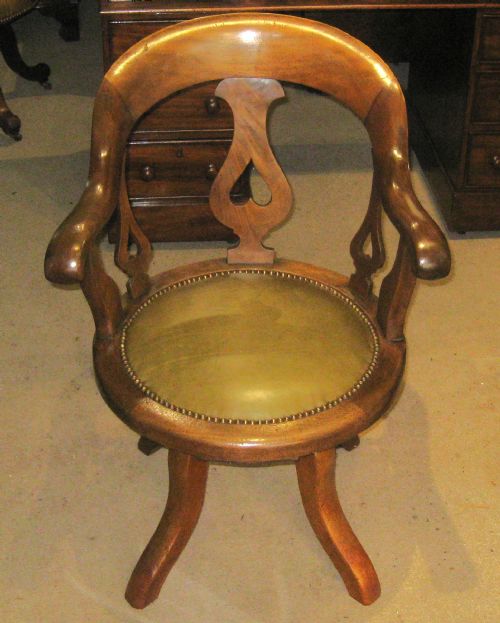
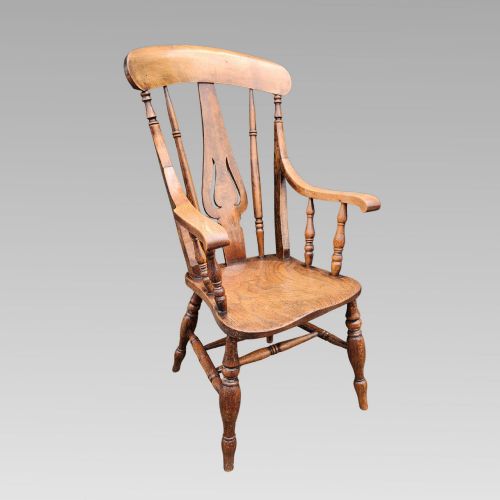

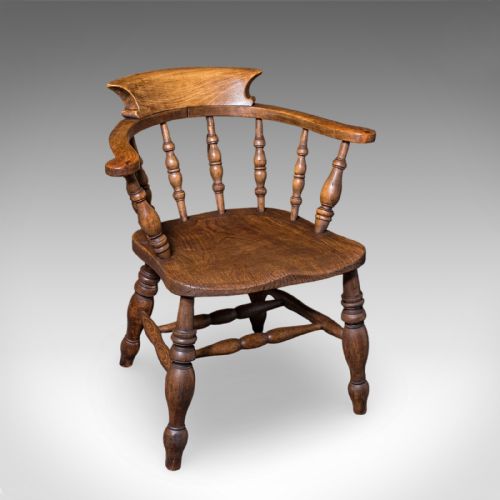
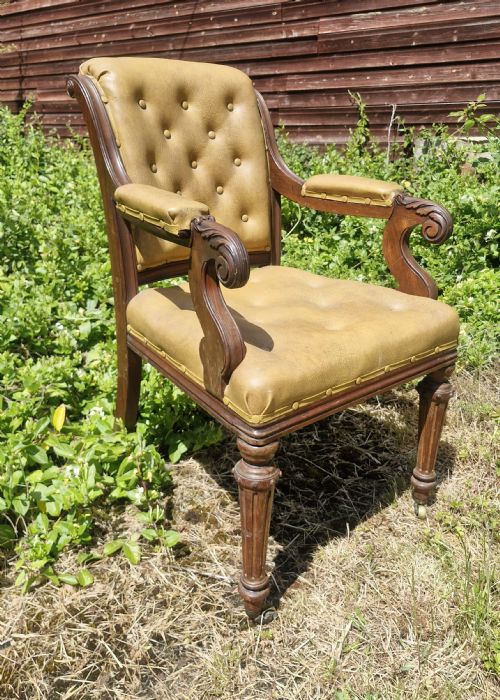

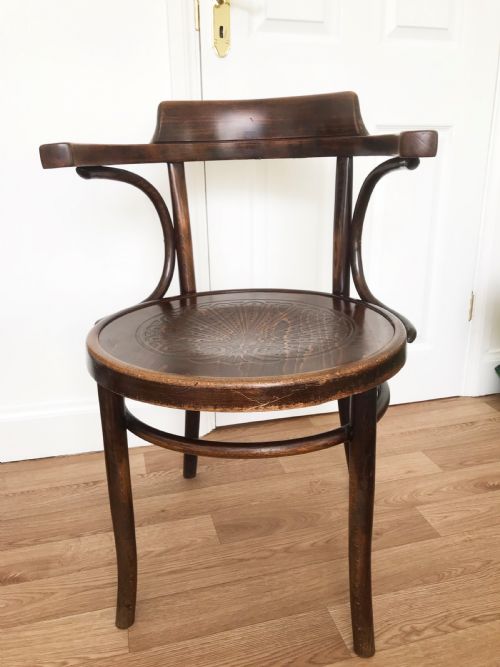

Captain Arm Chair
These captain arm chair examples offer solid timber framing and leather upholstery designed for long hours at a desk or library table.
Captain Arm Chair
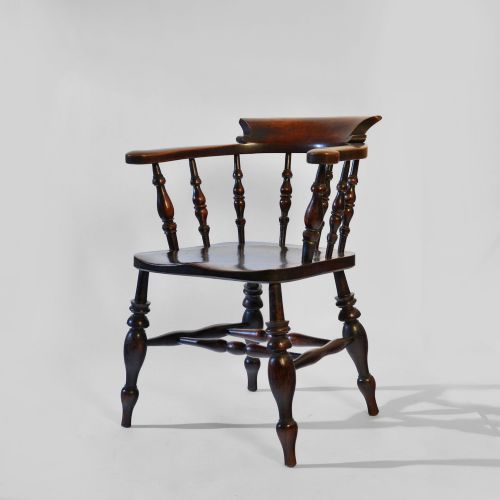
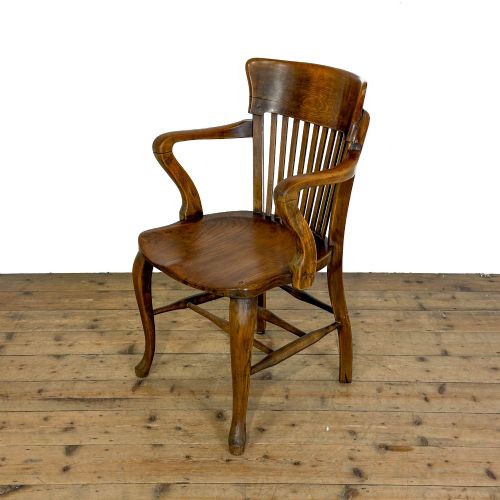
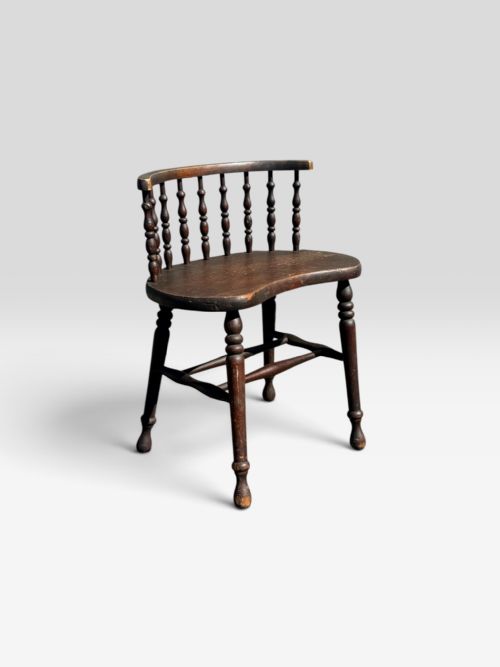
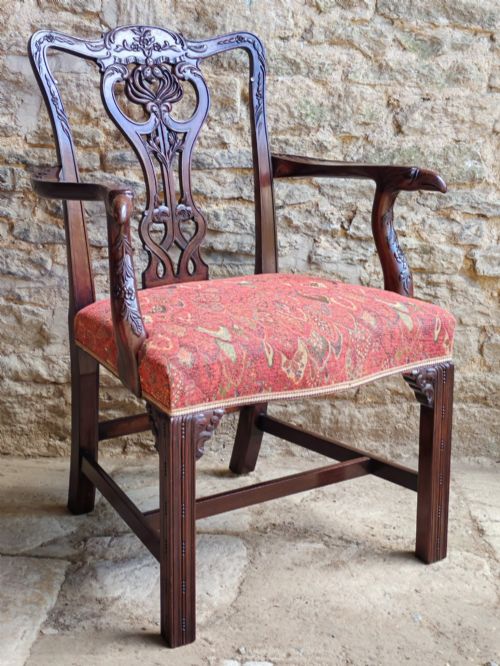
A captain arm chair is a sturdy seat built for working spaces, libraries and offices, combining the supportive back of a traditional Windsor or library chair with domestic comfort. The form typically includes a low, curved back rail supported by spindles and sturdy wooden arms intended to fit neatly beneath a desk.
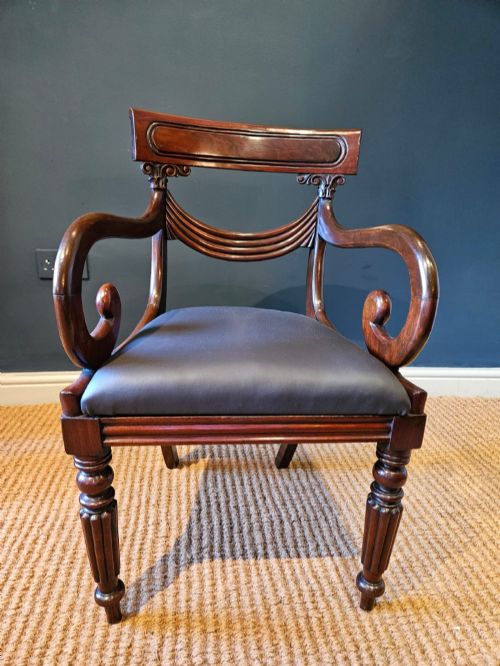
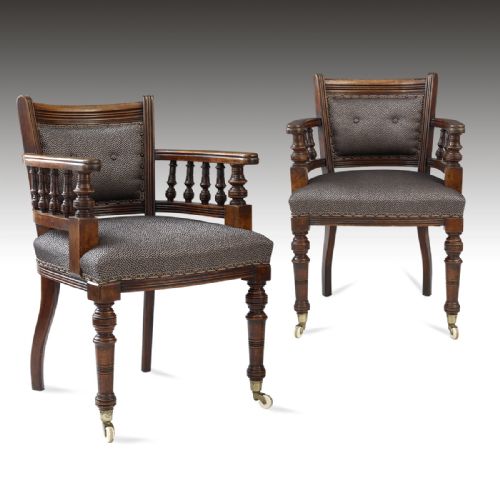
On this page, the captain arm chair most frequently appears in Victorian and Edwardian iterations, alongside earlier Regency and William IV forms. Materials range from solid mahogany and walnut to country timbers like elm, oak, beech, ash and yew.
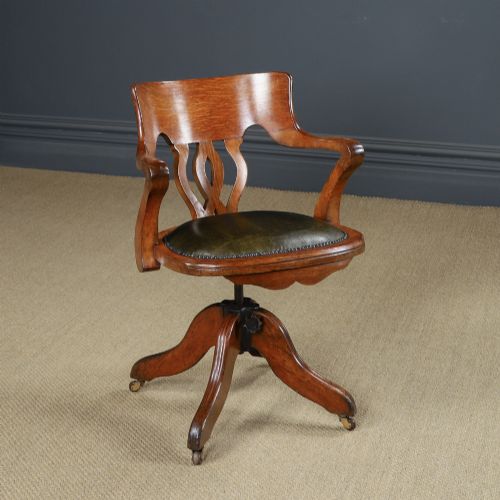
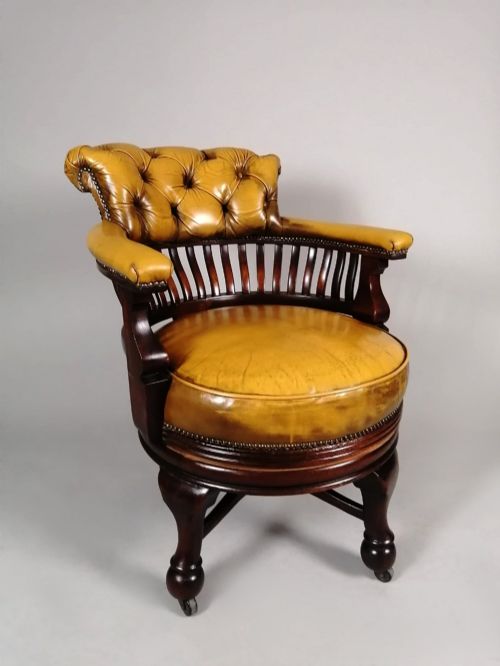
Variations span from fixed-leg library carvers to swivel desk chairs fitted with leather upholstery and brass mechanisms. Buyers encounter country house smoker's bows alongside formal mahogany desk chairs tailored for professional interiors.
How they were made
Makers constructed these chairs using robust hardwoods such as mahogany, oak, walnut and rosewood for formal library and desk models, while country variants relied on elm, beech, ash and yew. Turners shaped spindles and legs on lathes, joining parts with traditional mortise and tenon joints.
Upholstered versions integrate supple leather seats, often hand-dyed green, secured with brass tacks. Revolving and swiveling examples incorporate iron and brass mechanical fixings to enable height adjustment and rotation.
Captain Arm Chair Retail Price Guide 2026
Typical asking prices for captain arm chair among the pieces listed under this phrase on Sellingantiques today, from the lower quarter to the upper quarter. They describe what is for sale here now, not the wider market.
Listings span the eighteenth, nineteenth and early twentieth centuries, featuring Regency, Victorian and Edwardian periods in mahogany, oak, elm and leather.
What varies in quality
The distinction between standard utility seating and finer examples rests on timber selection and joinery execution. Dense, figured mahogany and well-matched timbers signal a higher workshop origin than utilitarian beech or mixed woods.
Sophistication of the swivel mechanism and the quality of the leather upholstery differentiate workshop grades. Superior carving on scroll arms and refined turning on spindles elevate the piece from simple office furniture to a disciplined library seat.
Howard and Sons·S and H Jewell
The Captain Arm Chair Glossary
- Smoker's bow
- A low-backed Windsor elbow chair characterised by a continuous curved arm rail resting on turned spindles above a solid wooden seat.
- Carver chair
- An armchair, typically sharing a design with a set of dining chairs, used at the head of a table or as a desk seat.
- Revolving chair
- A seat fitted with a central spindle or mechanical pivot that allows the upper portion to rotate.
- Broad arm
- A chair featuring enlarged wooden armrests designed to provide a writing surface or extra arm support.
- Spindle
- A slender, turned wooden rod used to support the back rail or arm rests of a Windsor style chair.
Captain Arm Chair: Frequently Asked Questions
How do I date a captain arm chair?
Dating relies on identifying timber choices, construction techniques, and stylistic markers such as Regency scroll arms or Victorian turned spindles. Solid mahogany and brass swivel mechanisms often point to nineteenth-century manufacture.
Later Edwardian and early twentieth-century examples frequently employ oak or mixed country timbers alongside simplified mechanical adjustments.
Were these chairs used at desks?
Many examples on this page are explicitly designated as desk or library chairs, designed to slide underneath writing tables. Swivel mechanisms and leather upholstery were added to assist movement and comfort in professional settings.
Country versions, such as smoker's bows and elm windsors, served domestic studies and farmhouse parlours alike.
What woods were used?
Makers selected dense hardwoods like mahogany, walnut and rosewood for formal library and office chairs. Country workshops utilised native timbers including elm, oak, beech, ash and yew.
Combinations of elm seats and beech or ash spindles are common in traditional Windsor and smoker's bow forms.