


Canvas Clerical Portrait
A canvas clerical portrait depicts churchmen, ministers and theologians in oils, bringing centuries of ecclesiastical history into a room.
Canvas Clerical Portrait
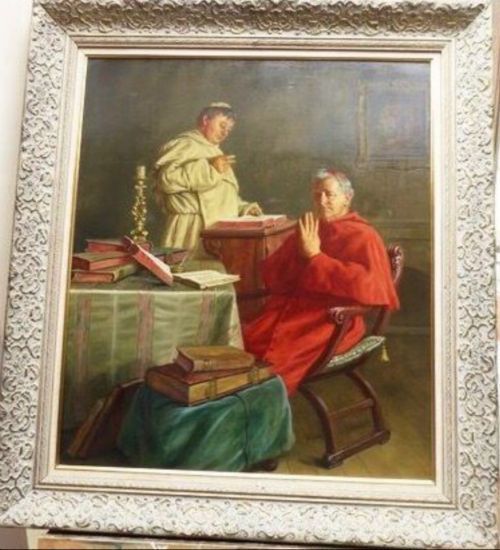
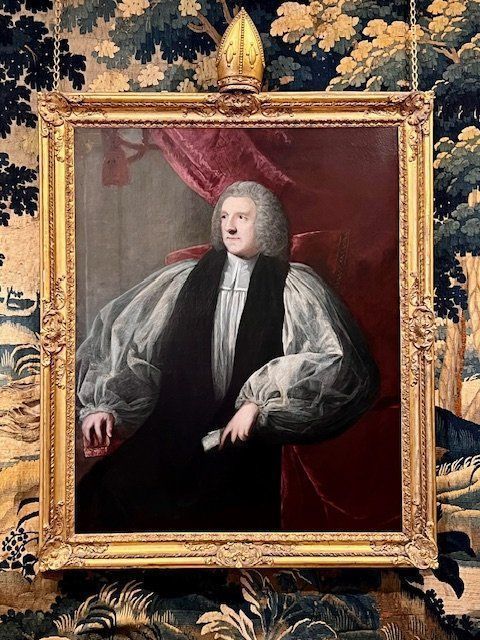
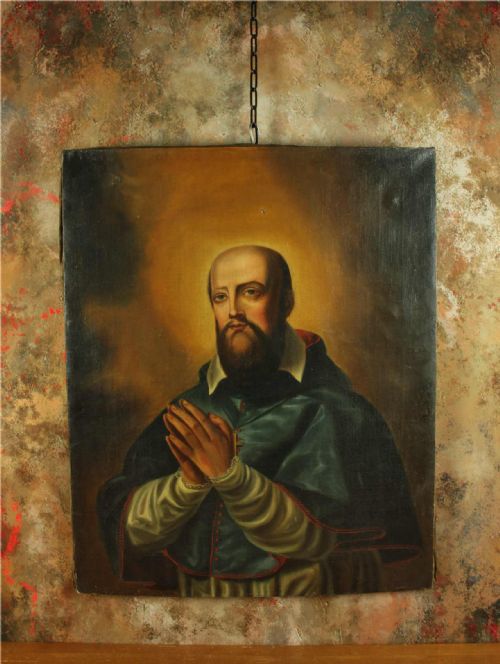
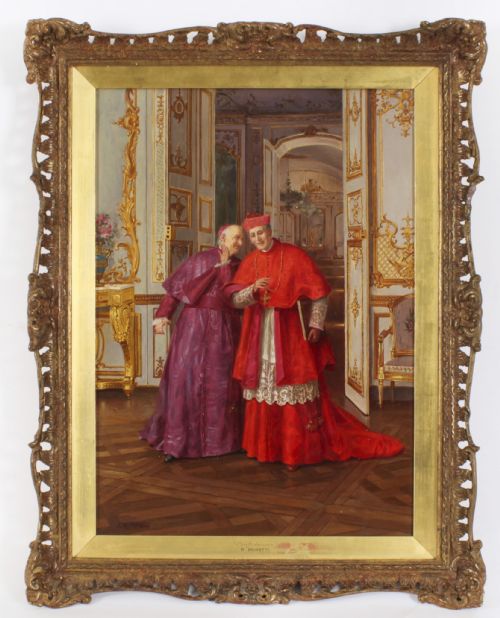
A canvas clerical portrait portrays archbishops, cardinals, bishops, puritan ministers and theologians in oil paint. These works record ecclesiastical figures from the seventeenth, eighteenth and nineteenth centuries, executed by British, Italian and Spanish schools.
The subjects wear traditional clerical bands, robes and skullcaps, often seated at tables or holding texts. Surviving examples range from intimate panel-sized studies to large formal canvases.
Nineteenth-century academic realists and earlier British school painters dominate this selection. The compositions present churchmen in moments of contemplation or study, capturing gravitas through posture and expression.
Materials and Technique
Artists painted these works using oil paint applied to stretched canvas supports. The pigment layers built up rich tones for dark robes and warm flesh tints.
Many historical frames utilise gilded wood and gesso, often carved in deep relief. These giltwood surrounds complement the dark palettes typical of ecclesiastical portraiture.
The selection includes works from seventeenth-century English and Spanish schools alongside eighteenth-century British portraiture.
Assessing Quality
The preservation of the original paint surface determines value. Intact craquelure and minimal overpaint indicate a canvas that has retained its original visual impact.
Sir Joshua Reynolds·Frank Moss Bennett·Frank Hyde·Alan Ramsay·James Ward·Edward Penny
The Canvas Clerical Portrait Glossary
- Oil on Canvas
- Pigments bound in drying oil applied to a woven fabric support. This combination allowed artists to blend tones smoothly and achieve deep shadows.
- Giltwood
- Timber carved and coated with gold leaf. It forms the decorative border for many historical oil paintings.
- Gesso
- A paint mixture consisting of a binder mixed with chalk, gypsum or pigment. It prepared wooden frames and canvas grounds for gilding or painting.
- Academic Realism
- A style of painting produced under the influence of European academies of art. It emphasises precise anatomical accuracy and detailed observation.
- Baroque
- An artistic style prevalent from the seventeenth century characterised by dramatic lighting and intense emotional expression. Spanish and Italian works often display these theatrical contrasts.
Canvas Clerical Portrait: Frequently Asked Questions
What periods do these portraits cover?
The works span from the seventeenth century through the Georgian and Victorian eras up to the mid-twentieth century.
Earlier pieces show seventeenth-century churchmen, while later canvases capture nineteenth-century academic realism.
How were these paintings displayed?
Ecclesiastical portraits hung in studies, rectories, colleges and formal reception rooms to mark positions of authority.
Their substantial giltwood frames suited panelled walls and high-ceilinged interiors.
How do I identify the subject?
Inscriptions on the canvas, stretcher bars or frames frequently name the sitter, often accompanied by their birth and death dates.
Clerical attire such as rochets, bands or doctoral hoods also indicates their rank within the church.
How do I care for an oil on canvas?
Keep paintings away from direct sunlight, radiators and damp environments to protect the canvas and paint layers.
Dust the surface gently with a soft dry brush and avoid using liquid cleaners.