


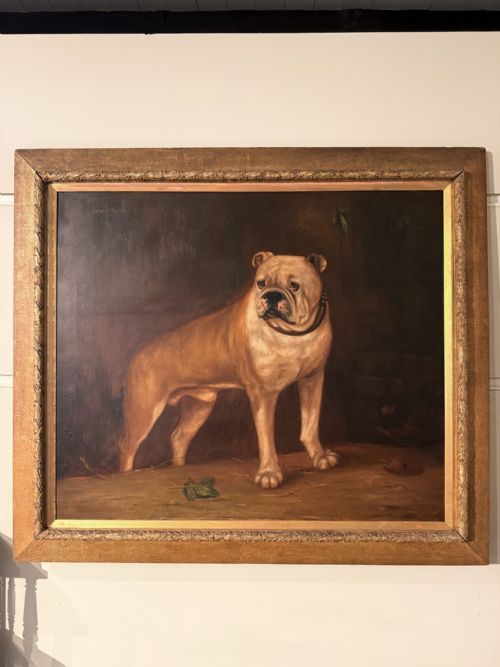
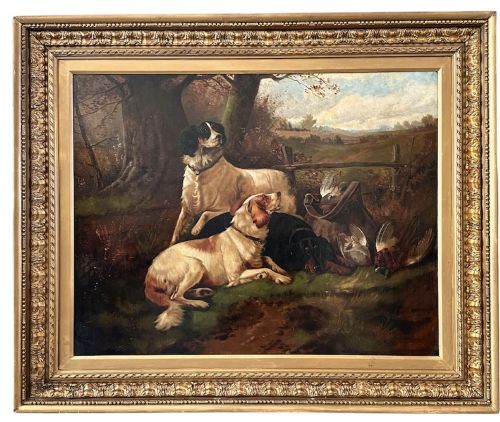
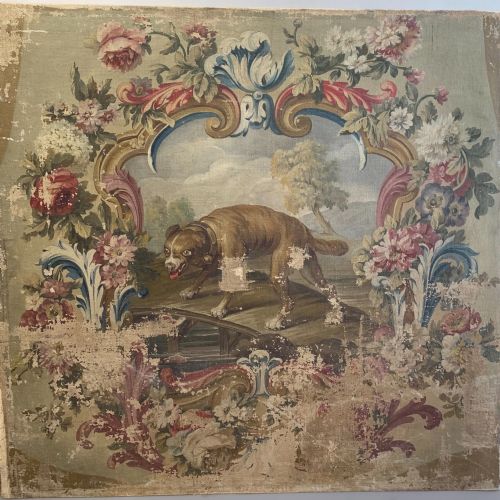

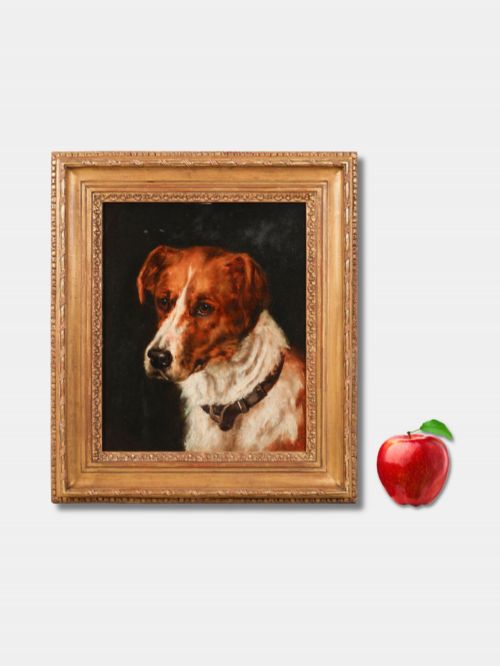
Canine Portrait Painting
A canine portrait painting captures the distinct character and spirit of a cherished animal through traditional mediums spanning multiple centuries.
Canine Portrait Painting
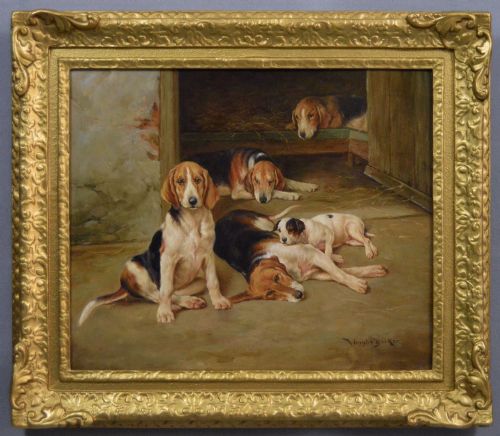
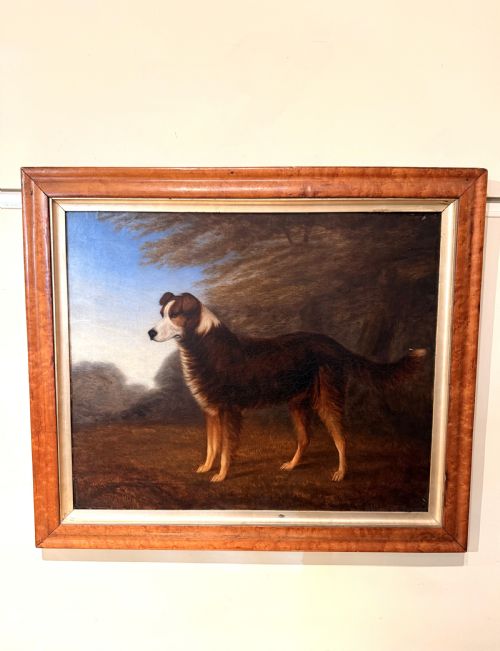
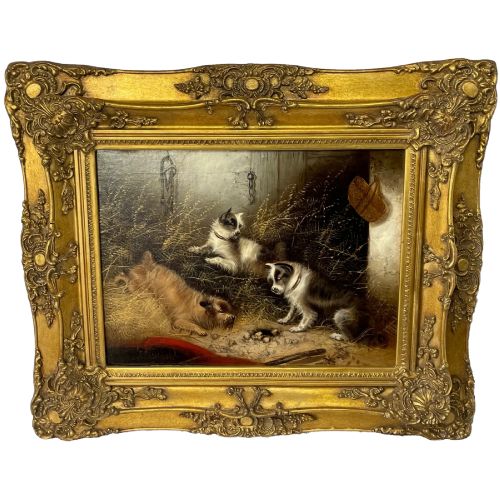
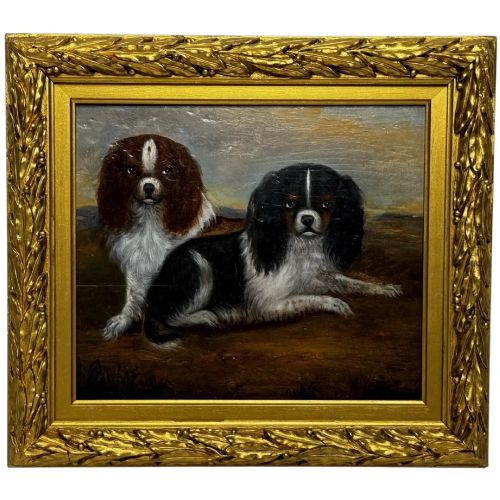
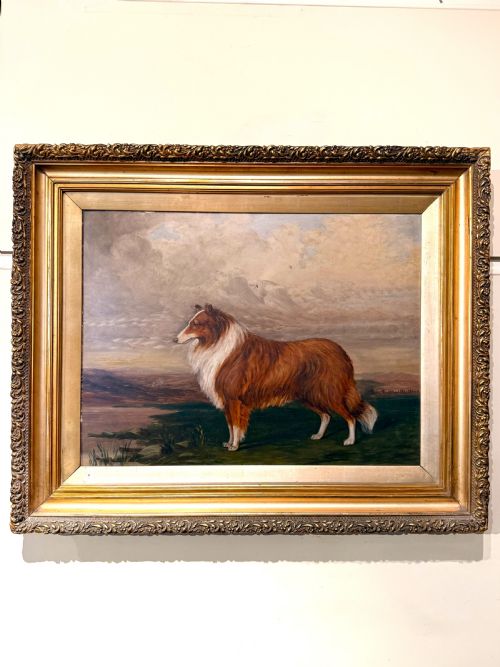
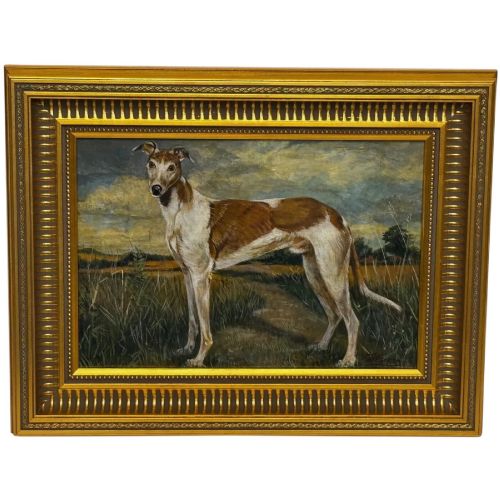
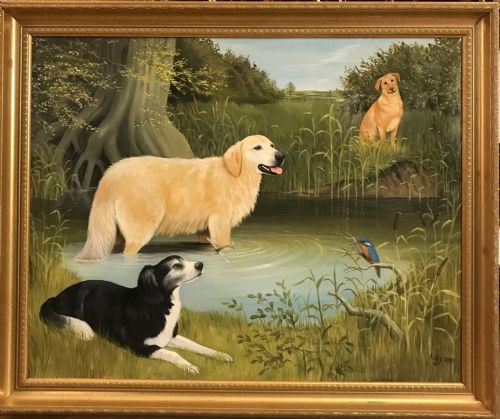
A canine portrait painting represents historical and mid-century depictions of dogs, ranging from working lurchers and spaniels to prized family hounds. Buyers seek these artworks for their direct connection to historical animal companionship and sporting traditions.
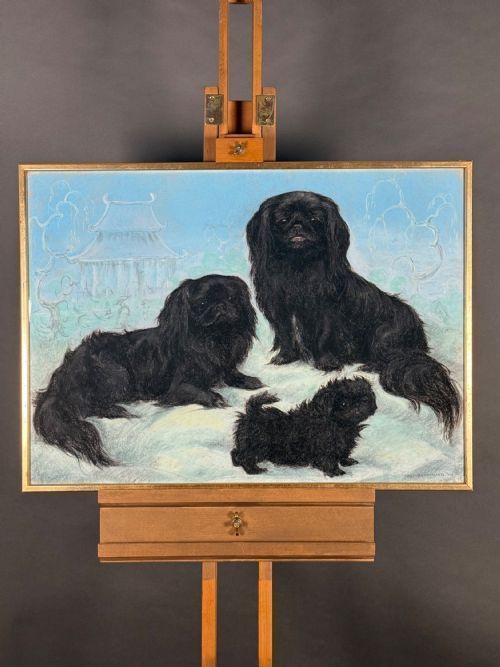
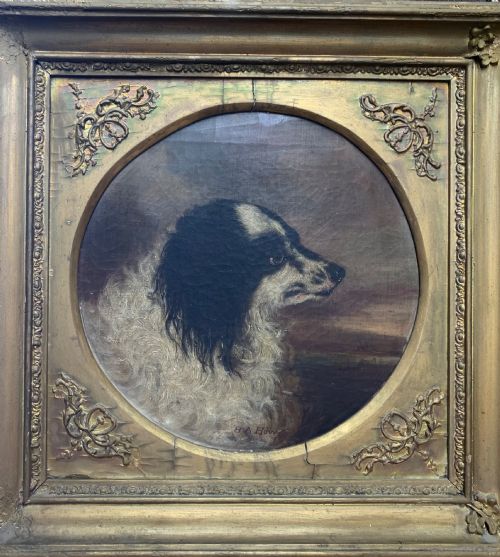
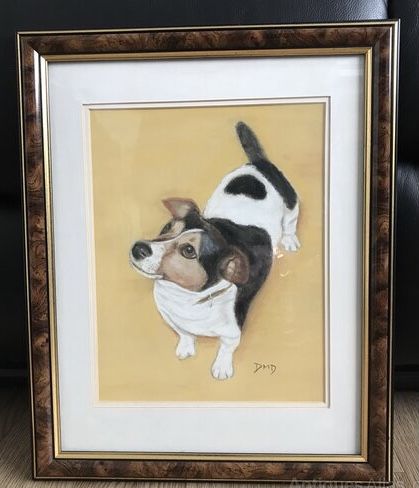
The pieces on this page are predominantly oil paintings executed on canvas or board, alongside select watercolours and pastel drawings. Victorian and nineteenth-century examples form the core of the selection, accompanied by twentieth-century works.
Subjects appear either as solitary studies in landscapes or grouped in domestic and sporting scenes. Artists frequently documented specific breeds such as terriers, collies, setters, and retrievers.
How They Were Made
Artists utilised oil paint applied to prepared canvas, wooden boards, or artist panels, often finishing the work within ornate giltwood and gold leaf frames. Watercolours and pastels on paper under glass also appear amongst the drawn studies.
The physical support dictates the preservation style, with oil on canvas offering flexibility while board and panel provide a rigid foundation for detailed brushwork.
Canine Portrait Painting Retail Price Guide 2026
Typical asking prices for canine portrait painting among the pieces listed under this phrase on Sellingantiques today, from the lower quarter to the upper quarter. They describe what is for sale here now, not the wider market.
Several portraits immortalise dogs with remarkably human expressions of stern dignity.
What Varies in Quality
Anatomical accuracy and the depiction of the animal's expression distinguish superior works from standard decorative pieces. The rendering of texture in a dog's coat requires precise handling of paint and pigment.
The integration of the subject within a naturalistic landscape or interior setting demonstrates the painter's competence and artistic ambition.
Valentine T. Garland·Martin Theodore Ward·John Sargent Noble·John Emms·John Frederick Herring Senior·Arthur Wardle·William Barraud·Sir Edwin Landseer·Colin Graeme Roe·John Trivett Nettleship
The Canine Portrait Painting Glossary
- Oil on Canvas
- Pigments bound in a drying oil applied to a woven fabric support stretched across a wooden frame. This medium allowed artists to achieve rich tonal gradations and depth.
- Giltwood
- Wood carved and coated with gold leaf or metallic paint to create a decorative frame. These frames traditionally complement the period aesthetic of the painting within.
- Sporting Art
- A genre of painting dedicated to animals, hunting scenes, and rural pursuits. It reflects the social history and agricultural priorities of nineteenth-century Britain.
- Pastel on Paper
- A dry medium consisting of powdered pigment and a binder rolled into sticks, applied directly to a paper surface. It offers a soft texture well suited to capturing fur.
Canine Portrait Painting: Frequently Asked Questions
What periods do these dog paintings come from?
The selection spans from the early nineteenth century through the Victorian era into the mid-twentieth century. Each period brings distinct framing choices and painting techniques.
Nineteenth-century works often feature rich oil on canvas formats, while later twentieth-century pieces incorporate diverse boards and pastel mediums.
How were canine portrait paintings originally displayed?
Owners traditionally hung these portraits in country houses, libraries, and family drawing rooms alongside sporting art. They served as tributes to favoured hunting companions and family pets.
Heavy giltwood frames were standard, designed to elevate the status of the animal within domestic interior schemes.
How do I identify different dog breeds in antique art?
Artists painted working and companion breeds with careful attention to historical standards of terriers, spaniels, collies, and hounds. Comparing physical traits like ear sets and coat textures helps determine the specific type.
Sporting records and kennel club histories often provide context for breeds depicted in Victorian and Edwardian art.
Are these paintings original works or copies?
The inventory includes original compositions painted from life alongside period copies after notable artists like Sir Edwin Landseer. Each listing records whether the artwork is an original study or an authorized period interpretation.
Signatures, artist attribution, and medium details help clarify the provenance of each individual piece.