




Canine Oil on Canvas
Canine oil on canvas works capture dogs through paint applied to woven fabric, offering direct records of historical animal companionship.
Canine Oil on Canvas
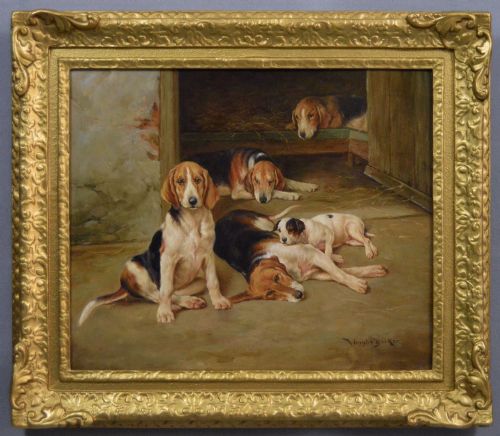
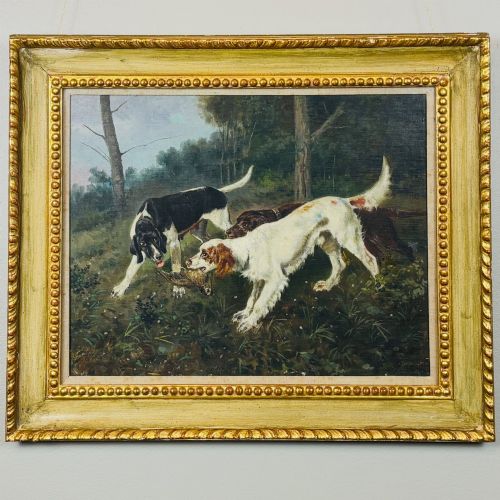
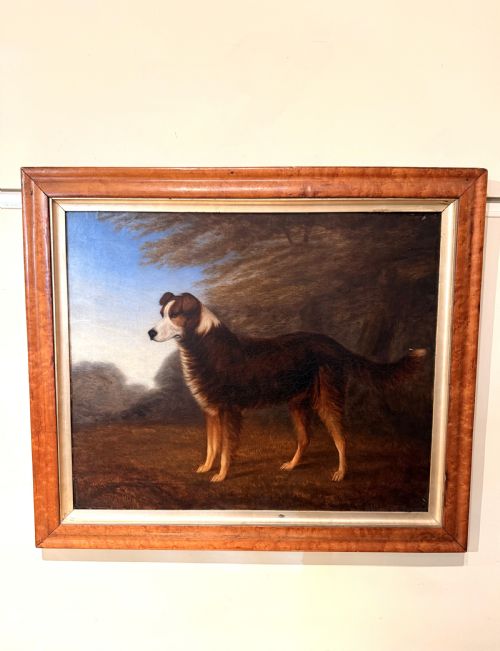
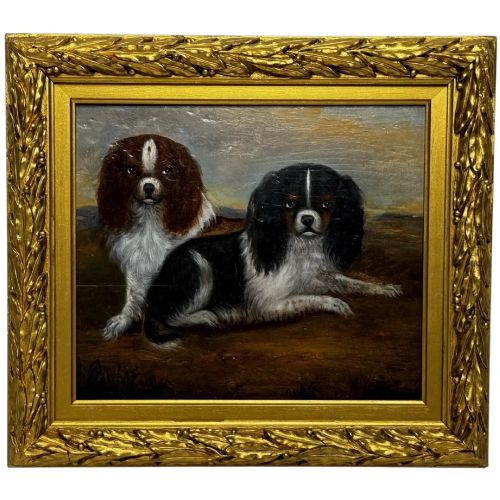
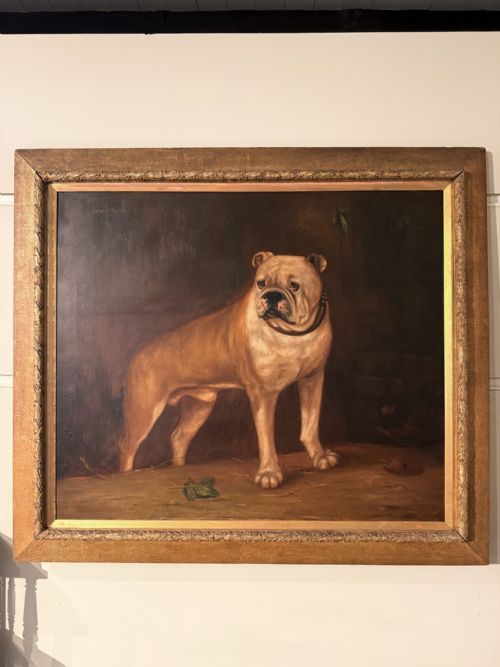
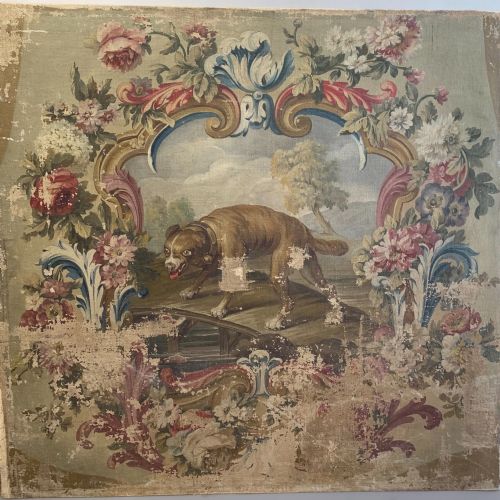
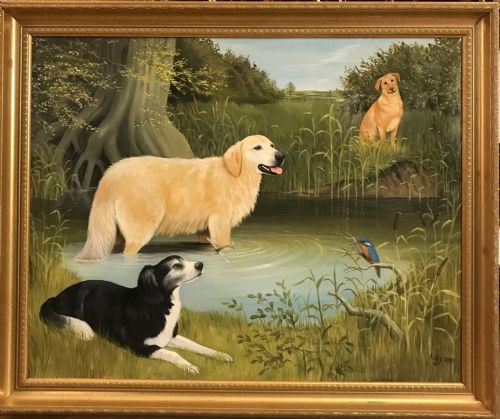
Canine oil on canvas works comprise painted portraits and sporting scenes focusing on dogs, spanning from the nineteenth century into the mid-twentieth century. These pieces record specific breeds, from working terriers and spaniels to prized hounds and lapdogs, often placed within landscapes or domestic interiors.
The selections available here lean heavily toward Victorian and Edwardian British sporting art alongside mid-century compositions. Buyers encounter both signed works by known animal painters and anonymous school pieces depicting pets and working animals.
How They Were Made
Artists painted primarily with oil pigments on stretched canvas, occasionally utilising board supports, building layers of colour to render animal coats and textures. Canvases were secured within wooden frames, frequently incorporating gilt or gold leaf ornamentation to enhance the presentation.
Painters employed fine brushes to capture individual hairs, light reflections in eyes, and anatomical details of breeds like collies, spaniels, and setters. Pigments were mixed with oils to allow slow drying times, enabling smooth blending of fur tones and background scenery.
Canine Oil on Canvas Retail Price Guide 2026
Typical asking prices for canine oil on canvas among the pieces listed under this phrase on Sellingantiques today, from the lower quarter to the upper quarter. They describe what is for sale here now, not the wider market.
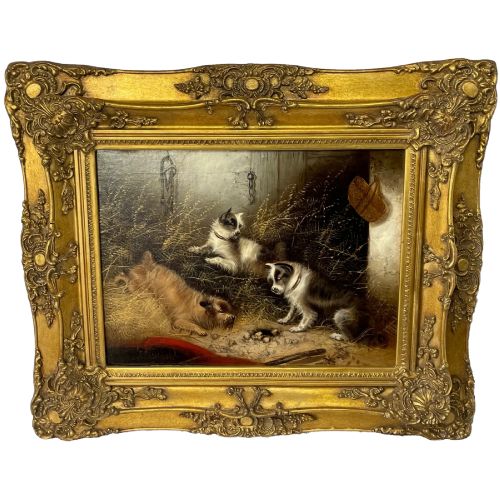
Several paintings capture dogs caught mid-action chasing rats or guarding caged prey in barns.
What Varies in Quality
The success of a canine oil on canvas piece depends upon the artist's command of canine anatomy, posture, and individual expression. Master painters render bone structure, muscle tone, and the distinct texture of a coat with convincing depth, whereas lesser works result in stiff or generalised animal forms.
Composition and background execution further divide the range, separating simple portraits against flat washes from sophisticated scenes placing dogs realistically within woodlands, courtyards, or beside firesides. The integration of the animal into a coherent environment demonstrates the painter's true ability.
Valentine T. Garland·Martin Theodore Ward·John Sargent Noble·John Emms·LM Webb·C W Tuck·William Barraud·Sir Edwin Landseer·Colin Graeme Roe·John Trivett Nettleship·Jules Chardigny·Alfred Duke·M.E.Hankinson·Philip Eustace Stretton·Florence Mabel Hollams
The Canine Oil on Canvas Glossary
- Oil on Canvas
- A painting medium where pigments suspended in drying oils are applied to a stretched woven fabric support. This combination provides a flexible yet durable surface favoured by artists for centuries.
- Giltwood
- Wood carved and coated with gold leaf or metallic paint to create a decorative frame finish. Such frames often complement the period of the painting they enclose.
- Sporting Art
- Genre of art depicting blood sports, hunting scenes, and working animals such as gun dogs and hounds. These works document the history of field sports and rural life.
- Canvas
- Heavy woven fabric, typically linen or cotton, stretched tightly across a wooden frame to form a painting surface. It provides the necessary tension and tooth for oil paint adherence.
Canine Oil on Canvas: Frequently Asked Questions
What periods do these dog paintings date from?
The listings span primarily from the nineteenth century through the Victorian era and into the mid-twentieth century. Many pieces originate from the late eighteen-hundreds and early nineteen-hundreds.
Works from this timeframe reflect changing attitudes toward pets and the formalisation of distinct dog breeds through the Victorian period and beyond.
Who were the notable artists working in this genre?
Numerous identified painters specialised in animal portraits and sporting scenes during the nineteenth and twentieth centuries. Figures such as John Emms, William Barraud, and Valentine Thomas Garland produced recognised works.
Many other pieces remain attributed to broader British or French schools, or follow the style of prominent painters like Sir Edwin Landseer.
How should I display an oil painting on canvas?
Display these works away from direct sunlight and fluctuating humidity to protect both the canvas fabric and the oil pigments. Proper environmental control prevents warping of the wooden stretcher frames.
Most pieces arrive within period wooden or gilt frames that suit the aesthetic of the artwork and provide structural support.
What dog breeds appear most frequently in these artworks?
Terriers, spaniels, setters, collies, and hounds feature prominently across the collection. These animals reflect the popularity of working dogs, hunting companions, and household pets of past eras.
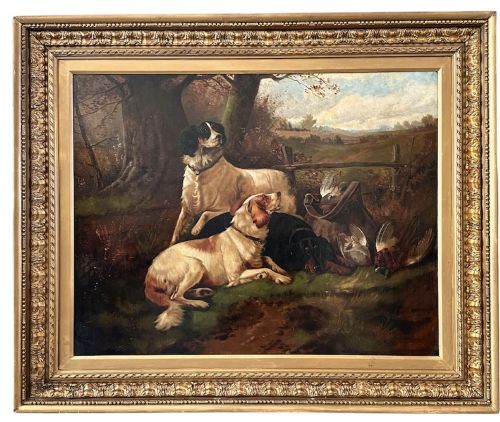
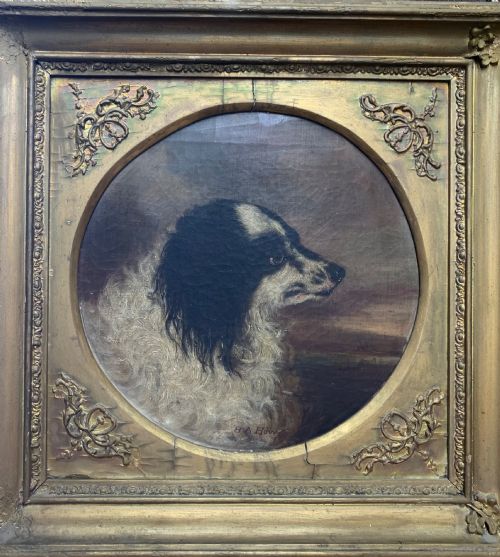
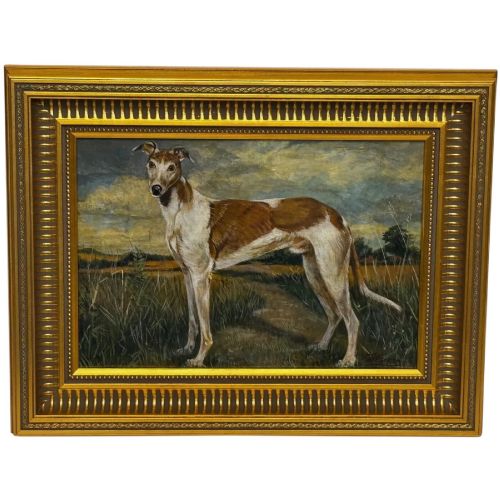
Artworks range from individual portraits of prize-winning racing greyhounds and family pets to multi-dog hunting and sporting scenes.