





Caned Wood Desk Chair
A caned wood desk chair offers nimble seating with woven charm, drawing on Regency, Victorian, and Edwardian craftsmanship to suit a study or library.
Caned Wood Desk Chair
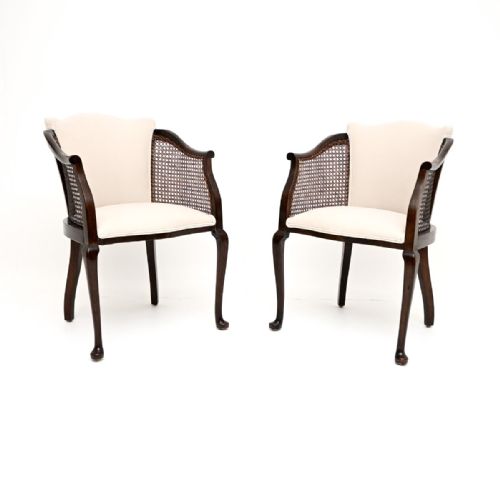
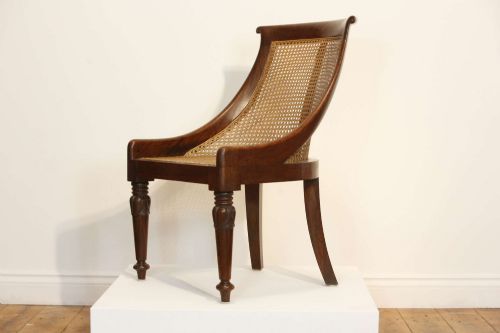
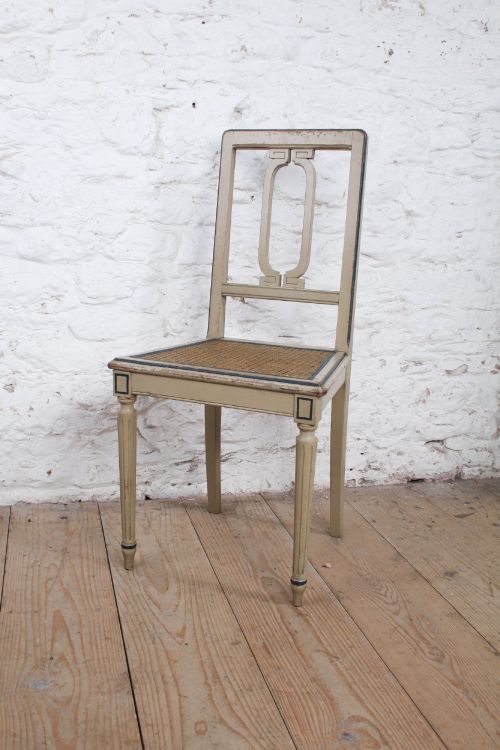
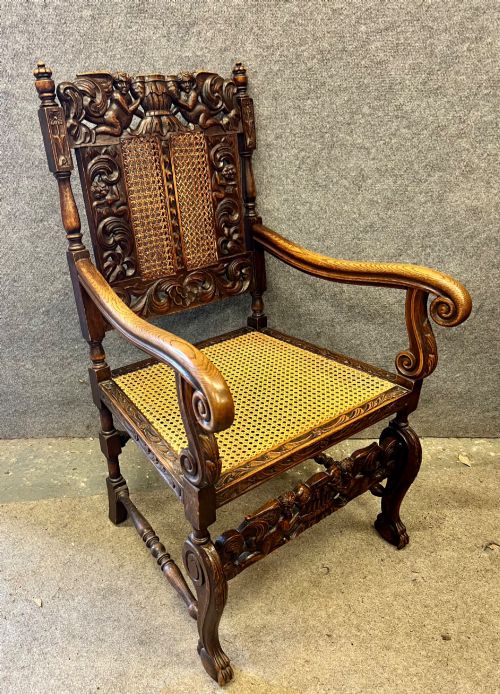
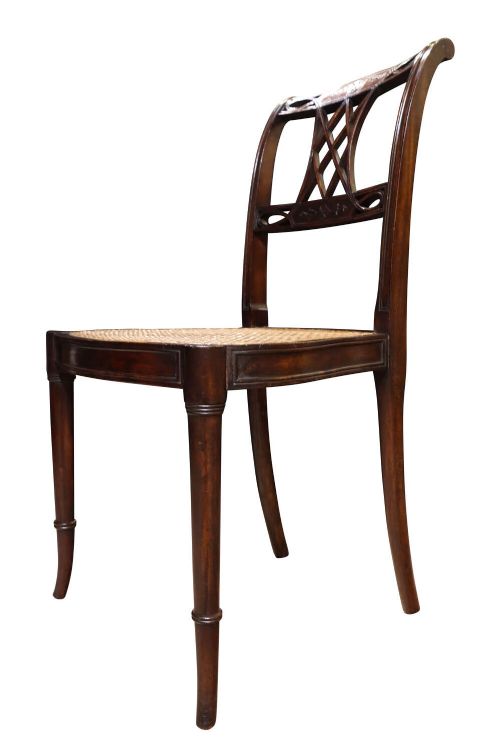
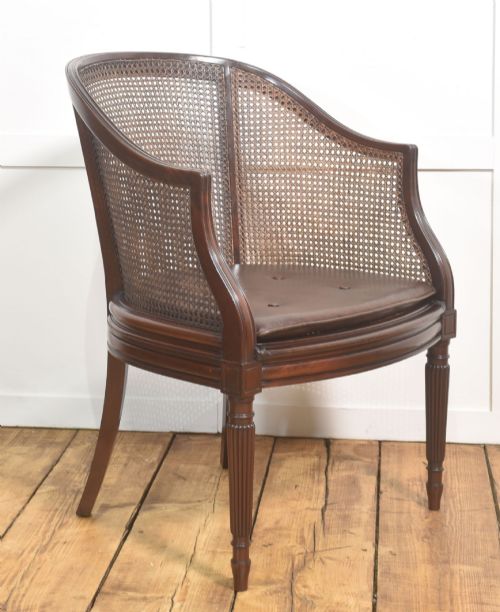
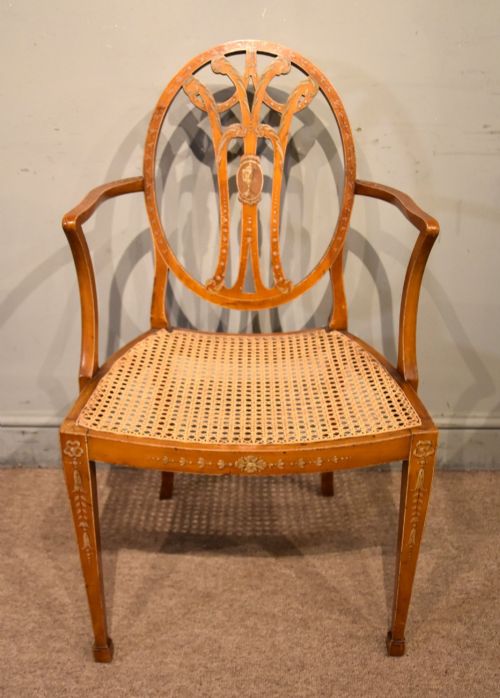
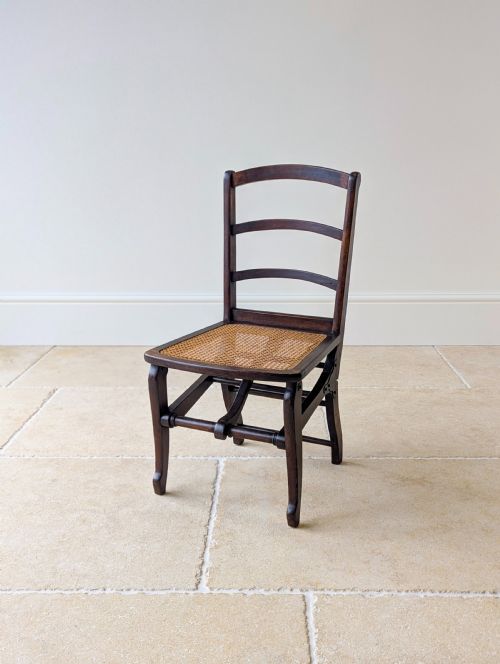
A caned wood desk chair brings together timber frames and woven seating surfaces across forms such as armchairs, tub chairs, and open armchairs. Buyers searching for a caned wood desk chair will encounter pieces spanning the nineteenth century into the early twentieth century, reflecting stylistic revivals from Carolean to French Arts and Crafts.
The selection on this page leans heavily toward nineteenth-century origins, featuring Regency models alongside Edwardian bedroom and library chairs. Timber choices range from mahogany and oak to satinwood, rosewood, and padouk, often paired with traditional woven cane panels.
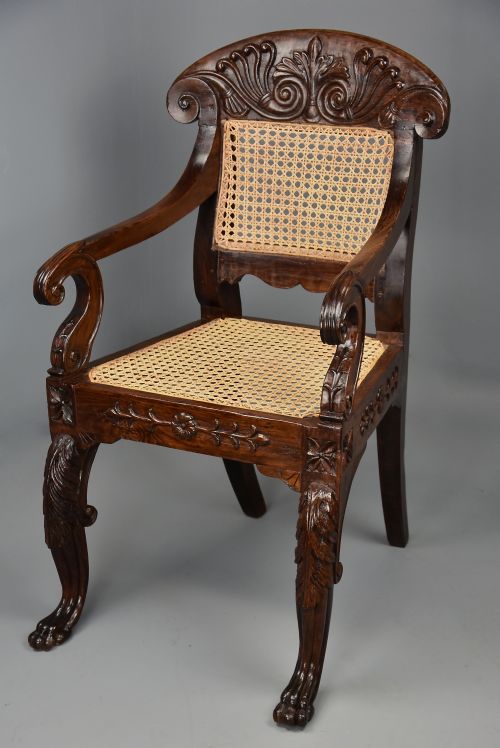
Makers utilised diverse regional influences, from Anglo-Indian and Ceylonese details to formal English Regency lines, creating flexible seating options for writing desks and reading corners. These chairs combine sturdy wooden construction with the lighter texture of woven cane seats and backs.
How they were made
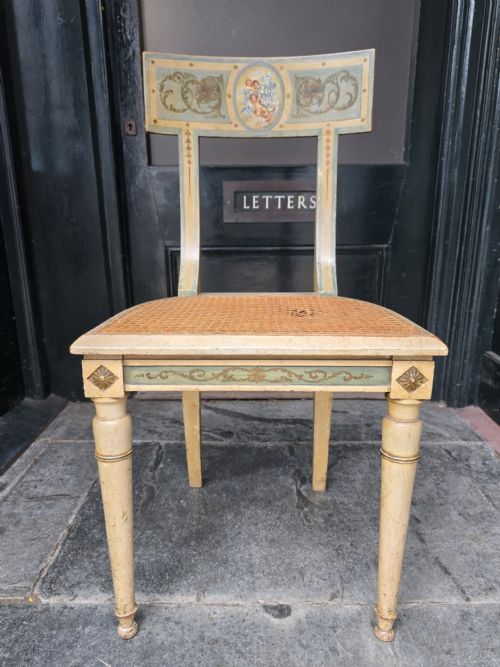
Makers built these frames using hardwoods like mahogany, oak, walnut, and exotic timbers such as padouk, shaping them through traditional joinery and carving. Surfaces frequently show turned elements, painted finishes, or simulated rosewood graining over solid wood foundations.
Seating areas incorporate natural cane or rattan woven tightly through drilled frame margins to provide a resilient and flexible support. Brass accents, gilt highlights, and inlaid satinwood details occasionally finish the construction, depending on the period and regional workshop style.
Caned Wood Desk Chair Retail Price Guide 2026
Typical asking prices for caned wood desk chair among the pieces listed under this phrase on Sellingantiques today, from the lower quarter to the upper quarter. They describe what is for sale here now, not the wider market.
Campaign chairs folded flat for colonial travel, letting nineteenth-century officers write home from the field in surprisingly civilised comfort.
What varies in quality
The distinction between standard examples and finer pieces rests on the crispness of the timber carving and the precision of the frame joinery. Generous proportions, well-drawn profiles, and harmonious stylistic influences separate exceptional library and bergere models from simpler utility seating.
Condition and integrity of the woven cane work significantly influence the character of each piece, alongside the preservation of original painted or polished wood surfaces. Finer items retain their structural balance and period decorative schemes without heavy alterations.
The Caned Wood Desk Chair Glossary
- Bergere
- An enclosed upholstered armchair with exposed wooden framing, often featuring cane panels to the back and sides. This French-inspired form appeared frequently in Regency and later nineteenth-century libraries.
- Cane
- A woven material derived from the peeled outer bark of rattan palms, utilised for resilient and lightweight chair seats and backs. It provides breathability and a distinctive textured appearance.
- Simulated Rosewood
- A decorative paint technique applied to a base timber to imitate the rich dark grain and warm reddish tones of genuine rosewood. Cabinetmakers used this method during the Regency period to achieve opulent effects economically.
- Tub Chair
- A seated form featuring a rounded, continuous backrest that curves around to form low arms. These pieces offer enclosed comfort and frequently appear in Edwardian and nineteenth-century domestic settings.
- Padouk
- A dense tropical hardwood valued for its durability and rich red-brown colour, often seen in Anglo-Indian and Ceylonese furniture production. It holds intricate carved details exceptionally well.
Caned Wood Desk Chair: Frequently Asked Questions
How do I care for cane seats?
Keep woven cane panels clean by dusting them gently with a soft brush and wiping them occasionally with a damp cloth to maintain moisture. Avoid placing the chair near direct heat sources that can dry out and snap the natural fibres.
Support the cane seating properly during daily use and avoid kneeling or applying heavy concentrated pressure to the woven mesh. Regular light conditioning helps preserve the flexibility of the rattan material over time.
Can I use an antique armchair at a modern desk?
Many nineteenth-century armchairs and tub chairs fit comfortably beneath standard desk heights, provided you check the clearance beneath the armrests. Measuring your desk opening against the chair dimensions ensures a proper fit for writing tasks.
Consider adding a thin, period-appropriate loose cushion to adjust the sitting height if the cane surface sits lower than your workspace requires. This protects the original weave while improving daily comfort during extended writing sessions.
How do I identify a Regency period chair?
Regency pieces often display classical architectural influences, curved saber legs, reeded framing, and decorative painted finishes or simulated rosewood graining. Proportions tend to be generous and well-balanced, reflecting early nineteenth-century design tastes.
Look for refined joinery, brass inlay work, and stylistic links to classical antiquity that distinguish these items from later Victorian or Edwardian interpretations.
What is an Anglo-Indian armchair?
Anglo-Indian furniture refers to pieces made in the Indian subcontinent during the British colonial period, combining local timber craftsmanship with European furniture forms. They frequently feature deep carving in dense woods like padouk and reflect distinct regional workshops.
These chairs blend traditional Asian decorative motifs with English Regency or Victorian structural outlines, resulting in striking seating distinct from domestic British production.