
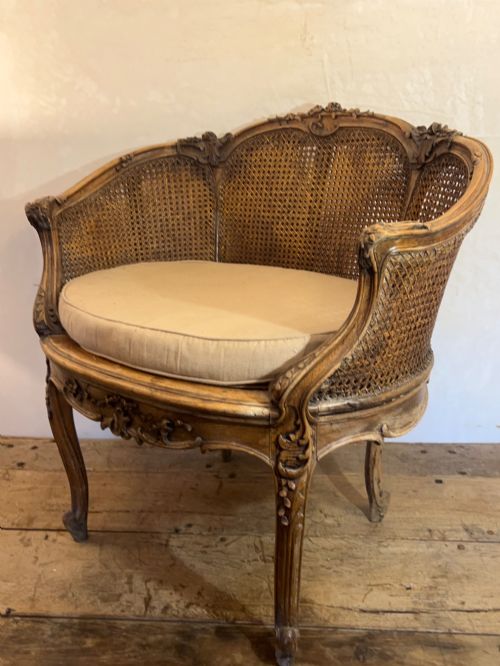
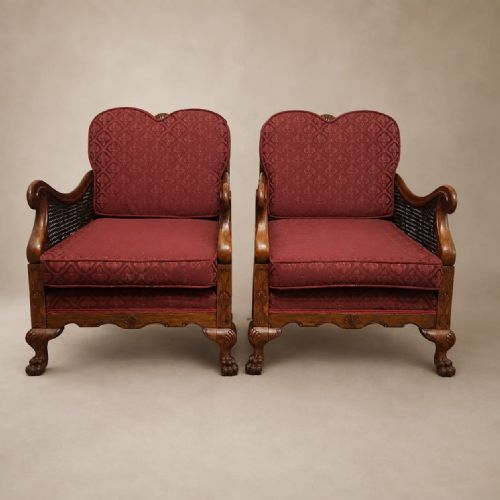
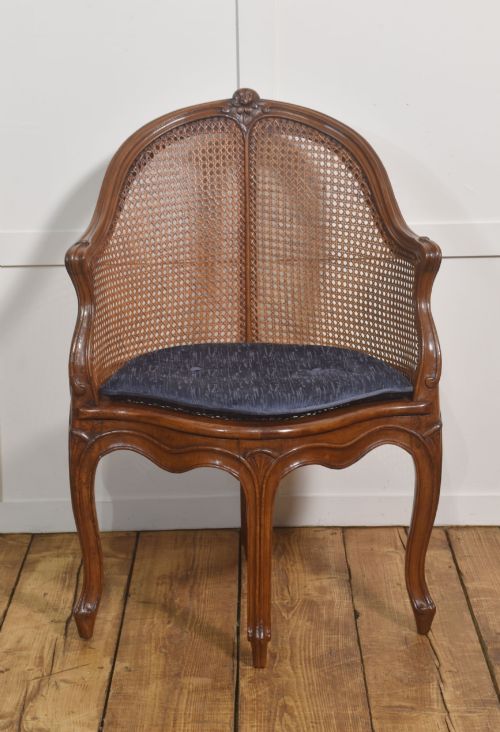
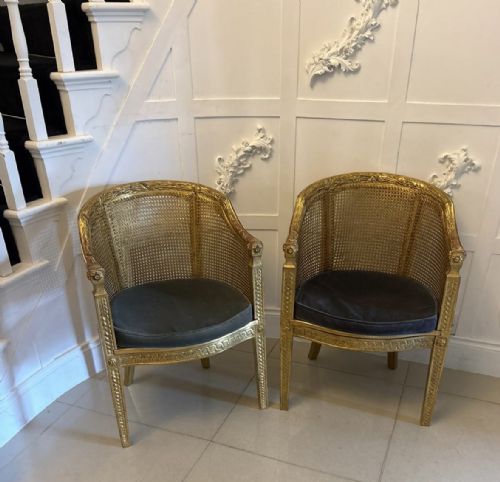


Caned French Armchair
A caned french armchair brings effortless Continental elegance to a room, offering a carved wooden frame with woven seating that balances lightness and solid comfort.
Caned French Armchair
When searching for a caned french armchair, collectors encounter seating spanning the nineteenth century through to the nineteen-twenties. These pieces draw heavily on traditional Continental aesthetics, particularly Louis XV and Louis XVI styles, alongside French Provincial and Neoclassical interpretations.
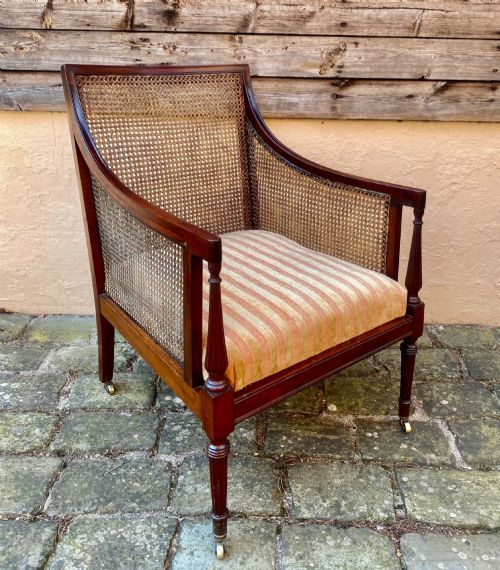
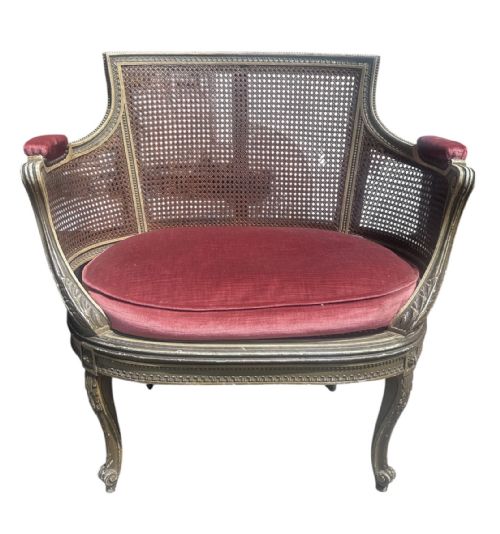
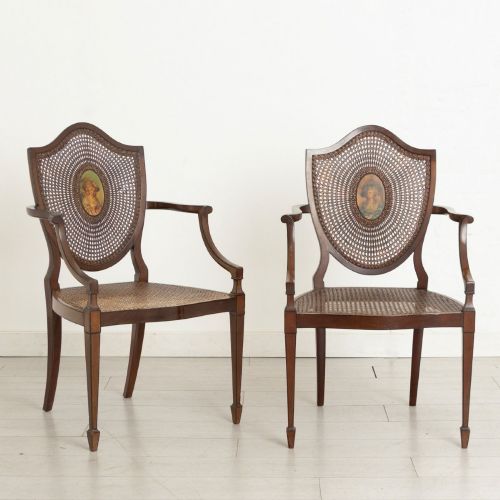
The selections on this page predominantly feature bergere armchairs, tub chairs, and salon chairs. Frames are constructed in various forms, including corbeille seats, medallion backs, and library armchairs designed for daily use.
Origins trace across the nineteenth century up to nineteen-twenty, incorporating Edwardian interpretations and specific regional variants. Buyers frequently find pairs or single accent pieces suitable for drawing rooms, bedrooms, and studies.
Materials and construction
Frames rely on hardwoods such as walnut, mahogany, beech, oak, and giltwood, often shaped with detailed carving or finished in later paint. These sturdy timbers provide the necessary structural support for the upholstered and woven elements.
Seating and backrests utilise traditional cane, split cane, and rattan cane woven tightly into the wooden channels. Many examples are further enhanced with velvet, fabric, or faux bamboo details that complete the classic silhouette.
Caned French Armchair Retail Price Guide 2026
Typical asking prices for caned french armchair among the pieces listed under this phrase on Sellingantiques today, from the lower quarter to the upper quarter. They describe what is for sale here now, not the wider market.
One extraordinary nineteenth-century piece serves as a French military campaign or invalid chair, proving that even historical ergonomics valued a proper sit.
Indicators of quality
The distinction between standard examples and finer items rests in the crispness of the wood carving and the precision of the woven cane work. Superior frames exhibit deeply defined botanical or scroll motifs executed by skilled hands.
Material selection also dictates the hierarchy, with solid walnut or giltwood frames commanding greater appreciation than simpler painted beech. The integrity of the joinery and the harmonious balance of proportions complete the measure of a superior chair.
The Caned French Armchair Glossary
- Bergere
- An enclosed upholstered armchair with wooden framing and cane sides and back. This classic French form first gained popularity during the eighteenth century.
- Cane
- Woven material made from the peeled bark of rattan palms. It provides a flexible yet durable surface for chair backs and seats.
- Louis XV style
- A decorative aesthetic characterised by asymmetrical curves, cabriole legs, and naturalistic floral carvings. It reflects the rococo tastes of the mid-eighteenth century.
- Medallion chair
- A seating form featuring an oval or round upholstered backrest framed in carved wood. This design is strongly associated with neoclassical French revival periods.
- Corbeille
- A chair with a rounded, basket-like back that wraps around the sitter. The style offers an enveloping silhouette found in nineteenth-century French seating.
Caned French Armchair: Frequently Asked Questions
What is a bergere chair?
A bergere is a traditional French armchair characterised by an enclosed upholstered seat and wooden sides filled with woven cane. These chairs are designed for comfortable lounging while maintaining an elegant architectural presence.
Unlike standard upholstered armchairs, the exposed wooden frame and woven panels give a lighter visual weight to the interior space.
How do I date a French chair?
Dating relies on examining the timber species, the style of carving, and the method used to weave the cane. Nineteenth-century examples often mimic earlier Louis XV or XVI reigns through revival movements.
Tool marks on the frame and the patina of the wood also provide reliable clues regarding the exact era of manufacture.
Where should I place a salon chair?
Salon chairs work well in drawing rooms, bedrooms, or reading corners where seating needs to remain visually light. Their decorative carved frames allow them to act as accent pieces rather than heavy furniture.
They pair easily with contemporary or traditional interiors, adding a distinct touch of Continental character.
Are these chairs comfortable for daily use?
Many bergere and tub chairs are built with deep seats and supportive cane backs designed for relaxation. Adding a loose cushion enhances the comfort for extended periods of sitting.
Library armchairs and salon chairs from this period balance sturdy construction with ergonomic shaping suitable for everyday lounging.