

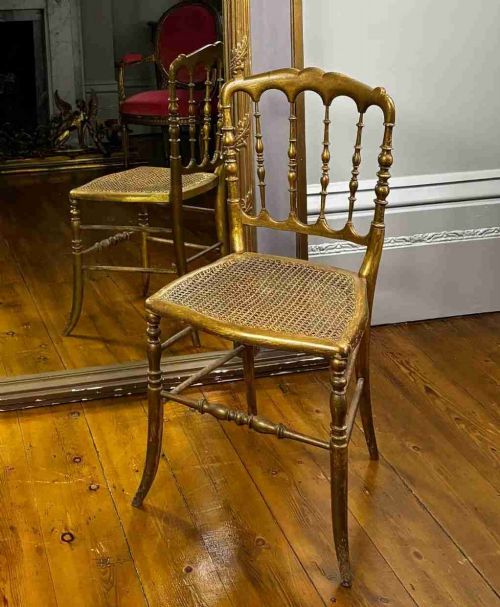
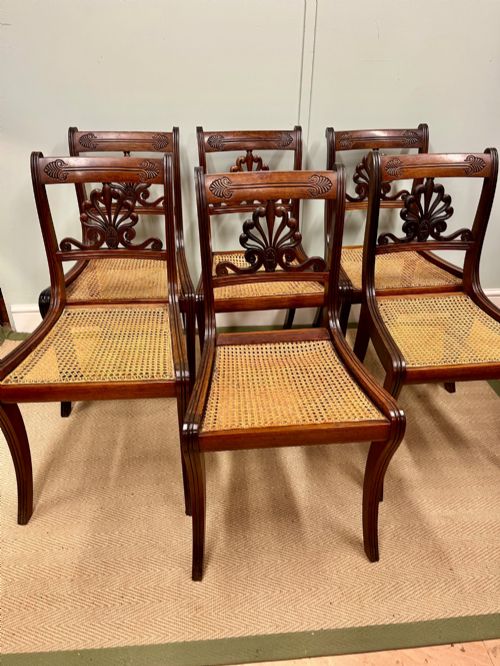
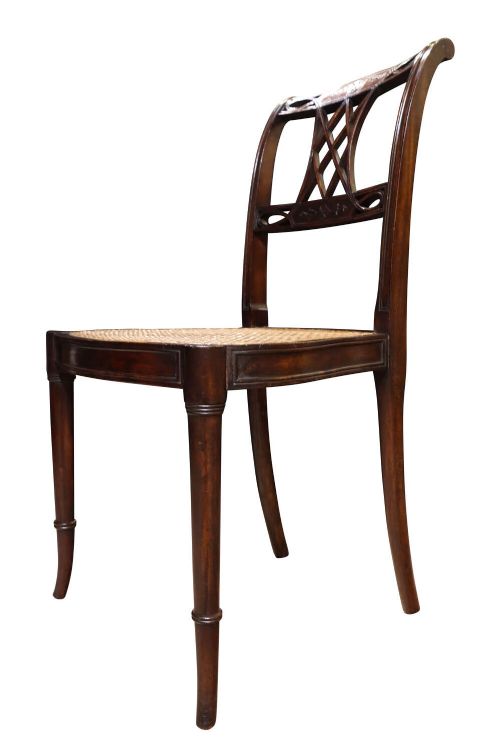
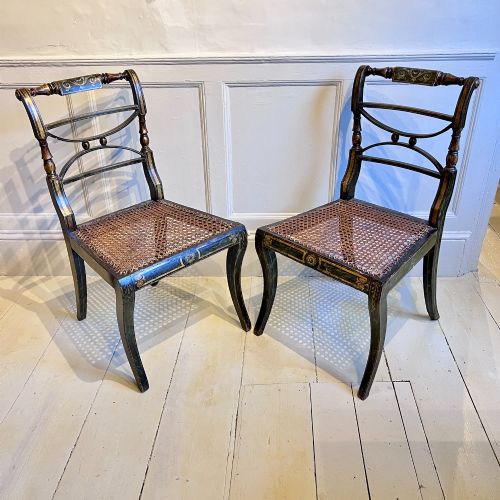
Cane Seated Side Chair
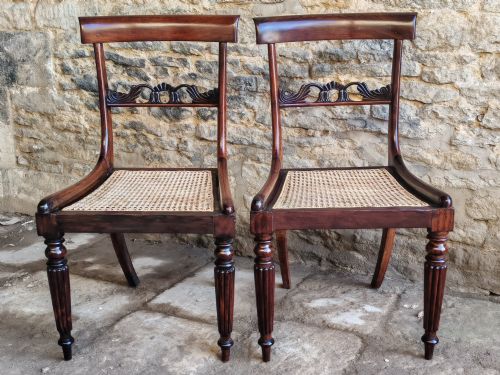
These cane seated side chair pieces combine woven natural materials with timber frames, offering a practical seat that brings historic texture to a room.
Cane Seated Side Chair
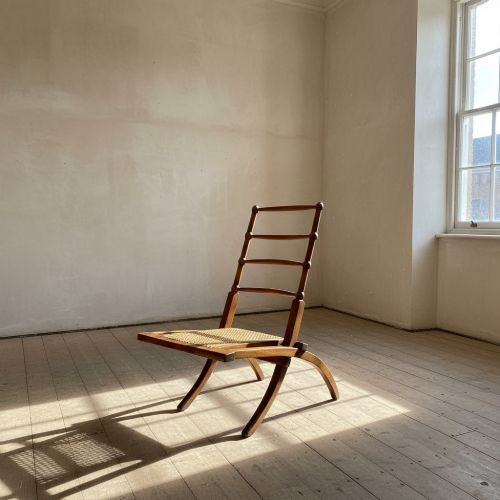
A cane seated side chair is an item of seating furniture designed without arms, intended for dining rooms, bedrooms, or occasional use. The selection spans several centuries, running from early examples through the Georgian, Regency, and Victorian eras into the twentieth century.
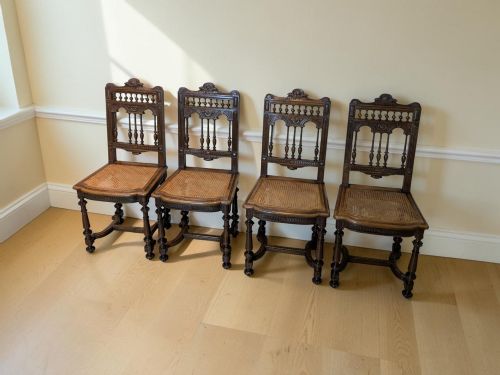
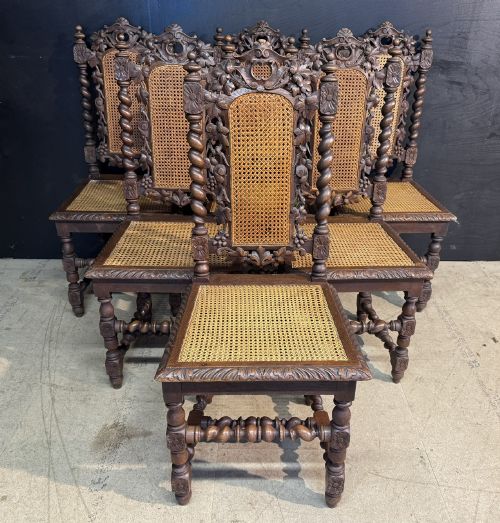
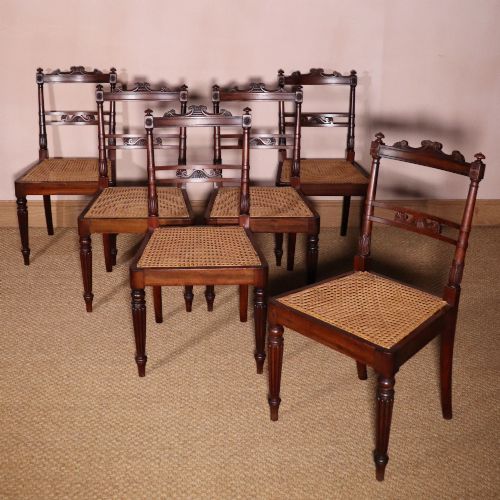
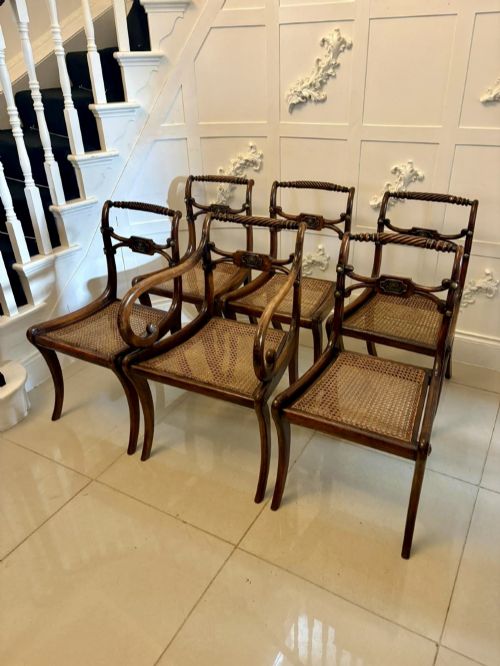
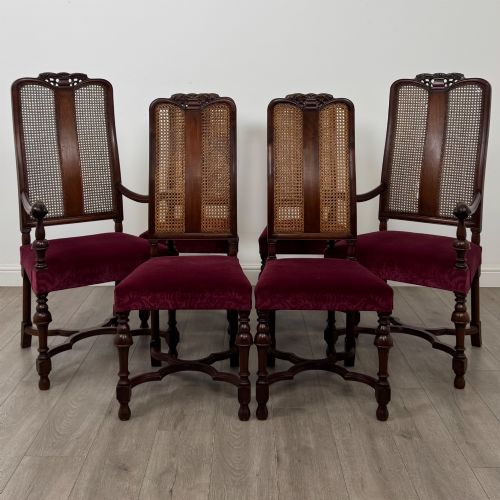
The evidence shows dining chairs, hall chairs, and bedroom chairs taking this form, appearing singly or in sets. Regency and Victorian interpretations dominate the selection alongside revival styles such as Jacobean, William and Mary, and Carolean.
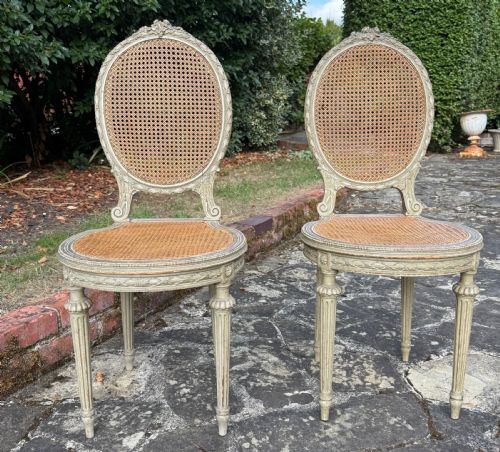
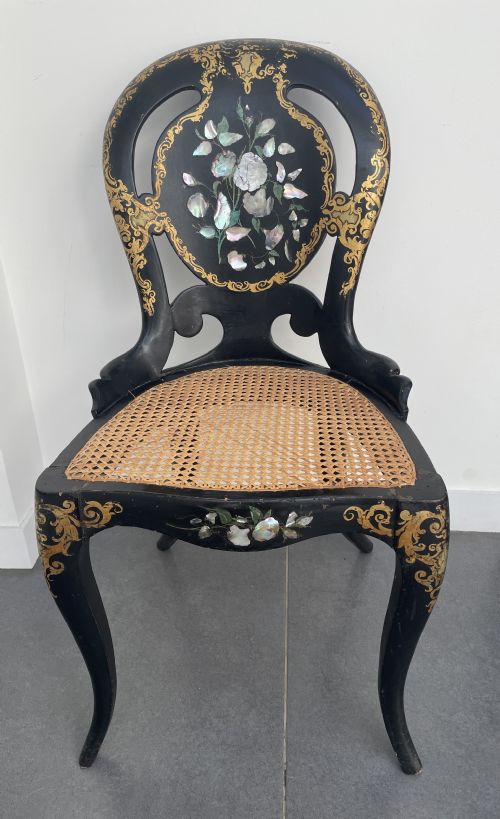
Makers utilised various regional interpretations, including Anglo-Indian and Ceylonese pieces alongside domestic British cabinet work. Buyers encounter painted, ebonised, and giltwood finishes upon frames constructed from mahogany, rosewood, oak, and walnut.
Factors determining the standard of the piece
The refinement of the timber carving and the crispness of any applied details dictate the visual standard of the framework. Dense, high-grade hardwoods hold sharper profiles through turned legs and curved rails than softer or replacement timbers.
The tightness and regularity of the woven cane mesh indicate the skill involved in the seating. Original woven surfaces that retain uniform tension demonstrate superior execution compared to loose or uneven replacements.
Cane Seated Side Chair Retail Price Guide 2026
Typical asking prices for cane seated side chair among the pieces listed under this phrase on Sellingantiques today, from the lower quarter to the upper quarter. They describe what is for sale here now, not the wider market.
Listings feature woods including mahogany, rosewood, oak, walnut, ebony, satinwood, and ebonised wood alongside painted finishes.
Waring & Gillow
The Cane Seated Side Chair Glossary
- Cane
- A material woven from peeled rattan stems to form a durable, porous seat panel. It provides a lightweight and resilient surface for seating.
- Sabre leg
- A curved, outwardly tapering chair leg resembling a cavalry sword. This form appears frequently on Regency examples.
- Bergère
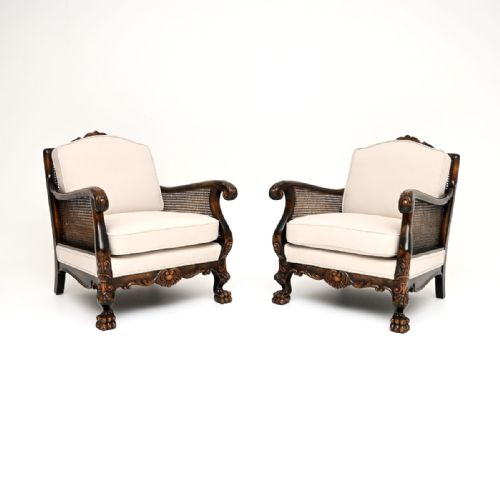
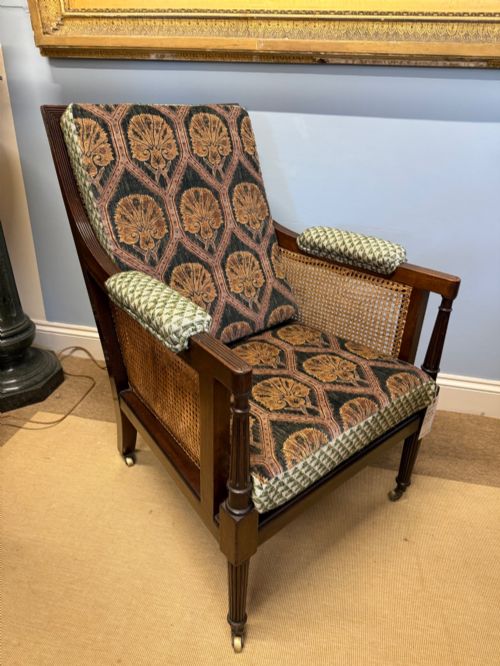
- An enclosed upholstered armchair featuring woven cane sides and back panels. It offers a heavier proportion than a standard side chair.
- Ebonised
- Timber treated with a dark finish to imitate expensive ebony wood. This treatment was common during the Regency and Victorian periods.
- Klismos
- An ancient Greek chair design characterised by curved back rails and sabre legs. Revival versions appear in nineteenth-century seating.
Cane Seated Side Chair: Frequently Asked Questions
What rooms suit a cane seated side chair?
These chairs function well around a dining table, as occasional seating in a living space, or placed beside a dressing table in a bedroom. Their light visual weight prevents them from crowding smaller interiors.
The slender frames and woven seats also make them practical additions to hallways or landings where heavier furniture would obstruct movement.
How do I identify a Regency period chair?
Regency pieces often display classical influences, featuring sabre legs, painted or ebonised surfaces, and gilt highlights. Look for clean lines derived from ancient Greek and Roman furniture forms.
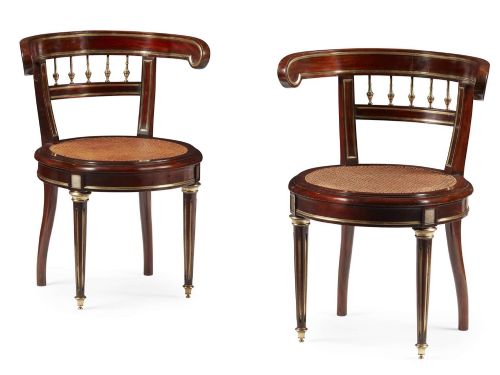
The timber selection frequently includes mahogany or simulated rosewood, sometimes accented with brass inlay along the top rail or splat.
How should I care for the cane seat?
Keep woven cane seats clean by dusting them gently with a soft brush and wiping them occasionally with a slightly damp cloth to prevent the material from becoming brittle. Avoid placing them in direct sunlight or next to heat sources.
Maintaining a moderate humidity level in the room prevents the rattan strands from drying out and snapping under normal seating pressure.