




Cane Seat Oak Chair
A cane seat oak chair brings sturdy timber framing together with woven plant fibre for resilient seating across dining rooms and libraries.
Cane Seat Oak Chair
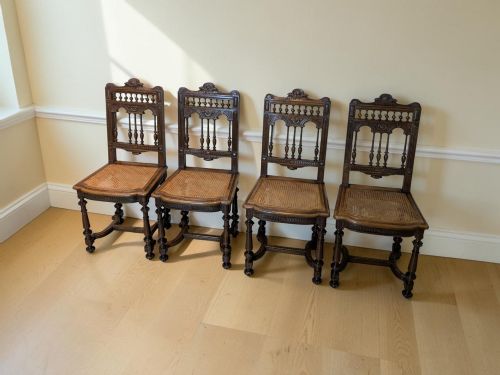
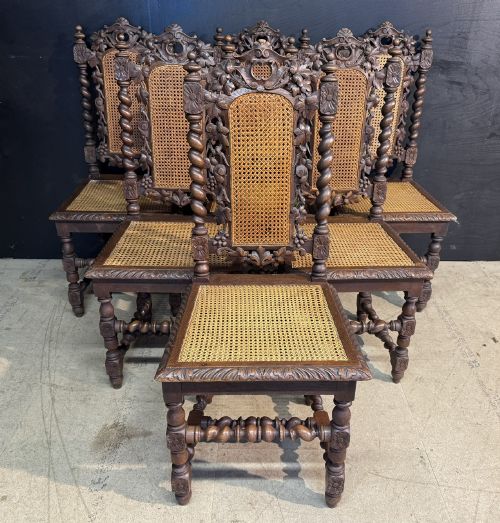
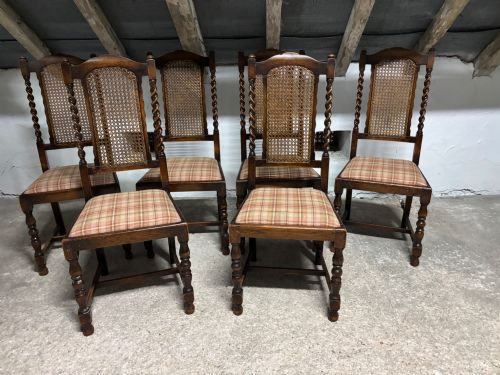
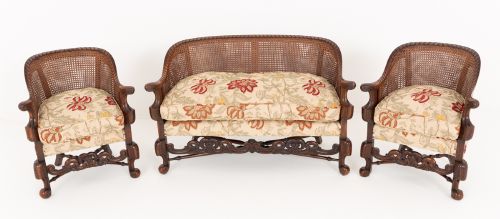
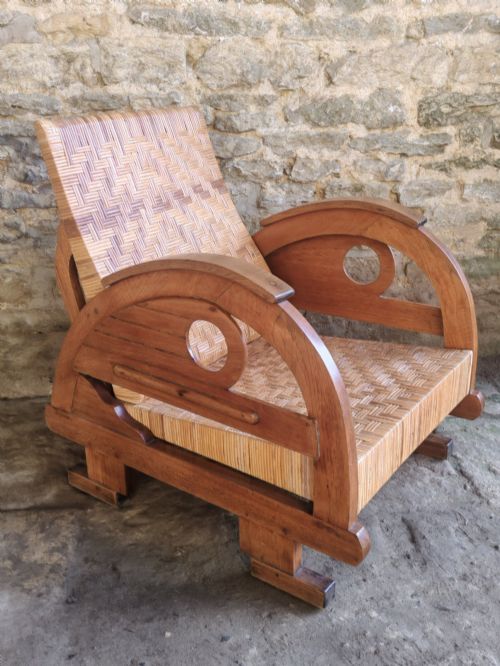
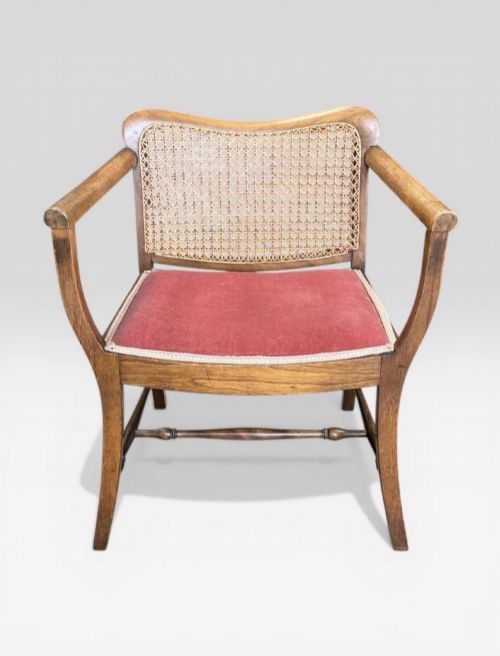
A cane seat oak chair comprises solid timber construction paired with woven seating panels, taking forms from armchairs and side chairs to dining sets and library seating. These pieces draw on historical revivals, most notably Carolean and Jacobean styles, alongside Victorian designs and later Art Deco interpretations.
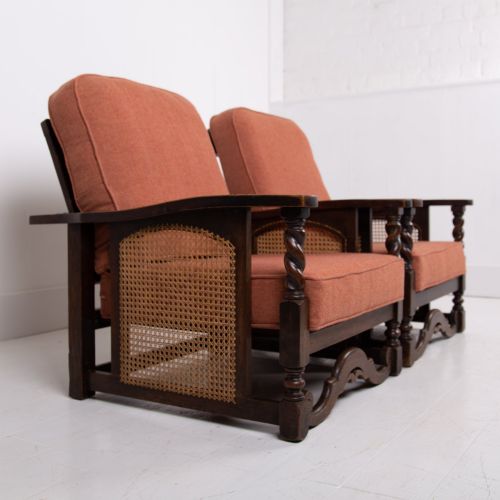
The pieces appearing here span the nineteenth century through the early twentieth century, including French bergere models and English country seating. Buyers find single armchairs, pairs, and full dining sets suited to domestic use.
How they were made
Makers utilised solid oak for the primary frames, shaping the timber through turning, carving, and joining. Structural supports often incorporate barley twist legs or bobbin turnings.
Cane and rattan form the woven panels for seats and backs, sometimes complemented by secondary materials like leather, fabric, or velvet cushions and brass hardware.
Cane Seat Oak Chair Retail Price Guide 2026
Typical asking prices for cane seat oak chair among the pieces listed under this phrase on Sellingantiques today, from the lower quarter to the upper quarter. They describe what is for sale here now, not the wider market.
Early twentieth-century options include a French First World War campaign or invalid chair alongside domestic library bergere seats.
What varies in quality
The definition and depth of the carved ornamentation on the oak frame distinguish standard production from finer examples. Crisp detailing in the stylistic motifs indicates superior workshop execution.
The tightness and regularity of the cane or rattan weave affect the integrity of the seating panels. Integrated elements such as turned stretchers and matching cushion additions also influence the overall standard.
James Shoolbred·Richard Hicks Bridgens
The Cane Seat Oak Chair Glossary
- Bergere
- An enclosed upholstered or caned armchair with wooden framing, frequently featuring an exposed timber border and a loose seat cushion.
- Carolean
- A seventeenth-century English design style associated with the reign of Charles II, characterised by rich carving and scrolling motifs.
- Barley twist
- A type of turning shaped to resemble a twisted column, commonly found on the legs and stretchers of seating from the nineteenth and early twentieth centuries.
- Rattan
- A climbing palm used whole or split into strands for weaving cane seats and chair backs.
- Jacobean Revival
- A nineteenth-century historicist movement reinterpreting early seventeenth-century English furniture forms with heavy oak frames and carved panels.
Cane Seat Oak Chair: Frequently Asked Questions
What periods do these chairs date from?
The pieces span the nineteenth century and the early decades of the twentieth century, with revival styles referencing seventeenth-century design.
Examples range from Victorian dining chairs to 1920s bergere suites and Art Deco seating.
How do I identify a Carolean style chair?
Carolean style chairs feature prominent carved woodwork, scrollwork, and often cane panels in the backrest and seat.
They frequently utilise turned wooden legs connected by decorated stretchers.
What materials are used besides oak?
Frames primarily utilise oak, though walnut appears in certain nineteenth-century pieces.
Seating surfaces incorporate cane, rattan, fabric, velvet, and leather, occasionally supported by brass fixtures.
Are these chairs suitable for daily dining use?
Many examples are dining chairs constructed in sets, designed specifically for table seating.
Armchairs, rocking chairs, and library bergere seats offer alternative forms suited to lounges and studies.