


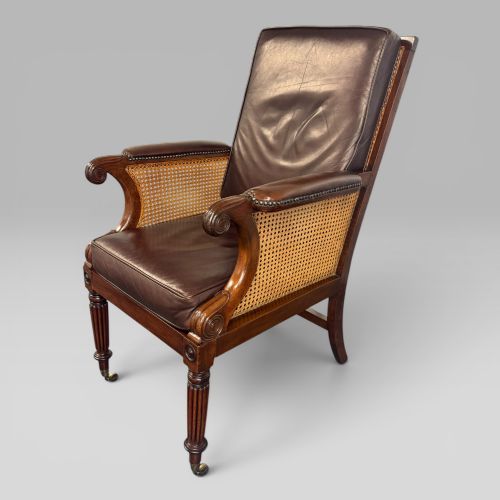

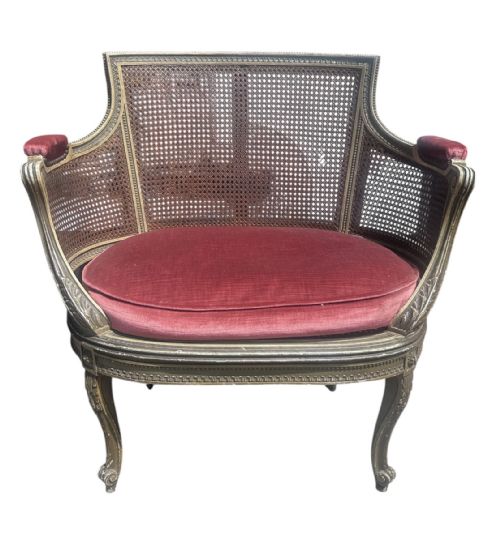
Cane Bergere Armchair
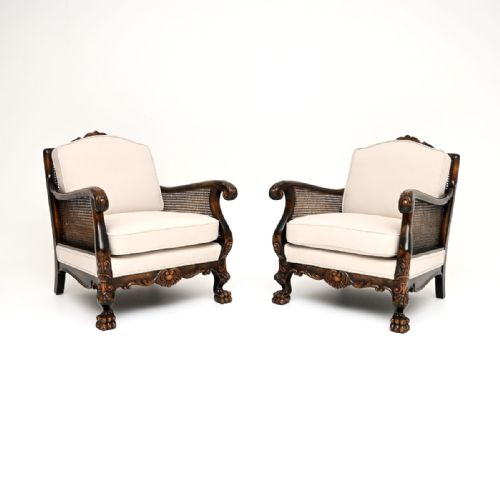
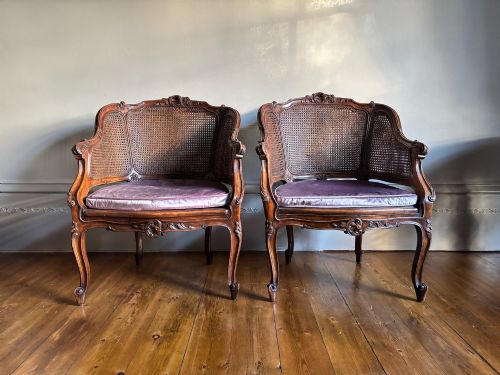
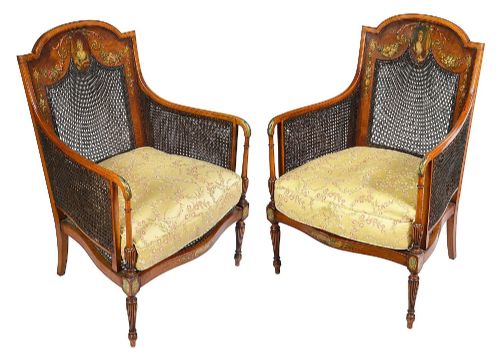
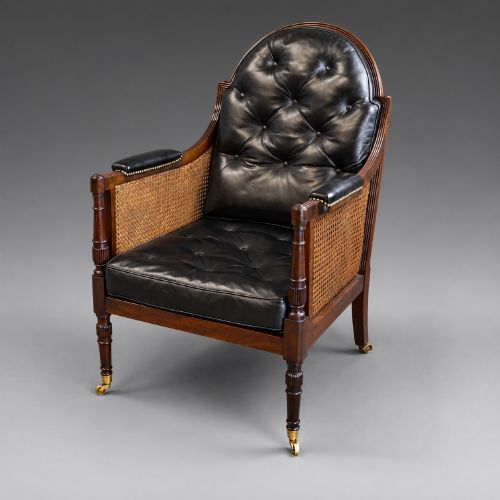
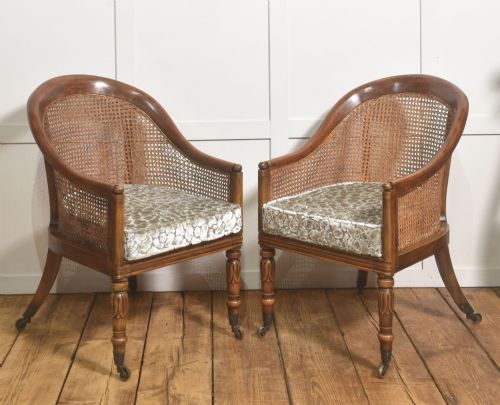
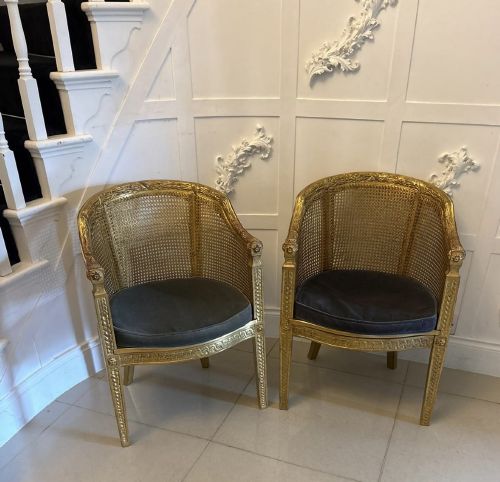
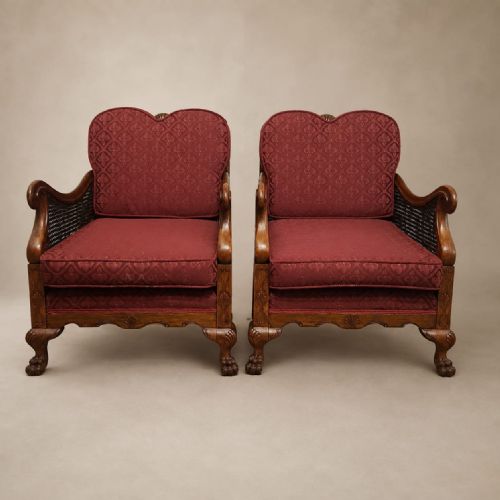
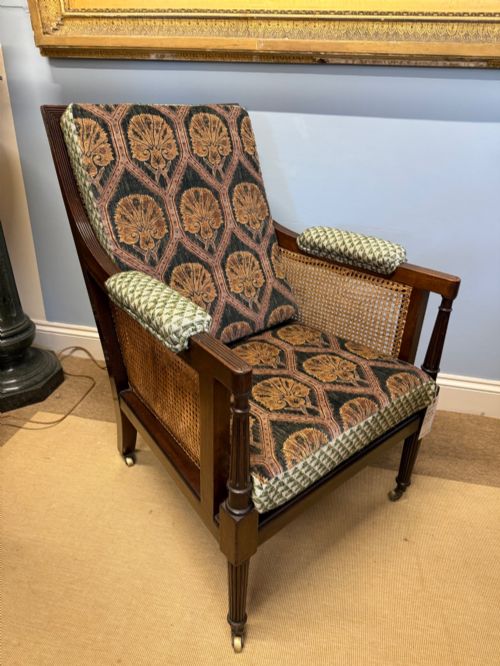
A cane bergere armchair provides deep, enclosed seating through woven panels set within a solid wood frame.
Cane Bergere Armchair
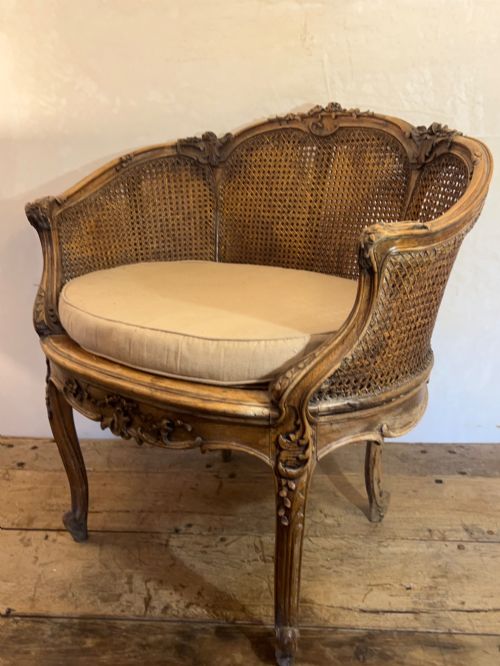
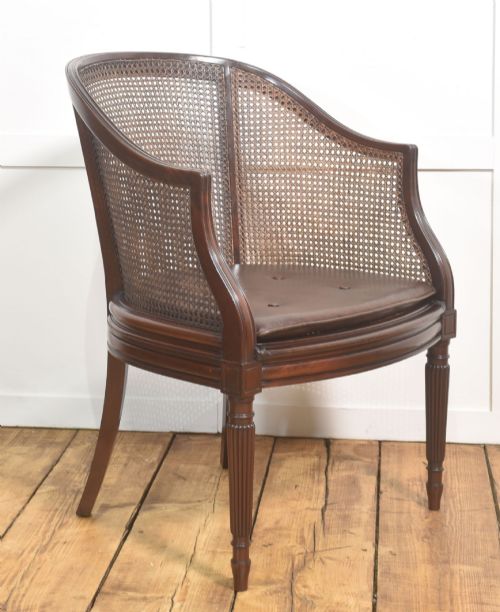
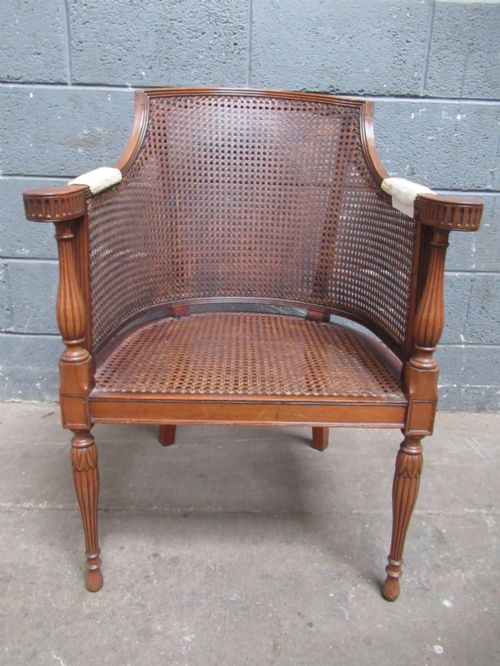
A cane bergere armchair is a low, upholstered or caned seat designed for relaxed sitting, often featuring closed sides filled with woven plant material. The versions you meet most frequently on this page date from the nineteenth century and the early twentieth century, spanning Regency, Edwardian and revival styles.
Makers shaped these frames in mahogany, walnut, oak and rosewood, occasionally adding brass mounts or leather squab cushions. Formats range from library armchairs and tub chairs to French-influenced corbeille seats and childs armchairs.
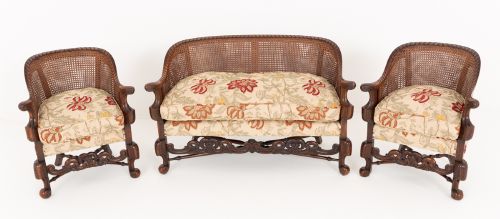
The design originates in France before becoming a staple of English Regency and Victorian drawing rooms and libraries. Buyers encounter single chairs alongside matched pairs and larger seating suites.
How they were made
Cabinetmakers constructed the supportive skeletons from dense hardwoods like mahogany, walnut, oak and rosewood, frequently employing steam-bending to form the curved tub backs and rounded armrests.
Craftsmen wove rattan cane and split cane tightly through pre-drilled holes along the frame channels to create breathable, flexible panels for the backrests and side panels.
Upholstered elements rely on horsehair stuffing beneath leather, velvet or fabric covers, complemented by loose feather or hair cushions for the seat base.
Cane Bergere Armchair Retail Price Guide 2026
Typical asking prices for cane bergere armchair among the pieces listed under this phrase on Sellingantiques today, from the lower quarter to the upper quarter. They describe what is for sale here now, not the wider market.
A miniature childs armchair lets the smallest household member sit in full library dignity.
What varies in quality
The precision of the wood carving and the tightness of the joinery set the structural standard, distinguishing plain utilitarian seating from master-carved library armchairs attributed to workshops like Gillows.
The regularity and fineness of the hand-woven cane work indicate the skill of the artisan, where uniform gauge and unbroken tension signal superior execution.
The choice of primary timber influences desirability, with rich grains of rosewood, figured mahogany and walnut commanding greater attention than plain oak or secondary woods.
Gillows·James Shoolbred
The Cane Bergere Armchair Glossary
- Bergere
- An enclosed upholstered armchair with wooden framing and cane or upholstered sides. This form developed in France during the early eighteenth century.
- Caning
- A method of weaving plant material, typically rattan, through holes in a wooden chair frame. It provides a lightweight, resilient surface.
- Tub chair
- An armchair with a continuous curved back and armrests forming a rounded enclosure. The design wraps around the sitter for added comfort.
- Squab cushion
- A loose, removable cushion placed on the seat base of a chair. These are typically filled with hair or feathers and covered in leather or fabric.
- Corbeille
- A French style of chair featuring a rounded basket-like back. The curved profile resembles an open wicker basket.
Cane Bergere Armchair: Frequently Asked Questions
What is a cane bergere armchair?
A cane bergere armchair is a deep, comfortable seat featuring a wooden frame filled with woven rattan or cane panels along the back and sides. These chairs evolved from French eighteenth-century designs into staples of English libraries and drawing rooms.
They combine structural woodwork with flexible woven surfaces to create a light yet supportive chair. Most examples found today date from the Regency period through to the Edwardian era.
How do I date a cane bergere armchair?
Dating relies on identifying the timber species, joinery methods and stylistic revival motifs present in the frame. Regency and William IV pieces display heavier classical lines, while Edwardian models often exhibit lighter proportions.
Cabinetmaker stamps or attribution marks, when present, help narrow the timeframe. Secondary woods and framing techniques also offer clues to the exact decade of manufacture.
Where were these chairs used?
These armchairs were traditionally placed in libraries, drawing rooms and private studies as comfortable seats for reading and writing. Their enclosed sides offered protection from draughts in large rooms.
Matched pairs were often positioned near fireplaces or flanking a writing desk. Smaller childs armchairs served in nurseries and family parlours.
How do I care for caned furniture?
Caned panels require gentle cleaning with a slightly damp cloth to remove dust from the woven strands. Avoid placing the chair near direct heat sources that can dry out and snap the natural rattan.
Conditioning the surrounding wood with appropriate wax helps maintain the overall structure. Periodic inspection of the weaving tension ensures the cane remains supportive.