
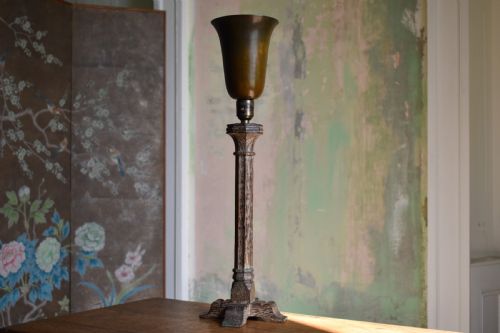
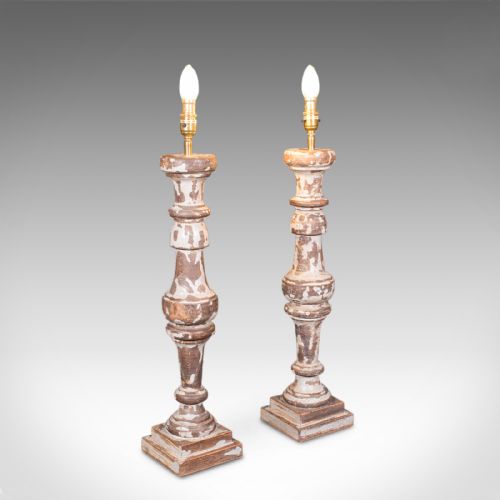
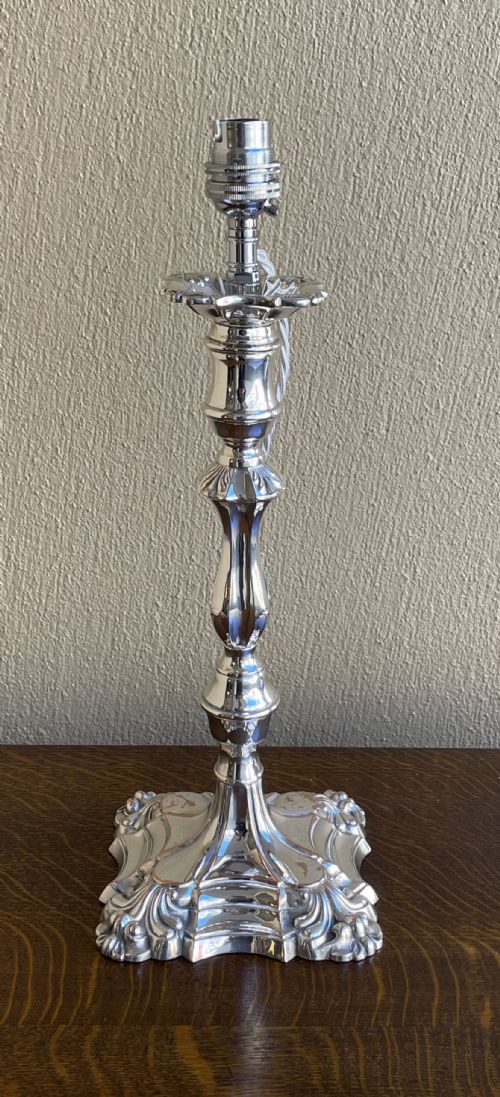
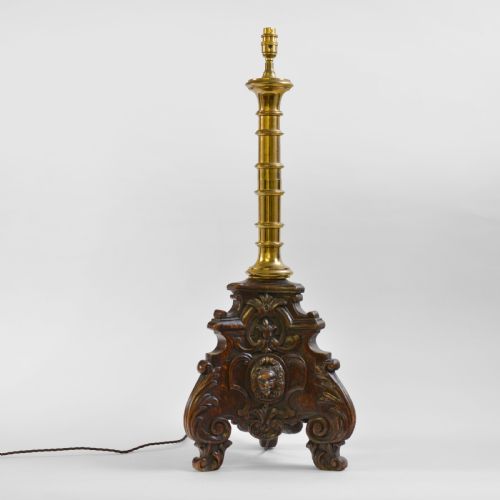
Candlestick Base Lamp
These candlestick base lamp selections transform historic lighting into practical table illumination, bringing period character and warm vertical height to a room.
Candlestick Base Lamp
A candlestick base lamp adapts tall historic candle holders, pillars and columns into functional electric lighting for modern interiors.
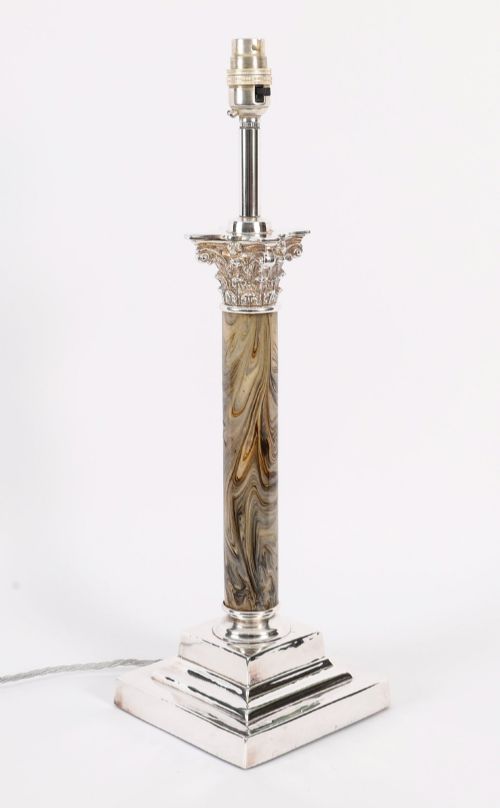
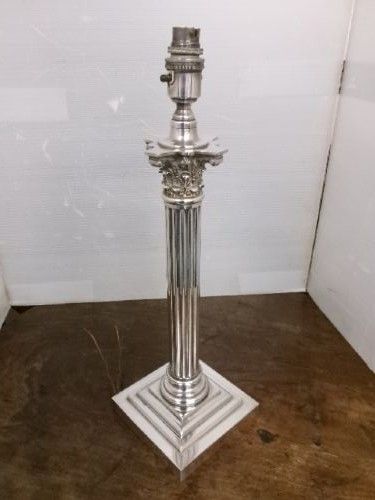
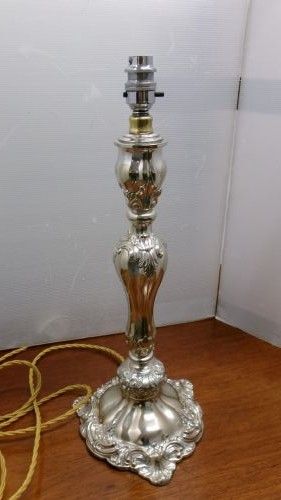
Victorian and Edwardian silver plated or brass Corinthian columns form the most frequent encounters in this category.
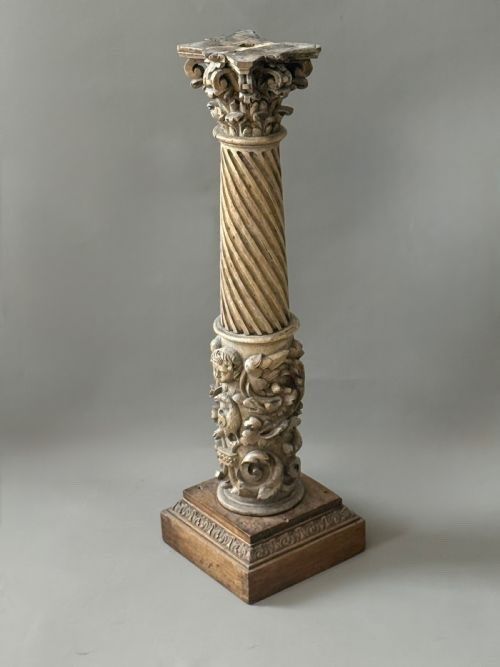
Examples stretch from seventeenth century carved oak and seventeenth century baroque wooden pillars to twentieth century adaptations.
Materials and Construction
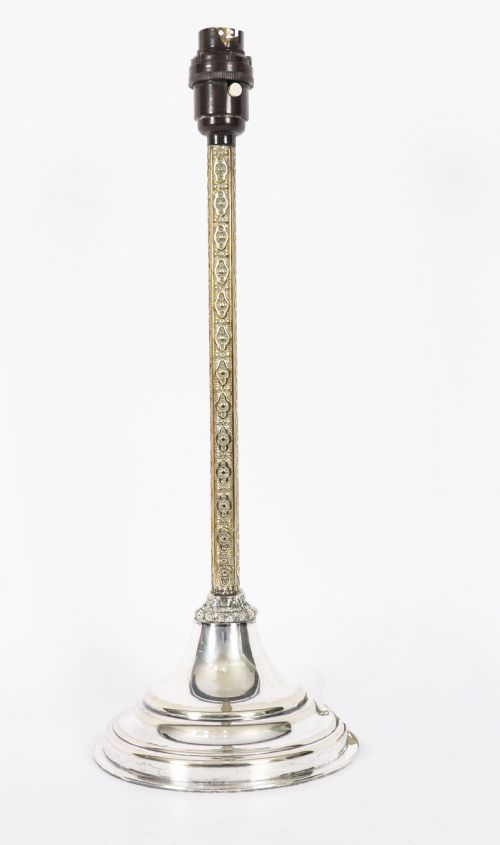
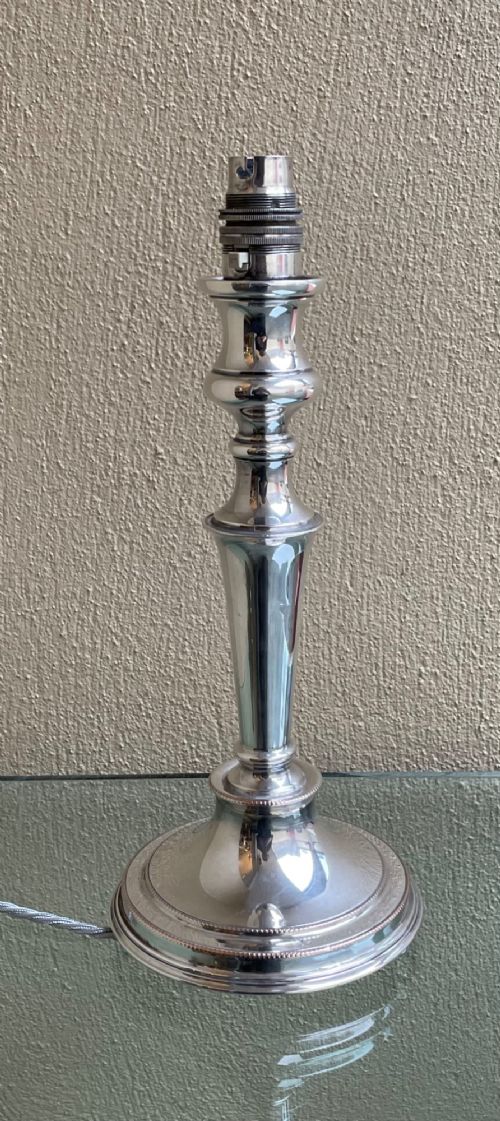
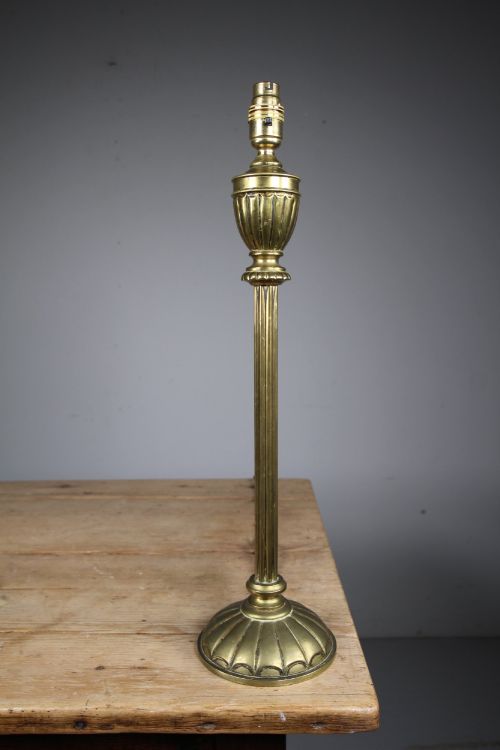
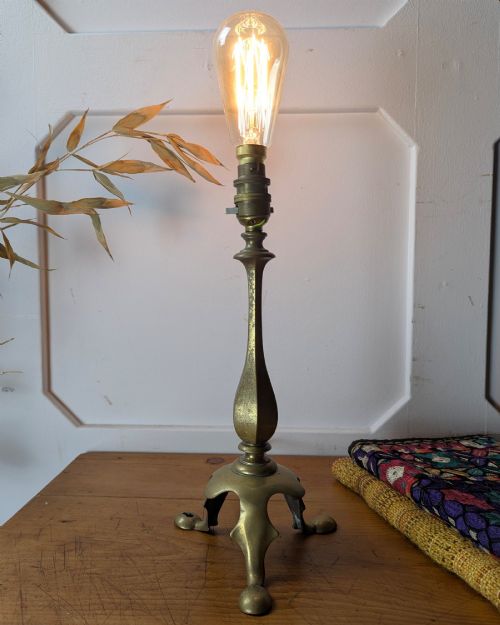
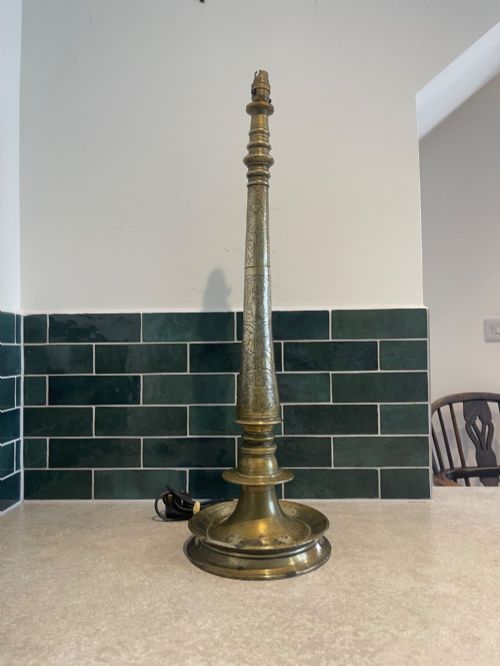
Metalwork dominates the construction through brass, silver plate, EPNS, sterling silver and gilt bronze cast into columns, balusters and tripod configurations.
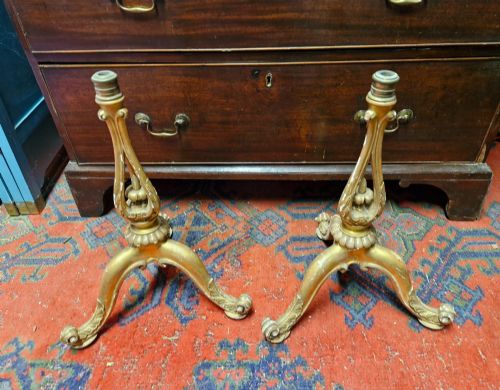
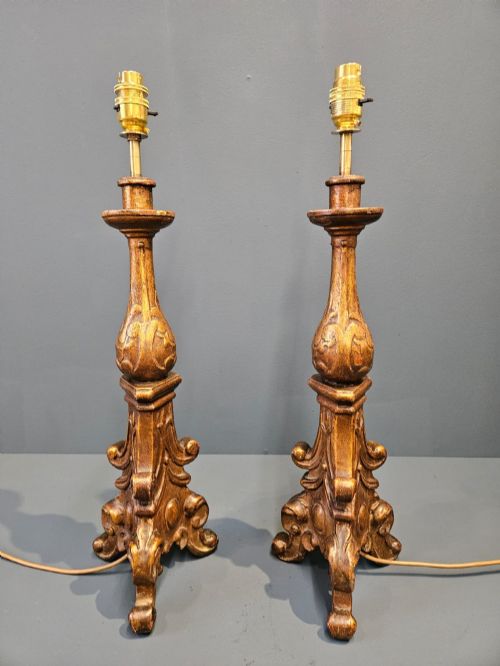
Carved timber specimens utilise oak, lignum vitae, painted pine and giltwood, frequently enhanced with gesso or silver leaf applications.
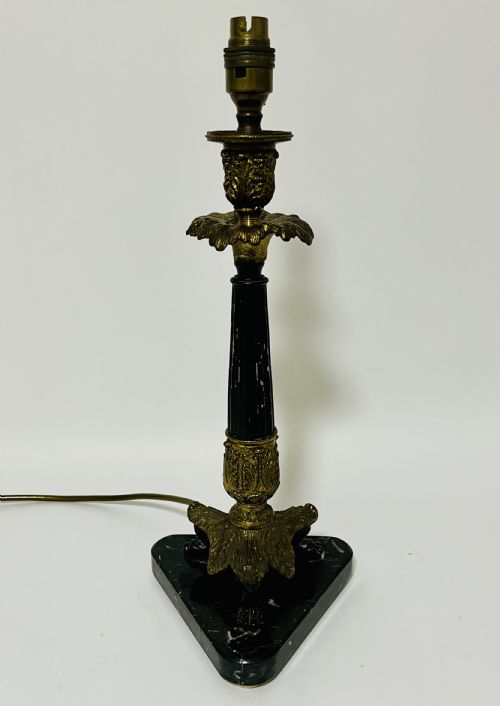
Combination pieces integrate marble bases with ormolu mounts, crystal glass components and parcel gilt treatments.
Materials range from solid brass and silver plate to carved oak, lignum vitae and marble across Victorian, Edwardian and seventeenth century periods.
Craftsmanship and Proportion
Superior examples display crisp detailing in cast capitals, fluted columns and applied ornamentation without softening of the design.
The weight and balance of the base dictate stability, separating substantial cast metal or dense hardwoods from lighter constructions.
Original surface preservation, whether rich patination on timber or intact silver plating, defines the distinction between refined execution and standard production.
Mappin & Webb's·Harrison Brothers & Howson·Walter Latham & Son·Goldsmiths
The Candlestick Base Lamp Glossary
- Corinthian column
- A classical architectural order featuring an ornate capital decorated with acanthus leaves, frequently seen on tall metal lamps.
- Epns
- Electroplated nickel silver, a common base metal method used for nineteenth century silver plated items.
- Ormolu
- Gilded bronze or brass applied to decorative mounts and bases, popular in French classical revival designs.
- Barley twist
- A spiral carved wooden or cast metal shaft design that creates diagonal movement along the lamp stem.
- Peg oil lamp
- A reservoir font designed to drop directly into the top socket of a candlestick holder.
Candlestick Base Lamp: Frequently Asked Questions
How do I choose the right height?
Consider where the lamp will sit and the scale of surrounding furniture. Taller column designs require more clearance, whilst compact baluster forms suit smaller side tables.
Proportion remains key to balancing the vertical base with an appropriate lampshade. Ensure the total height complements the room without dominating the surface it occupies.
Are these converted from old candlesticks?
Many examples began life as oil lamps, church candlesticks or decorative pillars before receiving modern electrical fittings. Some retain structural evidence of their previous functions, such as original wick mechanisms or weighted bases.
This adaptation history is standard for antique lighting, blending historical craftsmanship with modern utility.
How should I clean silver plated bases?
Use a soft cloth and a gentle, non-abrasive polish formulated specifically for silver plate. Avoid aggressive rubbing that might wear through the thin silver layer to the base metal beneath.
Keep electrical components completely dry during cleaning, and protect finished surfaces from moisture and direct heat.
Can I use modern lampshades?
Standard shade fittings can usually be adapted to fit historic harp or shade carriers with the correct reducer rings. Pay attention to the fitter type on the bulb holder to ensure compatibility.
Choosing a shade that respects the period style helps maintain the visual balance of the original candlestick architecture.