
Candle Style Sconces
Candle style sconces bring ambient illumination to a room, taking the form of wall-mounted lights designed to mimic traditional candleholders.
Candle Style Sconces
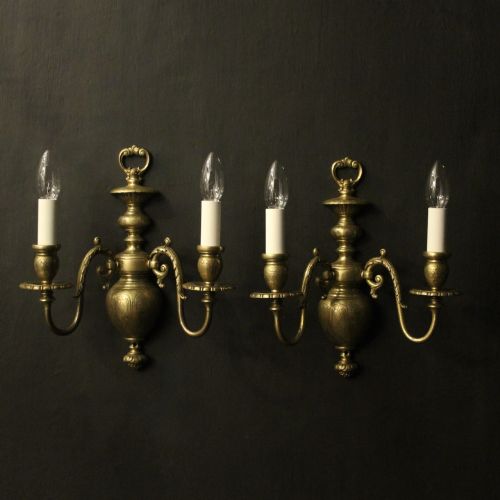
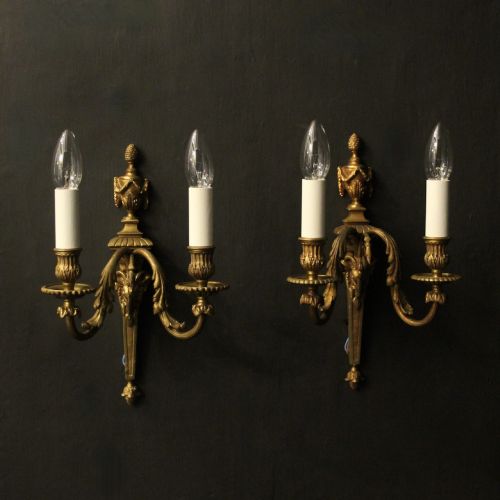
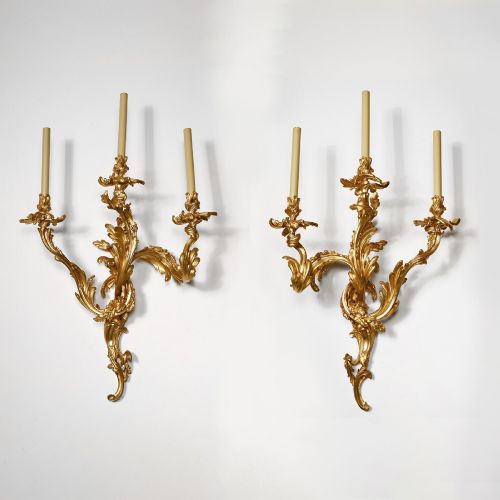
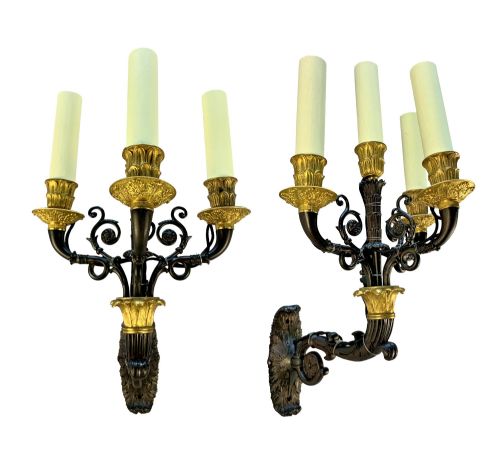
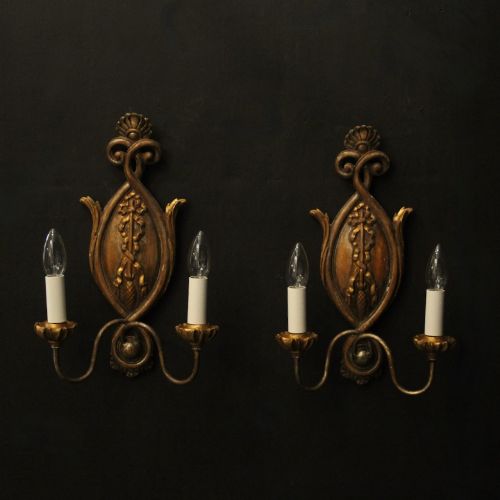
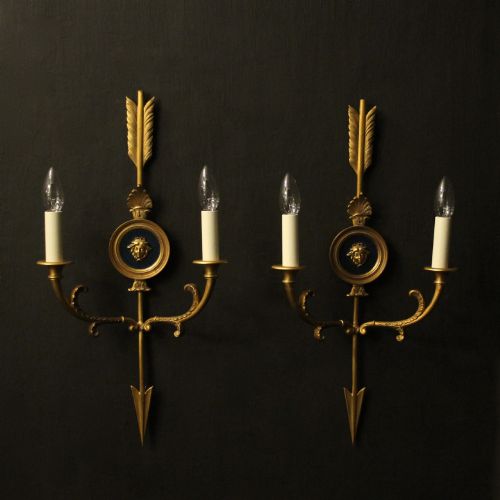
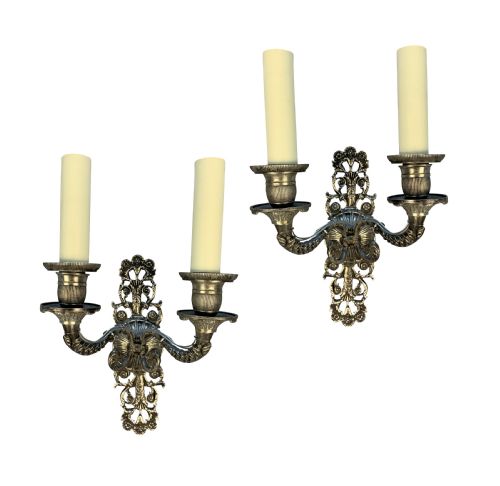
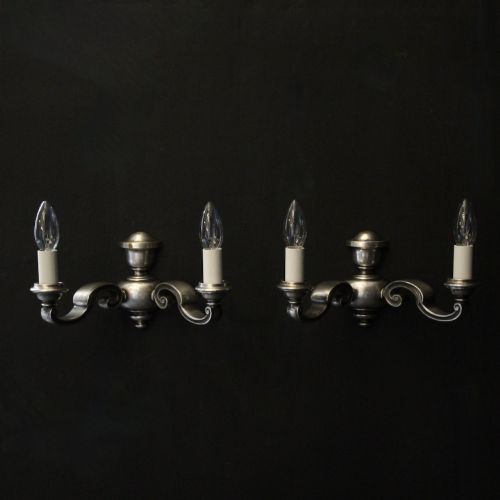
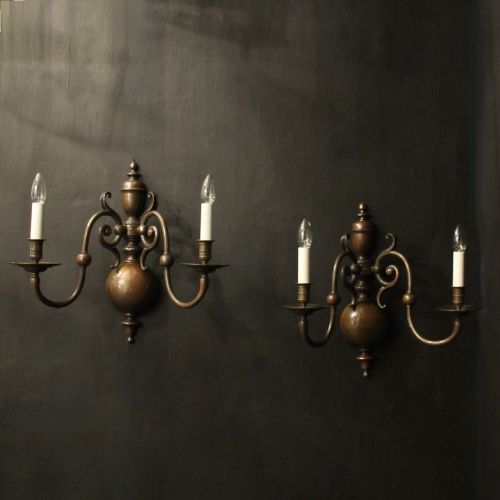
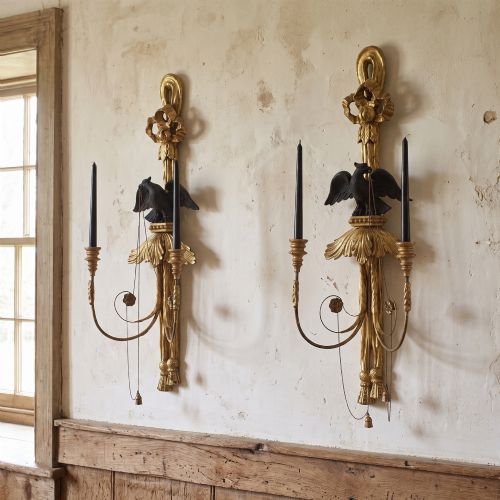
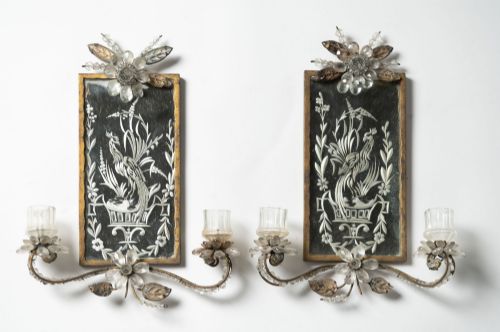
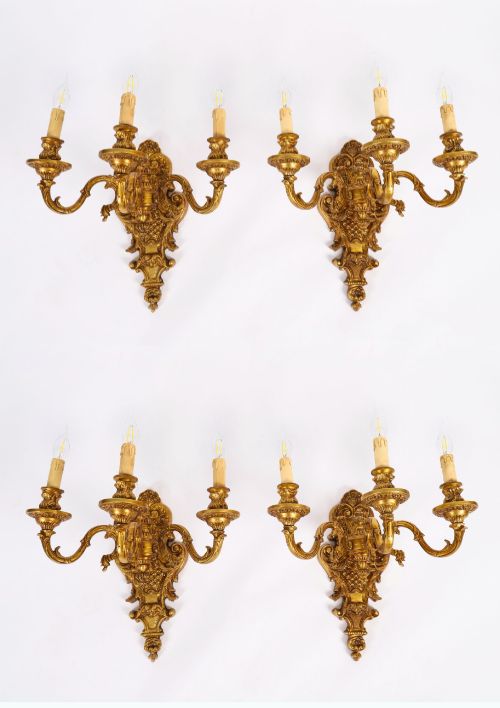
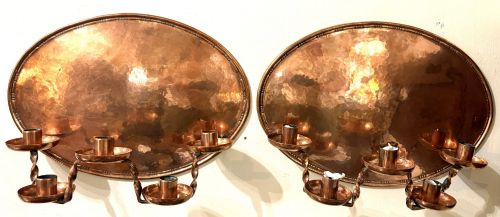
When searching for candle style sconces, buyers encounter wall lights and girandoles designed to hold candles or adapt the form for electricity. The most common examples on this page are pairs of twin-arm or multi-branch wall lights originating from French and English workshops.
The selection spans periods from the nineteenth century through the early decades of the twentieth century, including Victorian, Edwardian, and mid-century pieces. Styles draw heavily upon French Rococo, Neoclassical, and French Empire designs, often featuring symmetrical arms and ornate backplates.
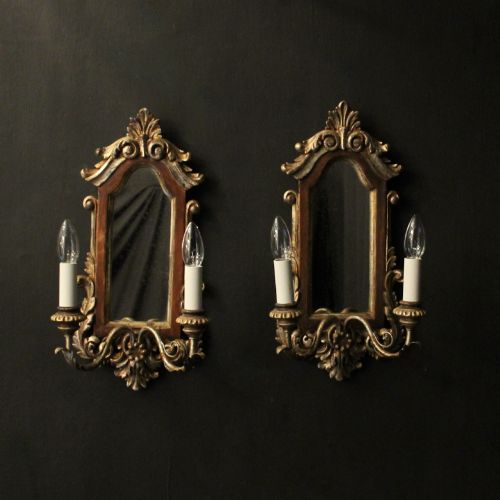
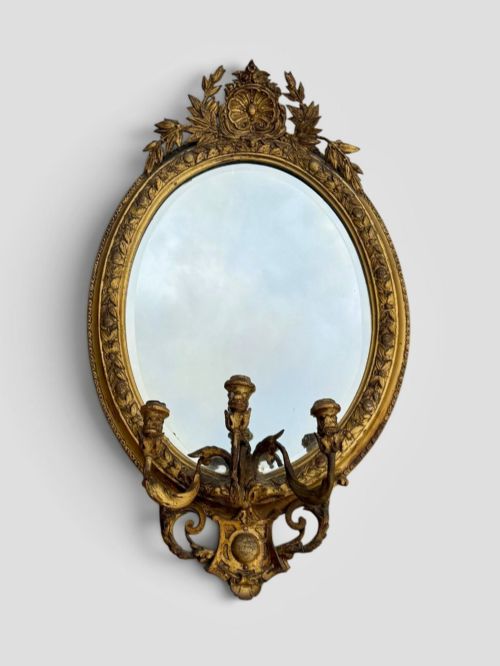
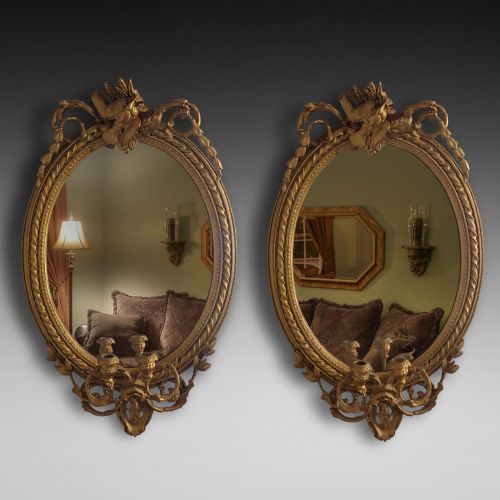
Beyond standard wall sconces, the inventory includes girandole mirrors that incorporate candle arms flanking reflective glass. These diverse forms share a common purpose of projecting warm light from vertical surfaces using historical decorative vocabularies.
How they were made
Metalwork forms the core of these pieces, utilising bronze, brass, copper, and cast ormolu alongside silver-plated mounts. Gilding techniques apply gold leaf or gilt layers over bronze, brass, and carved wooden bases to achieve a rich surface finish.
Carved gesso and giltwood construction appears frequently in Florentine and Victorian girandoles, where intricate floral and scroll motifs take shape upon wooden substrates. Glass and crystal components are integrated into select fixtures to refract the candle or electric illumination.
Foundry casting methods produced detailed figural elements, cherubs, and scrolling arms, which were subsequently hand-chased and assembled. Structural joins often rely on threaded rods and nuts concealed behind backplates designed for secure wall attachment.
Cast metal cherubs regularly peer from behind candle arms, keeping a watchful eye on centuries of parlour conversations.
What varies in quality
The degree of hand-chasing on bronze and ormolu surfaces dictates the crispness of leaf motifs and figural details. Finer castings retain sharp relief and subtle textures, whereas mass-produced alternatives appear softer and less defined.
The integrity of the gilding and surface finish distinguishes superior examples from simpler ones. Original fire gilding or carefully applied gold leaf demonstrates greater depth and durability than modern chemical lacquers or flat paint.
Construction weight and structural robustness differentiate robust, high-grade fixtures from lighter stamped metal variants. Substantial backplates and securely seated arms ensure the fixture hangs flush and supports the weight of multiple branches safely.
Maison Baguès·Villeroy & Boch·F. & C. Osler
The Candle Style Sconces Glossary
- Sconce
- A wall-mounted lighting fixture designed to hold candles or electric bulbs. These pieces typically feature a decorative backplate that fastens directly to the wall.
- Girandole
- A branched wall light or a decorative wall mirror incorporating candle holders attached to the frame. The reflective glass enhances the ambient illumination of the room.
- Ormolu
- Finely chopped and mercuric-gilt bronze ornamentation applied to furniture and lighting fixtures. This technique produces a warm, durable golden lustre characteristic of French decorative arts.
- Appliqué
- A French term frequently used interchangeably with wall sconce. It refers to a decorative light fixture affixed to a vertical surface.
- Gesso
- A plaster-based material applied to wood substrates and carved or moulded into intricate relief decorations before gilding. It provides a smooth base for gold leaf application.
Candle Style Sconces: Frequently Asked Questions
How do I wire a candle style sconce?
Many vintage wall lights require professional conversion to meet modern electrical safety standards. An electrician can run internal wiring through the mounting plate and arms.
Original backplates often retain clearance for concealed wall wiring. Care must be taken to match the weight of the fixture with appropriate wall anchors.
Are these sconces meant for real candles?
Historical pieces were originally built exclusively for wax candles before many underwent later electrification. Examining the drip pans and nozzle interiors reveals whether they held tapers or electrical fittings.
Modern buyers frequently choose to use flame-tip LED bulbs to replicate the original candle aesthetic safely. This avoids heat damage to antique gilt surfaces.
How do I clean gilt bronze sconces?
Dust accumulation should be managed using a soft, dry brush to protect delicate gilt layers. Avoid commercial metal cleaners that strip historical finishes.
Water and harsh solvents must be kept away from gesso and wooden components. Professional conservation cleaning is recommended for heavily tarnished or fragile ormolu.
What is the difference between a sconce and a girandole?
A standard wall sconce consists solely of a backplate and candle arms mounted directly to the wall. A girandole specifically incorporates a mirror into the backplate design.
The inclusion of reflective glass in a girandole multiplies the visual impact of the candle flames. Both forms share similar metalworking and carving techniques from the nineteenth and early twentieth centuries.
How do I date an antique wall light?
Dating relies on stylistic clues, casting methods, and construction materials characteristic of specific periods like the Victorian era or the French Empire style. Standard screw threads and fastening hardware also provide clues to the manufacturing decade.
Comparing backplate construction with documented examples from makers such as Maison Baguès helps narrow the timeframe. Subtle shifts in decorative motifs reflect the transition from nineteenth-century revival styles to early twentieth-century designs.