


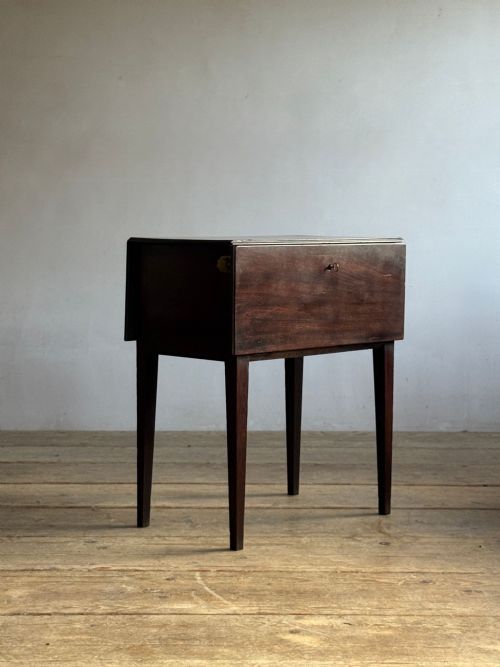
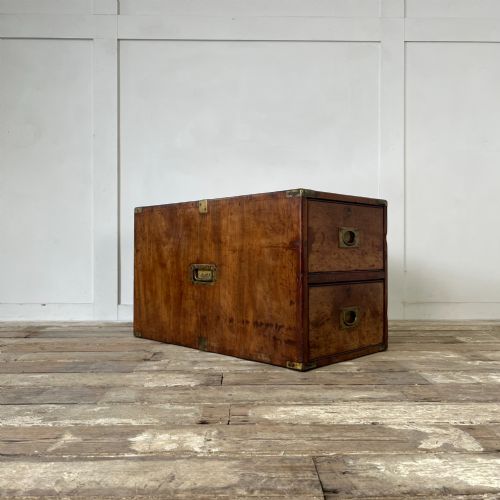


Campaign Furniture Box
A campaign furniture box solves the demand for portable, durable storage made for travel during the eighteenth and nineteenth centuries.
Campaign Furniture Box
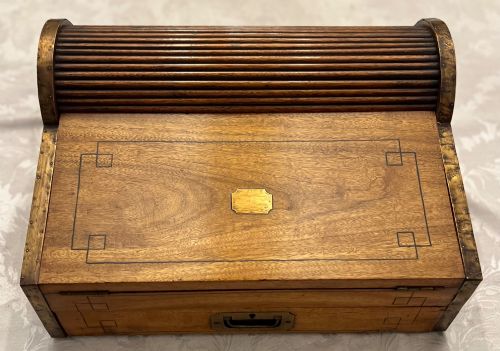
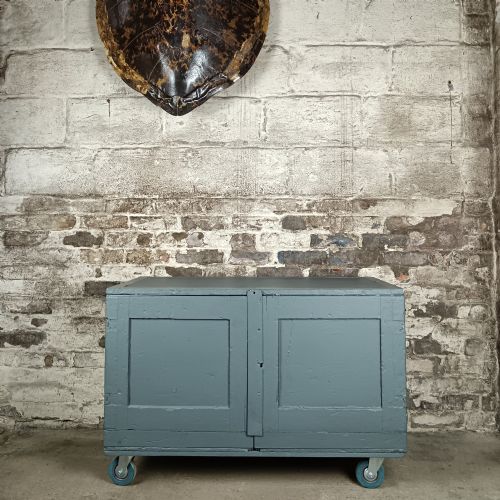
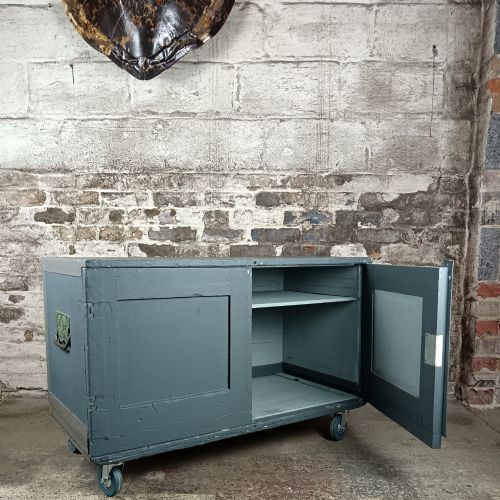
A campaign furniture box encompasses travel trunks, writing slopes, and desktop chests designed for officers and merchants on the move. When searching for a campaign furniture box, buyers encounter items ranging from compact writing desks to large blanket chests and packing cases. The pieces originate primarily from the eighteenth, nineteenth, and early twentieth centuries, reflecting a period of extensive military travel and colonial expansion.
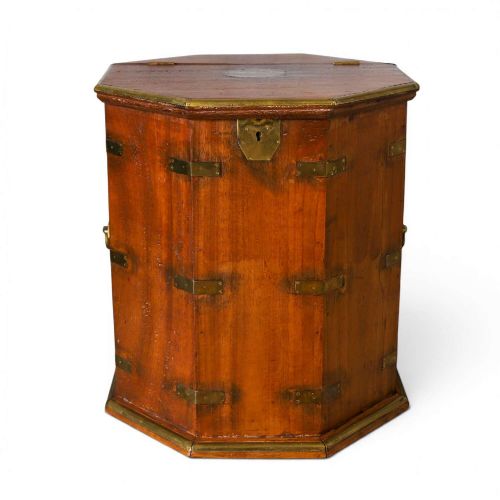
Mahogany, camphor wood, and teak form the predominant timber choices for a campaign furniture box, often paired with protective metal mounts. Common regional origins include Anglo Indian workshops and Chinese studios alongside British makers, demonstrating a global production history. The surviving examples on this page show distinct utilitarian forms built to withstand frequent transport.
Materials and construction methods
Makers constructed a campaign furniture box using durable timbers such as mahogany, oak, camphor wood, and teak to endure the rigours of transit. These woods resisted warping and damp conditions encountered during long journeys across land and sea.
Brass corners, binding, and recessed flush handles protected the vulnerable edges of each campaign furniture box from impact while maintaining smooth exterior lines for packing. Carpenters utilised pigeonholes, secret drawers, and folding mechanisms to maximise internal utility within compact dimensions.
Campaign Furniture Box Retail Price Guide 2026
Typical asking prices for campaign furniture box among the pieces listed under this phrase on Sellingantiques today, from the lower quarter to the upper quarter. They describe what is for sale here now, not the wider market.
Several trunks preserve their original keys, inviting wonder about the secret compartments and missing letters locked inside long ago.
Distinctions in craftsmanship and survival
Quality in a campaign furniture box rests on the precision of its hardware integration and the integrity of its timber. Superior examples exhibit tightly fitted brass mounts, flush joints that withstand seasonal movement, and intact internal fittings like writing surfaces or original compartments.
The presence of maker inscriptions, original keys, and well-preserved secondary woods such as pine further elevates an example. Poorer quality typically manifests as crude replacement hardware, split timbers from improper storage, or compromised interior layouts.
JW Allen·Allen of London·Withers Safe
The Campaign Furniture Box Glossary
- Brass-bound
- A technique of reinforcing box edges and corners with brass strips and corner pieces to prevent splintering during travel. This metalwork also adds structural rigidity to heavy hardwood chests.
- Writing slope
- A portable desk featuring a hinged lid that opens at an angle to provide a slanted writing surface. Inside, compartments hold inkwells, pens, and paper for correspondence on the road.
- Flush handle
- A pull handle inset into the wood of a drawer or lid so that it does not project beyond the surface. This design prevents snagging when items are stacked or packed into tight spaces.
- Camphor wood
- An aromatic timber frequently utilised for campaign trunks because its natural scent repels insects. The wood exhibits a distinctive grain and pale to honey-brown colouration.
- Dovetail
- A method of joining two pieces of wood by interlocking wedge-shaped fingers. This joint provides exceptional tensile strength for boxes subjected to the stress of military transport.
Campaign Furniture Box: Frequently Asked Questions
What is a campaign furniture box?
A campaign furniture box is a portable storage piece or desk built for officers, travellers, and merchants during the eighteenth and nineteenth centuries. These items were engineered to dismantle or pack securely for long journeys.
Survival depends on robust construction, featuring hardwood bodies and protective metal hardware designed to endure harsh transport conditions.
How were these boxes used?
Owners utilised them to transport personal belongings, valuable documents, and silverware across continents during military campaigns and trade missions. Writing boxes provided a stable desktop and storage for stationery in temporary quarters.
Larger trunks accommodated clothing and blankets, serving double duty as luggage and furniture in campaign tents or cabins.
Where were they made?
Production occurred across Britain, Europe, and colonial outposts including India and China, where local craftsmen adapted traditional forms for Western military use. Workshops utilised regional timbers like camphor wood and teak alongside imported mahogany.
This global exchange resulted in distinct stylistic variations depending on the regional workshop and intended destination.
How do I care for antique camphor wood?
Maintain stable indoor humidity and temperature levels to prevent the hardwood from drying out or splitting. Avoid placing the box near direct heat sources or in intense sunlight.
Clean the surface gently with a dry or slightly damp cloth, preserving the natural patina and the characteristic aroma of the timber.