





Campaign Armchair
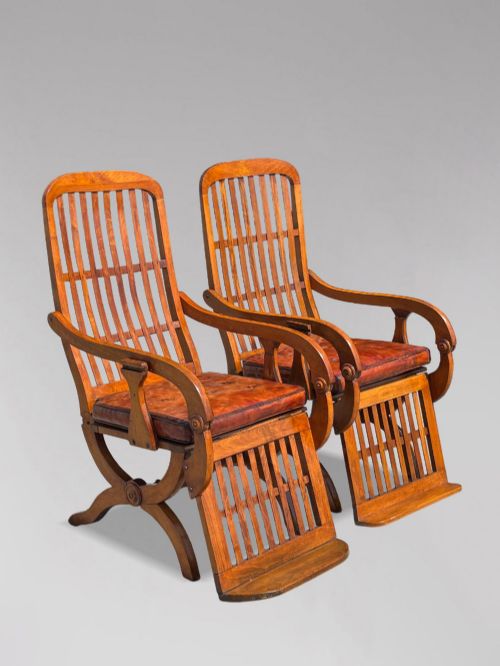
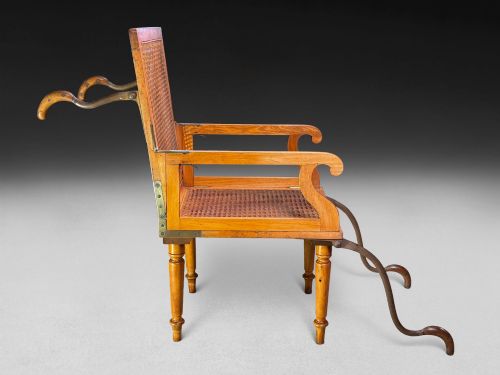
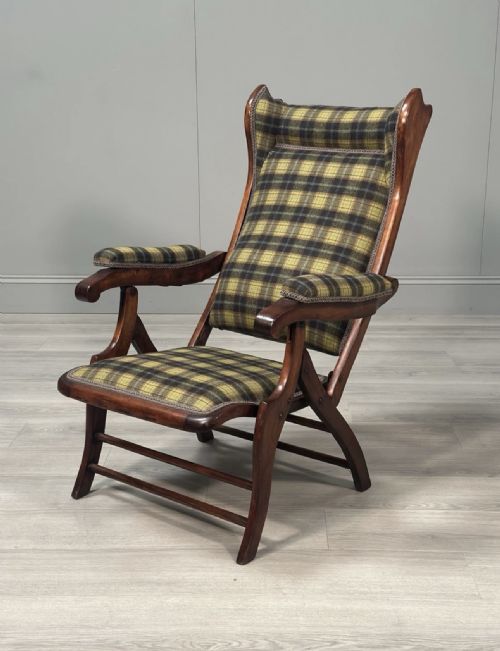
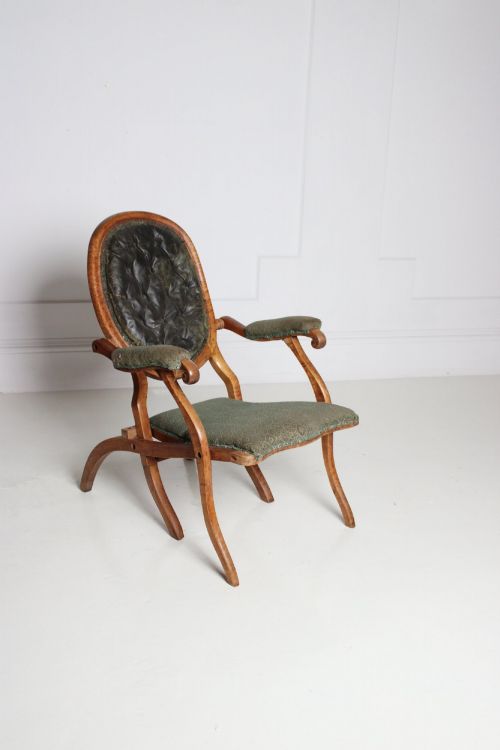
These campaign armchairs offer clever folding or reclining mobility designed for travel, combining robust utility with comfort.
Campaign Armchair
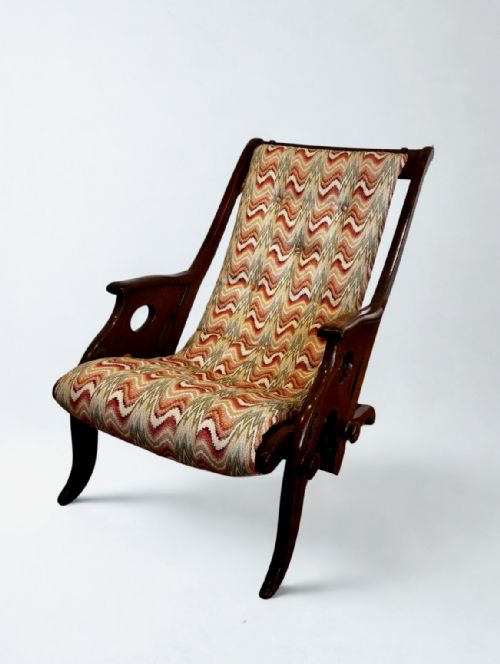
A campaign armchair brings portable seating to officers and travellers, taking the form of folding chairs, reclining loungers and adjustable seats. Most pieces seen here originate from the nineteenth century, spanning Victorian, Edwardian and colonial periods.
The selection ranges from simple folding camp frames to complex metamorphic armchairs that double as daybeds. Walnut and mahogany provide the primary timber structures, alongside rosewood, oak, maple and hardwood examples.
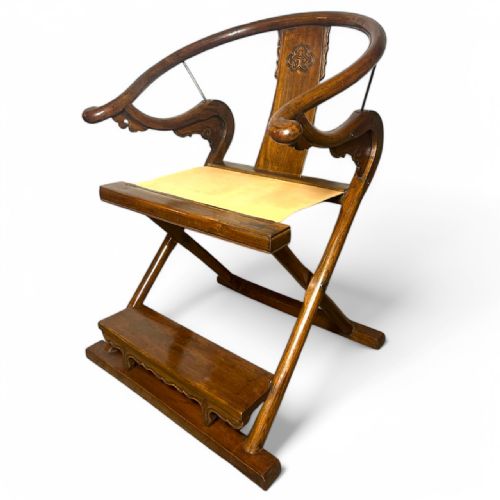
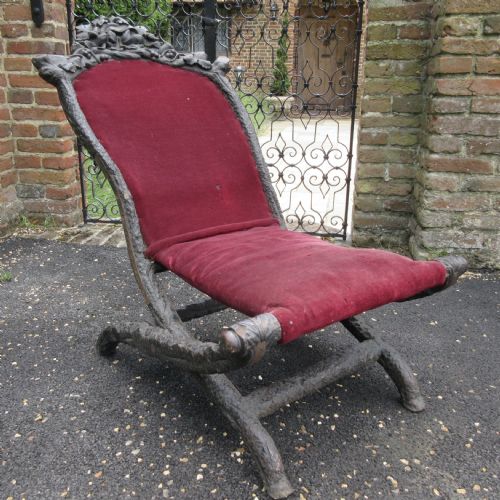
Regional variations appear across English, French and Chinese traditions, including horseshoe-back throne chairs and Black Forest carved designs. Buyers frequently encounter folding chairs with cane, leather or fabric upholstery suited for transport.
Materials and Construction
Timbers such as mahogany, walnut and rosewood form the rigid skeletons necessary for frequent folding and transit. Metal hinges, brass fittings and castors reinforce the joints and allow the chairs to collapse smoothly.
Seats and backs utilise flexible materials including woven cane, stitched leather, textile and padded fabric. Bone button decorations and pierced carved crest rails appear on selected frames to add detail without hindering portability.
Recorded styles span Victorian, colonial and Arts and Crafts traditions, alongside Chinese hardwood folding chairs and French Louis Philippe designs.
Evaluating Quality
Quality rests upon the ingenuity of the folding mechanism and the rigidity of the joints when deployed. Finer examples execute complex adjustments, such as reclining backs and extending footrests, with fluid precision.
Material selection separates standard camp furniture from elite pieces fashioned in solid rosewood or birds-eye maple. The crispness of carved details, such as fluting and bone buttons, marks the distinction in craftsmanship.
J. Herbert McNair
The Campaign Armchair Glossary
- Metamorphic
- Furniture designed to transform from one form into another, such as an armchair converting into a daybed. This adaptability served travellers who required multiple functions from a single item of luggage.
- Bergère
- An enclosed upholstered armchair with wooden framing exposed. The style incorporates woven cane panels on the back and sides.
- Fluting
- Parallel vertical grooves cut into the surface of wood. This classical decorative technique appears on chair legs and structural supports.
- Castor
- A small wheel mounted on a swivel attached to the legs. It enables heavy armchairs to move across floors with minimal effort.
Campaign Armchair: Frequently Asked Questions
How do campaign armchairs fold?
These chairs utilise pivoting X-frames, brass hinges and collapsible wooden struts that allow the entire structure to pack flat into a compact footprint.
Travellers packed these seats into wooden crates or canvas bags for long journeys across colonies and military campaigns.
Where were these chairs used?
Officers, diplomats and explorers used them in campaign tents, colonial outposts and aboard ship during the nineteenth century.
Their portable nature meant comfortable seating could travel across rugged terrain without taking up excessive wagon space.
Are campaign armchairs comfortable for daily use?
Many include reclining mechanisms, adjustable ladders and cushioned upholstery that rival standard domestic lounge seating.
Models featuring leather slings or sprung seats adapt well to modern living rooms and studies.
How do I identify a nineteenth-century piece?
Look for dense hardwoods like mahogany and walnut, hand-cut brass screws, and traditional joinery methods. Maker stamps and patinated leather surfaces also indicate age.
Victorian and Edwardian examples often display specific regional carving styles and hardware typical of the period.