
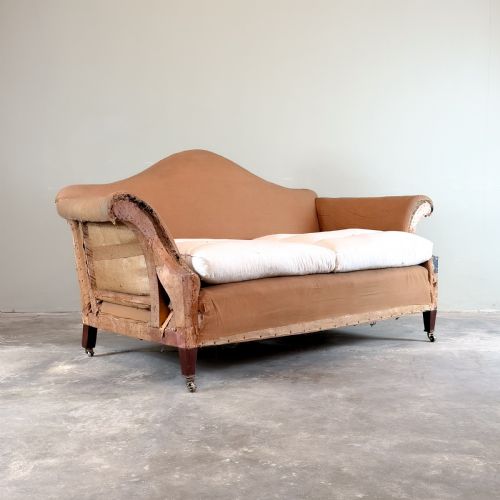
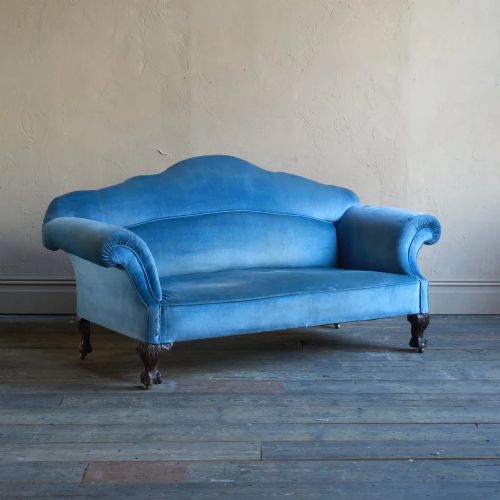


Camelback Upholstered Sofa
A camelback upholstered sofa brings distinct serpentine lines and tailored upholstery to a room, offering both formal elegance and deep seating comfort.
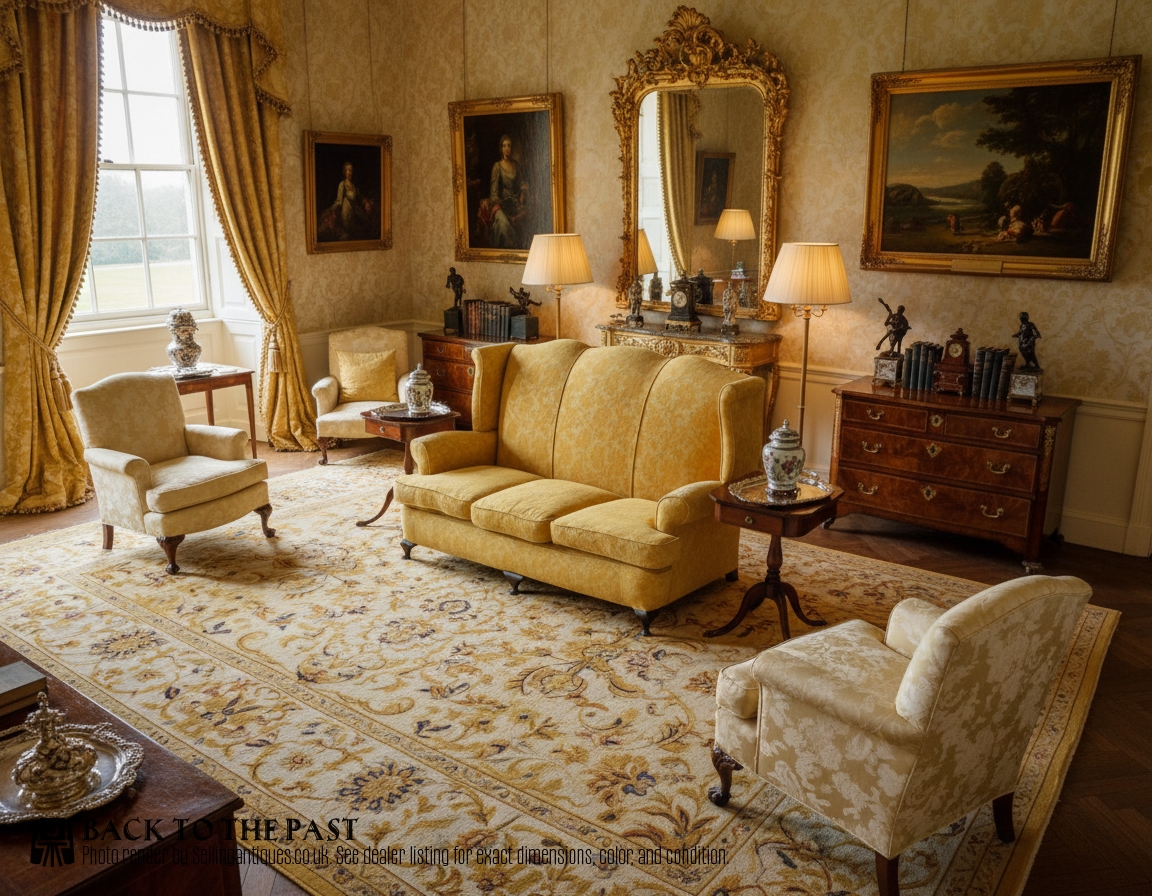
Camelback Upholstered Sofa
A camelback upholstered sofa displays a characteristic undulating backrest with one or more humps that sweep downwards towards the arms. These seating pieces appear across several periods, most notably in 18th-century pieces and later revivals from the 19th and early 20th centuries.
The selections available on this page encompass various regional and stylistic interpretations, including George III designs and Chippendale revival pieces. Buyers frequently encounter serpentine fronts and distinct mahogany frames within this specific group of settees and sofas.
Maker influences and stylistic revivals span Edwardian adaptations and Victorian interpretations, reflecting a sustained preference for classic Georgian proportions. The fundamental form remains consistent, balancing robust structural timbers with refined textile coverings.
Materials and construction
Makers constructed the primary frames of these sofas using dense hardwoods such as mahogany and walnut, ensuring the longevity of the curved crest rails and load-bearing joints. Exposed woodwork often displays hand-carved details, particularly on the legs and arm supports.
Upholstery techniques relied on traditional stuffing materials, secured over robust webbing and supportive internal framing. Outer coverings typically utilise damask fabric, patterned damask upholstery, or tactile velvet textures.
Metal elements such as brass appear in structural reinforcement or decorative castors, whilst supportive jute webbing underpins the seat construction to maintain firmness and shape over decades of use.
Some Edwardian sofas secretly harbour early 20th-century jute webbing beneath their traditional damask upholstery.
Variations in quality
Quality in a camelback upholstered sofa rests primarily upon the precision of the frame's joinery and the fluidity of the serpentine timber line. Superior examples exhibit hand-carved wooden elements that integrate seamlessly with the overall proportions of the piece.
The integrity of the internal upholstery build dictates how well the sofa holds its tailored silhouette over time. Pieces finished with high-grade damask or velvet and executed within revival periods like the Chippendale style demonstrate elevated craftsmanship.
The Camelback Upholstered Sofa Glossary
- Serpentine front
- A curved furniture front that curves outward in the centre and inward toward the ends. This contour frequently accompanies the sweeping lines of the backrest.
- Chippendale style
- A design aesthetic drawing from mid-18th-century cabinetmaking traditions. Pieces in this vein often feature carved mahogany frames and intricate leg work.
- Damask upholstery
- A reversible figured fabric traditionally woven on a jacquard loom. It provides a structured, patterned surface suited to formal antique seating.
- Ball and claw
- A furniture foot carved to resemble a bird's talon gripping a ball. This motif appears frequently on the wooden legs of period settees.
- Edwardian period
- An era spanning the early 20th century marked by lighter interpretations of earlier styles. Sofas from this time often blend Georgian proportions with refined manufacturing.
Camelback Upholstered Sofa: Frequently Asked Questions
How do I identify a true camelback sofa?
Look for the characteristic undulating crest rail that rises in one or two gentle humps before sloping downward toward the arms. This profile forms the defining silhouette of the seating type.
Examine the overall proportions and timber framing to see whether the piece aligns with Georgian or revival periods represented in the listings.
What fabrics are authentic to these sofas?
Traditional upholstery on these seating pieces relies heavily on woven textiles like damask fabric and heavy velvet. These materials provide the necessary weight and structure for tailored edges.
Subsequent reupholstery often retains these historic textile choices to preserve the formal appearance intended by the original makers.
Where should I place a camelback sofa?
These sofas suit formal drawing rooms, parlours, or central living spaces where their decorative back profile can be appreciated from multiple angles. Their tailored silhouette works well away from walls.
Consider the surrounding room proportions, as the curved crest rail draws the eye upward and requires adequate vertical clearance.
Are Edwardian copies valuable?
Edwardian revival pieces replicate earlier 18th-century designs using period manufacturing techniques and quality hardwoods like mahogany. Their value stems from skilled craftsmanship rather than age alone.
Collectors often value these Edwardian interpretations for their sturdy construction and faithful adherence to classic Georgian proportions.