




Calico Library Chair
These calico library chair pieces offer deep-seated comfort upholstered simply for everyday study and reading.
Calico Library Chair
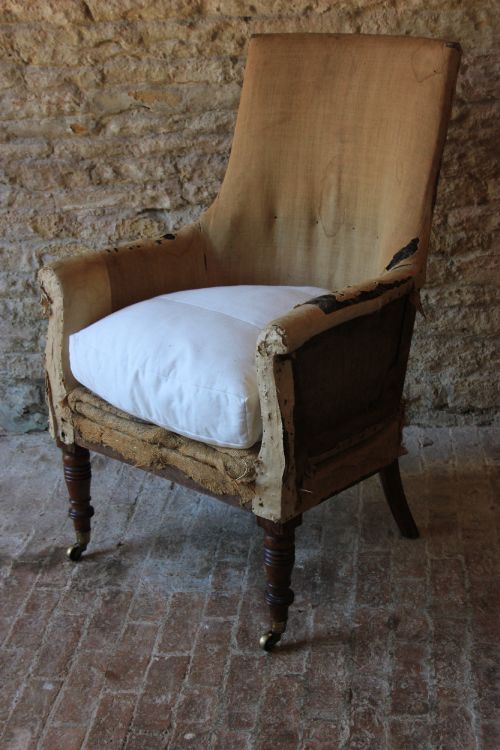
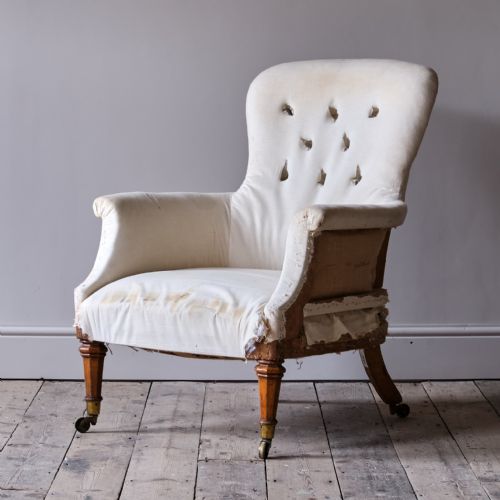
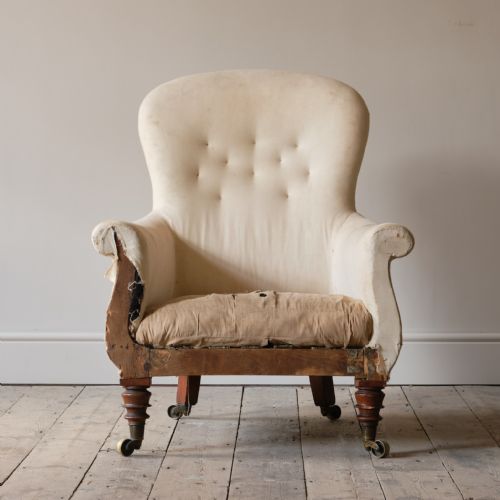
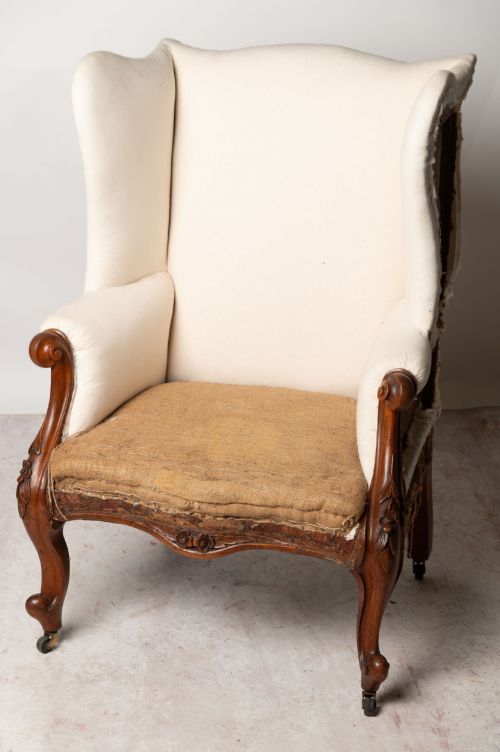
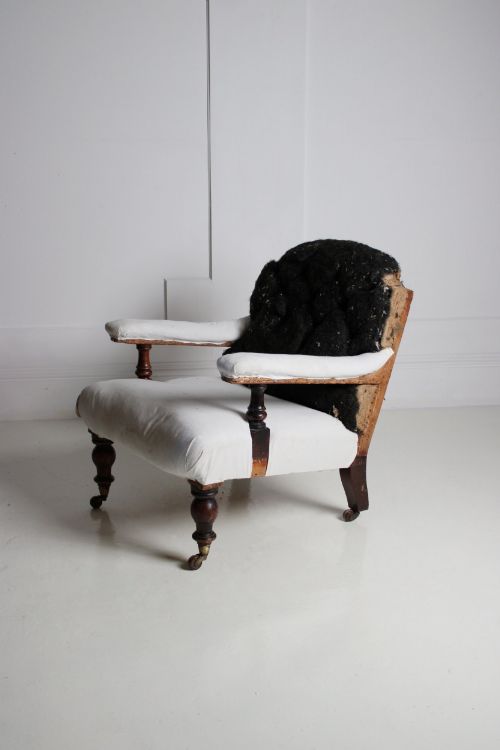
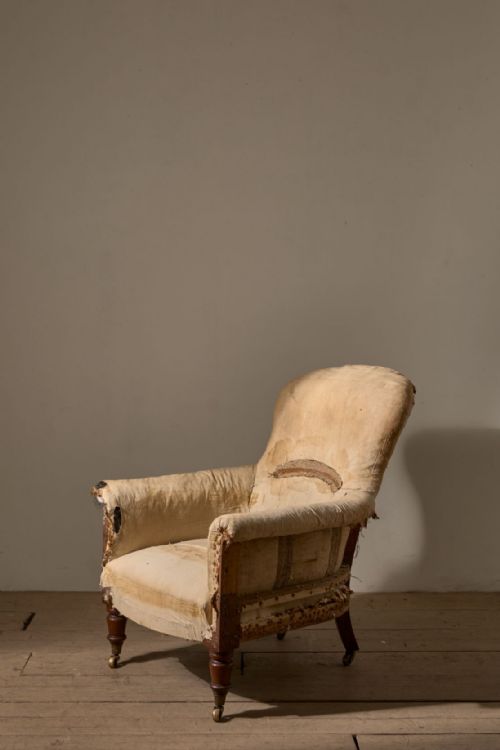
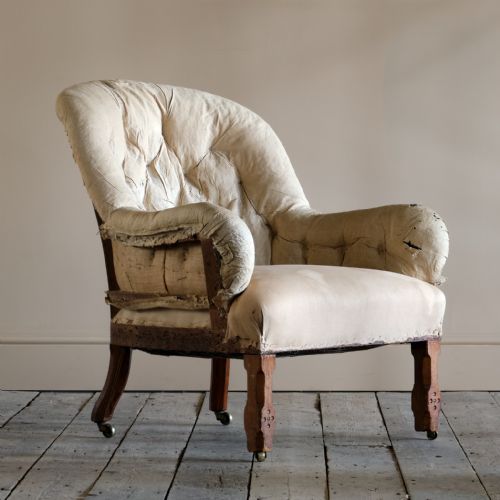
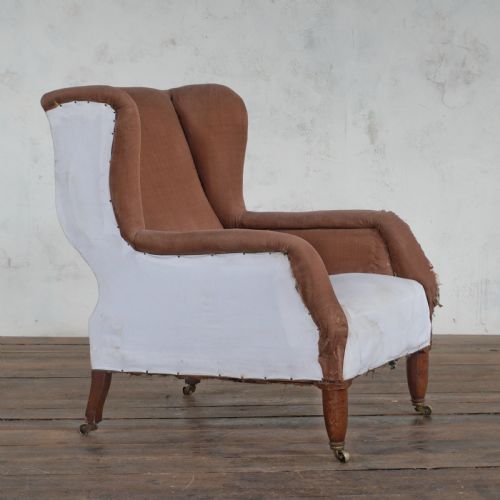
When you search for a calico library chair, you are looking at substantial armchairs upholstered in plain cotton fabric ready for final covering or use as they are. The examples you meet on this page span the eighteenth, nineteenth, and early twentieth centuries, encompassing Regency, William IV, and Victorian periods.
The forms range from deep-seated country house armchairs and wing chairs to spoon-back and open-arm library seats. Most pieces arrive in calico or hessian, reflecting their origins as foundational upholstery designed for domestic studies and grand drawing rooms.
Makers such as Gillows, Howard and Sons, and Thomas Sopwith appear across the records alongside unattributed English pieces. These chairs prioritise heavy proportions and supportive backs intended for long hours of reading.
How they were made
Makers built these frames using dense hardwoods like mahogany and walnut to withstand heavy daily use. Joinery techniques included sturdy mortise and tenon joints to secure the arms and legs under significant weight.
Traditional stuffing relied on horsehair and natural fibres held securely by hessian webbing before the outer layer of calico was applied. Brass castors and steel springs appeared in later nineteenth-century models to improve mobility and bounce.
Calico Library Chair Retail Price Guide 2026
Typical asking prices for calico library chair among the pieces listed under this phrase on Sellingantiques today, from the lower quarter to the upper quarter. They describe what is for sale here now, not the wider market.
Some nineteenth-century armchairs retain ghosts of forgotten firesides preserved beneath layers of heavy horsehair stuffing and calico.
What varies in quality
The distinction between ordinary and exceptional pieces lies in the weight of the timber frame and the refinement of the carved details. Earlier frames exhibit hand-shaped proportions and superior structural integrity that cheaper mass-produced alternatives lack.
Original maker stamps or attribution to reputable workshops elevate a piece significantly above generic workshop output. The health of the underlying horsehair stuffing and the rigidity of the frame dictate how well the chair retains its original posture.
Gillows·Howard and Sons·Thomas Sopwith
The Calico Library Chair Glossary
- Calico
- A plain-woven unbleached cotton textile used traditionally as the foundational upholstery layer beneath decorative fabrics. It provides a clean, neutral finish when left bare on antique chairs.
- Horsehair
- A traditional stuffing material gathered from the mane and tails of horses, prized for its natural springiness and durability. It packs tightly into upholstered frames to maintain shape over decades.
- Regency
- An English design period spanning the early nineteenth century defined by classical restraint and archaeological revival styles. Furniture from this era often incorporates dark mahogany and restrained brass mounts.
- Wingback
- An armchair featuring protective side panels designed originally to shield the sitter from drafts in unheated rooms. This form remains a staple of eighteenth and nineteenth-century country house interiors.
- Hessian
- A coarse woven fabric typically made from jute fibres, utilised inside upholstered furniture to contain internal stuffing materials. It forms a sturdy base beneath the outer calico layer.
Calico Library Chair: Frequently Asked Questions
Why are these chairs upholstered in calico?
Calico served historically as a strong under-upholstery layer designed to hold horsehair stuffing firmly in place before an owner chose a final decorative fabric. Many survived in this plain state because country house owners preferred the understated look or intended to cover them later.
Leaving the calico exposed allows the pure lines of the woodwork and the historical stitching to remain visible. It provides a neutral, textile-first aesthetic that fits modern minimalist interiors easily.
How do I date a library chair?
Dating relies on examining the timber species, the turning of the legs, and the structural silhouette of the frame. Regency and George III pieces display lighter classical proportions, whereas Victorian examples tend toward heavier padding and buttoned spoon backs.
Internal stuffing materials also offer clues, as coiled steel springs appeared increasingly through the nineteenth century alongside traditional horsehair. Maker stamps on the wooden frame or castors provide the most definitive chronological evidence.
Were these chairs meant for reading?
Library chairs were constructed specifically for domestic studies, large libraries, and private drawing rooms where owners spent hours reading or writing. Their deep seats and supportive upholstered arms accommodated relaxed postures over extended periods.
Country houses utilised them in quiet corners away from formal reception spaces. Their robust hardwood frames ensured they endured constant daily use by members of the household.
How do I care for calico upholstery?
Plain cotton calico responds best to gentle surface cleaning with a soft brush or a low-suction vacuum attachment to remove dust. Spot cleaning requires mild detergent and minimal water to prevent rings from forming on the unbleached fabric.
Keep these chairs out of direct sunlight to prevent the cotton from weakening or fading over time. Professional upholstery cleaning is recommended for deep maintenance without disturbing the internal horsehair.